
Sweco Belgium
Façade engineering enhances the energy concept while respecting the architecture
Façade engineering goes far beyond aesthetics. The façade of a building brings together numerous factors that determine comfort, functionality, environmental impact, and safety.
For an innovative project, Sweco developed an energy master plan. As engineering partner, Sweco is responsible for building services and the overall energy concept, with our façade engineering consultants contributing to both energy performance and architectural quality.
Façade engineering connects aesthetics and energy efficiency
Within the energy master plan, the central building contributes through the integration of BIPV (Building‑Integrated Photovoltaics) in both the façade and the roof.
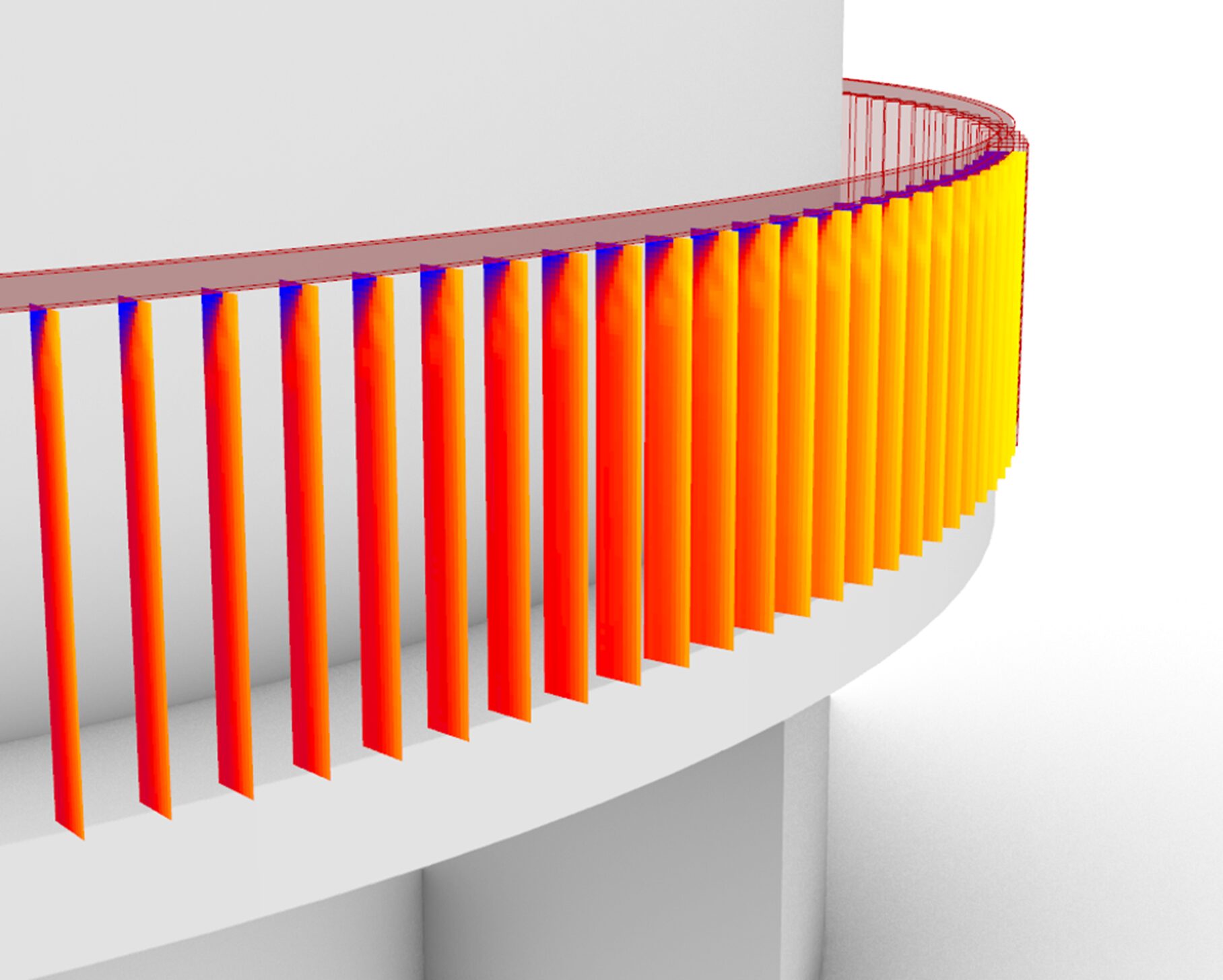
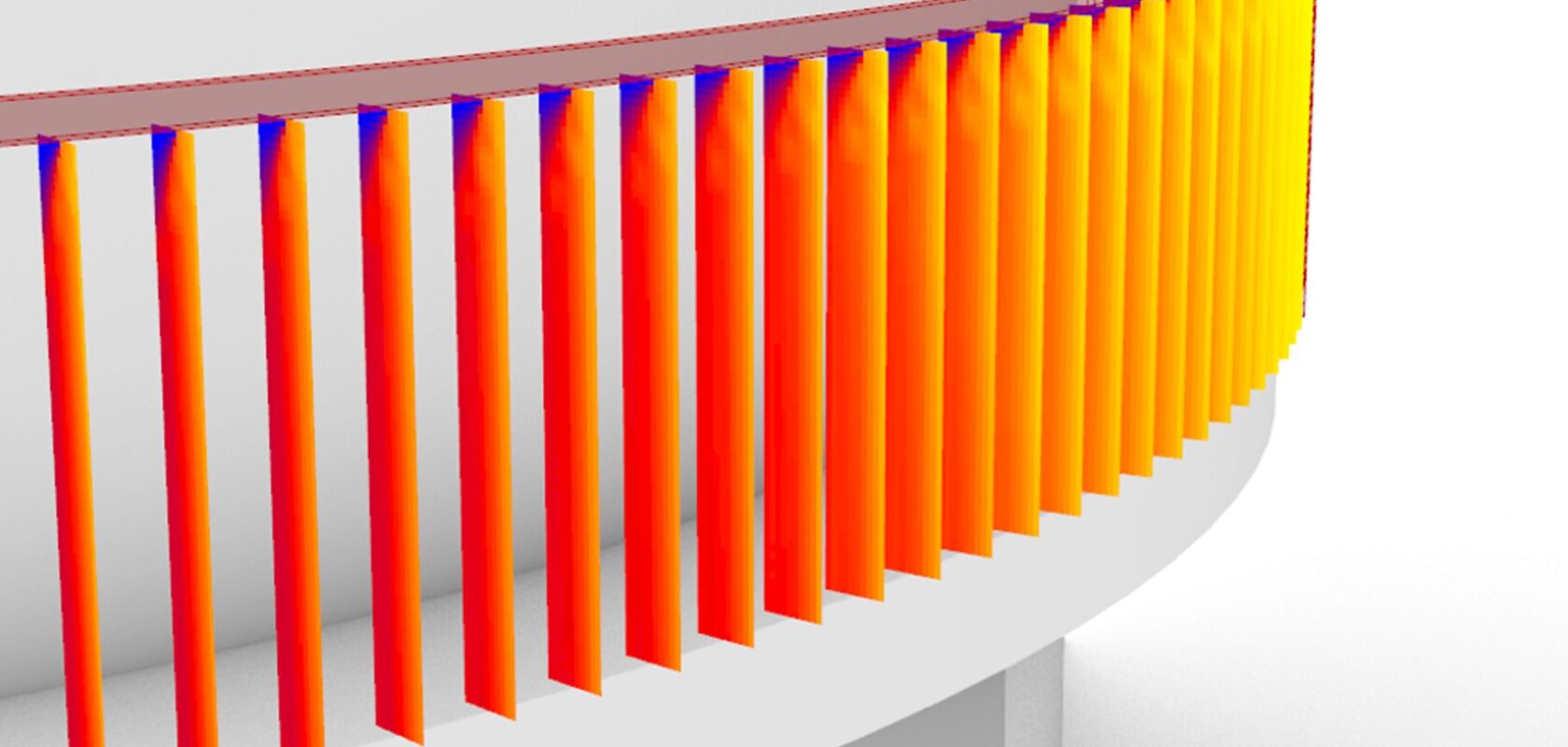
On the façade, BIPV is incorporated as fixed solar‑shading elements in the form of vertical louvres. Our façade engineers analysed a wide range of parameters, including:
- Solar panel energy yield
- Optimisation of louvre geometry, spacing, orientation, and positioning
- Architectural detailing and integration into the design concept
- Structural pre‑dimensioning of the louvres and their integration into the structural concept
- Integration into the overall energy strategy
- Analysis of the impact of louvres on daylight quality
- Technical descriptions for inclusion in the project specifications

Simulations: digital tools supporting yield assessment
Using project‑specific simulations, our façade engineers estimated the energy yield of the BIPV louvres over the full lifespan of the façade, expressed in kWh/year. For the return on investment (ROI), yields were translated into monetary value and compared with the initial investment, benchmarked against conventional aluminium or glass louvres.
The simulations demonstrated that energy yield is strongly influenced by the position, geometry, and dimensions of the louvres.
- Optimal positioning: Side‑clamped glass proved to be the most advantageous solution, as it avoids structural shading of the PV cells and maximises energy yield.
- Geometry: The large number of identical BIPV slats allows for custom manufacturing without excessive additional costs. Based on simulation results, the louvre dimensions were optimised to achieve maximum PV cell coverage, with the glass strip in the clamp intentionally left free of PV cells.
Wind load calculations defined the required clamping profiles and glass thicknesses.
Integration into the architectural and structural concept
The louvres serve a dual function: solar shading and energy generation through BIPV. As a highly visible architectural feature, they play a defining role in the building’s façade.
Sweco’s façade engineering consultants ensured seamless integration into both the architectural and structural concepts through careful detailing and structural pre‑dimensioning of the glass and clamping profiles. The custom‑designed aluminium clamp profiles elegantly incorporate steel reinforcements and concealed electrical wiring, while specially designed anchors ensure that fixings and cable routing remain invisible.
Comfort through daylight optimisation
Once the fixed BIPV solar shading strategy was established, the façade engineers assessed daylight comfort within the interior spaces. The louvres wrap around the entire building, creating a coherent and harmonious architectural expression.
On the northern façade, where PV yield is naturally lower, the louvres are fully transparent and do not contain PV cells, allowing additional daylight to enter the interior while maintaining visual consistency across the façade.
By involving façade engineering from the earliest design stages, Sweco’s experts were able to deliver solutions that significantly enhance energy performance while fully respecting the architectural intent.
Other news

Making CCS Work: Insights from Real Industrial Projects
Read more

New national hockey stadium ready for the 2026 World Cup
Read more

UZ Gent is building the care of tomorrow with Project U
Read more