
Sweco Belgium
SILT: Carefree entertainment through performance-based fire safety engineering
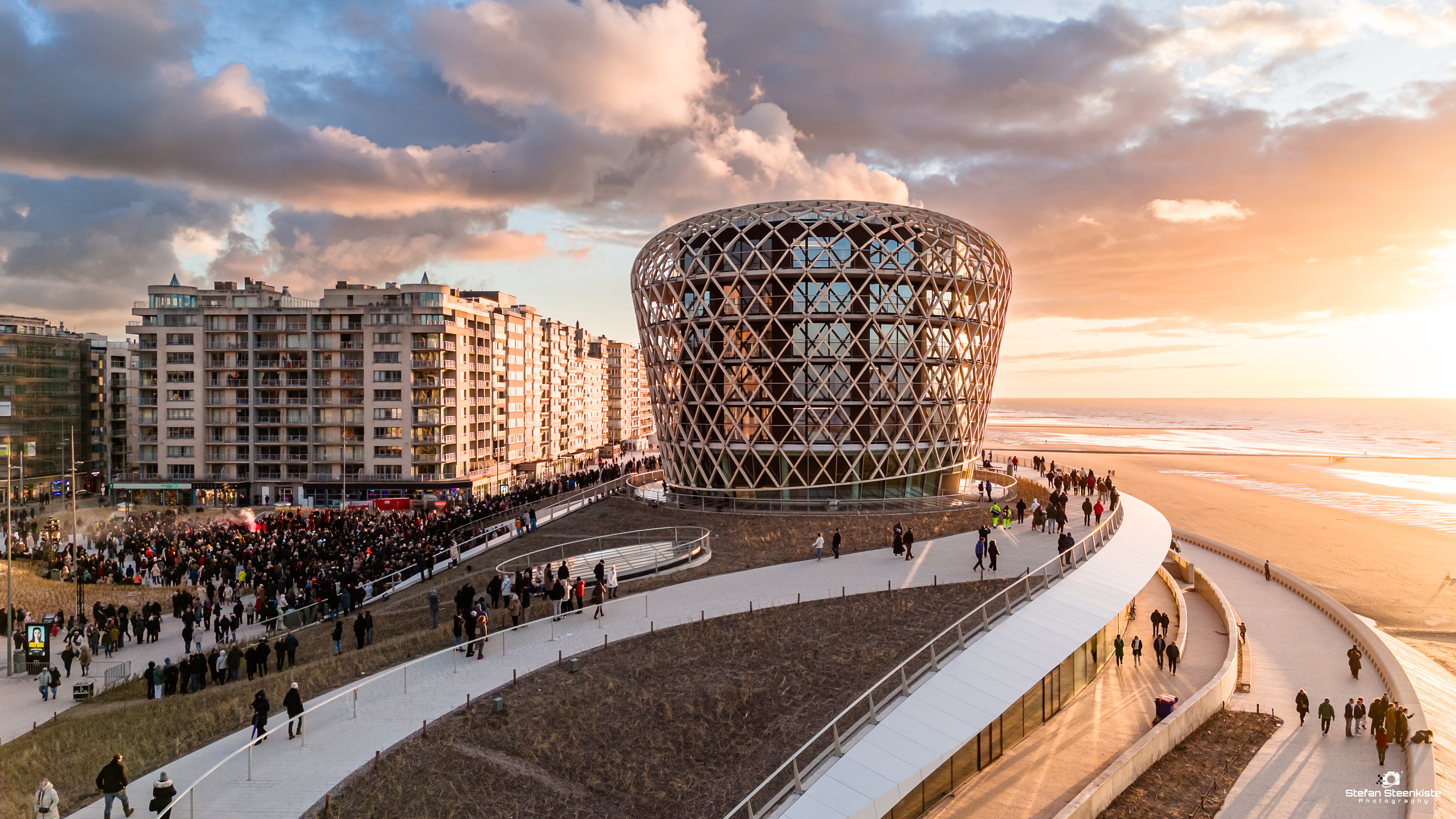
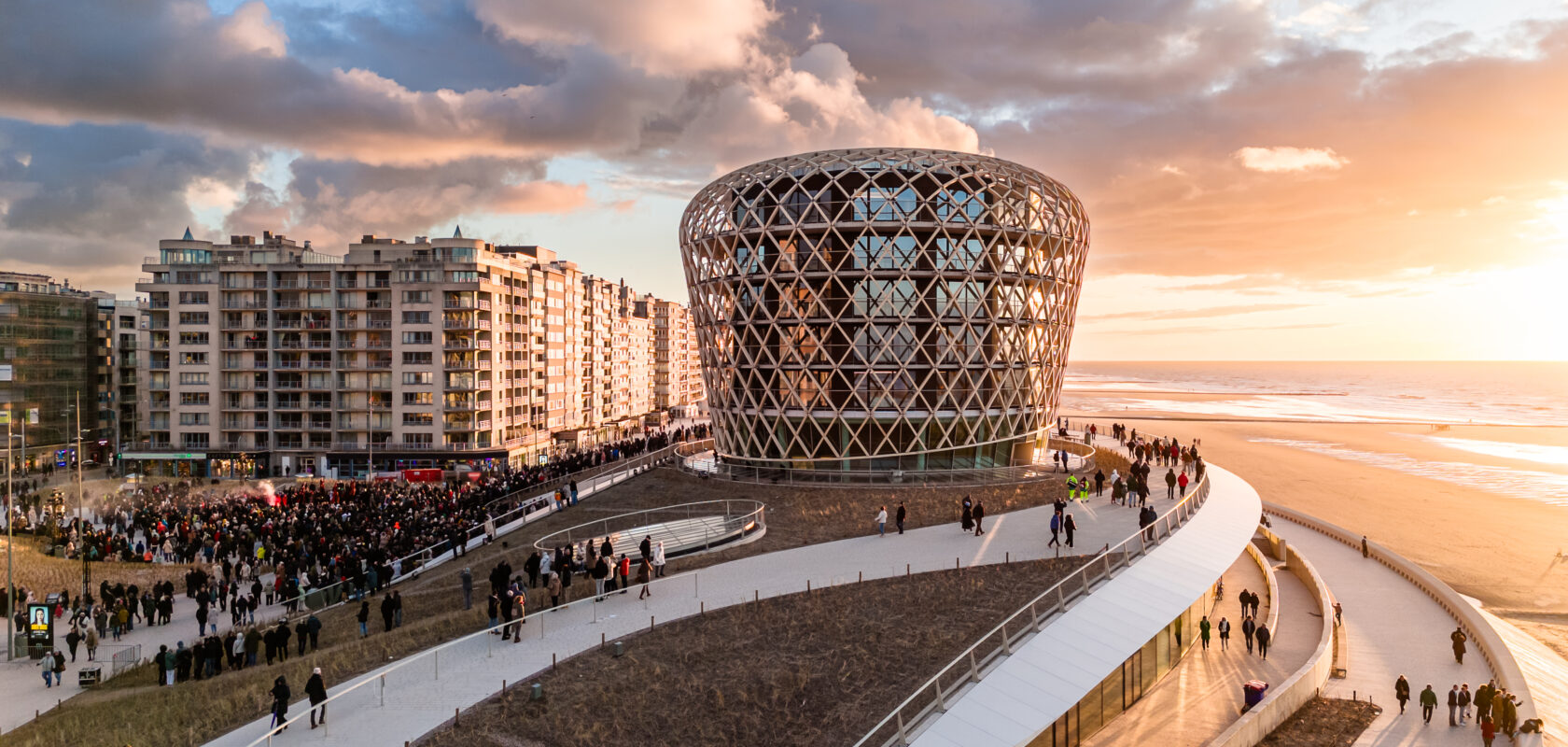
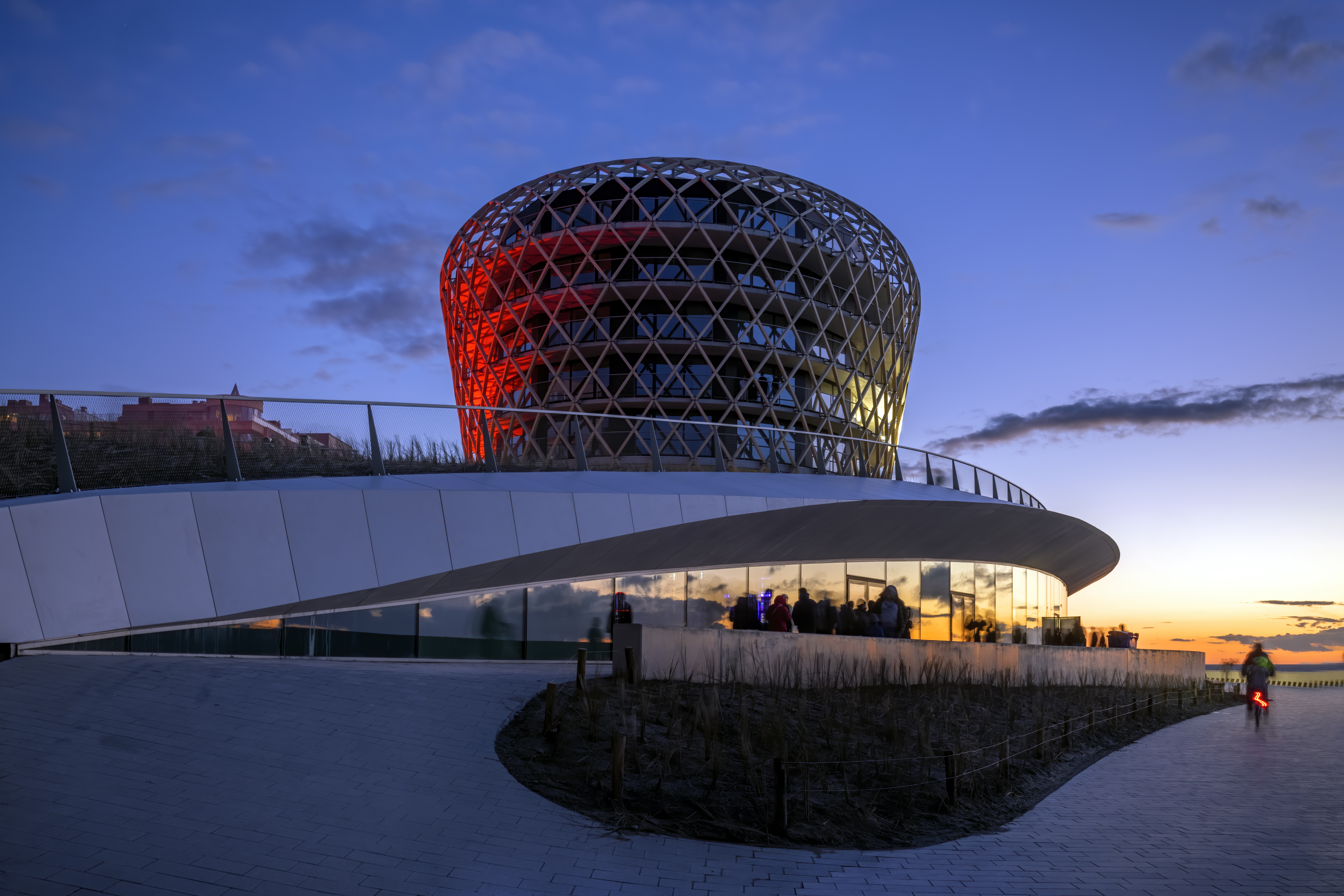
The Casino in Middelkerke is a striking architectural landmark with bold, expressive forms. This new icon on the Belgian coast houses not only a casino, but also a Michelin-starred restaurant, a beach hotel, and an event hall, all connected via an underground car park. As engineering partner in the Nautilus construction team, including ZJA, Delva and Bureau Bouwtechniek, Sweco adopted a multidisciplinary approach, covering building services and structural engineering, as well as consultancy in acoustics, fire safety, and sustainability.
Safety above all
Past and recent events repeatedly remind us that safety is not a choice – it is a responsibility. One that Sweco’s fire safety experts take extremely seriously, given the potentially life-saving impact of their work.
The event hall at SILT can accommodate up to 2,267 people. Its distinctive architectural language is fully expressed in the space: from a mezzanine at ground level housing the main entrance, the hall descends via a wide, open staircase to an underground level. The total area of 1,809 m² forms a single fire compartment, with flexible, movable partitions allowing for a wide range of configurations.
Key challenges for the fire safety study
- The underground level lies five metres below ground level, where the evacuation routes are located, while regulations prescribe a maximum height difference of three metres for halls with a capacity exceeding 500 people.
- High flexibility in layout, compartmentation, and occupancy resulted in numerous possible scenarios.
- Potential fire load beneath the mezzanine.
- Limited smoke buffering capacity due to the mezzanine and the acoustic ceiling structure. Sweco was also the acoustic consultant for SILT.
- Critical requirements regarding pressure management during smoke extraction and the guaranteed operability of evacuation doors.
Fire safety strategy
Sweco submitted a robust and well-substantiated deviation request, supported by a clear fire safety strategy. Our fire safety engineers analysed multiple scenarios using advanced CFD simulations.
- Strategy objective
To demonstrate safe evacuation and safe intervention by the fire brigade, despite the event hall floor being five metres below ground level.
More specifically, prove that the Available Safe Escape Time (ASET) is larger than the sum of the Required Safe Escape Time (RSET) and the Safety Factor (SF) – or, ASET > RSET + SF. - Design fire assumptions
- Category 1 fire (according to NBN S21-208-1),
- Maximum total heat release rate of 4,5 MW (of 500 kW/m²),
- Fire development following a ‘fast’ α.t² growth curve.
- Parameters of the fire scenarios
- Variable room layouts using movable partitions
- Fire locations at different levels
- Maximum occupancy and worst-case smoke development scenarios
- Smoke and heat extraction (SHEV)
Based on these scenarios, the required smoke and heat extraction strategy was defined.
With special attention to ensuring optimal performance across all possible hall configurations.
Performance-based integrated design solutions
Smoke and heat extraction (SHEV)
A high-performance SHEV system significantly increases the available evacuation time (ASET). A mixed system was designed, combining mechanical smoke extraction with 80% mechanical air supply and 20% natural air intake. This hybrid air supply system is self-regulating and prevents underpressure exceeding 60 Pa, ensuring that emergency doors can always be opened without resistance. Manual smoke extraction is also provided to allow de-smoking of the hall following an intervention.
Depending on the hall configuration and fire location, specific SHEV components are activated, including smoke curtains and a dedicated extraction system beneath the mezzanine.
Fire detection and alarm
Automatic fire detection is provided using point detectors installed both above and below the slatted ceiling. This enables rapid fire detection and ensures the timely activation of smoke extraction and evacuation procedures.
Organisational measures
For certain configurations, approved operational procedures are implemented. These include staff training to ensure that specific actions are carried out correctly and promptly in the event of an incident.


Side view: sight length – scenario “Fire in the event hall” (time in seconds)
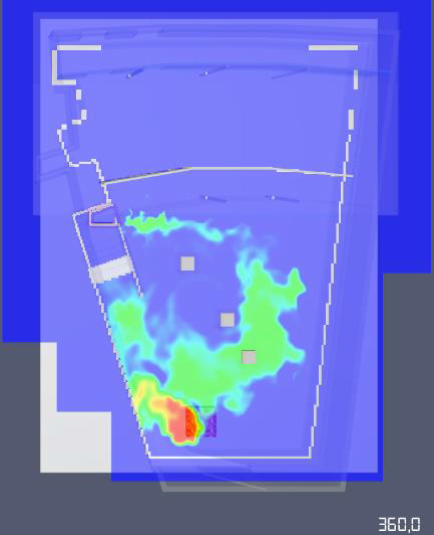
Top view: sight length – scenario “Fire in the event hall”, 2.5 metres above Level −1 (time in seconds)
Intensive coordination between Sweco’s fire safety specialists, the wider design team, and the authorities allowed the project’s striking architectural design and maximum flexibility to be reconciled with stringent fire safety requirements. Through advanced simulations, a robust smoke control concept, and clear operational procedures, safe evacuation and fire brigade intervention were ensured—despite significant deviations from prescriptive regulations.
With its well-founded deviation request for the SILT event hall, Sweco has delivered a reference project for future underground or multifunctional event venues.
photos ©stefansteenkiste and ©LilianJacobs – simulations ©Sweco
Other news

Making CCS Work: Insights from Real Industrial Projects
Read more

New national hockey stadium ready for the 2026 World Cup
Read more

UZ Gent is building the care of tomorrow with Project U
Read more