
Sweco Belgium
No-nonsense techniques for quality, uninterrupted care at CH Les Viviers
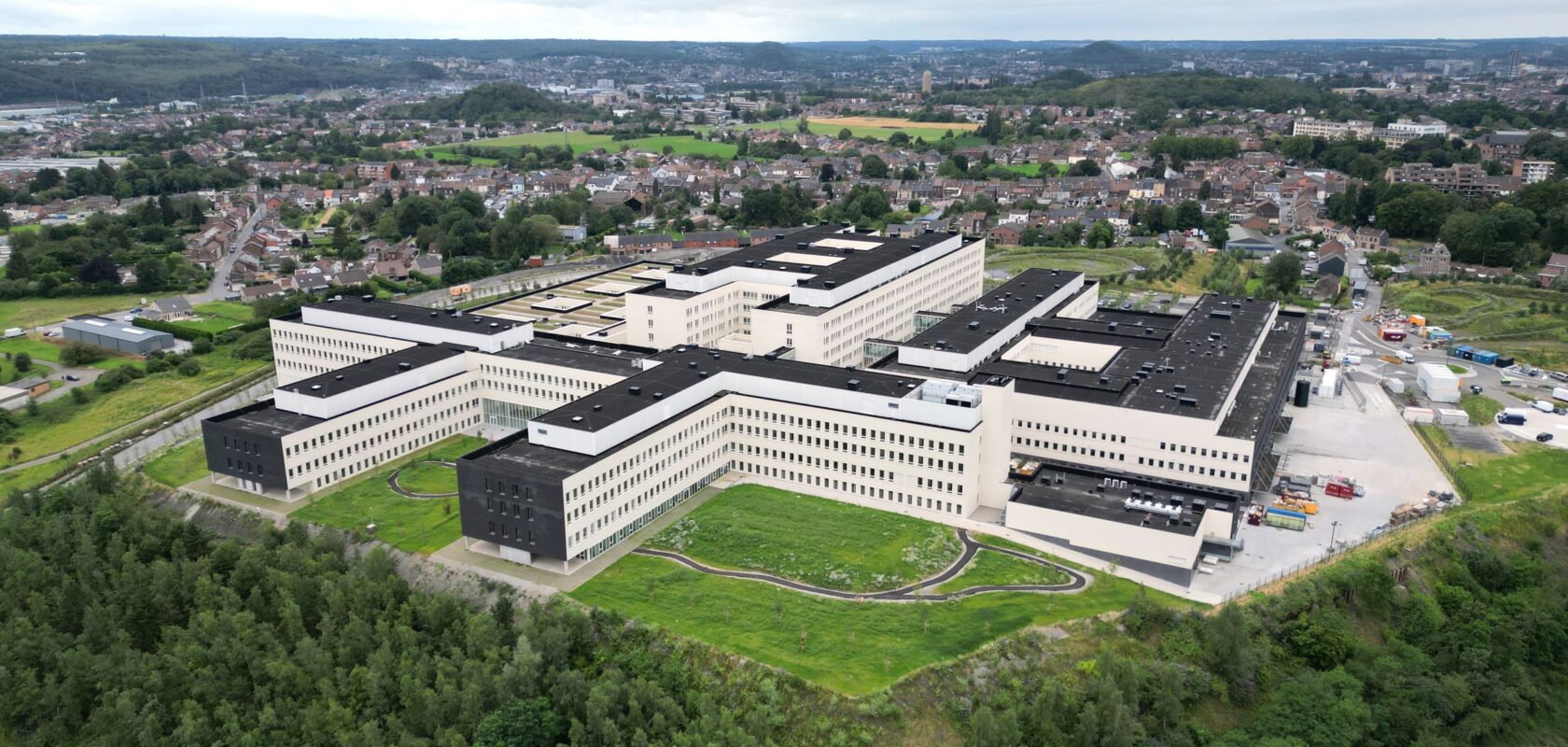
CH Les Viviers is the largest non-university hospital in the country. As the designer of this healing environment, Sweco, in collaboration with Réservoir A, is proud to highlight some key concepts. Read our blog articles on the design of the healing environment and the general design approach of this exceptional project.
The technical installations of CH Les Viviers form the beating heart of the hospital, often invisible to its users. In a healing environment, these installations are crucial for ensuring uninterrupted care. Sweco’s technical engineers face an additional challenge due to the constant evolution of the medical sector. Beyond reliability, flexibility and scalability are key parameters.
The installation concept for CH Les Viviers reflects these needs, combining proven and reliable technologies with innovative solutions that anticipate future developments. At the same time, we adhere to the budgetary framework imposed by the funding authorities. We call this a no-nonsense approach or “design to budget.”
CH Les Viviers presented several challenges, partly due to the scale of the project and partly due to its location atop a slag heap with a network of mining tunnels below.

Installation Concept with a Focus on the Energy Transition
For heating and cooling, we explored various geothermal options:
- The ‘classic’ closed-loop geothermal system based on Borehole Energy Storage (BES).
- The possibility of using water from the abandoned mine tunnels beneath the site as an energy source.
- Utilizing a deep (>2 km) aquifer with a constant temperature of 70°C as a source for heating and absorption cooling.
A test drilling revealed that due to unknown mine tunnels beneath the site, a BES field would be too risky and therefore not a viable option. Similarly, the unpredictability of the underground tunnels made the use of mine water impractical. A deep aquifer, in terms of temperature stability and sustainability, remains an excellent option. However, its high investment cost and excessive available capacity for just the hospital require a broader approach. This solution would need to be considered on a larger scale, potentially involving government or private partners. In such a scenario, the aquifer could serve as the foundation for a district heating network, with the hospital as one of its users—an opportunity for a broader societal discussion.
During the design phase in 2014-2015, we chose a scenario that accounted for the energy transition as much as possible at a time when “full electric” was not feasible. The system includes low-temperature heating and high-temperature cooling. Heating is provided by two gas-fired boilers, while two additional gas-fired boilers are dedicated to steam production and serve as backup for heating via a steam-to-water heat exchanger. Cooling is managed by three water-cooled chillers in combination with cooling towers.
Heat pumps facilitate direct exchange between cooling and heating during winter and transitional seasons, optimizing energy consumption. When outdoor temperatures are sufficiently low, a dry cooler enables free cooling. Additionally, two cogeneration units simultaneously generate heat and electricity.
We also optimized insulation and airtightness within the constraints of a large-scale project.


Climate Control Optimized for TCO
A well-thought-out distribution of air handling units minimizes their number and reduces the Total Cost of Ownership (TCO). Critical departments have dedicated air handling units, while less critical areas are served by central air handling systems with main distribution routes, incorporating redundancy. Non-critical departments use heat wheels for energy recovery, reducing the need for (steam) humidification and lowering overall energy consumption.
Where possible, heating and cooling are provided via climate ceilings in patient rooms, offices, and consultation rooms. Depending on comfort requirements, other areas are climatized via air handling, fan coil units, or other systems. For operating rooms, the hospital opted for a differentiated approach: five rooms feature an ISO5 unidirectional airflow plenum, while the remaining rooms utilize a dilution-based air handling system that guarantees ISO7 classification.
Climate Control Optimized for TCO
A well-thought-out distribution of air handling units minimizes their number and reduces the Total Cost of Ownership (TCO). Critical departments have dedicated air handling units, while less critical areas are served by central air handling systems with main distribution routes, incorporating redundancy. Non-critical departments use heat wheels for energy recovery, reducing the need for (steam) humidification and lowering overall energy consumption.
Where possible, heating and cooling are provided via climate ceilings in patient rooms, offices, and consultation rooms. Depending on comfort requirements, other areas are climatized via air handling, fan coil units, or other systems. For operating rooms, the hospital opted for a differentiated approach: five rooms feature an ISO5 unidirectional airflow plenum, while the remaining rooms utilize a dilution-based air handling system that guarantees ISO7 classification.

Reliability at the Core of Water and Energy Management
The hospital is directly powered by the Elia transformer station in Gilly, with two separate parallel feeders ensuring high reliability at the grid level.
Three emergency generators, each with a capacity of 1,500 kVA, provide internal electrical redundancy. They can supply emergency power to the entire hospital except for part of the cooling system. Each building section is reinforced with its own medium-voltage substation, redundant transformers, main low-voltage switchboards, and an uninterruptible power supply (UPS) system. A high-performance and redundant control system monitors and manages all electrical installations.
The hospital also features high-performance low-voltage systems such as a nurse call system, extensive access control, CCTV surveillance, and ICT infrastructure. For the central server room (MER room), the hospital opted for prefabricated containers on the logistics platform, ensuring autonomy and flexibility for future ICT developments.
Water is just as crucial as electricity in a healing environment. The hospital has two storage tanks of 100 m³ each, ensuring approximately eight hours of autonomy at peak consumption in case of a public water supply failure. Domestic hot water production is decentralized per building. Toilets are flushed using rainwater, which is treated and filtered before use via flush mechanisms.

Ready for the Future
Hospitals are among the most complex types of buildings. New hospital projects can take up to a decade from preliminary design to completion. Upon delivery, the design team is expected to provide a high-performance building—one that meets comfort, energy, and efficiency standards at the time of commissioning and for many years afterward. Despite the absence of a crystal ball, the design team must anticipate future needs and ensure the building remains adaptable to evolving circumstances.
By combining proven technologies with innovative solutions, our technical experts have developed an installation concept that is prepared for the energy transition and other challenges the future may bring.
Other news

The parking ladder: take control of parking policy, one step at a time
Read more

Approved by children: designing safe school environments
Read more

More eyes at sea: Sweco designs offshore platform concept for marine monitoring and enforcement in the North Sea
Read more