
Sweco Belgium
Revisiting Grand Hôpital de Charleroi 15 months after inauguration – part 1
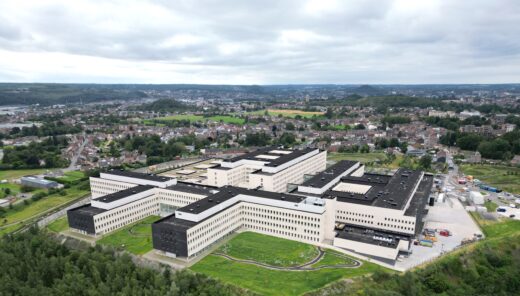
The Viviers site is now fully operational. If you were to describe the Grand Hôpital de Charleroi as it is expressed today in this new hospital, how would you define it in a few words?
Gauthier Saelens: The new hospital is truly the flagship of our organisation. We still operate two smaller hospital sites: Notre‑Dame, which continues to host activities such as the polyclinic, elderly care and mental health services, and the Charles‑Albert Frère Centre, which is dedicated to child psychiatry. However, all acute, technical and medico‑technical activities are now concentrated here, on the Les Viviers site. That is why I refer to it as our “flagship”: it has become the centre of gravity for the entire organisation. This does not mean that the other sites are overlooked—quite the opposite. They remain essential components of our overall healthcare ecosystem.
The development of the new hospital was always presented as a lever for the broader transformation of the Grand Hôpital de Charleroi. To what extent has this project reshaped the institution’s identity?
G.S.: Simply bringing the majority of our activities together on a single site represents a profound organisational transformation. In the past, our teams were spread across several locations; today, they meet, collaborate and even share informal moments together in one place. This concentration has fundamentally changed the way we work together. Managing five separate sites, each with its own specificities, is very different from managing one large central hospital supported by two smaller facilities. To give a sense of scale: out of our 4,800 employees, around 4,200 now work here at Les Viviers. It represents a complete shift in paradigm, with much stronger synergies between medical, surgical and nursing disciplines.
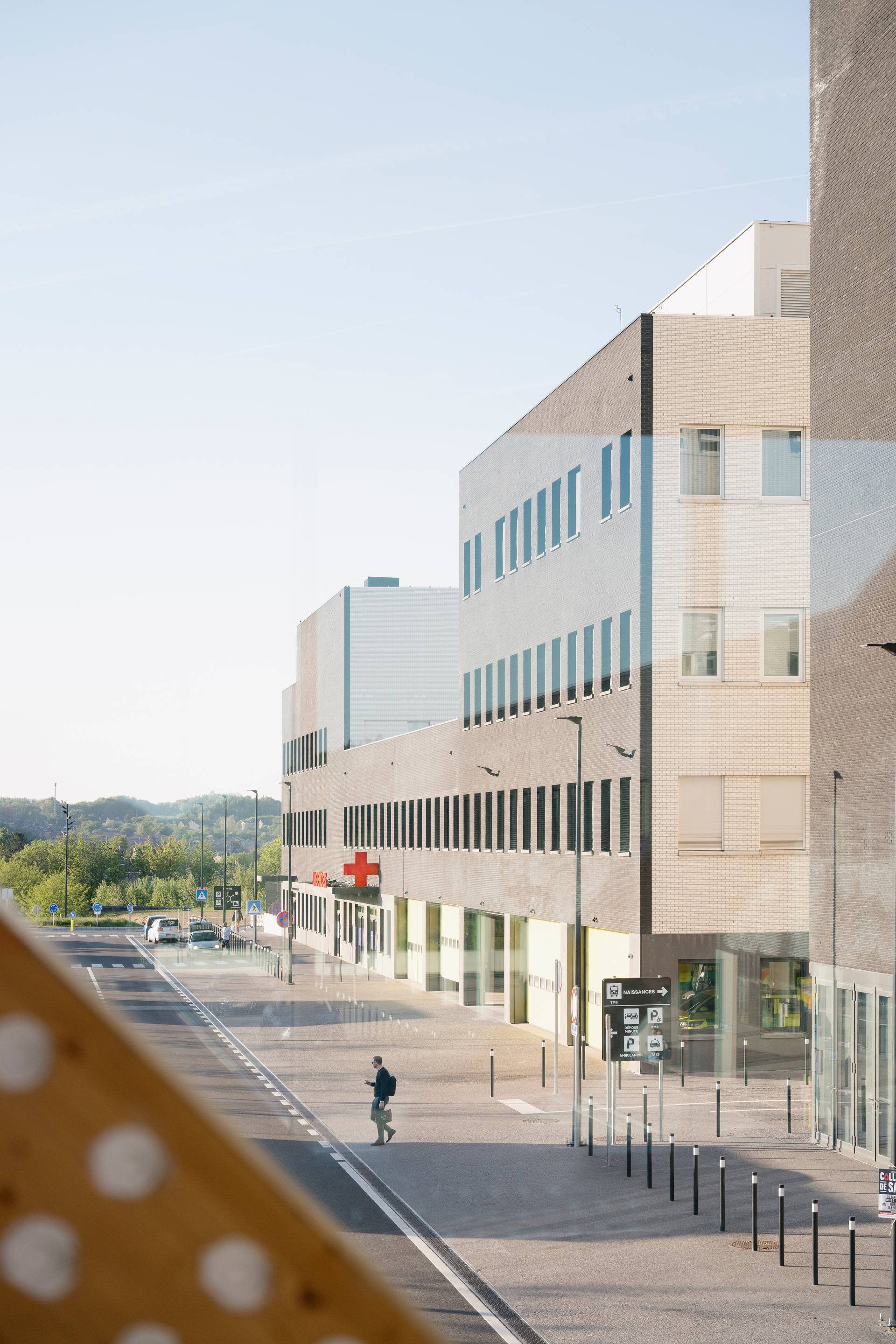
This consolidation of activities was driven by a strategic vision from the outset. What benefits are you seeing today?
G.S.: The primary benefit—and the one we were seeking above all—is an improvement in the quality of care. When a patient arrives in the emergency department with a complex condition, all the necessary specialists are now on site, within the same building. In the very first weeks alone, we encountered concrete situations where this proximity quite literally saved lives. The second benefit is comfort. Patients now enjoy more spacious rooms, better‑designed circulation areas and a calmer, more reassuring environment. The third contribution is sustainability. Compared with our buildings from the 1960s, we have made major advances in energy performance: rainwater harvesting, improved insulation and a wide range of energy‑saving systems. Finally, there is the economic dimension, which is still in progress. At present, we are slightly over‑consuming both human and material resources as we finalise the organisation. The objective, however, is to achieve greater efficiency fairly quickly—without any job losses—through a natural adjustment of staffing structures.
Has human resources management evolved as a result of this project? Have you noticed an impact on the site’s attractiveness, particularly for medical staff?
G.S.: The impact was immediate. Several months before the opening, young doctors were already telling us they were applying specifically because of the new hospital—not only because it is new and visually appealing, but above all because everything is concentrated in one place: all disciplines, all pathologies, all services. This creates a rich and stimulating working environment. For nursing staff, the effect has been more gradual, as teams were significantly disrupted: changes in shift patterns, the merging of services, new protocols, and so on. That said, the situation is now stabilising, and I am convinced that this stability will progressively enhance the hospital’s attractiveness for nurses and other paramedical professions.
You often emphasise the hospital’s role as a key player within its community. How does the Viviers site help to renew the hospital’s connection with the city and the wider region?
G.S.: First and foremost, we have remained in Charleroi—more precisely, we have reinvested in the eastern basin, which is our historical anchor. At the same time, we can already see the neighbourhood evolving. New roads have been built, businesses are beginning to establish themselves, and property transactions are increasing. This clearly shows that the Viviers site acts as a catalyst. It attracts people and encourages them to settle in the area—both staff members who wish to live closer to their workplace and entrepreneurs who recognise the area’s economic potential. I believe it will play a major role in transforming a zone that, until now, has been relatively underdeveloped.
The second benefit is comfort. Patients now enjoy more spacious rooms, better‑designed circulation areas and a calmer, more reassuring environment.
Gauthier Saelens, Chief Executive Officer Grand Hôpital de Charleroi
What impact has this project had on how users perceive the Grand Hôpital de Charleroi?
G.S.: In the first few weeks, the feedback was mixed. Some people felt unsettled: the hospital is much larger than what they were used to, familiar landmarks have disappeared, and parking, circulation routes and registration processes have all changed. For long‑standing, loyal patients, this can be quite challenging. On the other hand, others—often younger patients or those new to the hospital—found the new facility remarkable. It’s important to recognise that everyone is in a learning phase. Staff are learning to operate in a completely new environment, and patients are learning how to find their way around it. What we have heard time and again, however, is a sense of pride in having a hospital of this scale in Charleroi. One woman once said to me: “A hospital like this—we thought that was something reserved for Brussels or elsewhere… not here.” For me, that comment says it all.
This facility was designed to remain agile in the face of crises. Do you feel the hospital is now equipped to deal with the unexpected?
G.S.: I do believe we now have the structure in place to cope with the unexpected. Of course, we don’t know what the next crisis will be—we tend to prepare based on the last one, whether that was COVID, an economic downturn or a sudden drop in activity in a particular department. That said, I am confident in the institution’s capacity to adapt. This agility is no longer just an objective; it has become part of our DNA.
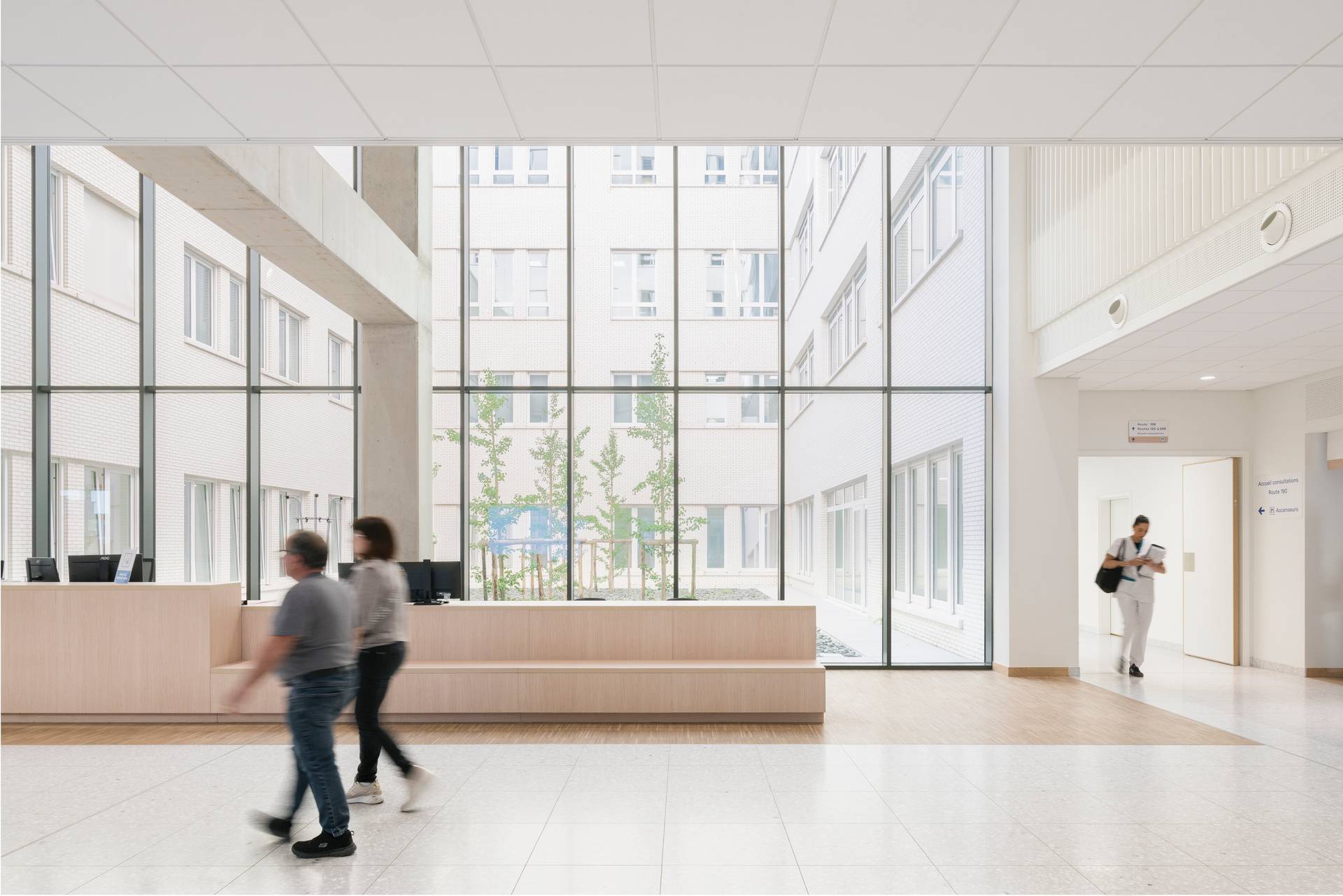
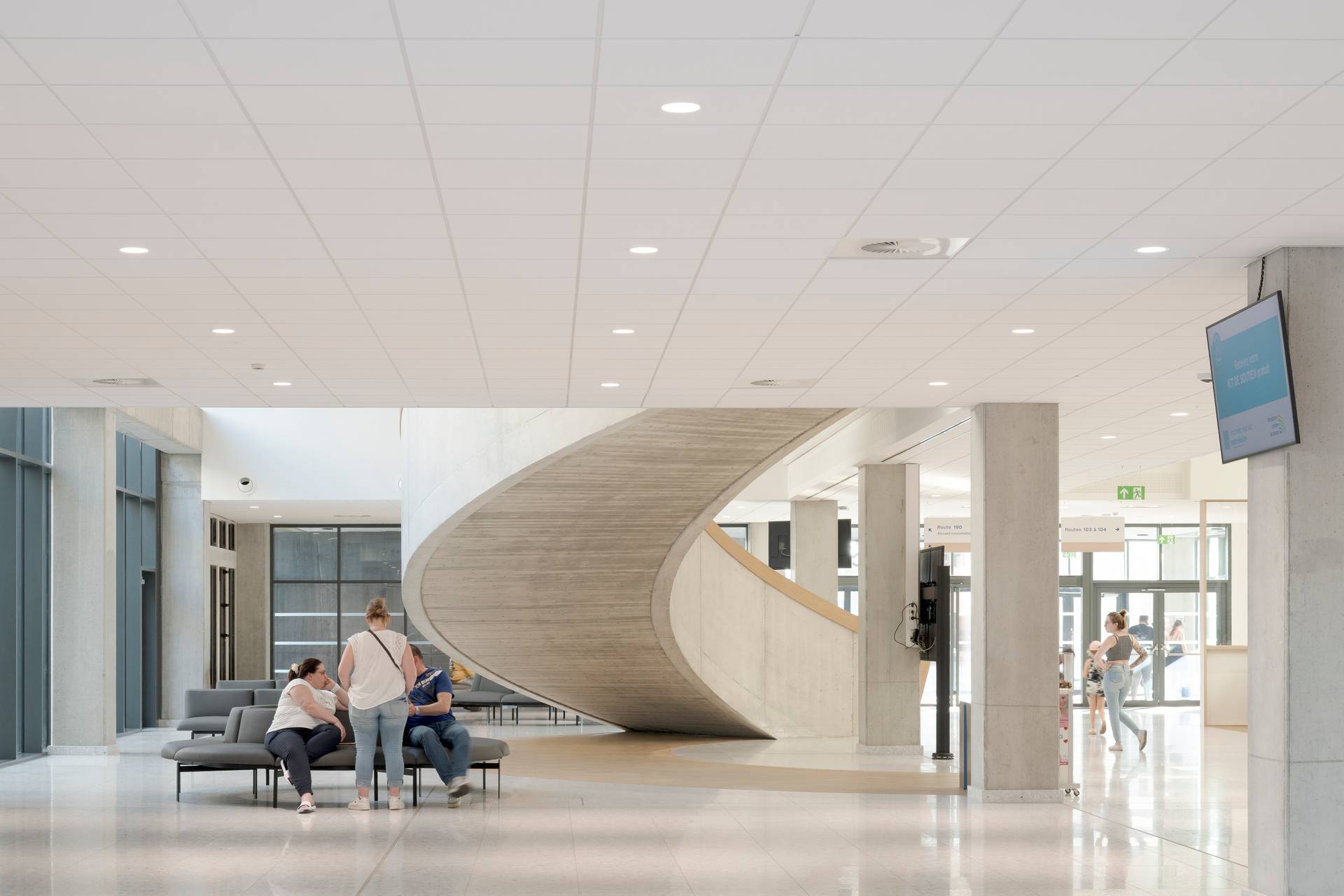
This is an extraordinary project—a professional adventure that comes along only rarely. The architecture and spatial design have a profound influence on how work is organised. We now have a remarkable facility that truly serves both patients and healthcare professionals.
Véronique Guilmot, Human Resources director Grand Hôpital de Charleroi
The architectural concept is based on a modular logic, designed to stand the test of time. How do you assess this strategy in day‑to‑day use?
G.S.: From the outset, we planned for potential extensions, particularly in areas where we anticipate future growth: chronic care, oncology, geriatrics, mental health and outpatient services more broadly. All of these scenarios were integrated into the design from the beginning. We know exactly where and how to build should we need to increase capacity in the future—the foundations are already in place.
What has been the most memorable moment for you in this decade‑long project?
G.S.: There have been many. It’s really been a succession of defining moments: the first groundbreaking, of course; the levelling of the slag heap, which truly marked the start of the project; the moment we buried a time capsule beneath the main hall, with each staff member contributing an object, sealed inside a concrete cube. A plaque now marks that spot. And then there were the four days of the move itself. Thirty ambulances, hundreds of patients transferred—mothers, newborns, elderly people, burn victims. It was an extraordinary collective effort, driven by incredible energy and solidarity. I also vividly remember the moment the funding was confirmed—that single “yes” which made everything possible. Each of these moments mattered, and taken together, they made this project a true adventure.
You also have academic and research ambitions. How does this new framework strengthen that dimension?
G.S.: It’s important to make a clear distinction: we are neither a university nor a teaching hospital, and we have no ambition to become one. That said, we are very much engaged in research. We have centres of excellence in oncology, cardiology and dermatology, to name just a few. Many young doctors today want to combine clinical practice with research without necessarily pursuing an academic career. They want to take part in studies and clinical trials, to reflect, to publish—and here they find a flexible and stimulating environment in which to do so. We certainly have fewer resources than university hospitals, but when a promising project emerges, we find ways to support it. In oncology, for example, this enables patients to access the latest therapeutic agents. That is a genuine added value.
In 2017, you called for moving beyond hospital‑centrism. In 2021, you spoke about the need to structure cooperation with local stakeholders. Now, following the opening of this new facility, what do you see as the next step?
G.S.: We didn’t just talk about it—we acted. I have a deputy specifically dedicated to these issues, who works on a daily basis to build links with nursing homes, home‑care services and the disability sector. We have put protocols in place, including digital ones, to ensure continuity of care. We have also welcomed some of these partners into our Notre‑Dame site. We work closely with the CPAS (Public Social Welfare Centre), mental health services, disability sports organisations and social support services. All of this aligns with the concept of “positive health”, which we have been promoting for several years: viewing the patient not only from a medical perspective, but also within their social, family and professional environment. This approach is not yet fully funded, nor is it always sufficiently recognised, but we are convinced it is the right direction. And whenever we have the opportunity to move forward along this path, we do.
A more extensive version of this interview was published before in Architectures Hospitalières.
Copyright images: Klaas Verdru – principal image: Sweco
Other news
Revisiting Grand Hôpital de Charleroi 15 months after inauguration – part 2
Read more

Sweco welcomes CONIX RDBM Architects: cross-innovation and a holistic approach for impactful design
Read more
Revisiting Grand Hôpital de Charleroi 15 months after inauguration – part 1
Read more
