Sweco Belgium
Revisiting Grand Hôpital de Charleroi 15 months after inauguration – part 2
With the Centre Hospitalier des Viviers, GHdC set out to improve the quality of care while making the organisation more efficient. Fifteen months later, we return to the Grand Hôpital de Charleroi to speak with various stakeholders. What impact has the Viviers site had on the hospital and its medical project? How do those involved—and the end users—look back on the design and delivery process?
Today, we speak with David Van Drooghenbroeck, director of institutional affairs at the Grand Hôpital de Charleroi (GHdC). In part 1, managing director Gauthier Saelens shared his experience..
Can you trace the history of the Grand Hôpital de Charleroi project? When did the initial reflections begin, and what were the key milestones?
David Van Drooghenbroeck: The very first institutional reflections date back to the creation of the Grand Hôpital de Charleroi in 2008. It was probably at that point that some members of the Board began to consider consolidating the five hospitals into a single site. The logic was straightforward: if we were unifying legally, why not do so physically as well? Concrete decisions were taken between late 2010 and early 2011, when the Grand Hôpital de Charleroi formally decided to build a new hospital and relocate its five sites to one location.
Which stakeholders supported the Grand Hôpital de Charleroi throughout this transformation? Are they still involved today?
D.V.D.: Projects of this scale bring together a wide range of stakeholders, both internal and external. When designing a hospital, you must anticipate how the building will evolve over decades of operation. All stakeholders needed to embrace this idea: true modernity in a hospital lies in its capacity to evolve and reinvent itself. No one can fully predict regulatory, economic or social developments. The COVID‑19 crisis reminded us how some assumptions were well founded, while others were less so. These reflections were captured in our “blue book”, a document that brought together numerous internal discussions into a set of fundamental project principles. The blue book became an integral part of the contractual framework with the project’s many partners—and all of those partners remain involved today.
What made the Viviers site the obvious choice for the new hospital?
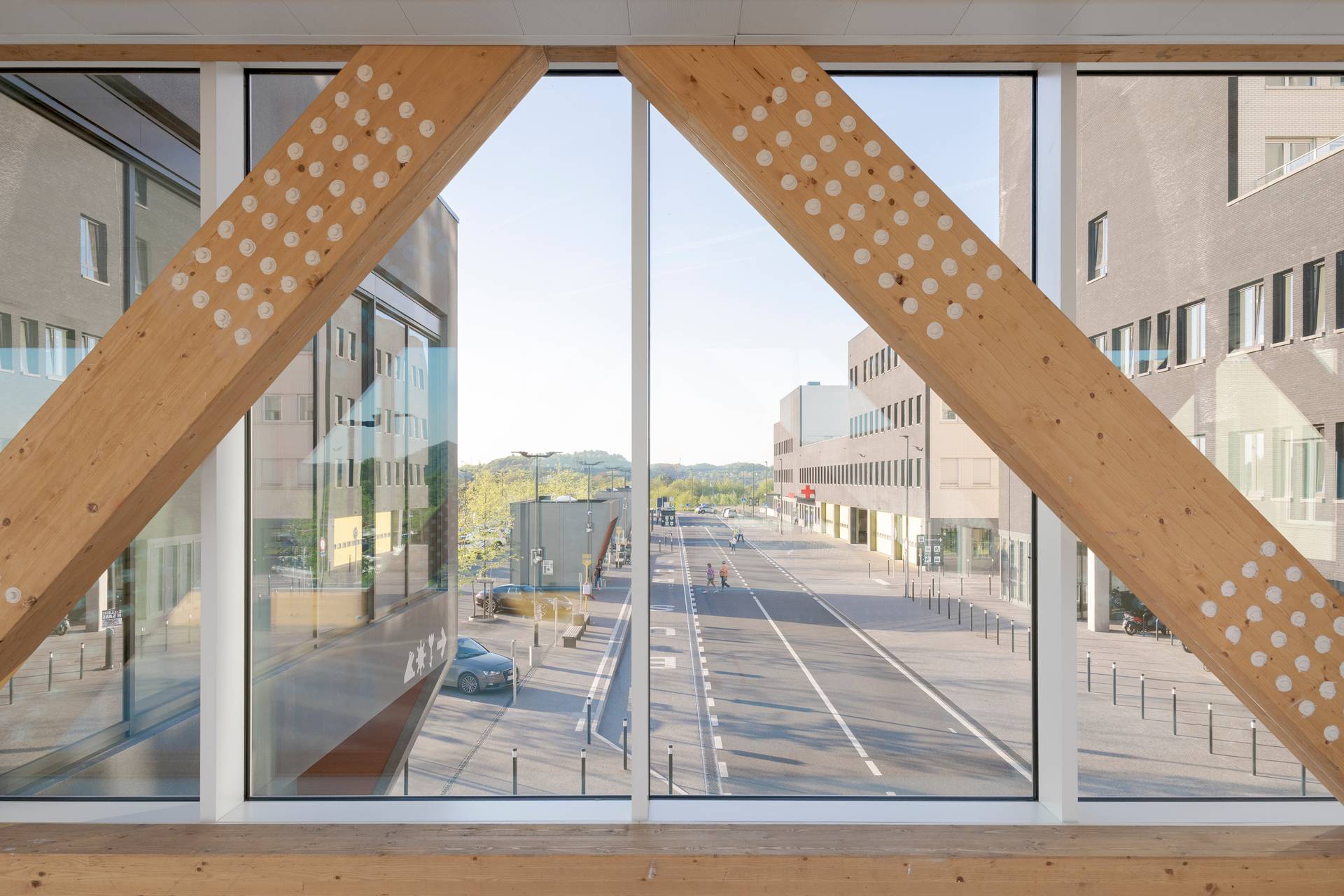
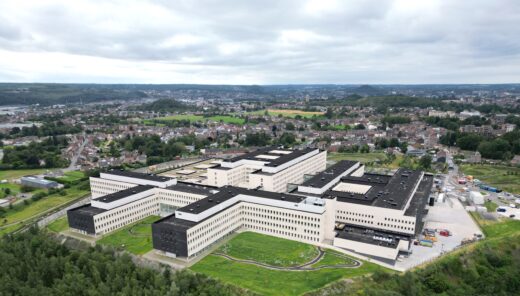
D.V.D.: Several criteria guided the decision. First and foremost, we needed a large, contiguous site: Viviers offers 17 hectares in a single plot. It is also highly accessible, located directly next to the motorway. The extension of the metro line—locally referred to as a tram—was already partially in place. The site is highly visible and well known to the local population, situated at the eastern entrance to the city. This visibility helps reduce stress for patients and visitors. From an urban‑planning perspective, it also enabled the Walloon and local authorities to identify the Grand Hôpital de Charleroi as a catalyst for urban, economic and social development in the region.
Which elements of the project designed by Sweco and Reservoir A are proving successful today?
D.V.D.: Sweco and Reservoir A responded very intelligently to our specifications. While designers propose solutions, it is the client who decides—and ultimately bears full responsibility. From the outset, we laid the foundations for genuine collaboration. We wanted an evolving building, designed according to a logic of functional “layers”, which Sweco and Reservoir A integrated perfectly into their proposal. Out of the twelve teams that responded to the public tender, the Sweco–Reservoir A partnership clearly stood out. Their team truly understood our blue book and our vision of the hospital of the future.
We wanted an evolving building, designed according to a logic of functional “layers”, which Sweco and Reservoir A integrated perfectly into their proposal. Out of the twelve teams that responded to the public tender, the Sweco–Reservoir A partnership clearly stood out. Their team truly understood our blue book and our vision of the hospital of the future.
David Van Drooghenbroeck, director of institutional affairs Grand Hôpital de Charleroi
Thirteen years for such a project—is that too long to plan and maintain adaptability?
D.V.D.: Thirteen years may seem long when compared with, say, a private housing project. But for a hospital built from scratch—154,000 m², plus 40,000 m² of parking—it is actually quite fast. Paradoxically, the real challenge is not managing the construction phase, which took five years, but managing institutional impatience. Between the closure of the programme and the hospital’s commissioning, any desire for changes must be resisted. New ideas emerge every day in a hospital environment. We anticipated this and agreed that structural changes could only be made after opening. This is where the building’s capacity to evolve becomes absolutely essential.
In terms of quality of working life, what concrete improvements has the new hospital delivered for staff and patients?
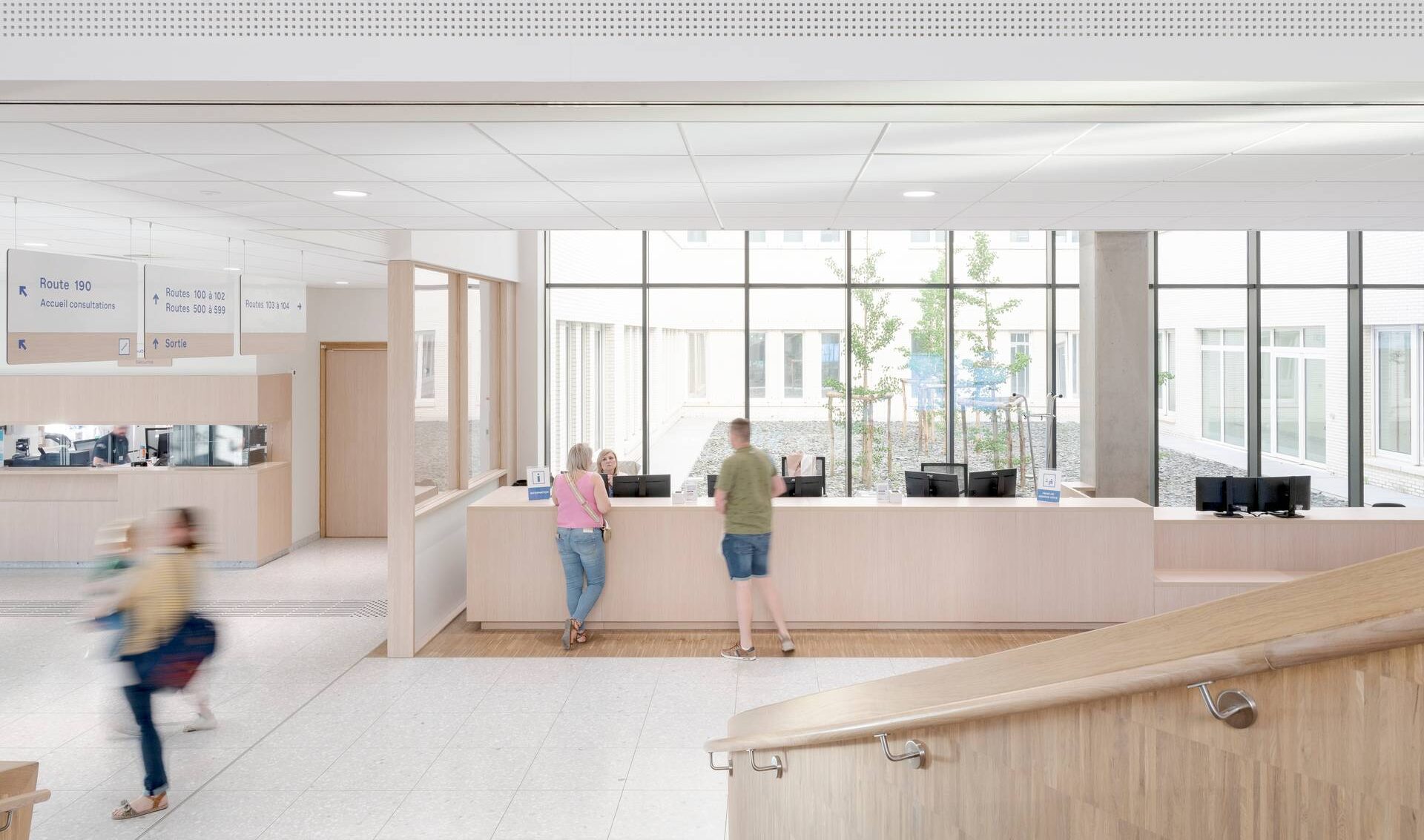
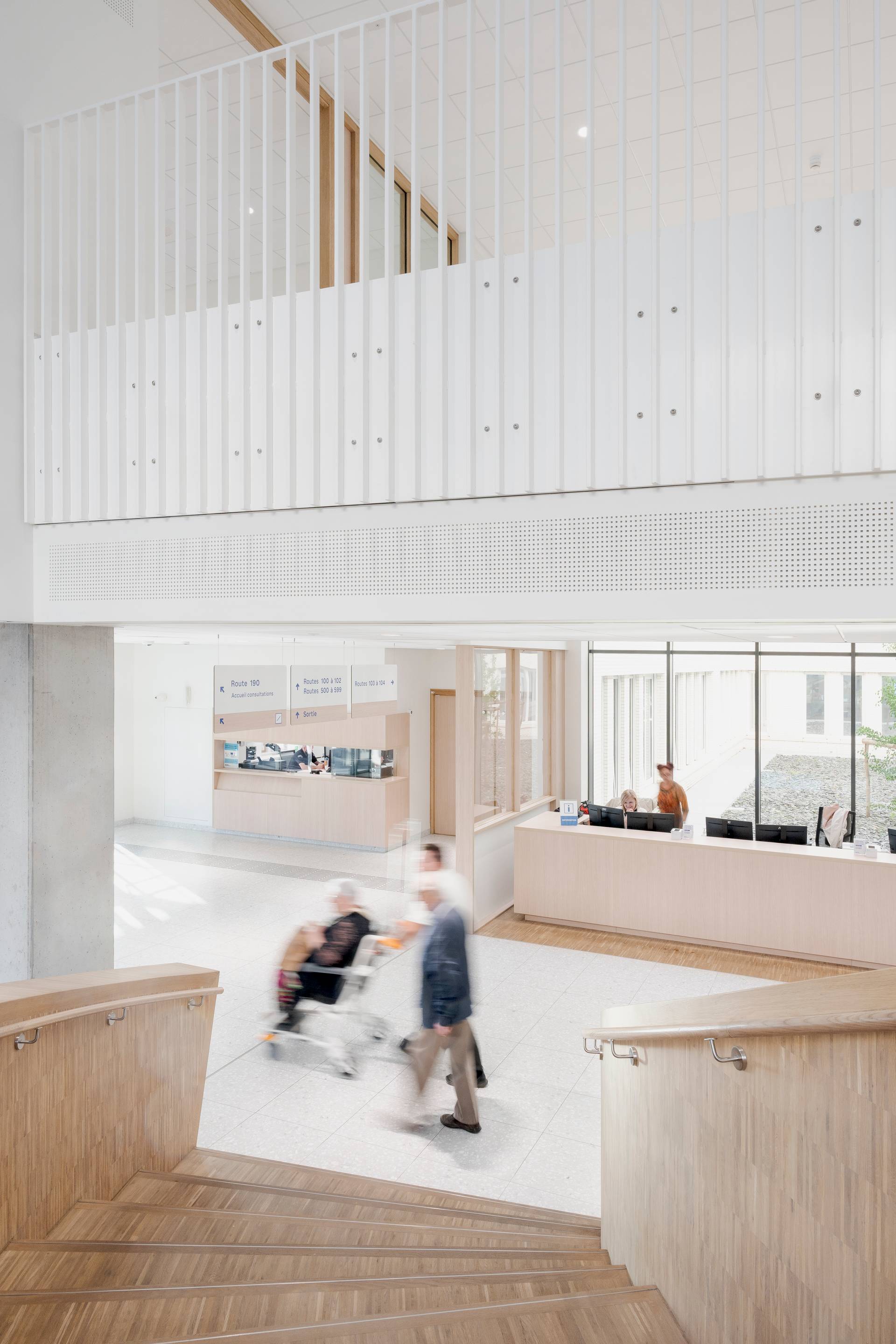
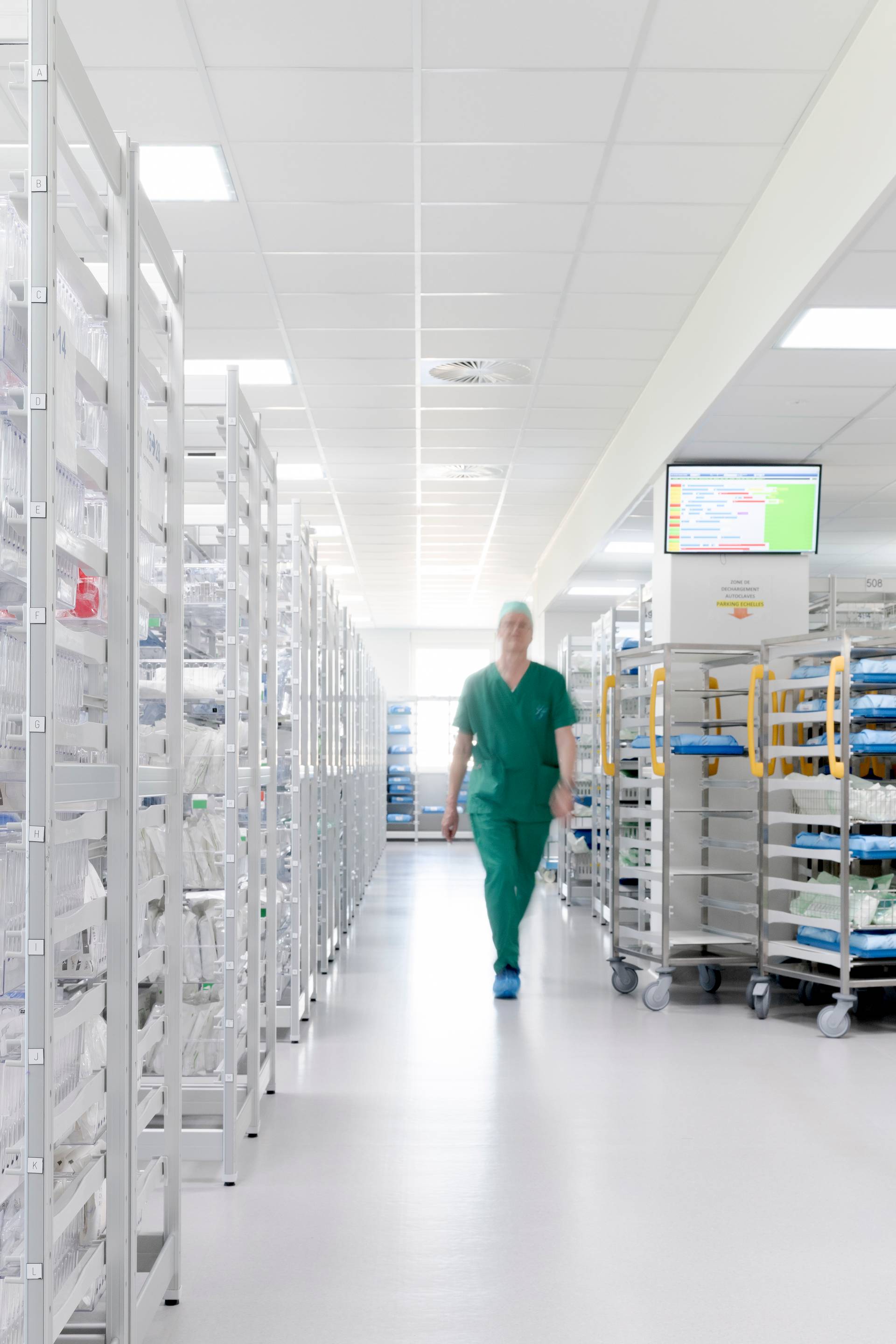
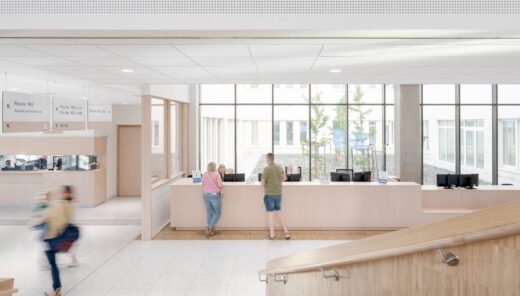
D.V.D.: From the moment they arrived, staff noticed the abundance of natural light throughout the building. This transforms the atmosphere, encourages interaction and facilitates communication. We also created pleasant shared spaces, such as the staff restaurant, which has become a real social hub. For patients, care units were designed around a care‑centre model. Rooms are comfortable, bright and well equipped, most with companion beds, hoists and spacious bathrooms. The use of wood, colour and thermal comfort all contribute to a calming environment. For caregivers, this translates into improved functionality, smoother circulation and greater working comfort. In highly technical areas such as intensive care, operating theatres and medical imaging, the equipment is state‑of‑the‑art and space is optimally designed. Compared with our former sites, the difference is striking.
Feedback on the new hospital has been overwhelmingly positive. The building is attractive, and there is a broad consensus on the quality of the spaces and the abundance of natural light. Teams are very satisfied with their working environment. I also speak regularly with nurses, and they are delighted with their working conditions.
Manfredi Venturi, medical director Grand Hôpital de Charleroi
What adjustments were required once the Viviers site became operational?
D.V.D.: The first related to mobility—and that was inevitable. From the very first day, we realised that traffic flows needed to be rebalanced. We implemented the necessary measures with a clear objective: ensuring that every user—patients, visitors and staff—can reach the right place, at the right time, without difficulty. This is a fairly typical adjustment for a project of this scale. Even the best mobility studies only reveal their limits once the building opens and real‑world use begins. Usage patterns evolve. We have now moved beyond the learning phase and are pleased with how Viviers is being experienced by its users.
If the hospital had existed during the COVID‑19 crisis, how would that have changed your management?
D.V.D.: My first thought is the emergency department. We designed it with critical and evolving scenarios in mind. I recall a meeting during which we radically revised the initial plans after seeing helicopters transport victims of the Brussels attacks to the burns unit. That day, we ensured the emergency garage could be rapidly converted into a care area capable of absorbing a large influx of patients. This foresight proved invaluable. Just five months after Viviers opened, a major residential fire triggered a hospital emergency plan, with 25 intoxicated patients arriving on a Saturday night. It was a real stress test—and it worked perfectly. Flow management during a pandemic is another key aspect. We worked in advance with hospital hygiene and internal medicine teams to anticipate the separation of patient flows. Three intensive care units located on the same floor can operate entirely independently. The organisation of four buildings, each with its own surrounding road infrastructure, also allows differentiated access during a health crisis. In terms of aerodynamics and air treatment, we opted for maximum safety.
What lifespan do you foresee for this building?
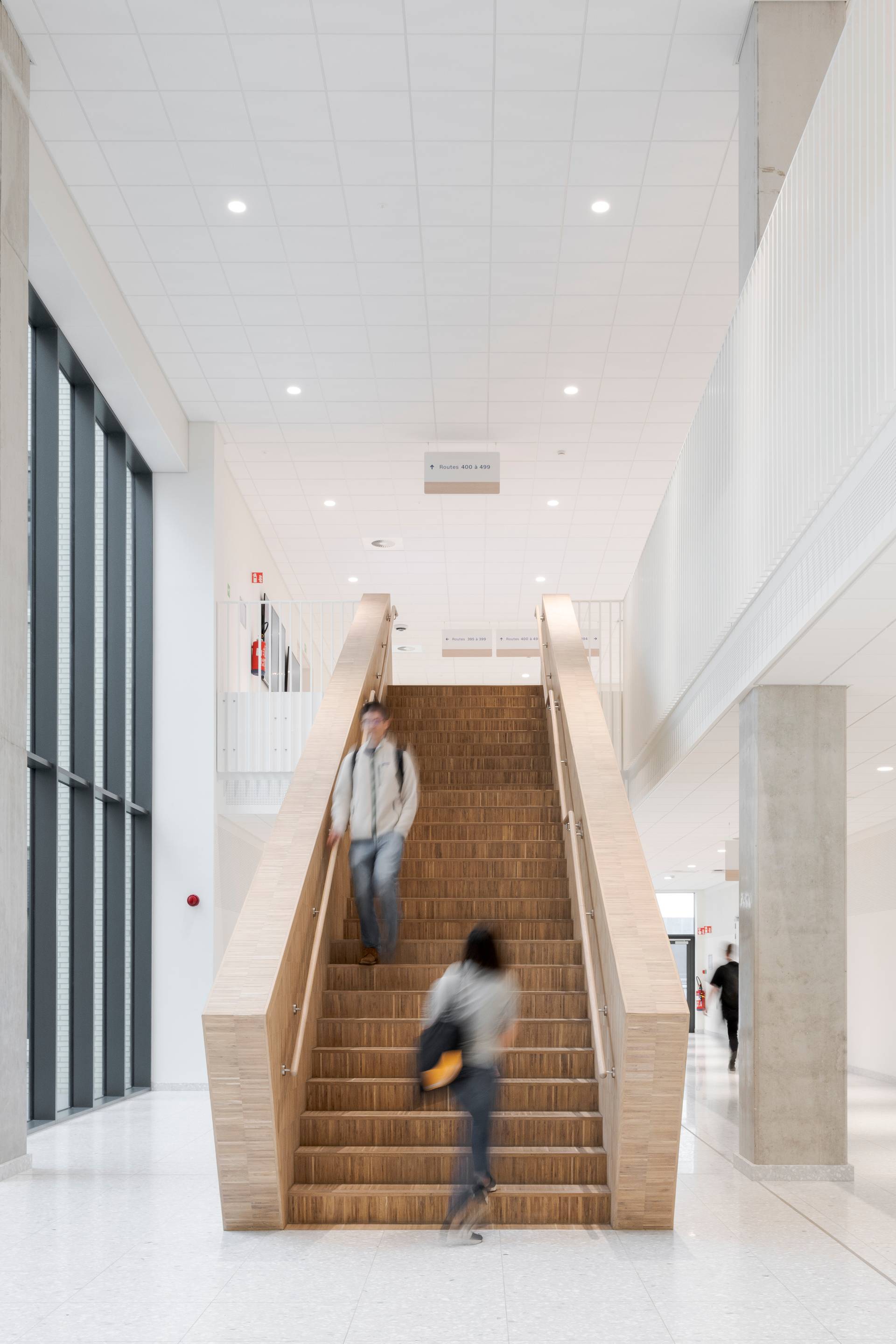
D.V.D.: Structurally, the building could remain unchanged for around 70 years. Functionally, however, it will evolve much sooner—that is inevitable. Take the operating theatres, for example: they will need to evolve significantly and probably be transformed within twenty years. Technically, this evolution has already been anticipated. Equally important is the clear organisation of maintenance, which is essential to keeping the building in optimal condition. The Viviers hospital is a living building—designed and constructed to adapt to whatever the future may bring.
What lessons have you drawn from this experience, and what advice would you give to other institutions embarking on a similar project?
D.V.D.: Our Board of Directors was convinced from the outset and never wavered. Doubt opens the door to resistance—whether internal, political, regulatory or budgetary. This unwavering commitment was one of the project’s greatest strengths. We also benefited from exceptional stability, with the same steering team and management board in place throughout the project’s duration. This is far from common. That stability was made possible by clear objectives and governance capable of navigating inevitable moments of complexity.
A more extensive version of this interview was published before in Architectures Hospitalières.
Copyright images: Klaas Verdru
Other news
Revisiting Grand Hôpital de Charleroi 15 months after inauguration – part 2
Read more

Sweco welcomes CONIX RDBM Architects: cross-innovation and a holistic approach for impactful design
Read more
Revisiting Grand Hôpital de Charleroi 15 months after inauguration – part 1
Read more