High Voltage (Energy) Systems
Baekeland: 380/150 kV high-voltage substation accelerates the energy transition
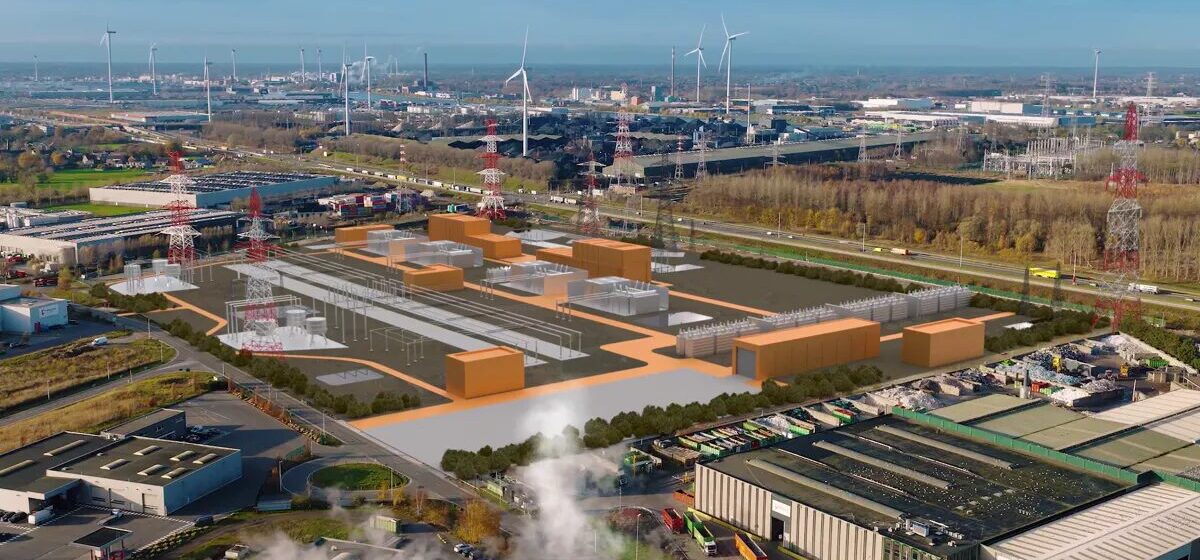
With the construction of the Baekeland high-voltage substation (380/150 kV) in the Port of Ghent, significant investment is being made in strengthening the Belgian transmission grid. This new hub makes it possible to transport large volumes of energy safely, reliably, and efficiently, playing a key role in integrating renewable energy and electrifying industry in line with European climate targets.
- Expertise:
- Energy solutions
- Client
- TM Spie – Jan De Nul
- Location
- Port of Ghent
- Services
- Detail engineering, project management, 3D BIM design, permitting, inventory, support during construction
Backbone of the Belgian electricity grid
Sweco was appointed by the construction consortium Jan De Nul – SPIE for the detailed engineering within the EPC package for this new 380 kV infrastructure. Within this ambitious project, Sweco translates complex technical requirements into an integrated and executable design, ensuring seamless coordination between all disciplines.
With Baekeland, we are helping to build the backbone of tomorrow’s electricity grid. This is a key installation that prepares our energy system for exponentially growing demand. By maximally integrating civil, high-voltage, and protection expertise, we are delivering a powerful and intelligent system capable of managing peak loads and supporting industrial growth. The Port of Ghent is undergoing a fundamental transition, and direct 380 kV connections are essential to enable electrification, shore power, and large-scale industrial electric applications.
Tom Lauwaert, Team Manager High Voltage at Sweco
Strategic high-voltage capacity for Ghent
The Baekeland substation is being built on a 15-hectare site along the R4 East in the Port of Ghent. Its location—between coastal areas, wind production zones, and major industrial clusters in Ghent and Antwerp—makes it a strategic node in Belgium’s electricity supply. The project foresees phased commissioning by 2030 and includes three 380 kV hybrid substations (air- and gas-insulated technology), two 150 kV substations, four phase-shifting transformers, and seven buildings, with a 10-metre green buffer surrounding the site.
Sweco ensures integrated design and constructability within EPC consortium
Within the EPC framework of the Jan De Nul – SPIE consortium, Sweco provides detailed engineering expertise and design coordination for the Baekeland project, in close alignment with civil works (by Jan De Nul) and electrical installations and telecommunications (by SPIE). The focus is on the integrated design of the 380/150 kV architecture, managing interfaces between civil and electrical disciplines, and ensuring constructability towards phased commissioning.
Preparing the electricity grid for 2030
The hybrid Air Insulated Switchgear/Gas Insulated Switchgear architecture at Baekeland offers a balance between flexibility, footprint, and reliability, while the phase-shifting transformers contribute to precise control of energy flows and reduce congestion in a system with high levels of renewable generation.
In addition, strong emphasis is placed on landscape and ecological integration, as well as phased commissioning to provide timely additional capacity to the region. Within the project scope, the 150 kV capacity in Ghent will increase significantly, enhancing the robustness of the electricity supply for the port and industrial area.
Simulation image Baekeland: © Elia | Photos: © Adobe Stock