Critical care services at the heart of the Lyon Sud campus
BAURéaLS
With the BAURéaLS project, Sweco Architects and Michel Rémon & Associés are leading a large‑scale renovation and extension of the Lyon Sud hospital campus of the Hospices Civils de Lyon. The design team brings an integrated, forward‑looking vision to a highly complex project on a site that remains fully operational throughout the works.

Facts about the project
- Expertise:
- High-performance buildings, Health & life sciences
- Hospices Civils Lyon
- Client
- Lyon, Frankrijk
- Location
- architecture, hospital design, advisory services
- Expertises
- Michel Rémon & Associés
- Partners

A single, integrated architectural gesture
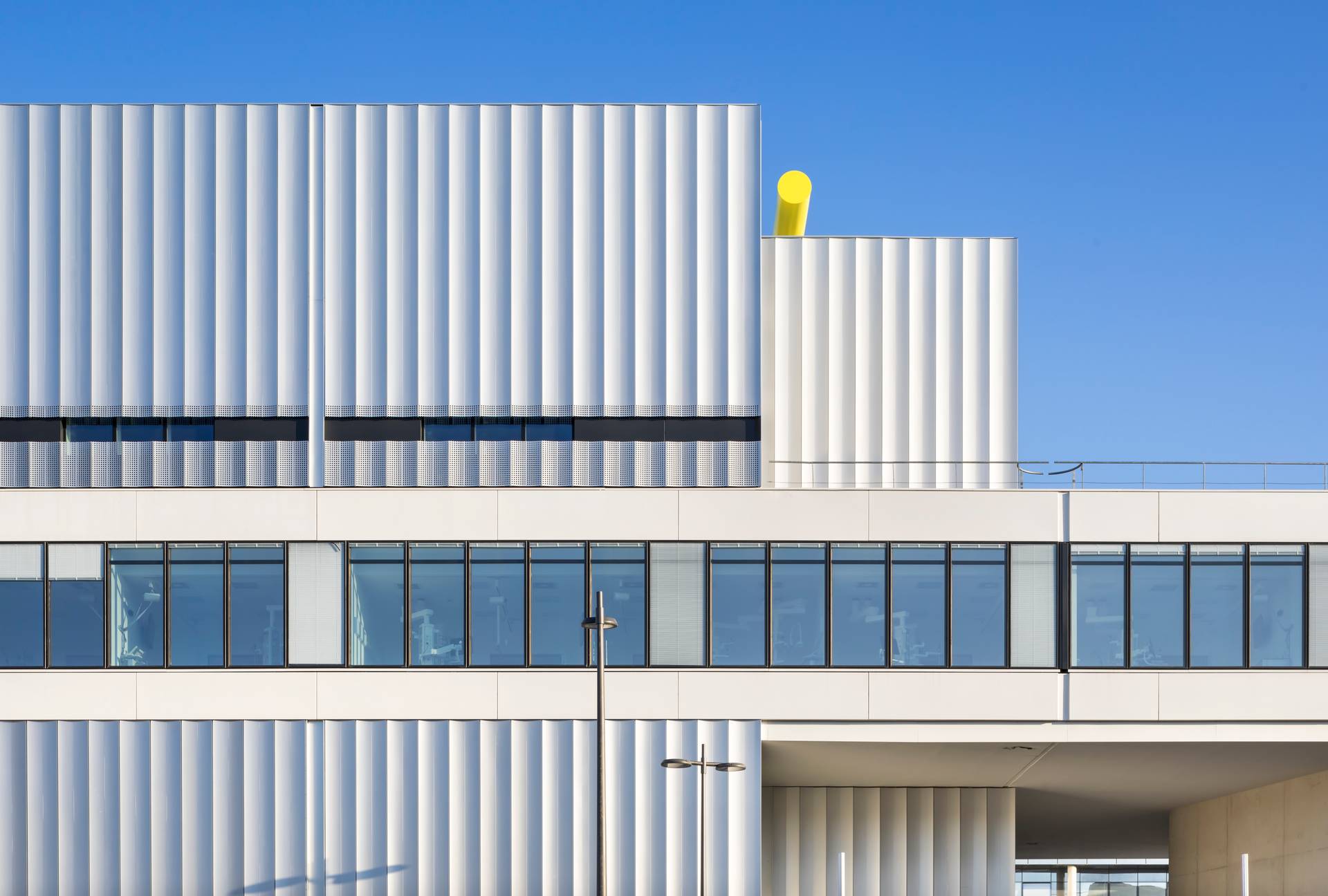
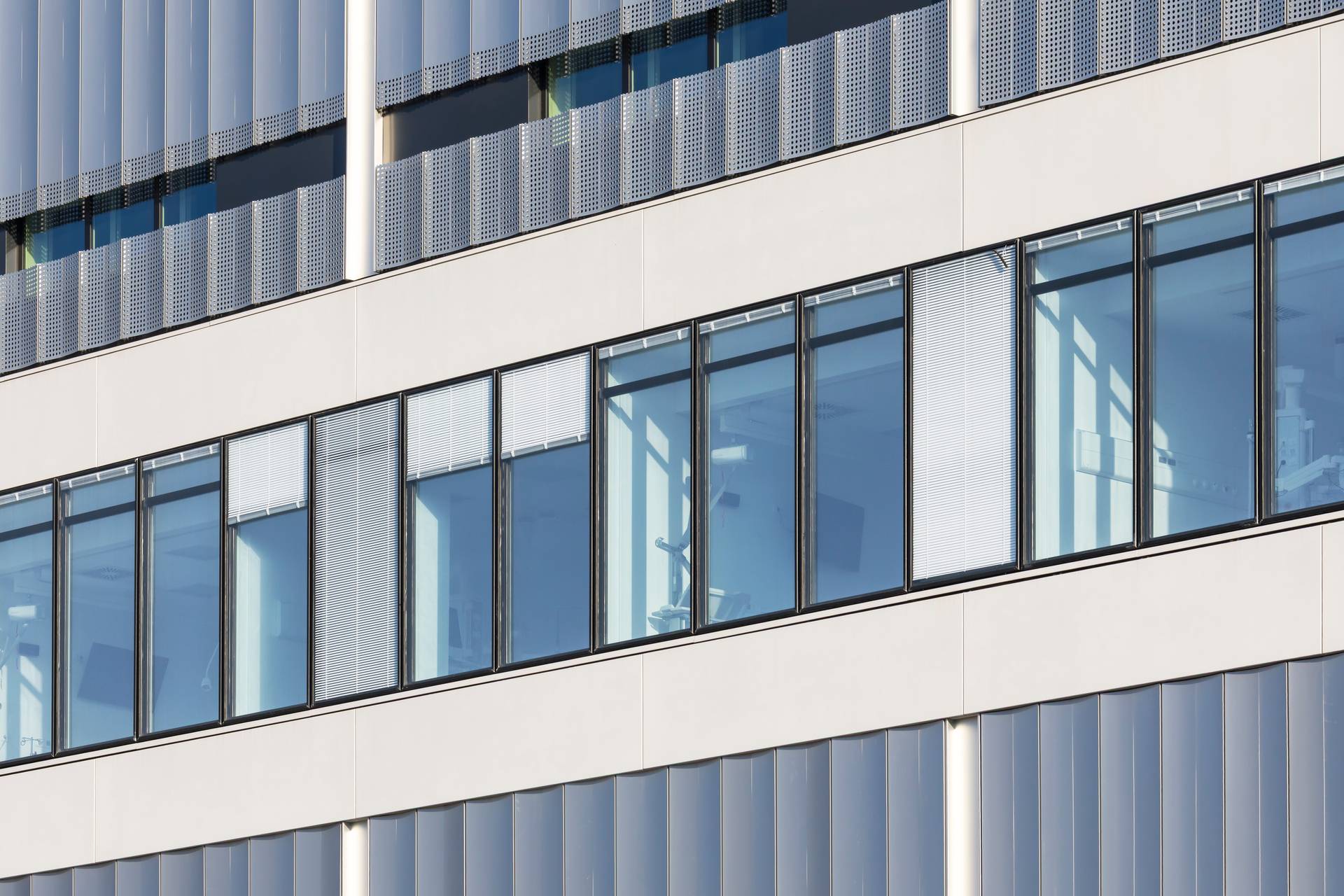
To create a clear and coherent campus, Michel Rémon & Associés and Sweco Architects approach all interventions as one unified project. Slim aluminium cassettes in a range of finishes wrap the new volumes, subtly distinguishing the different departments while reinforcing a shared architectural language. The result is a strong, recognisable identity that gives Lyon Sud a renewed presence.
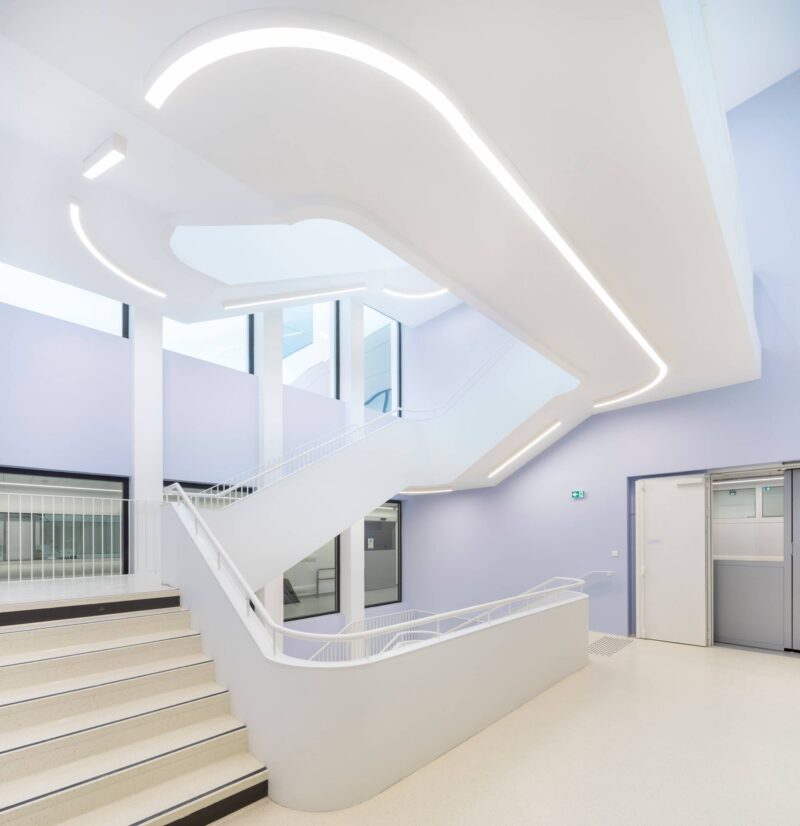
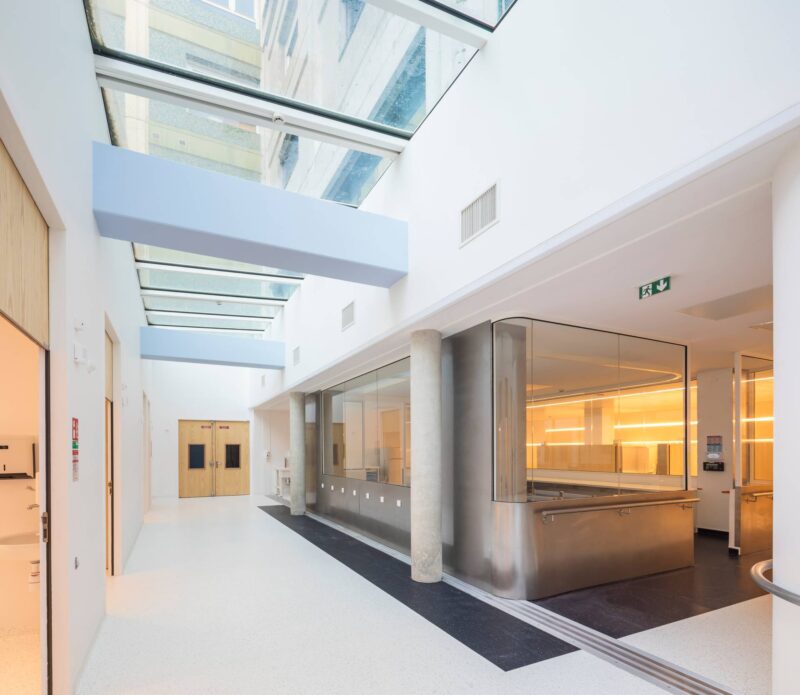
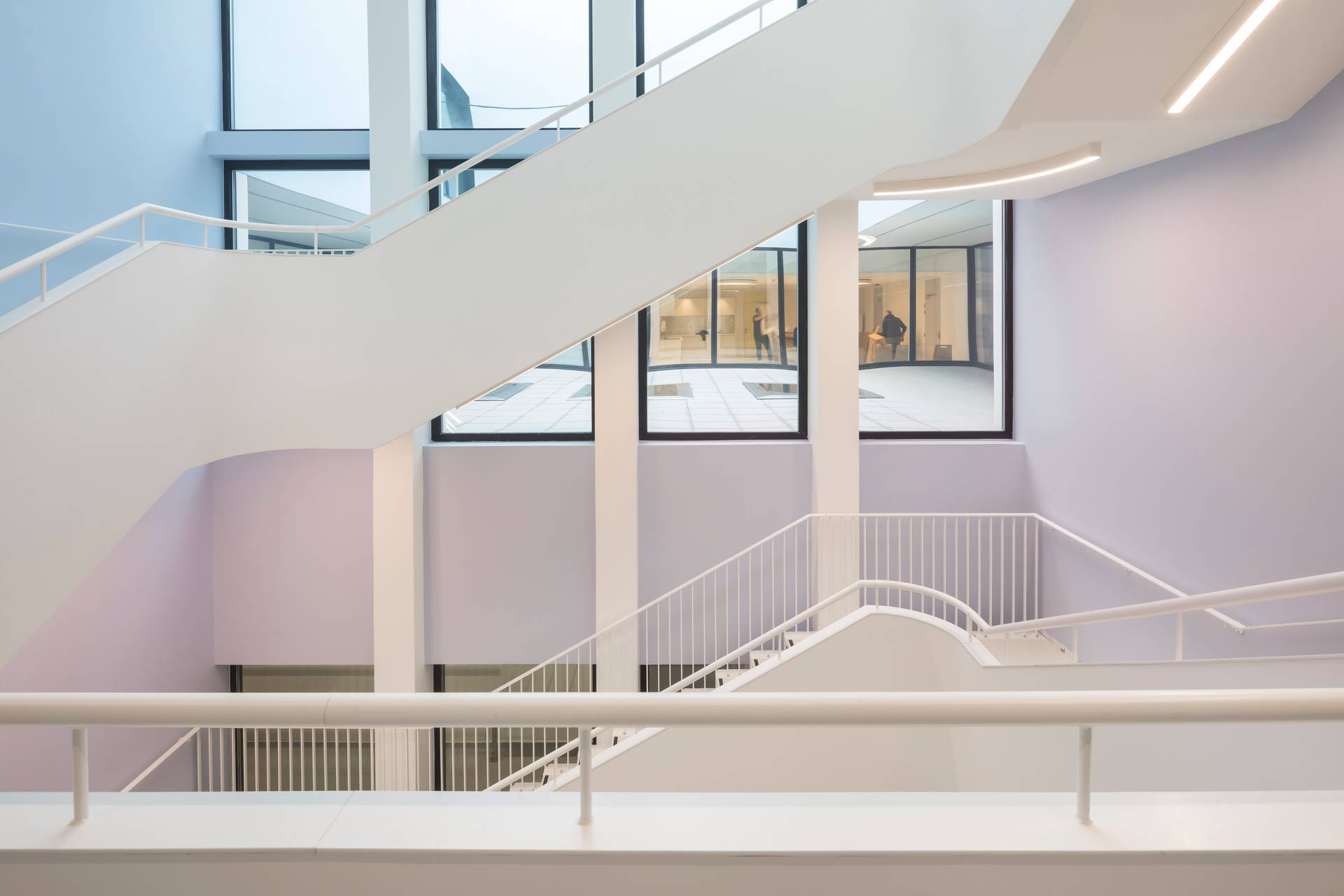
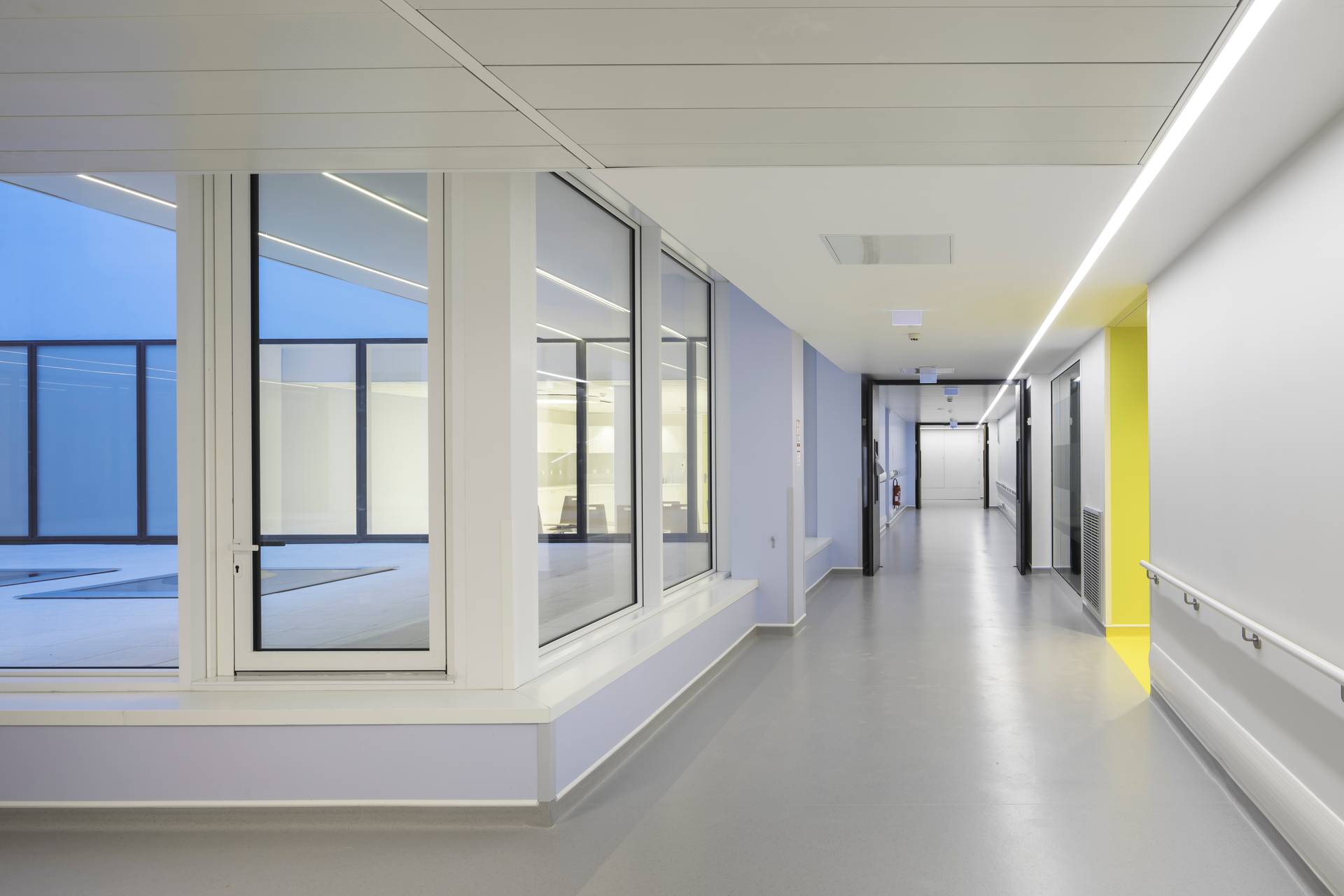
Daylight, views and orientation are central design drivers. A generous light well brings natural light deep into the core of the critical care services. Within the existing buildings, circulation is simplified and sightlines are opened up, enabling patients, visitors and staff to navigate the campus more intuitively and efficiently.
Sweco Architects acts as co‑architect from the competition phase through to tender, with particular attention to feasibility, phasing and continuity of care.
Careful phasing on a live campus
- Phase 1 – Extension and reorganisation of the Emergency Department
- Transition from non‑programmable to programmable care
- Forward flow with clearly separated patient streams
- A central triage and dispatch hub as the operational nerve centre
- Care pathways tailored to different patient profiles
- Controlled discharge flows
- A short‑stay unit and integrated post‑intervention intensive care
- Phase 2 – New medico‑technical platform
- Two stacked operating suites with a total of 34 operating theatres
- A consolidated intensive care unit
- The Géolab and an integrated logistics platform
- Phase 3 – Repurposing of existing areas
Once the critical functions have been relocated, the vacated spaces are converted into support facilities for the surgical day hospitals, including preparation and recovery rooms, changing areas and storage.
Lean Design: participation as the foundation of the project
Before the design phase began, an exceptionally broad participatory process was launched, based on Lean Design principles. Around 100 patients and more than 180 healthcare professionals from Emergency, operating theatres, intensive care and support services were involved. Over the course of a year, workflows, bottlenecks and success factors were analysed, and potential solutions were tested.
From the outset, this approach integrated:
- Organisational performance
- Quality of care and patient experience
- Working conditions
- Spatial and cost efficiency
The medical strategy was translated into a comprehensive functional and spatial programme, with departmental adjacencies and flows forming the backbone of the design.
Modular operating cluster and integrated critical care
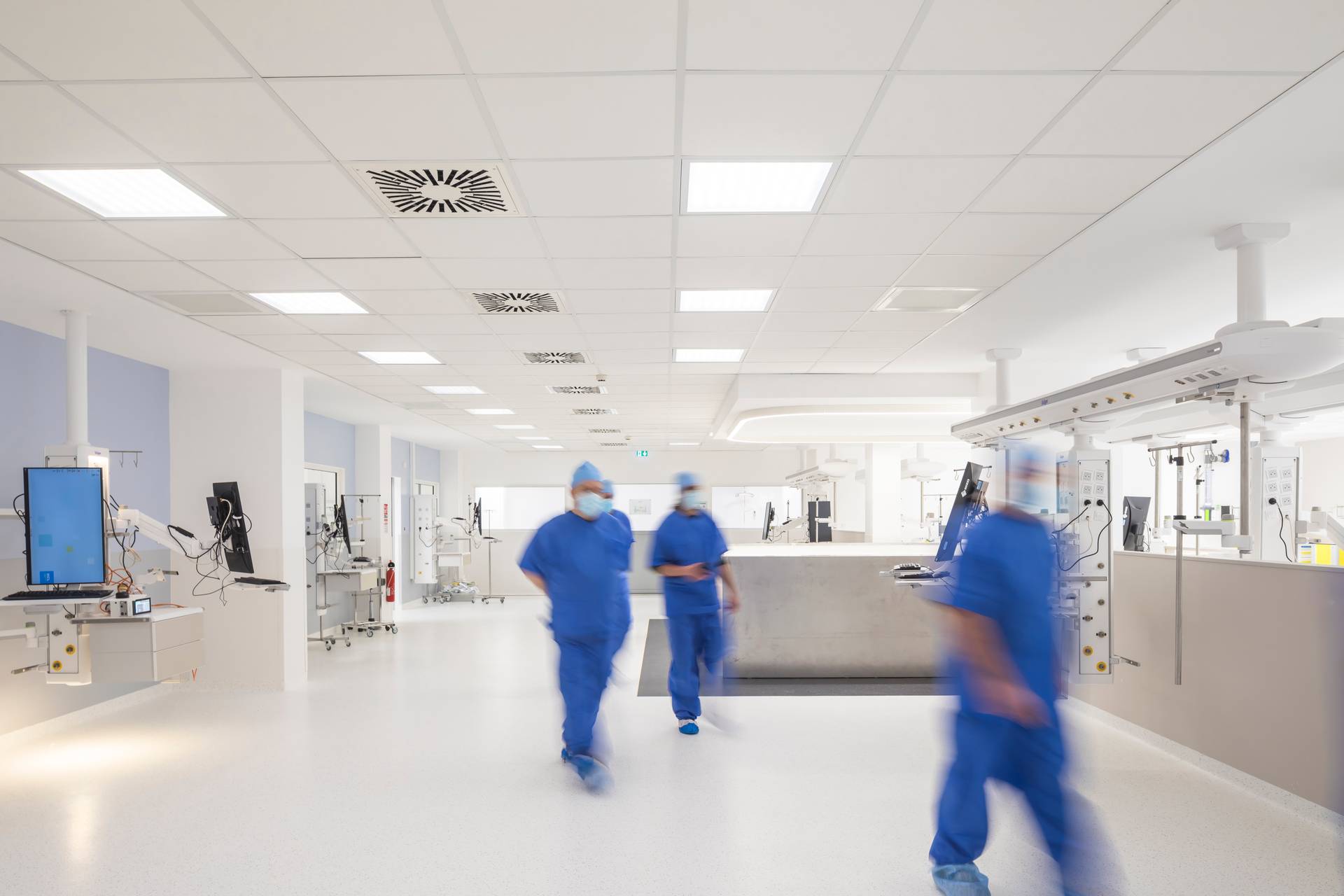
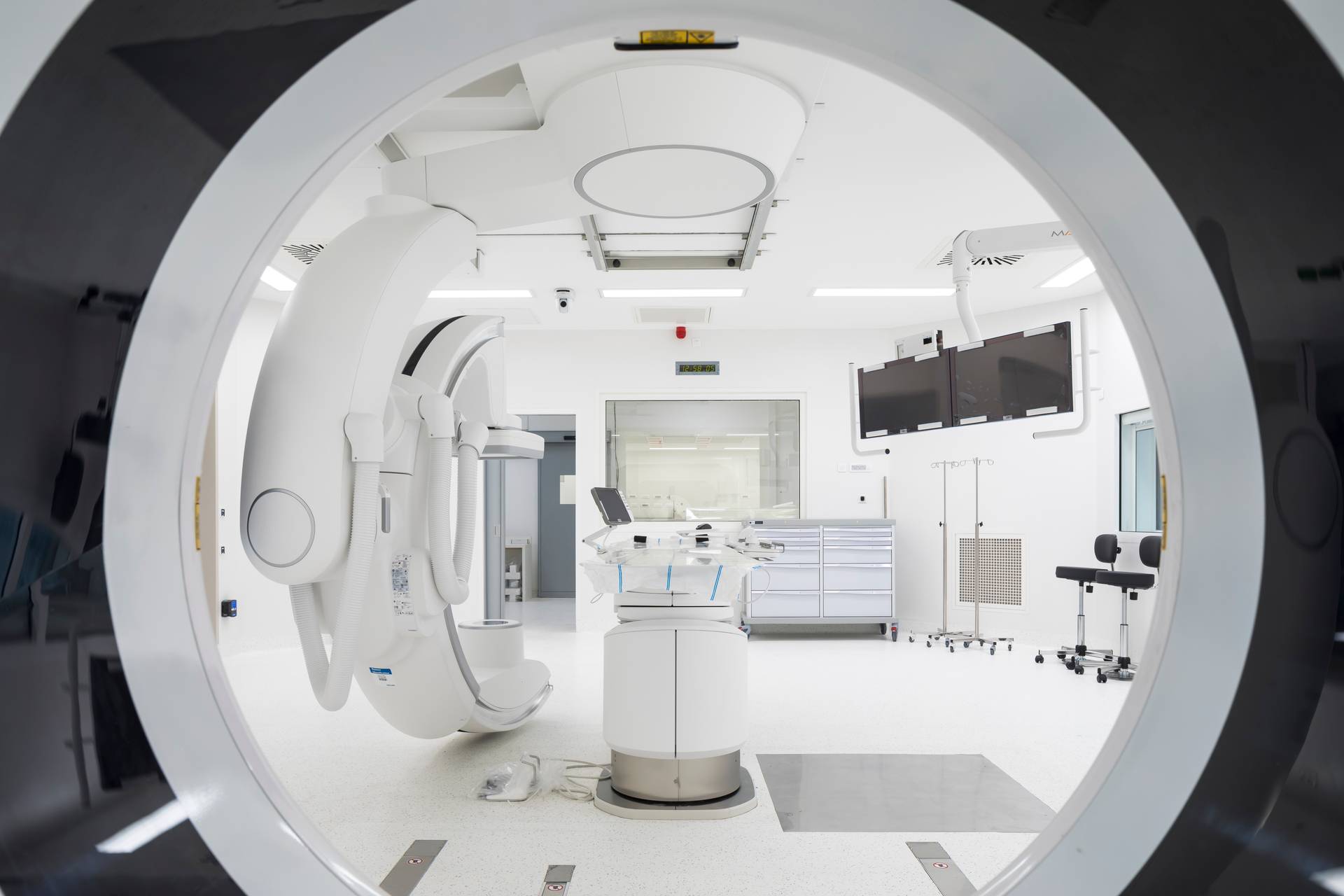
The 34 operating theatres are organised into a quadruple operating suite across two identical levels, with the Géolab and sterilisation facilities positioned between them. All interventional activities—ranging from urgent and complex surgery to day surgery, endoscopy and interventional radiology—are consolidated within a single building volume. This configuration allows scarce expertise to be deployed more efficiently, increases utilisation rates and reduces waiting times.
The operating theatres are arranged around standardised, modular halls, allocated by type of care rather than by medical discipline, maximising flexibility and adaptability over time.
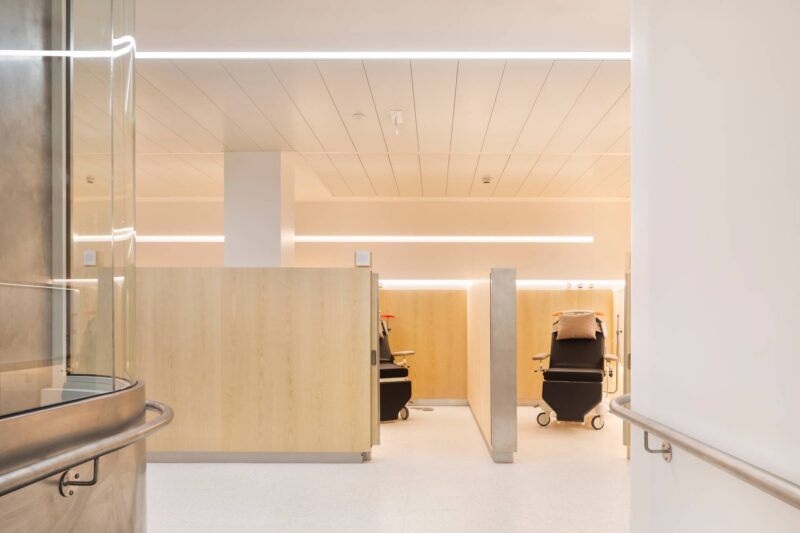
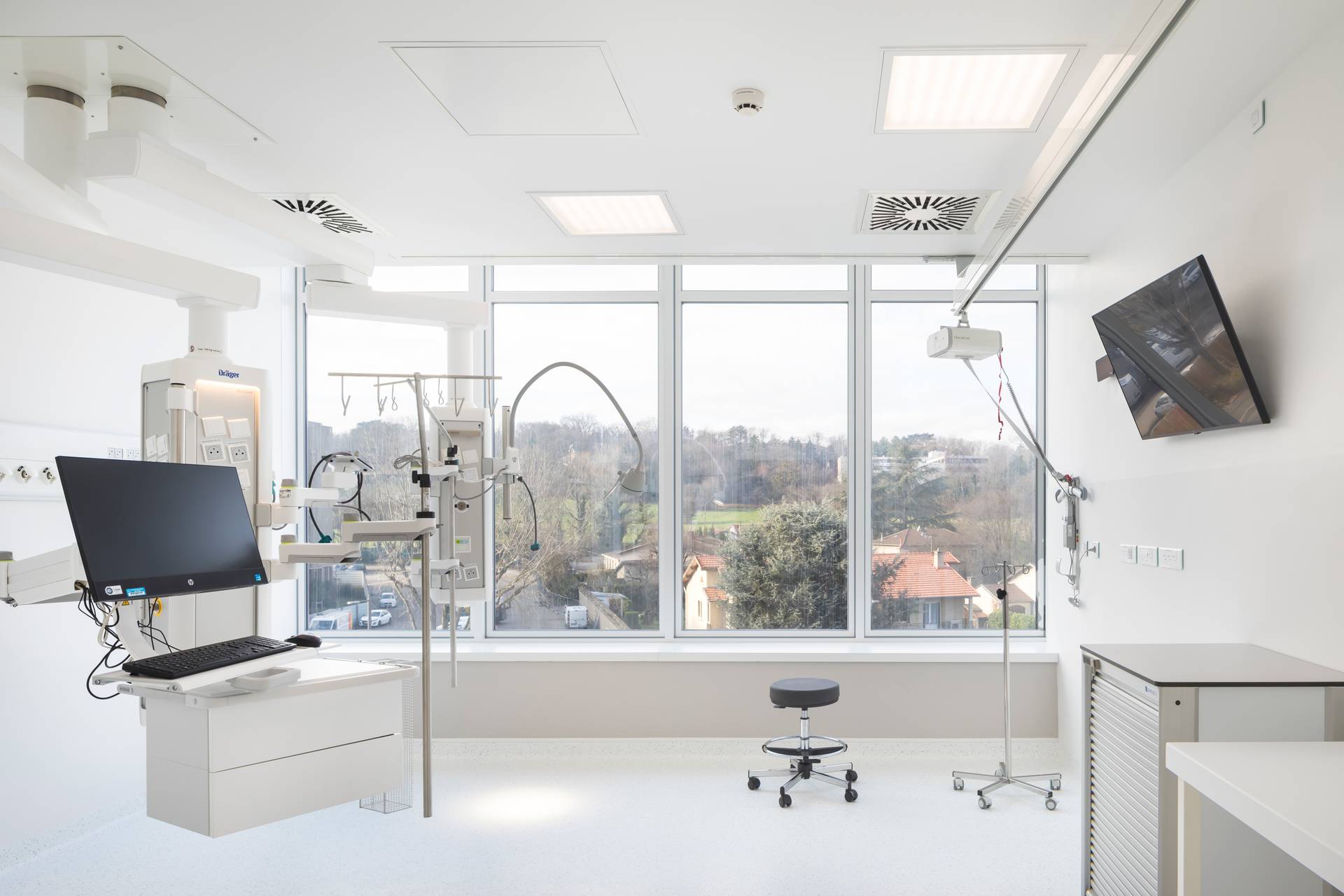
The intensive care unit is consolidated on a single level, in direct proximity to both Emergency and the operating suites. Three nursing units of 15 beds allow flexible use for post‑operative patients or admissions from Emergency. Adaptable air‑handling systems enable rapid reconfiguration in the event of infection risks or a pandemic.
Programmable care pathways are organised from a central dispatch point in Emergency, with the aim of achieving an average length of stay of no more than four hours. Forward flow, clear triage and tightly coordinated post‑care pathways reduce overall lead times and minimise the crossing of flows.

Innovative logistics, Géolab and day hospitals
A new logistics platform beneath the medico‑technical block forms the backbone of an advanced, largely automated logistics system. The Géolab, located on the level between the two operating suites, serves as the central storage and preparation hub for all sterile materials and surgical case carts (“Géodes”). From here, carts are automatically transported via dedicated logistics lifts to the modular halls serving the operating theatres, reducing internal transport, improving traceability and simplifying inventory management.
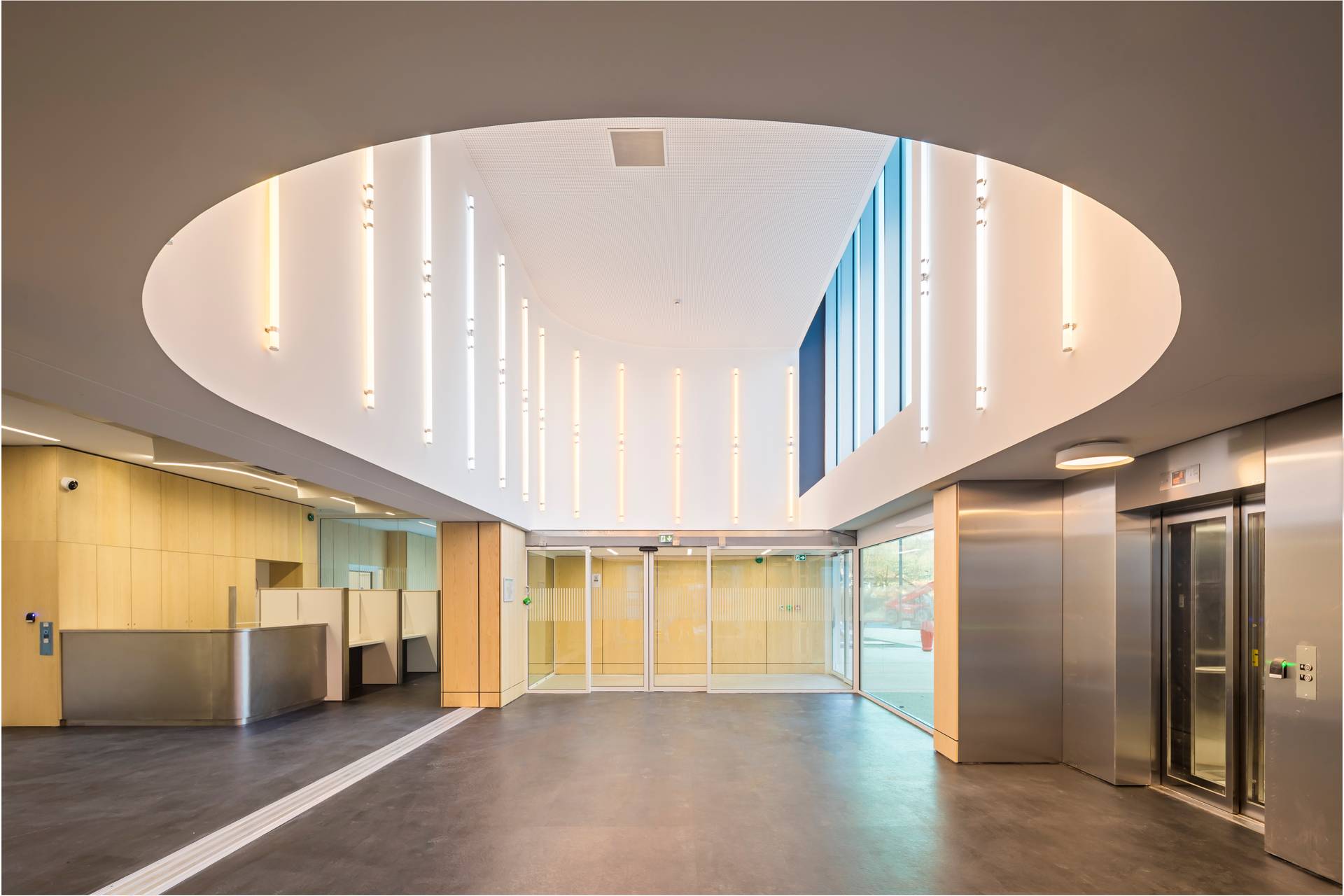
Two surgical day hospitals, each with 20 treatment places, have their own dedicated entrances and are directly connected to the operating suites via short, efficient routes. Vertical connections from the main entrance hall and compact horizontal circulation enable “just‑in‑time” walking transfers, improving operational efficiency while enhancing the experience for both patients and care teams.
With BAURéaLS, Sweco Architects is helping to shape a new generation of hospital infrastructure: modular, co‑created through participation, logistically intelligent, and firmly focused on comfort, quality and performance for patients, healthcare professionals and visitors alike.