First Aid for Drought: Integrated Water Management in Vulnerable Ecosystems
Our biotopes and ecosystems are increasingly suffering from growing drought and heat stress. From the overheating of cities to the loss of fertile farmland or the drying up of what was once always wet nature. This trend has not gone unnoticed by Sweco and its Integrated Water Management (IWM) teams
- Client
- Vlaamse Landmaatschappij (VLM)
- Location
- Brugge
- Expertise
- Integrated Water Management (IWM)
In addition to expertise in dewatering, sewer calculations, and water balances, our knowledge is steadily expanding to broader and more integrated water issues. This is evident from two study assignments within the “Framework Agreement for Thematic Drought Support” for the Vlaamse Landmaatschappij (VLM), with a particular focus on drought risks in highly water-dependent areas: the Oudlandpolder and the nature reserve Landschap De Liereman.
Optimization of Water Management in the Oudlandpolder
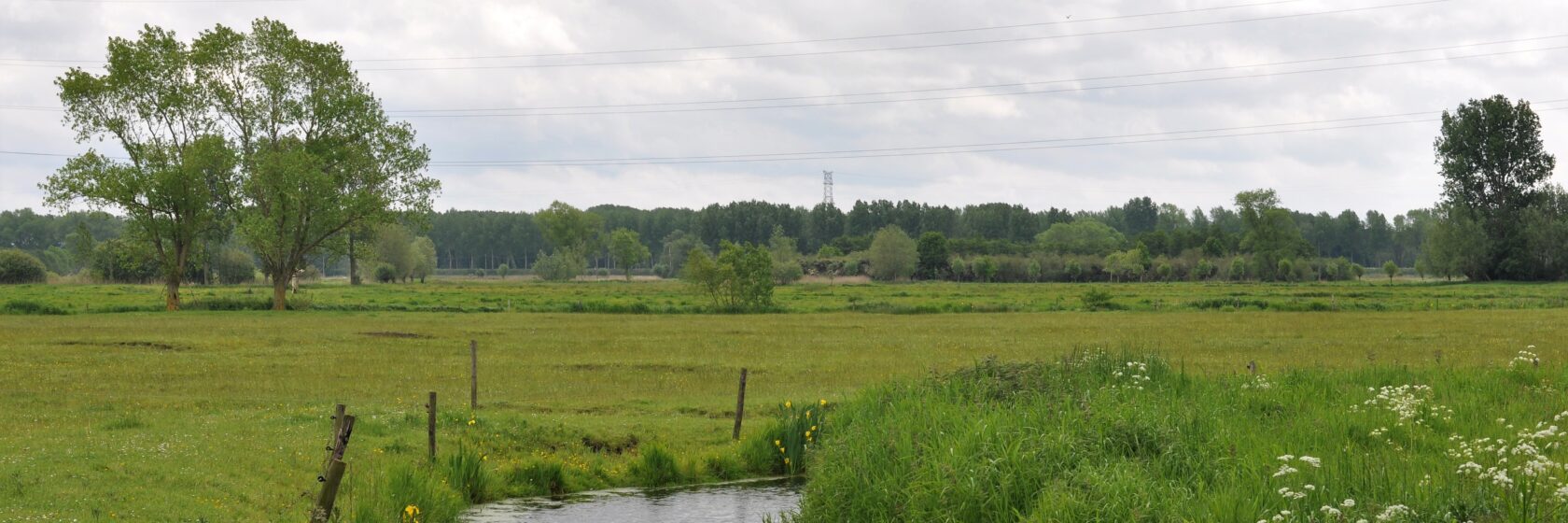
The Oudlandpolder, located northwest of Bruges and enclosed by the Boudewijn Canal, the Bruges-Ostend Canal, and the coastline, has a very open character. In this typical polder landscape, agriculture, nature, and historic village centers are closely intertwined. However, due to climate change, the risk of flooding during heavy rainfall is increasing, and drier summers are leading to the salinization of watercourses and polder soils. Therefore, the VLM is investigating how the water level management of the watercourses in the polder can be optimized and whether additional water sources are available to bridge dry periods.
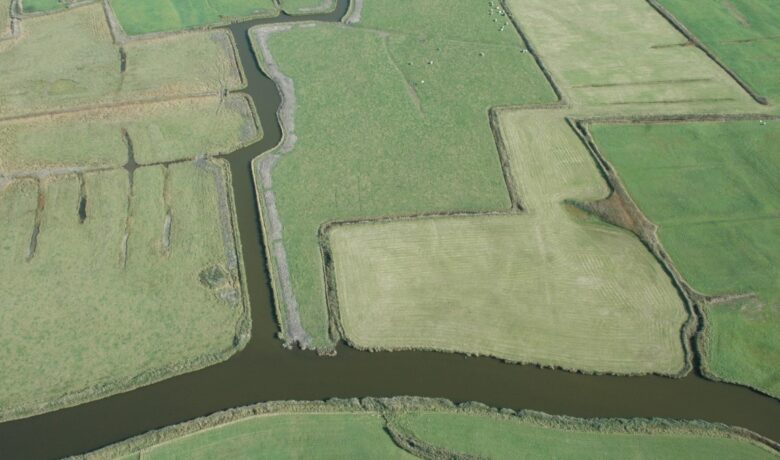
Since effluent water from the Bruges WWTP (wastewater treatment plant) is already regularly discharged into the Oudlandpolder, it has been investigated whether this can be a structural solution in the future to ensure freshwater availability and mitigate the effects of prolonged drought periods.
The great advantage of purified effluent is that the WWTP can provide a constant water flow, even during dry periods. Currently, the effluent is mainly discharged into the Boudewijn Canal, after which it flows directly to the sea and can no longer be used. Only during drier periods is water from surrounding watercourses allowed into the Oudlandpolder through various inlets.
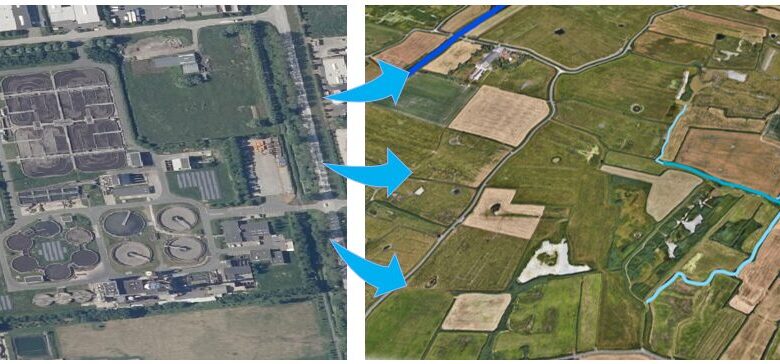
Analysis and storage of WWTP Effluent: ensuring freshwater
First, we analyzed the water quality of the WWTP effluent to check if it meets current standards and regulations. This was the case, although there are some points of attention that need further investigation. For example, the impact of higher concentrations of nitrogen, salt, and phosphorus on the ecosystems in the polder needs to be examined. A cost-benefit analysis can help determine whether additional purification steps are desirable and feasible. Future legislation on PFAS, pharmaceutical residues, and other priority substances must also be closely monitored, as these can pose additional challenges.
In addition, we looked for suitable locations for the storage of effluent in this study, to maintain water levels in the polder’s ditch system during dry periods. An existing water balance study calculated how much water needs to be stored to bridge a 10-day drought period in 2050. Using a QGIS analysis, locations were selected where water can be buffered. The proposed zones are mainly located upstream in the polder, so most watercourses and ditches in the area can be fed. Whether and when these buffer basins will actually be constructed is still unclear, as the VLM is also investigating other potential water sources in the region.
Addressing drought in Landschap De Liereman
Landschap De Liereman in Oud-Turnhout is one of the oldest nature reserves in Belgium. The Kempen forests, heathlands, fens, and dunes make it a unique nature reserve in Europe and a home for rare and vulnerable native species. The area has been struggling with drought for decades, and drought phenomena occur in the summer.
Therefore, a new nature management plan has been drawn up, with a notable suggested measure: cutting down some of the pine trees in the dune belts around the wet valley of De Liereman. Although trees are often associated with retaining (ground)water, they can also evaporate hundreds of liters of water per day. We studied the impact of this measure on De Liereman through a literature study and translated it into a conceptual model.
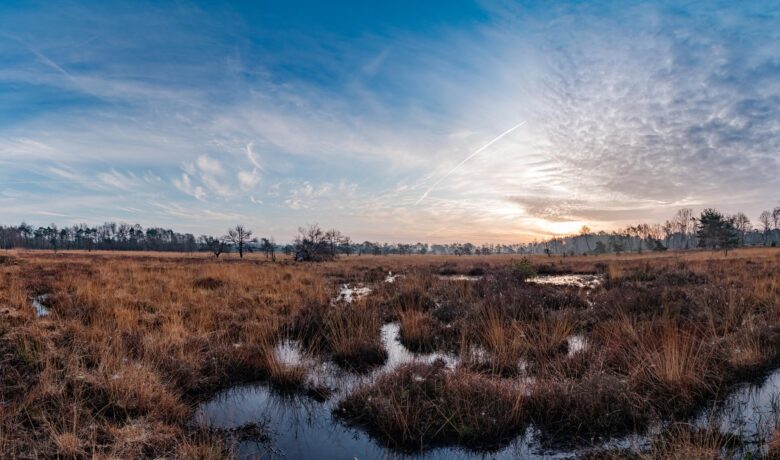
Our study consisted of 2 phases
Phase 1:
- Collecting data on rainwater management of different landscape types, to understand natural processes such as precipitation, evaporation & transpiration, interception, ‘gross’ and ‘net’ infiltration, runoff, etc.
- Distinction between vegetation type, density, soil type, slope, etc.
- Distinction between annual average and summer due to the focus on drought
- Drawing up a schematic water balance based on the collected data for several relevant landscape types (wet heath valley partly covered with willow and black alder, dune belts covered with Scots pine, bare dune belts after cutting, etc.).
- Insight into internal and external water fluxes of type ‘unit’
Phase 2:
- Combining building blocks into a conceptual model of a valley landscape, with different scenarios.
- Attention to the interaction between valley and dune belt
- Determining the impact of the proposed measures from the comparison of scenarios.
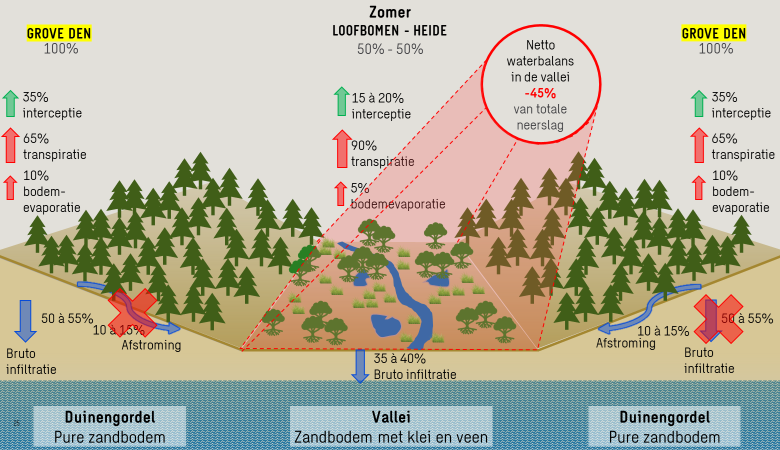
Findings: effects of pine tree cutting on water balance
On an annual basis, cutting down pine trees causes the valley to become wetter, as less water is lost to interception and evaporation. In a later phase, heather or grass vegetation on the dune belts can negate some of the positive impact on the water balance, as these also capture and evaporate rainwater.
However, estimating only annual water balances risks overlooking seasonal trends. The same analysis based on summer measurements shows this. The drying effect is visibly stronger than throughout the year, as observed in the field during dry summers.
But cutting down trees has a relatively limited effect on the wetting of the valley. When heather or grassland replaces existing trees, it does not create an advantage over the fully forested baseline. Given that drought issues are mainly relevant in the summer, these insights cast doubt on the usefulness of tree cutting on the valley slopes for wetting the valley in Landschap De Liereman or similar areas.