Mobility Plan Oudenaarde: Stakeholders Help Shape the Route
The city of Oudenaarde is working on a new mobility plan that addresses today’s and tomorrow’s mobility challenges. From a safer cycling network and low-traffic residential areas to efficient logistics and smart mobility solutions.
Sweco is guiding the city council both in terms of content and participation. Residents and partners are invited to contribute through idea evenings, mobility cafés, and an online survey.
- Client
- City of Oudenaarde
- Location
- Oudenaarde
- Expertise
- Participation, process management, mobility planning
The previous mobility plan dates back to 2011, and much has changed in how we move around. Electric bikes have become mainstream, shared mobility is on the rise, and there is growing demand for low-traffic neighborhoods. Time for an update. Together with Sweco, the city has developed a clear roadmap toward a strong and future-oriented mobility plan. With this new plan, Oudenaarde aims to tackle local challenges such as cut-through traffic, speeding, and parking pressure. The regional mobility plan of the ‘Vervoerregio Vlaamse Ardennen’ serves as the foundation.

Mobility Knows No Borders
Sweco supports the city council with technical and strategic expertise throughout the entire process: from initial analyses to concrete proposals. Building on the 2020 orientation note, there is room for new insights and priorities.
Together with the city, we translate all mobility themes into a clear plan aligned with regional visions and supported by residents. All ideas and suggestions are compiled into a concise synthesis note, which forms the basis for the final policy plan. The goal is to have a definitive mobility plan by early 2026, with clear actions for smoother and more sustainable mobility in Oudenaarde.
Broad Participation as a Foundation
Mobility concerns everyone. That’s why the city actively involves its residents in drafting the new plan.
Our own residents are best placed to suggest how we can improve mobility in Oudenaarde.
Marieke De Vos, Alderman for Mobility, and John Adam, Mayor of Oudenaarde
The strength of this participatory approach lies in the close involvement of all relevant stakeholders from the start. Think of internal city services, advisory councils, the shopping center, the Cyclists’ Union, and other local and regional partners. Thanks to a thorough stakeholder analysis, we quickly gathered valuable input to develop a well-founded working hypothesis.
From Idea Evenings to Open Dialogue
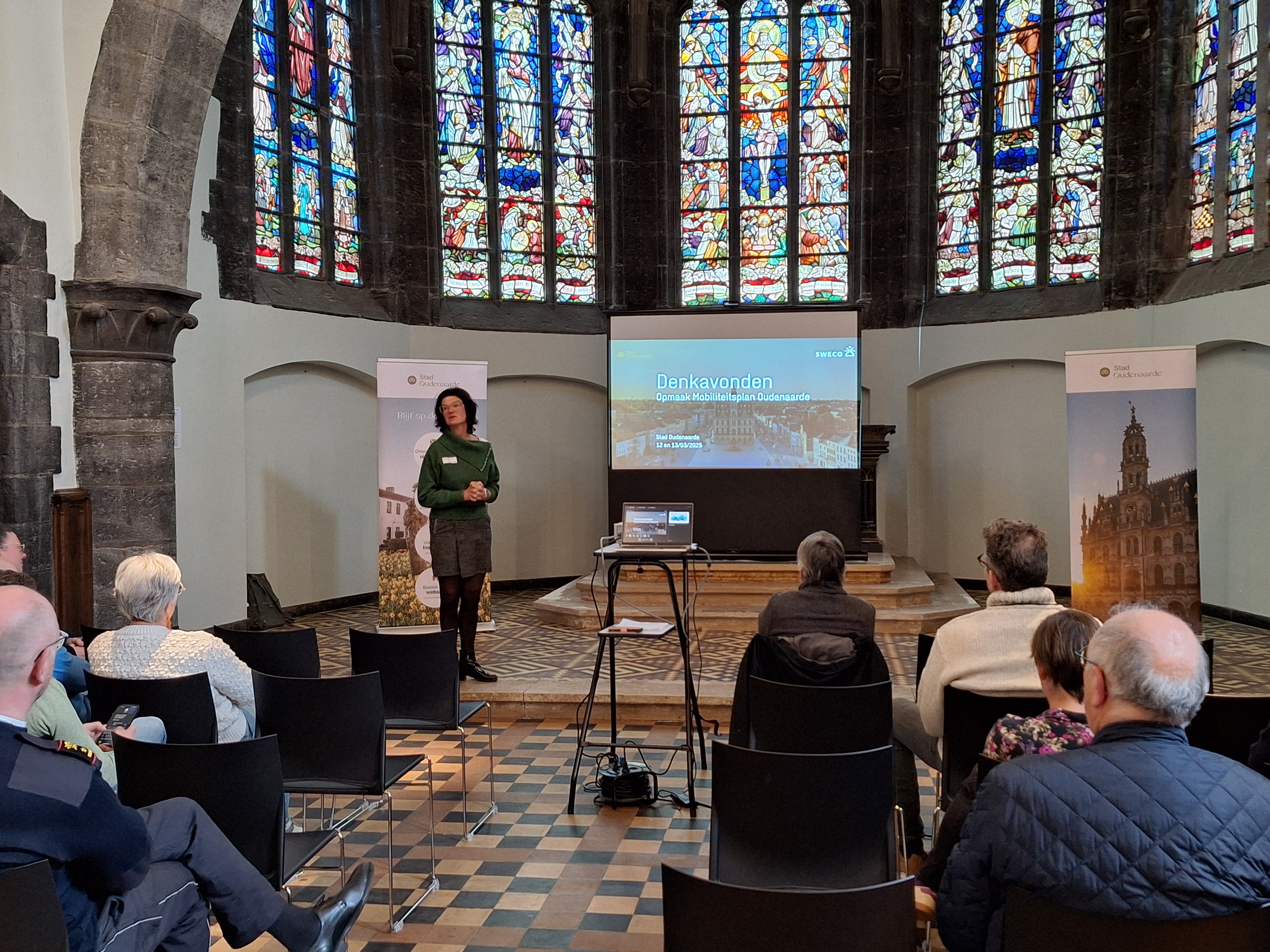
The process began with an initial idea evening, bringing together a wide range of stakeholders. Representatives from De Lijn, NMBS, AWV, schools, municipal council members, and neighboring municipalities discussed the major mobility challenges in and around Oudenaarde.
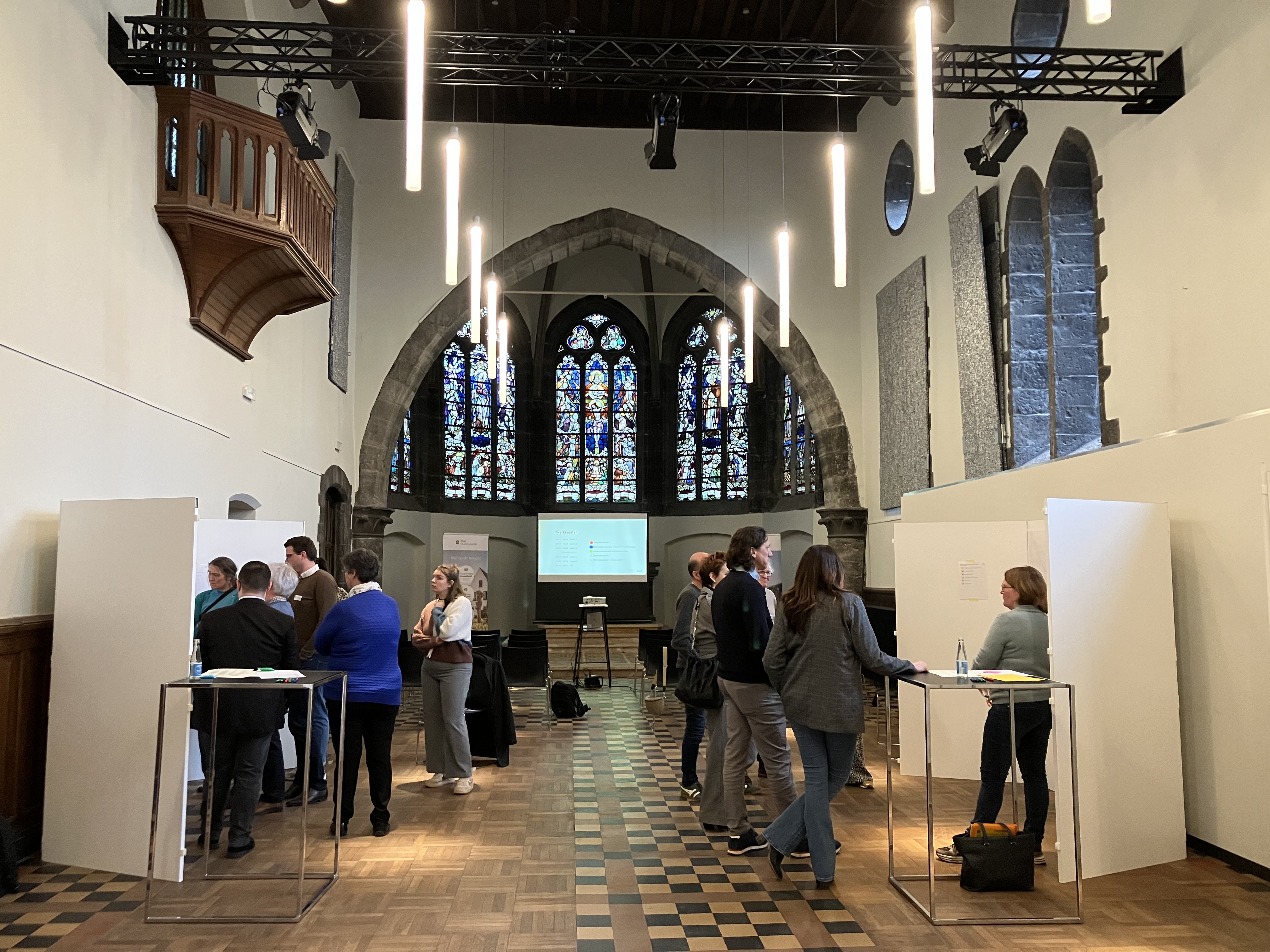
Everyone had the chance to contribute. We laid out large maps of the city and asked for ideas by theme. That really helped us set a direction. Without that input, we would have missed crucial pieces of the puzzle.
Els Doclo, Mobility Consultant for Oudenaarde
Residents also had the opportunity to share their ideas and concerns. At the first mobility café, brainstorming sessions were held on topics such as traffic safety, circulation, parking, multimodal transport, and sustainable alternatives. For those who couldn’t attend, the city organized an online survey via the participation platform. For three weeks, residents could share their views on various mobility statements. Special attention was given to young people, a group often hard to reach in such processes.
In autumn 2025, a second mobility café will follow, where the results will be shared and the new mobility plan will be presented.