Wind Energy
Tallest onshore wind turbine in Belgium
A 247-metre wind turbine is not built overnight. Behind this new record-holder at the Mercator Dock in Ghent lies a well-considered approach in which design, engineering and permitting fit seamlessly together. Commissioned by ENGIE, Sweco carried out the initial feasibility studies and permitting process, as well as the design of the foundations and infrastructure.
- Expertise:
- Energy solutions
- Client
- ENGIE
- Location
- Port of Ghent
- Services
- Feasibility studies, permitting process, design of foundations and infrastructure
Onshore wind turbine in the Port of Ghent
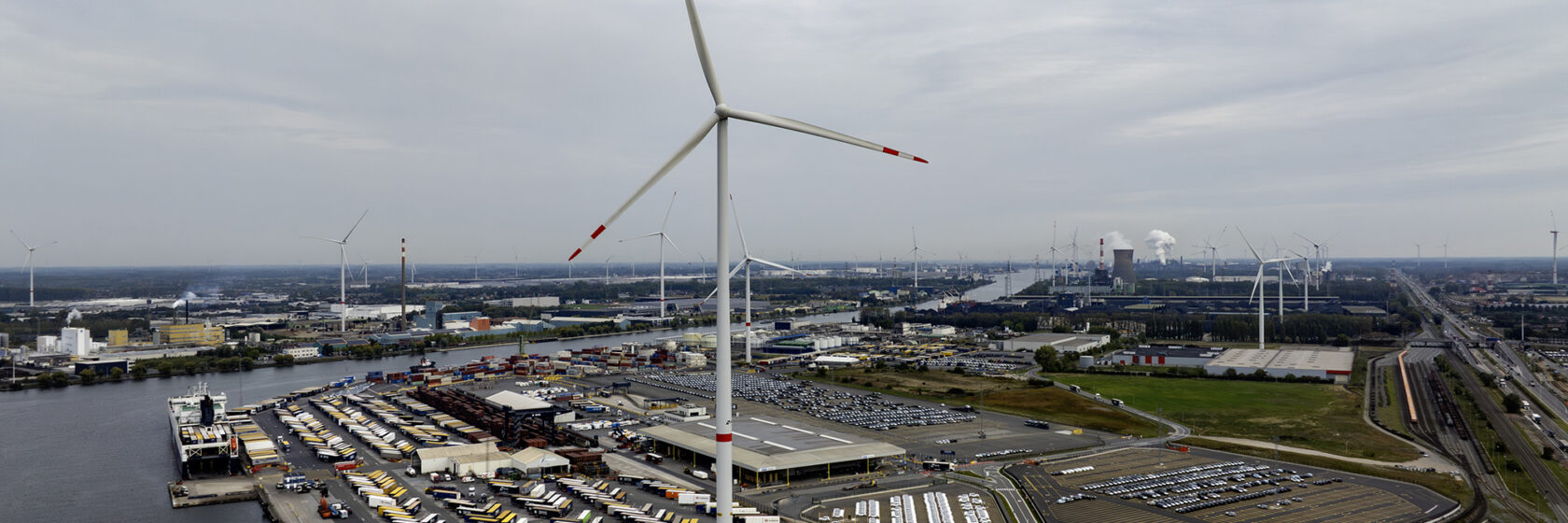
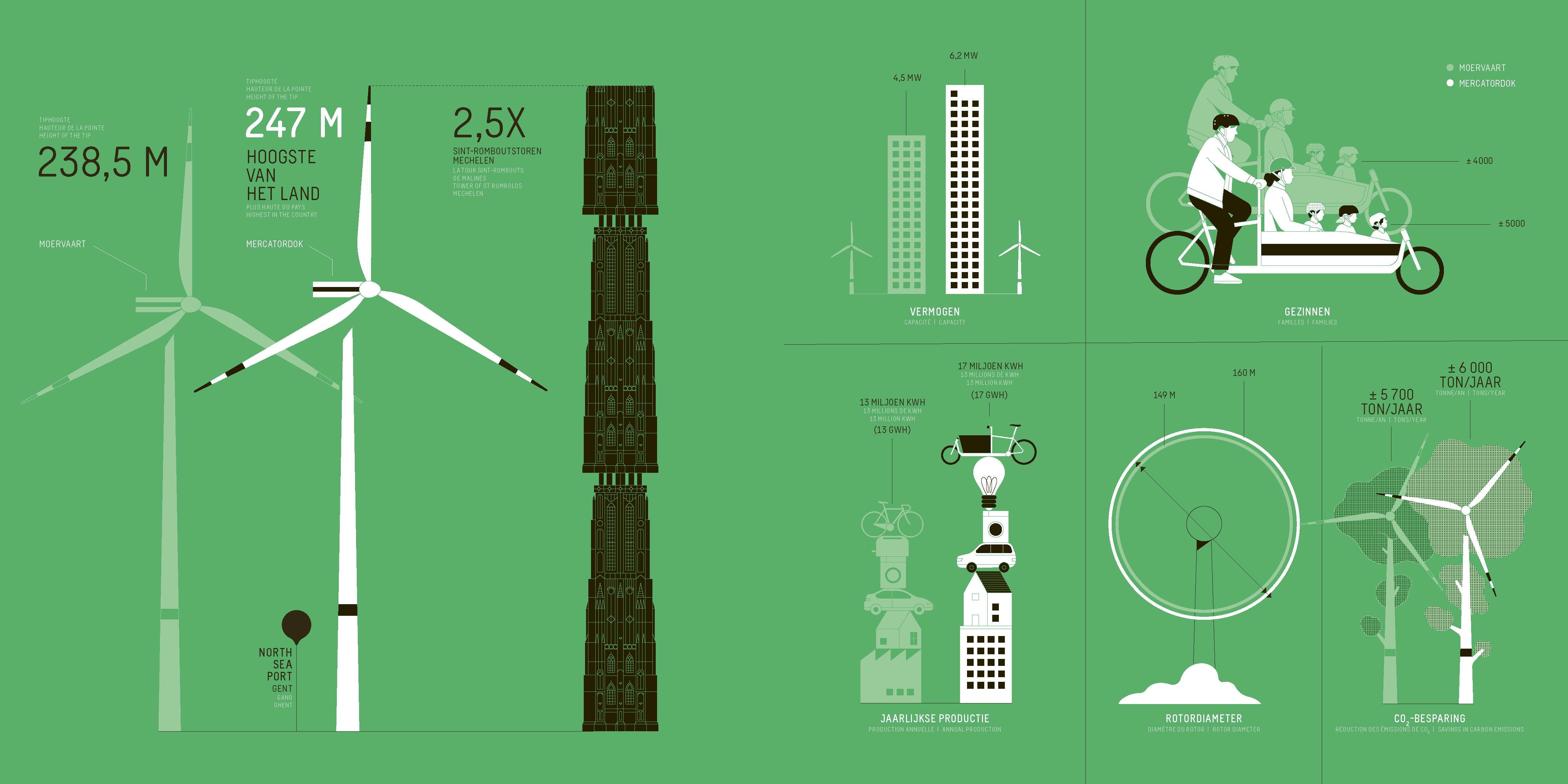
With a tip height of 247 metres, this wind turbine is the tallest onshore turbine in Belgium. It surpasses the previous record of 238 metres, also located in the Port of Ghent. The installation, developed by ENGIE, dominates the skyline of North Sea Port and forms, together with other turbines, a recognizable landmark of sustainable energy production.
The scale of the turbine is impressive: it is more than two and a half times the height of St. Rumbold’s Tower in Mechelen and roughly twice as tall as the Cathedral of Our Lady in Antwerp.
The new wind turbine is located in a primary zone at the Mercator Dock, on the site of logistics service provider DFDS, one of the largest integrated shipping and logistics companies in Northern Europe. This port location is ideal for wind energy due to the available space and proximity to large industrial off-takers.
Height as a key factor in energy yield
In a densely built region such as Belgium, height is crucial to make optimal use of wind energy. The higher the turbine, the stronger and more consistent the wind flows. This directly translates into higher and more stable energy production.
Thanks to its height, this turbine can accommodate blades exceeding 80 metres. As a result, the rotor captures significantly more wind, increasing efficiency and maximizing yield. The choice for height is therefore a deliberate and strategic design decision.
Green energy production reaches new heights
With an annual production of approximately 17 million kWh, the new wind turbine contributes to a significant reduction in CO₂ emissions. It is estimated to save more than 6,000 tonnes of CO₂ annually.
With a capacity of 6.2 megawatts (MW), the turbine can supply green energy to around 5,000 households. ENGIE aims to achieve 1,000 MW of onshore wind energy in Belgium by 2030, a considerable increase from the current 600 MW.
Partner from study to execution
Realising a wind turbine is a complex balancing act between technology, regulations, environment and societal expectations. Sweco played an integrated role in this process. The team was responsible for the full permitting dossier, the technical report, and the detailed design of the foundations and infrastructure.
By approaching all these aspects together from the outset, the project could be developed efficiently and thoughtfully. This integrated approach ensures that risks are identified early and that projects are technically and legally robust.
Permitting for wind energy
The growth of wind energy in Europe highlights the strategic importance of renewable energy. Today, approximately half of electricity production in the European Union comes from sustainable sources, with wind energy representing a significant share. The biggest challenge today, however, is not building new turbines, but successfully navigating an increasingly complex permitting environment. The Sweco Loket plays a key role in this.
Integrated guidance
Our multidisciplinary team supports developers, investors and energy companies throughout the entire trajectory, from initial feasibility studies through to permitting and execution.
This support includes environmental impact assessments, ecological studies, noise and shadow flicker analyses, landscape integration, spatial planning, safety, and technical engineering. By bringing these disciplines together, an integrated approach emerges that advances projects faster, more efficiently and with greater certainty.
Experience in wind energy as a foundation
Sweco has more than fifteen years of experience in the development of wind energy projects. During this period, we have supported the realisation of dozens of wind turbines, resulting in an estimated CO₂ reduction of over 200,000 tonnes per year and supplying energy to approximately 175,000 households.
This experience enables us to think strategically alongside our clients. In a context where regulations are constantly evolving, Sweco helps clients make future-proof decisions and develop robust projects.
Photos: © Tom D’haenens | Infographic: © Bridgeneers