A workplace where nature reclaims its place
The Nest
The Nest in Luxembourg brings together nature, wellbeing and work in a forward-looking office building. Located in the rapidly developing La Cloche d’Or district, the project is driven by a clear ambition: not simply to add nature to the city, but to restore its rightful place within it. With its lush garden, planted atrium and features designed for both people and wildlife, The Nest creates a setting in which employees, visitors, flora and fauna can thrive together. The result is a healthy, inspiring and biodiverse working environment.
Facts about the project
- Expertise:
- Architecture
- Eaglestone Luxembourg
- Client
- La Cloche d’Or, L-2530 Luxemburg
- Location
- Architecture, lighting design
- Expertise
- Maison Edouard François, Simon & Christiansen, Felgen, la compagnie du Paysage
- Partners
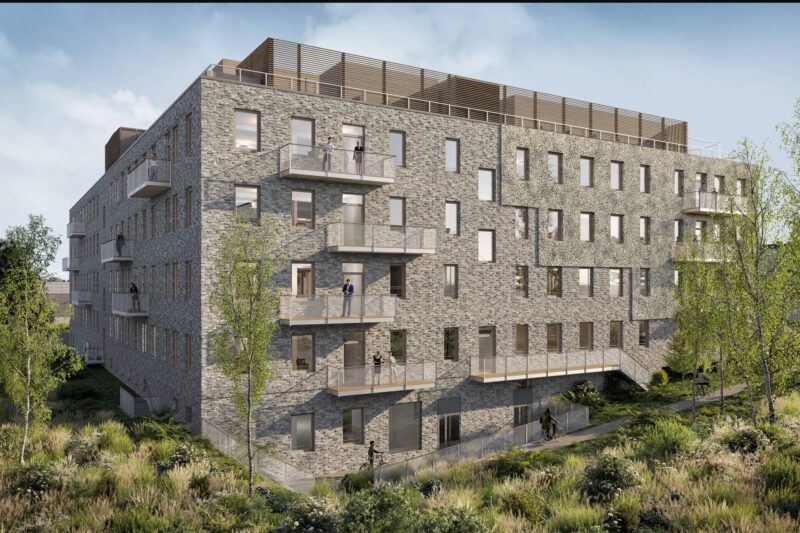 Photo © assar, part of sweco
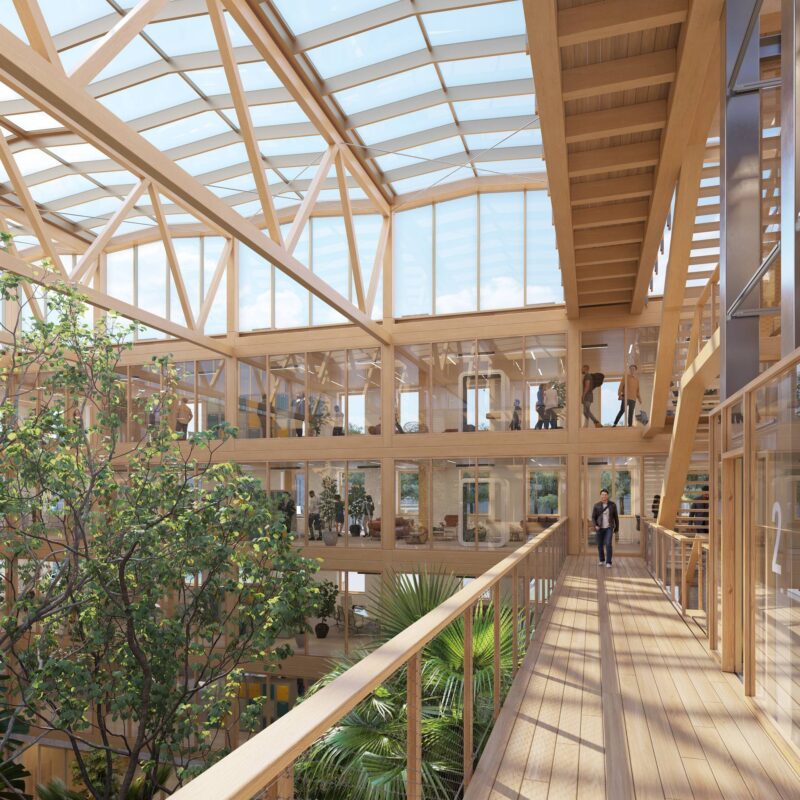 Photo © assar, part of sweco
A green link in La Cloche d’Or
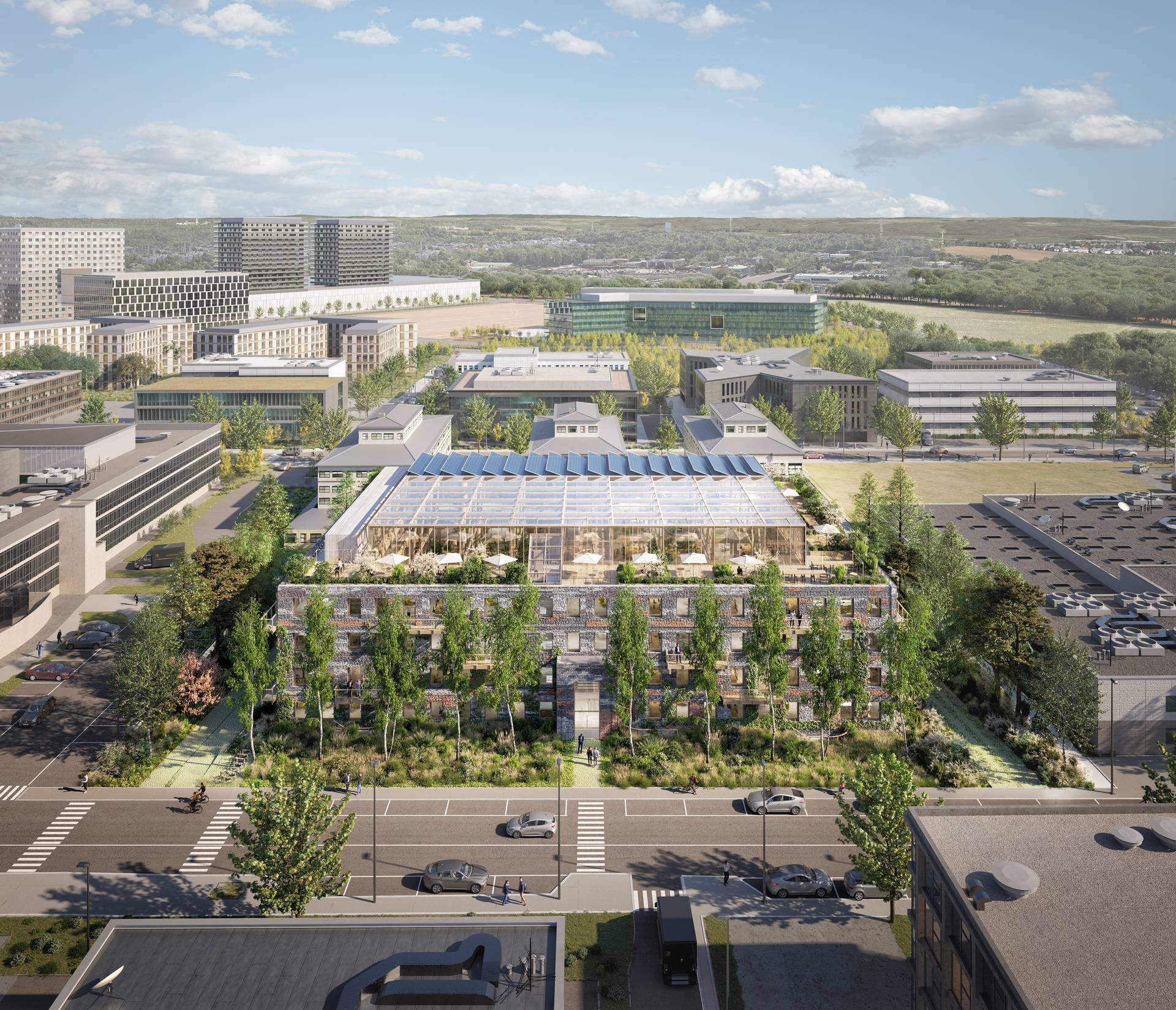
South of Luxembourg City, La Cloche d’Or is evolving into a mixed-use urban district that places sustainable mobility, greenery and wellbeing at its heart. The Nest actively contributes to this vision.
The 10,400 m² project includes 7,200 m² of office space, a lush garden, ground-floor amenities, and a rooftop restaurant and bar. A fitness centre, auditorium, meeting rooms and training spaces complete the programme. This makes The Nest more than an office building: it is a vibrant destination where meeting, relaxing and recharging are a natural part of the working day.
A habitat for people and nature
The planting around the building consists of native species, carefully selected to suit the local environment. The dense vegetation supports the return of wildlife to the city, providing a lasting habitat for insects, birds and small mammals.
Wood and stone piles, nesting boxes and sensitive lighting further reinforce this ecological function. The façade also contributes to biodiversity: its gabion structure offers shelter for small wildlife, while the ground-level garden provides a green haven within the urban setting.
A robust façade with a circular story
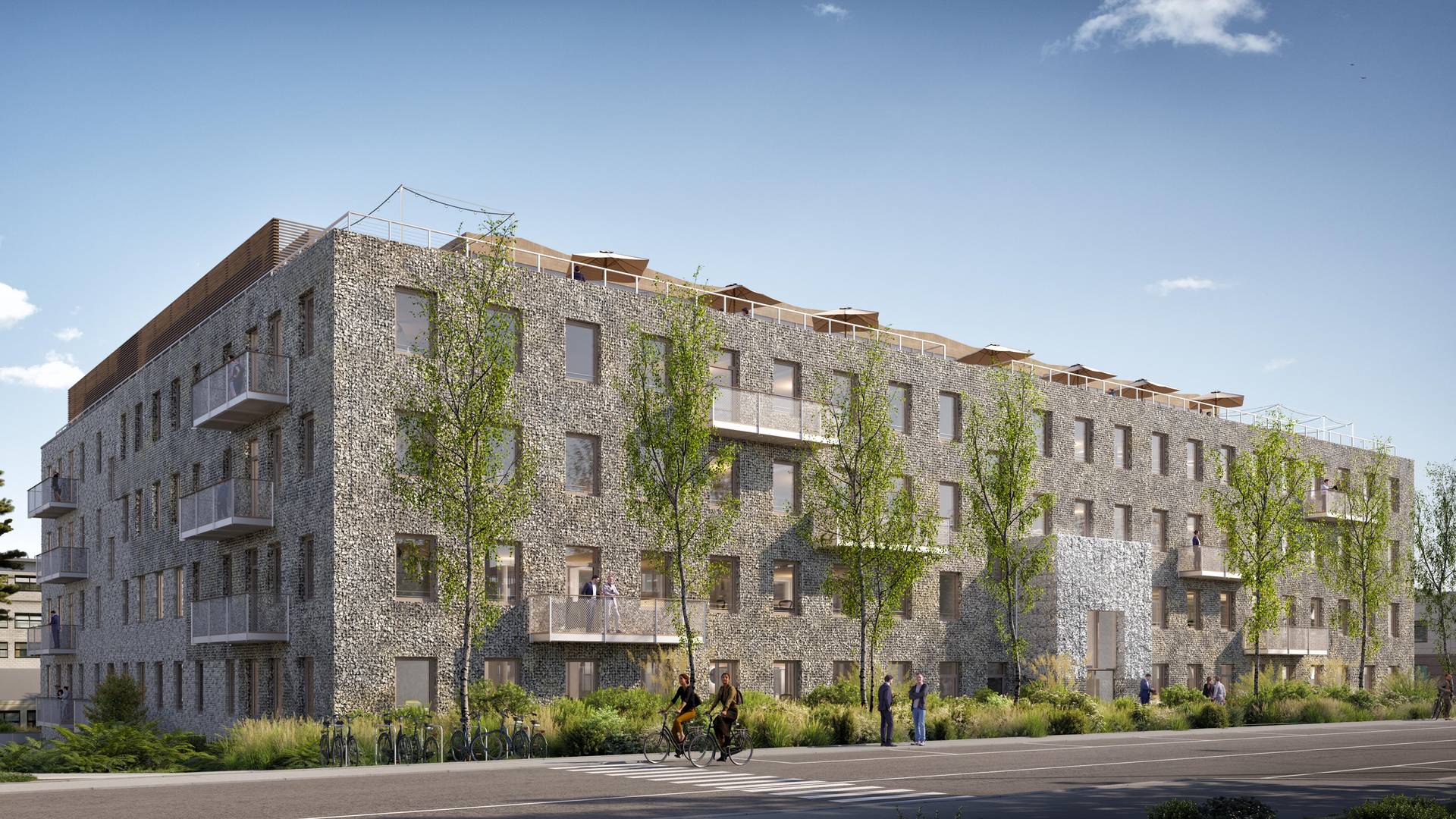
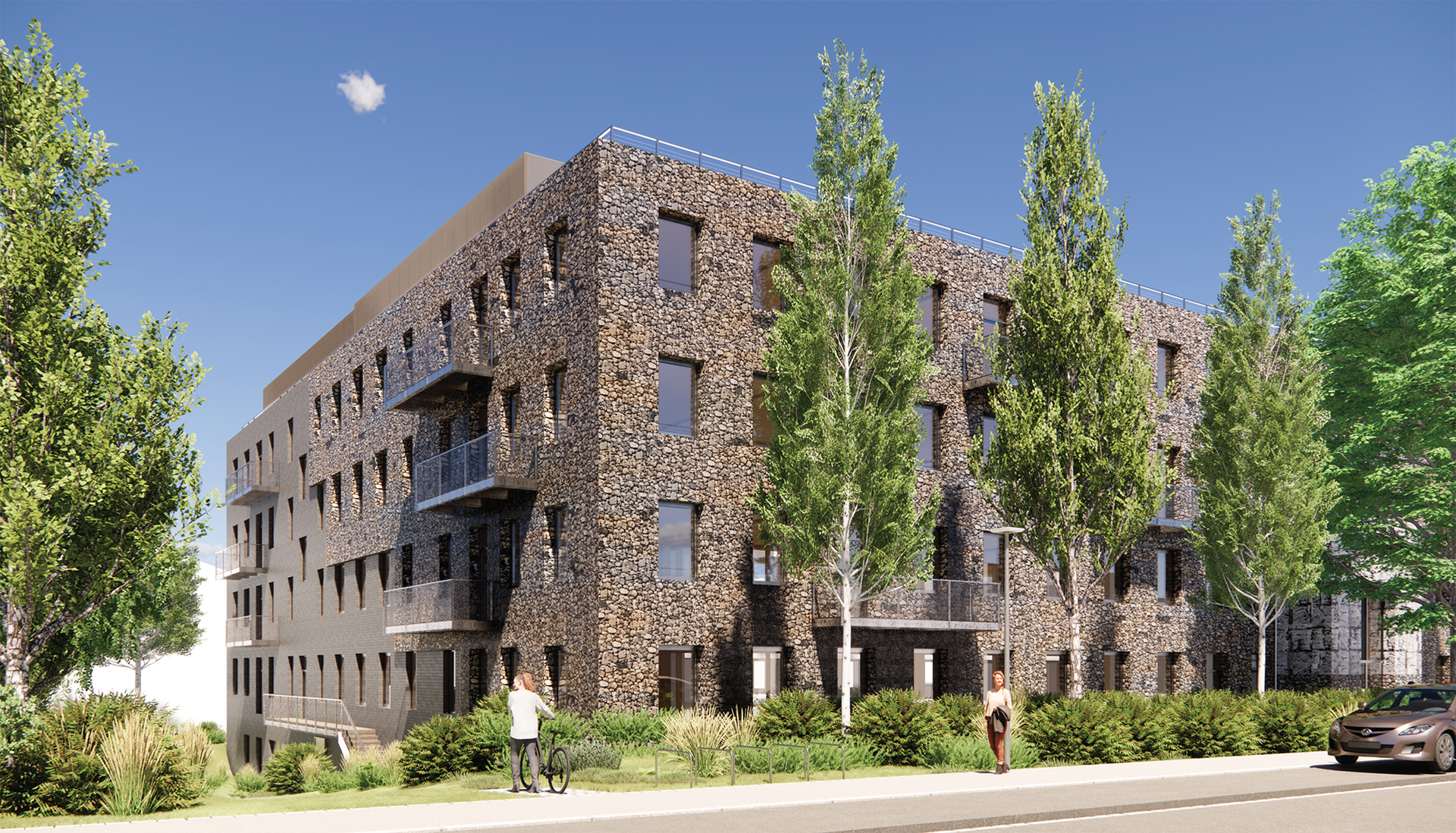
From the outside, The Nest presents itself as a restrained, almost protective structure. Its predominantly grey façades consist of gabion baskets filled with aggregates from deconstruction and reuse streams. Recycled materials therefore take centre stage in the architecture.
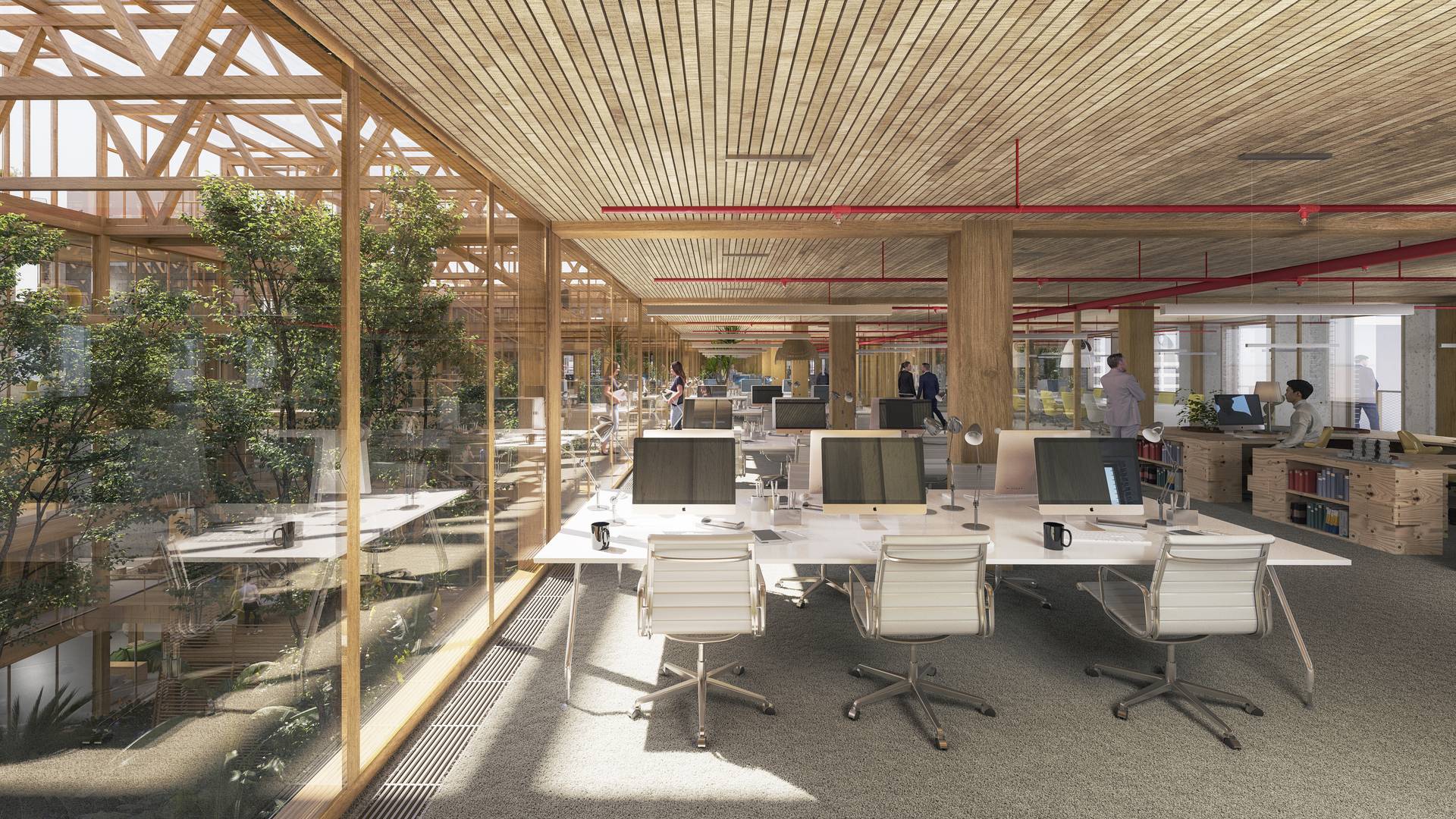
The façade is punctuated by carefully placed windows, balconies and a clearly defined main entrance. Behind this robust outer shell, a warm interior unfolds, shaped by timber, reclaimed materials and crafted details. Recovered marble sourced locally, for instance, is given a new life in the interior and sanitary areas.
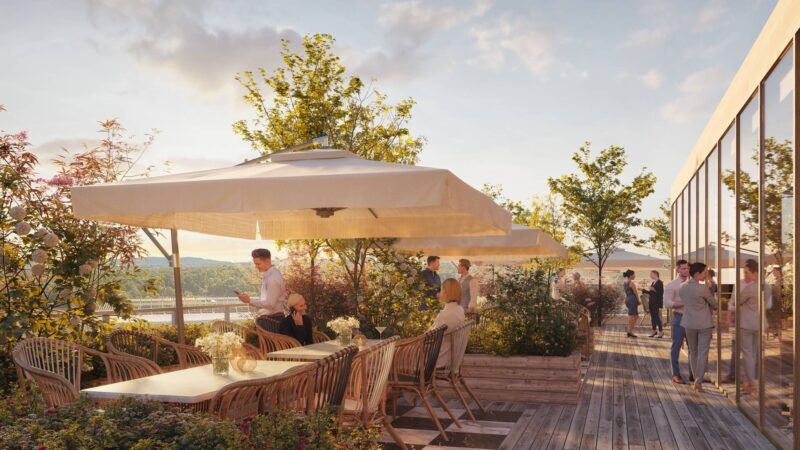 Photo © assar, part of sweco
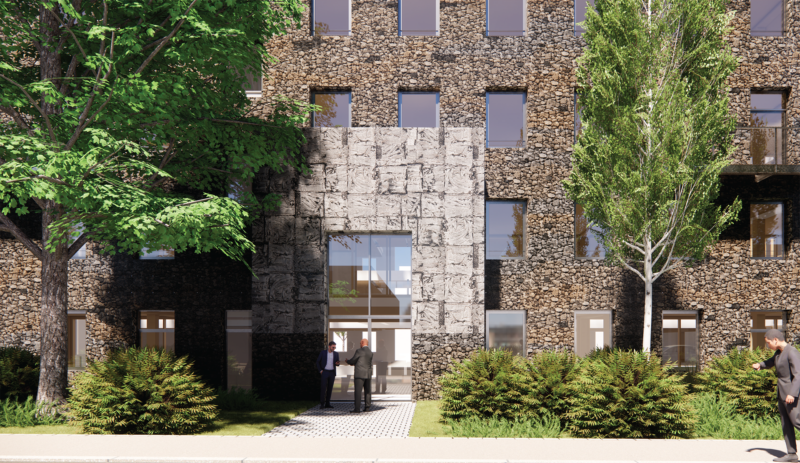 Photo © assar, part of sweco
An atrium as a green heart
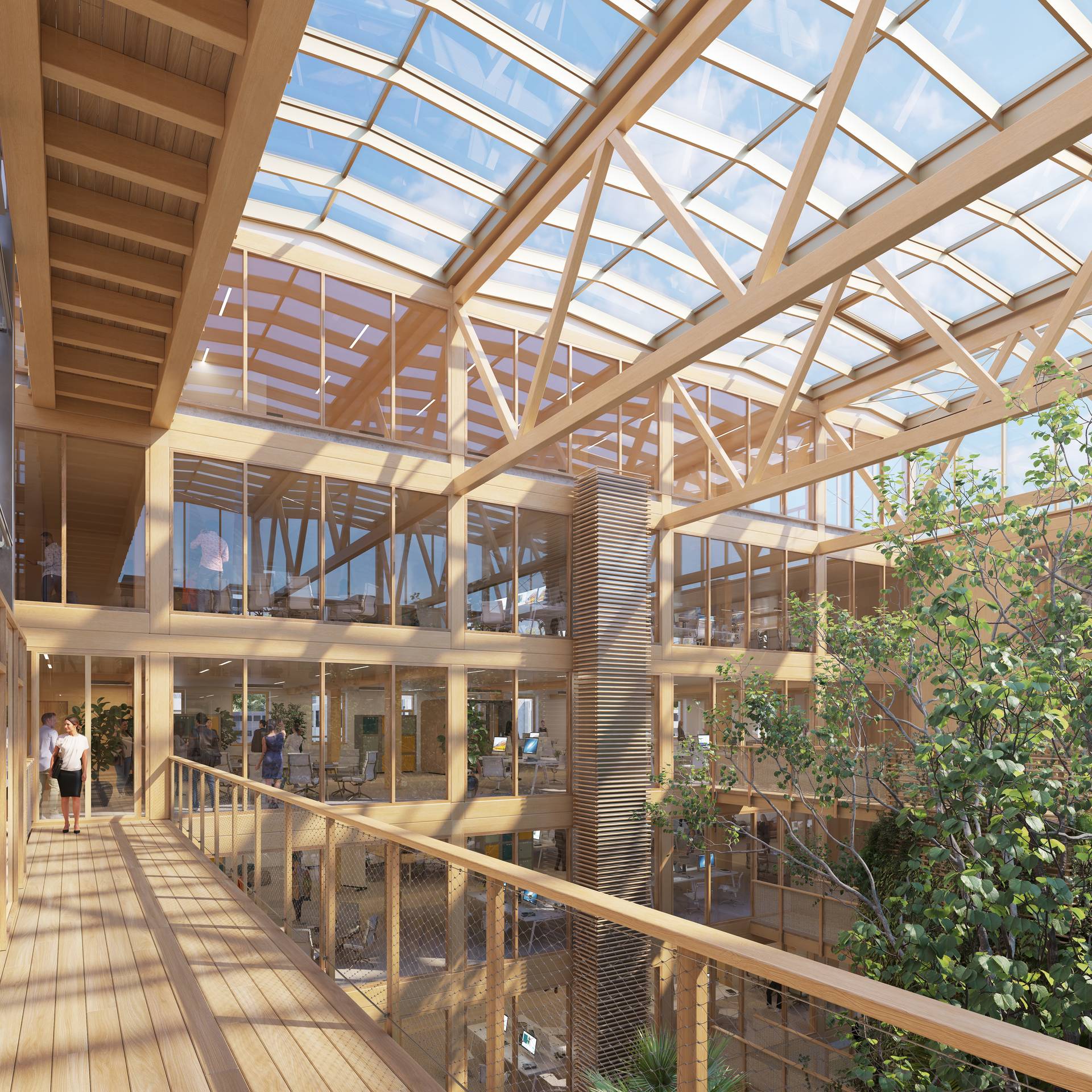
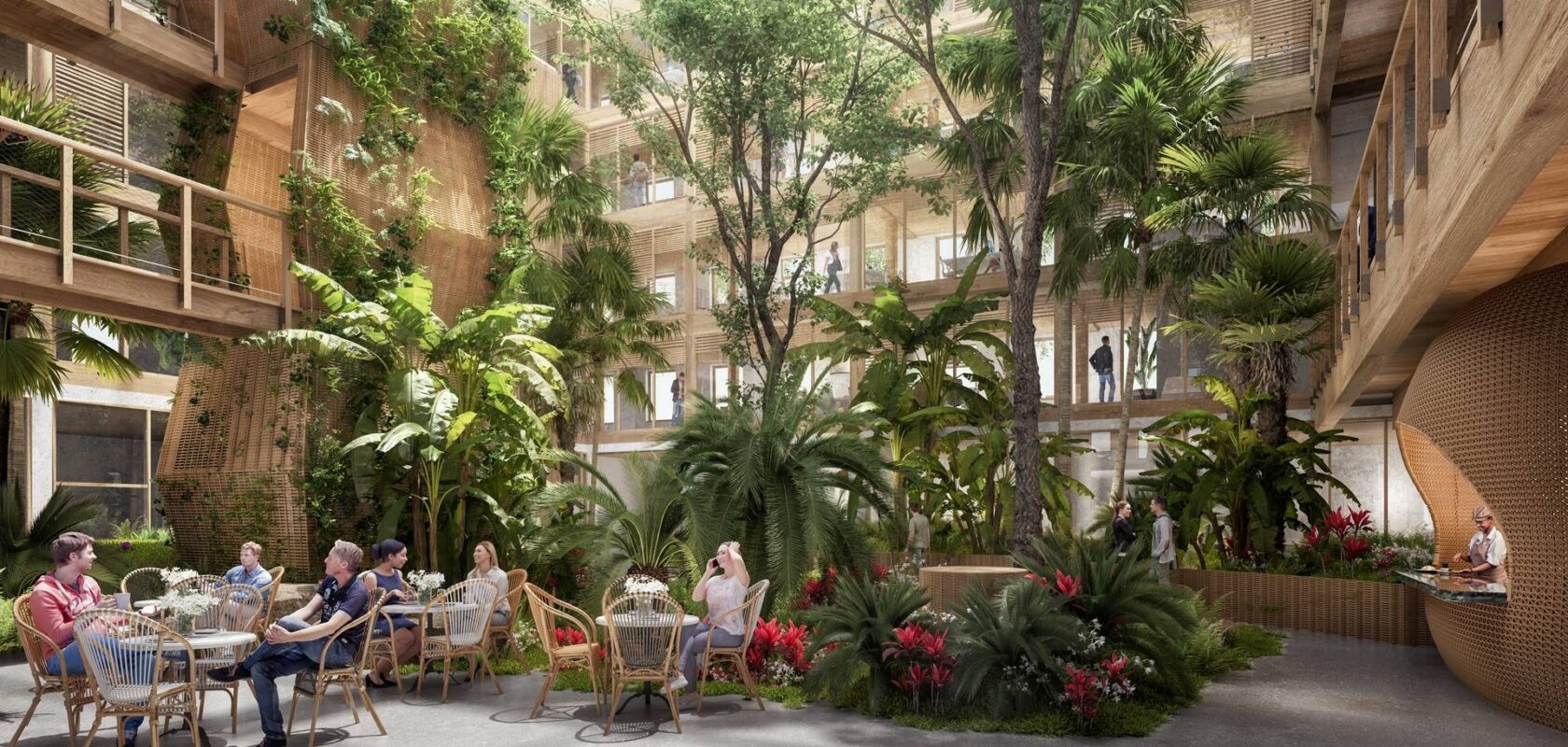
The central atrium forms the beating heart of The Nest. The office floors and shared amenities are arranged around this bright, sheltered space, constructed entirely from timber. A planted indoor garden brings nature deep into the building.
Timber walkways, terraces and informal seating areas offer changing views across a lush canopy. A barista area, meeting spaces and pathways encourage conversation, quiet breaks and spontaneous encounters. In this way, the architecture supports not only productivity, but also wellbeing, social connection and personal development.
Craftsmanship and sustainability as defining features
The Nest deliberately embraces materials and details with character. Crafted elements, including the main light fitting in the entrance hall, wicker cladding around ventilation ducts and restored vintage furniture, give the building a human scale and a distinctive identity.
The sustainability ambitions are high. The project is targeting BREEAM Outstanding, WELL Core Platinum and BiodiverCity AAAB certification. It also focuses on reducing its carbon footprint through the ongoing optimisation of materials and energy performance.
A new benchmark for workplaces
The Nest demonstrates how a workplace can help create a healthier, greener and more inclusive city. By bringing together circular materials, biodiversity, craftsmanship and wellbeing, it delivers a working environment that inspires its users while strengthening urban nature.