
Sweco Belgium
New national hockey stadium ready for the 2026 World Cup
In Wavre, the new national hockey stadium stands as a prime example of the intelligent transformation of an existing infrastructure. Commissioned by the Autonomous Municipal Authority of Wavre and designed by the Cerau agency, Sweco carried out all technical studies, giving the project a level of coherence and performance rarely achieved in a renovation of this scale.
From structural engineering to special techniques, including health and safety coordination, energy performance responsibilities and landscape design, Sweco mobilized its full expertise to reinvent a sports site set to host the biggest hockey events by 2026.
An ambitious renovation rather than a new-build
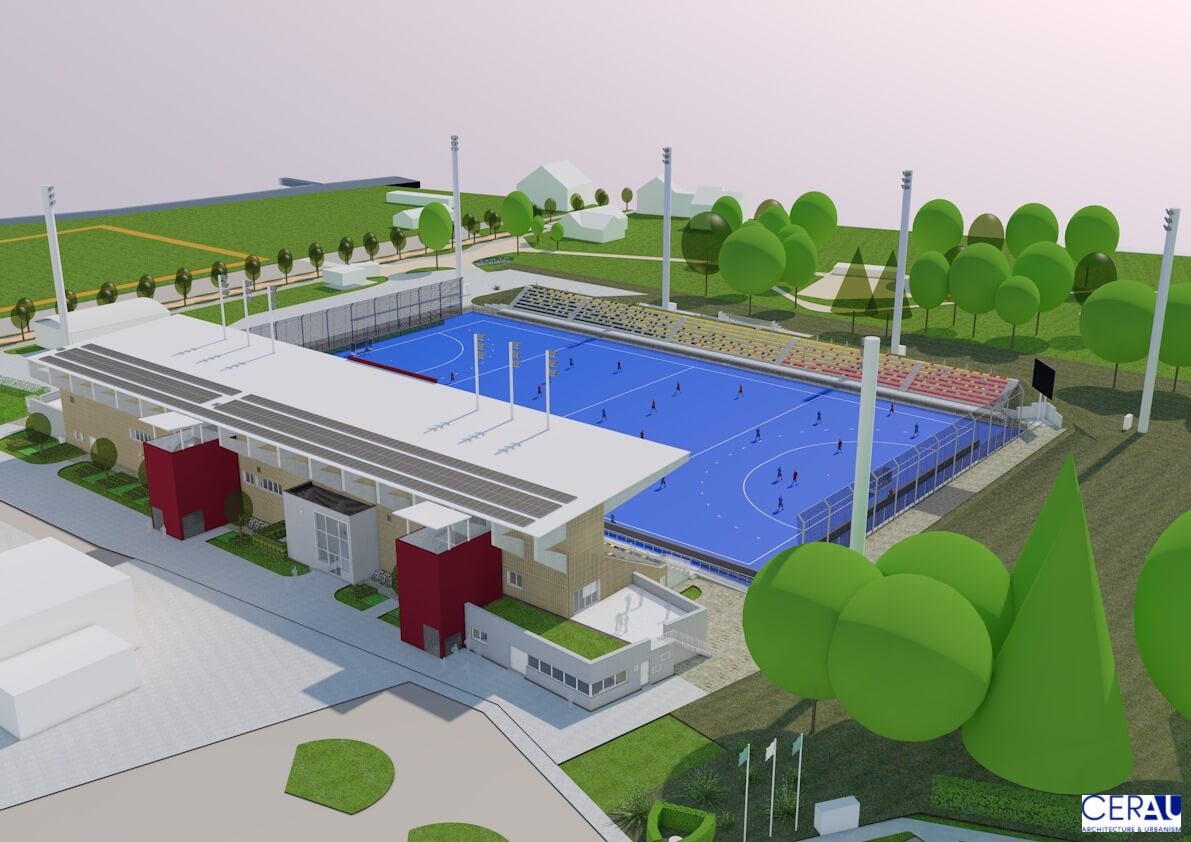
The architectural concept is based on a strong idea: minimizing new volumes while enhancing the existing stand, the historical heart of the site. This sustainable approach not only avoids a heavy reconstruction but also preserves the identity of the place while adapting it to contemporary requirements.
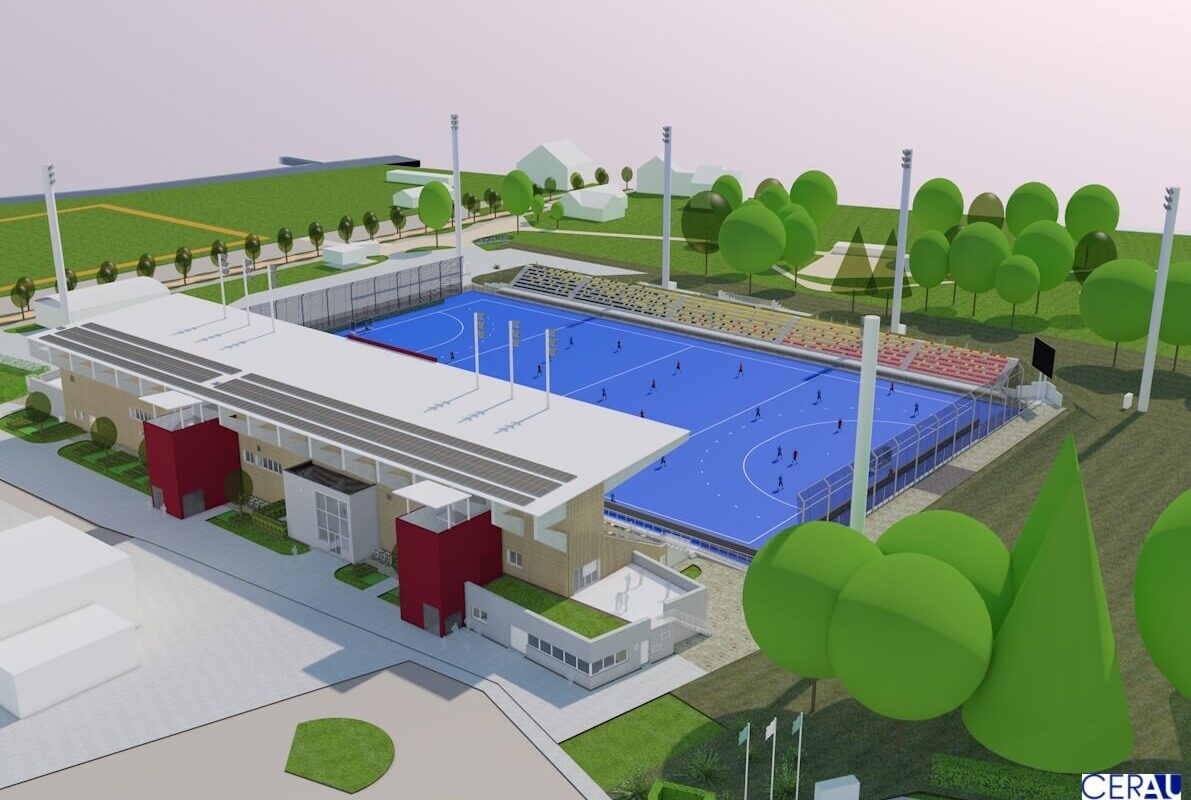
The main stand was insulated and wrapped with a new technical skin ensuring energy performance and comfort. Its two ends were extended to add 500 extra seats, while two new volumes were incorporated: one on the southeast façade, housing a fitness room, sanitary facilities and a sunny terrace for the LARA Hockey Club; the other on the northwest façade, offering the same functions and a terrace dedicated to the federation. At the same time, a new synthetic pitch was built, alongside a general optimization of the surfaces to improve the site’s functionality.
Designed for major events
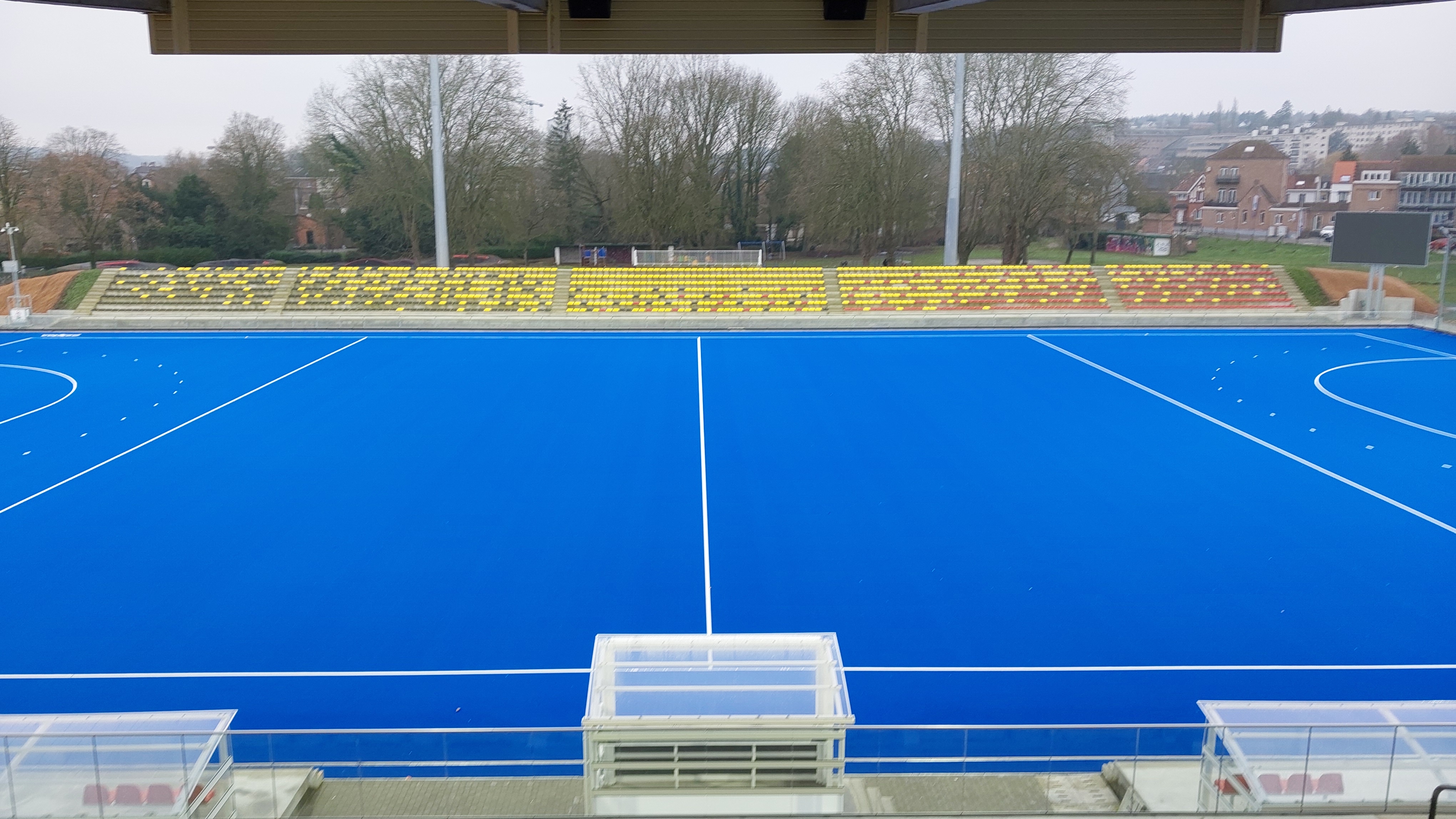
The modernization clearly targets international competitions. New uncovered outdoor stands, integrated into a landscaped embankment, offer 1,200 seats, extendable to 2,500. Specific zones have been reserved to install, during major tournaments, additional removable stands offering 4,700 more seats, as well as modular pavilions dedicated to catering and sanitary amenities. These choices allow the stadium to adjust its capacity to the event while maintaining a limited ecological footprint.
Sustainability embedded in every technical decision
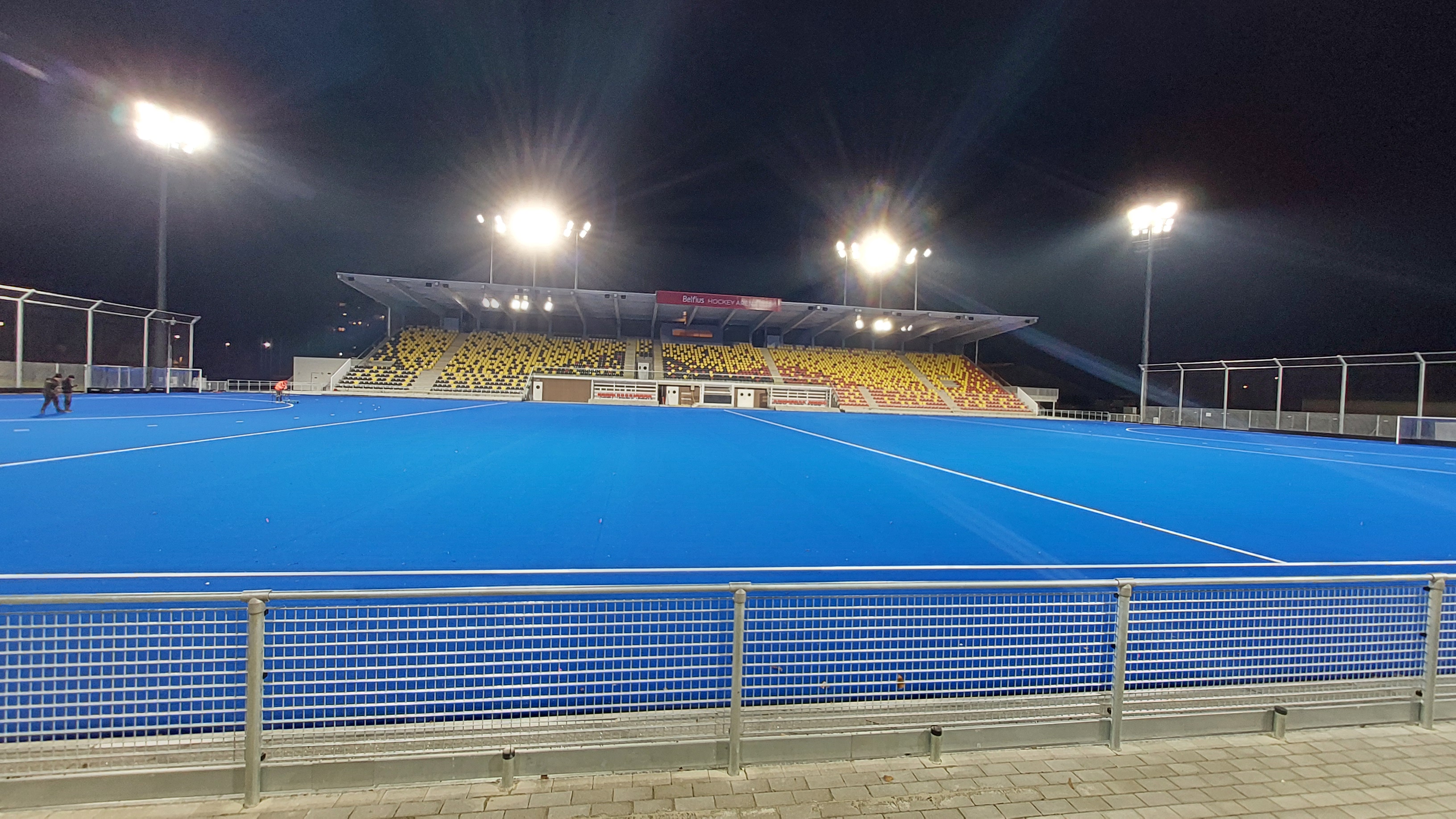
Sweco integrated numerous sustainable solutions into the design. A rainwater harvesting system and an artesian well allow the pitch to be irrigated without relying on municipal resources. The old boilers were replaced by heat pumps, ensuring fossil‑free heating of the building and domestic hot water production. The pitch lighting was completely redesigned to meet the TV2 standard, essential for international broadcasts, especially during the World Cup.
Belgium – Netherlands: first real-life test
On 1 April 2026, the match between Belgium and the Netherlands will serve as the first full‑scale test. This prestigious confrontation will validate the performance of the installations designed by Sweco: stability of the extended stands, lighting quality, flow efficiency, integration of TV infrastructures, comfort of the new reception areas and optimized energy management. The match will mark the first step in a series of events culminating in the 2026 World Cup final, which Wavre will host a few months later.
The future of Walloon hockey
Beyond the World Cup, the stadium will become a key infrastructure for the development of hockey in Wallonia. Thanks to Sweco’s multidisciplinary approach and the close collaboration with Cerau and the city of Wavre, the site is now ready to welcome clubs, competitions, elite training sessions and international events for decades to come.
Other News

Making CCS Work: Insights from Real Industrial Projects
Read more

New national hockey stadium ready for the 2026 World Cup
Read more

UZ Gent is building the care of tomorrow with Project U
Read more