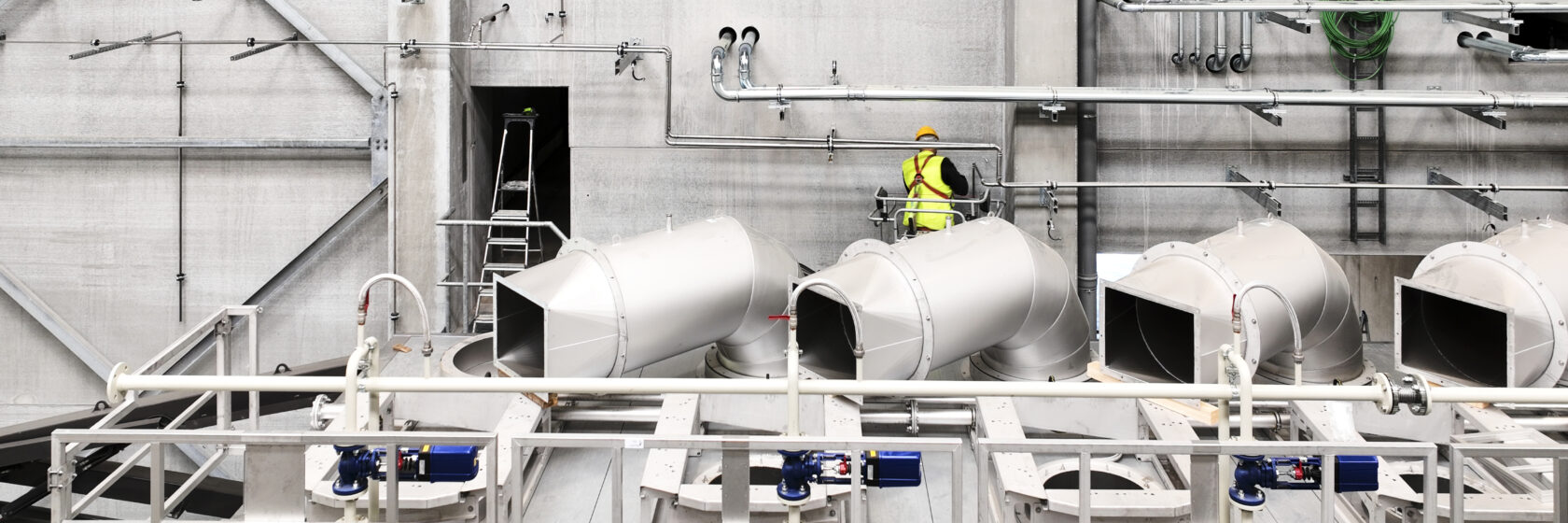
Fossil-free sludge treatment driving a circular wastewater value chain
Every day, Aquafin’s treatment plants purify millions of litres of wastewater from households and businesses across Flanders. What remains after this purification process is sewage sludge, a residual stream that for many years was mainly regarded as a waste product. Today, that perspective is changing fundamentally. Thanks to innovative treatment technologies, sewage sludge is increasingly recognised as a valuable source of energy and raw materials, making it an important component of the circular economy.
With the construction of two carbon-neutral sludge drying facilities in Roeselare and Beringen, Aquafin has taken a major step towards further decarbonising Flanders’ wastewater treatment chain. Instead of fossil fuels, the facilities use low-grade industrial waste heat. Together with Aquafin, Stadsbader-Deckx and Huber, Sweco delivered an integrated solution combining process engineering, architecture, structural engineering, building services, permitting and safety.
- Client
- Aquafin
- Location
- Roeselare, Beringen, Belgium
- Partners
- Aquafin, Stadsbader-Deckx, Huber, Sweco
- Sweco scope
- Environmental permitting, Architecture, Structural engineering, Building services, HAZOP, HAZID, ATEX, SIL, PED, Fire safety, Detailed Engineering, Commissioning
- Expertise
- Water, Industrial solutions, High-performance buildings, Process safety, Circular economy
A new benchmark for sustainable sludge treatment
Aquafin produces approximately 350,000 tonnes of dewatered sewage sludge every year, representing around 95,000 tonnes of dry solids. Traditionally, sludge drying relied heavily on fossil fuels. The new facilities take a different approach by using low-grade waste heat from Mirom in Roeselare and Biostoom in Beringen. This maximises the use of residual energy while significantly reducing CO₂ emissions.
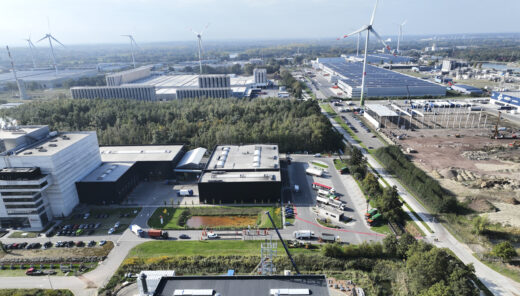
The strategic distribution of both facilities enables more efficient sludge logistics while significantly reducing transport distances.
From wastewater to valuable energy
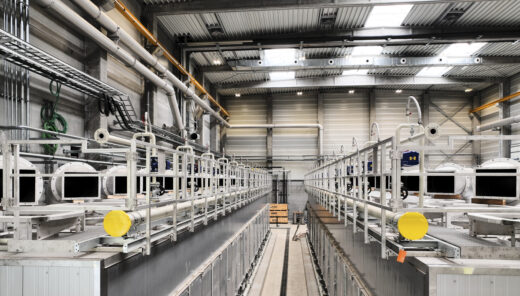
On average, the dewatered sludge still contains 73% water and 27% dry solids. Upon arrival, it is automatically stored in receiving bunkers and day silos. Sludge pumps then transport the material to the belt dryers, where it is spread into thin strands across the drying belt to maximise the contact surface with the warm air. The warm air, heated using industrial waste heat, dries the sludge in a closed air circulation system. Condensate is treated, process air is purified, and the dried sludge is compressed into pellets that are automatically transported to storage silos.
The drying process significantly increases the energy value of the sludge. This allows it to be processed in the SlibMonoVerwerker (SMV), where electricity and industrial steam are produced, with phosphorus recovery planned as a future step.

Waste heat as the key to carbon neutrality
The use of low-grade waste heat lies at the heart of the project. The heat is used directly without being converted into electricity, preventing unnecessary energy losses. These projects demonstrate how industrial symbiosis can play a vital role in the energy transition by maximising the value of existing residual energy streams.
The sludge drying facilities represent an important milestone in Aquafin’s long-term strategy. From 2027 onwards, approximately 66% of Flanders’ sewage sludge will be processed through the SlibMonoVerwerker. By 2040, Aquafin aims to achieve a fully circular treatment process in which energy generation and raw material recovery go hand in hand.
Designed for continuous operation
The facilities operate 24 hours a day, seven days a week. Thanks to a high level of automation, they can continue running throughout the night and during weekends without permanent on-site staffing. Large storage capacities and intelligent process control ensure reliable and efficient performance.
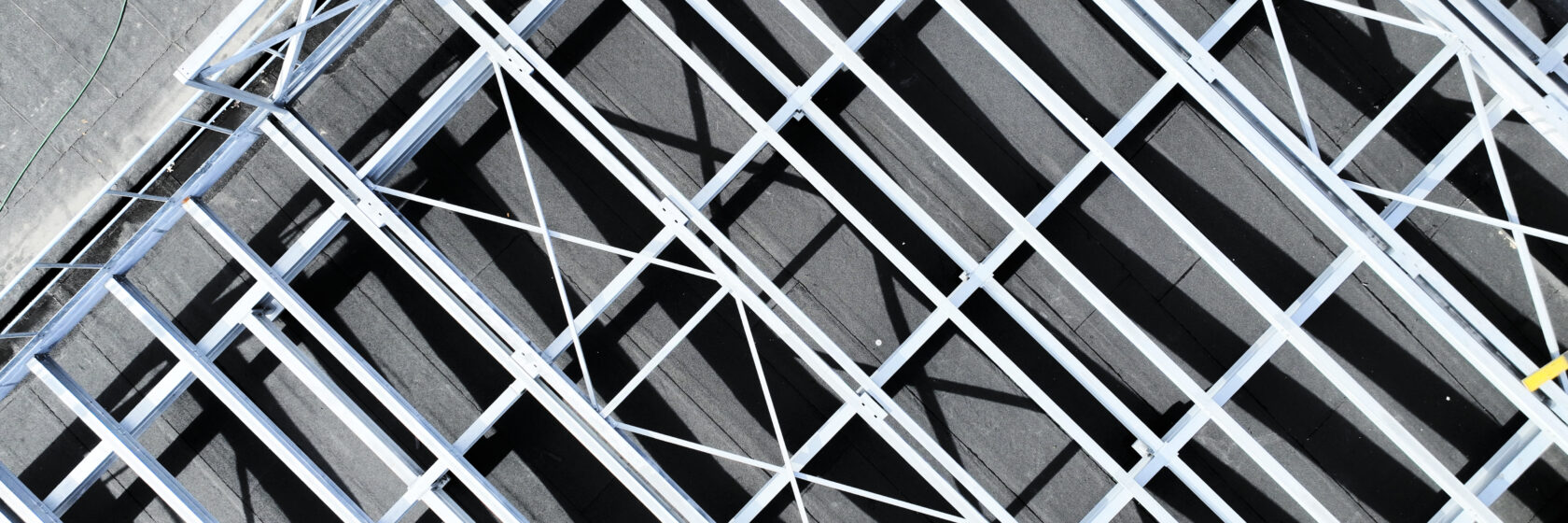
The limited available space required all process equipment, buildings and technical installations to be integrated into an exceptionally compact design. Deep sludge bunkers, settlement-sensitive ground conditions and heavy process equipment demanded a multidisciplinary approach. A central 3D model formed the foundation for collaboration across all engineering disciplines.
Designing with respect for the environment
Noise, odour and emissions were considered from the very first design phase. Innovative airlock systems minimise odour nuisance, while advanced air treatment systems and biofilters ensure the lowest possible environmental impact.

Safety from the very first design phase
Safety remained a priority throughout the entire project. Sweco carried out HAZOP, HAZID, ATEX, SIL and PED analyses and provided machine safety support. Fire safety was fully integrated through fire compartmentation, automatic fire detection, extinguishing systems, CO detection, evacuation studies and emergency procedures.
Designed for maintenance and long-term performance
All installations are easily accessible for inspection and maintenance. A maintenance overhead crane, epoxy flooring, dry pump rooms and battery-backed uninterruptible power supply systems enhance operational reliability while reducing maintenance costs throughout the facility’s lifecycle.
Sweco’s role
Sweco supported the consortium from the tender phase onwards and remained involved throughout the entire project delivery. Its multidisciplinary expertise covered architecture, structural engineering, building services, environmental permitting, process safety, detailed engineering and commissioning. By bringing together specialists from Buildings, Industry, Infrastructure, and Energy & Environment, Sweco developed an integrated design in which every discipline was seamlessly coordinated.
The Aquafin sludge drying facilities demonstrate how integrated engineering, circular energy solutions and innovative process technology can contribute to a carbon-neutral wastewater treatment chain. By replacing fossil fuels with industrial waste heat and transforming sewage sludge into a valuable source of energy and raw materials, Aquafin and its partners are building future-proof infrastructure for Flanders.