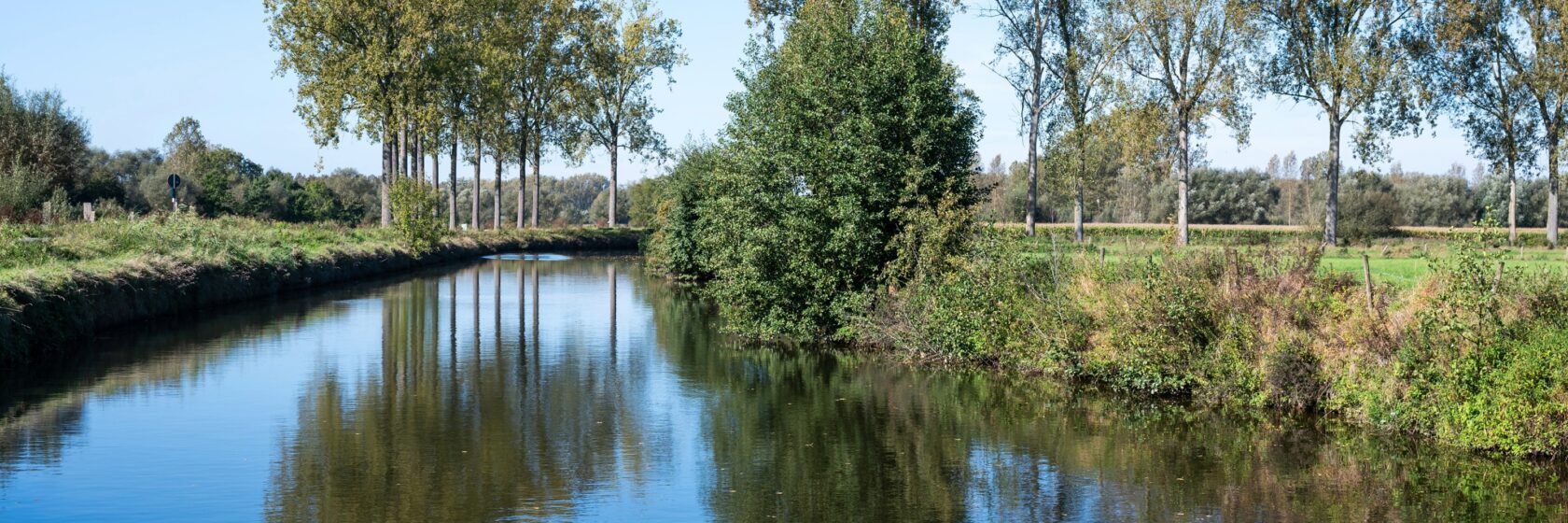
Nature development, ecohydrology & climate adaptation
De Nuchten and Kwaadbroeken-Pollaremeersen: key links in restoring the Dender Valley
The Dender Valley is vulnerable to flooding and drought. As part of the Room for Water – T.OP Dender programme, the valley is being prepared for the future. The sub-areas of De Nuchten and Kwaadbroeken-Pollaremeersen are key elements in this restoration process.
Sweco developed design plans for the Agency for Nature and Forests to transform this area into an attractive, connected wet meadow landscape of high ecological value.
The feasible and deliverable nature development measures are based on an ecohydrological system analysis, which examines how hydrology, soil, water quality, vegetation and fauna influence one another.
- Expertise:
- Climate resilience & nature, Water
- Client
- Agency for Nature and Forests
- Location
- Dender Valley, sub-areas of De Nuchten and Kwaadbroeken-Pollaremeersen
- Sweco’s scope
- Ecohydrological system analysis, vision development, target habitat types, design plans, schedule of measures and cost estimate
- Partners
- T.OP Dender, Room for Water
Restoring a valley system under pressure
The Dender Valley has a long history of interventions. As a result, its natural soil, water and vegetation systems are under pressure today.
The sub-areas of De Nuchten and Kwaadbroeken-Pollaremeersen face various challenges, including disrupted hydrology, reduced water quality, biodiversity loss and limited ecosystem resilience.
A number of studies were already available, setting out general objectives for the valley as well as more detailed insights for specific zones. The challenge was to:
- build on this existing knowledge,
- identify the missing links, and
- translate these into realistic design proposals tailored to the area’s specific characteristics, preconditions and opportunities.
A complex context
with multiple stakeholders
In addition to the Agency for Nature and Forests, water managers and external consultancies were involved. Ongoing and parallel projects in the Dender Valley were also relevant to the development of the design plans. Careful coordination and an integrated approach were crucial to reaching broadly supported decisions.
Sweco brought the various insights together in a clear framework: shared knowledge and transparent criteria for assessing feasible measures.
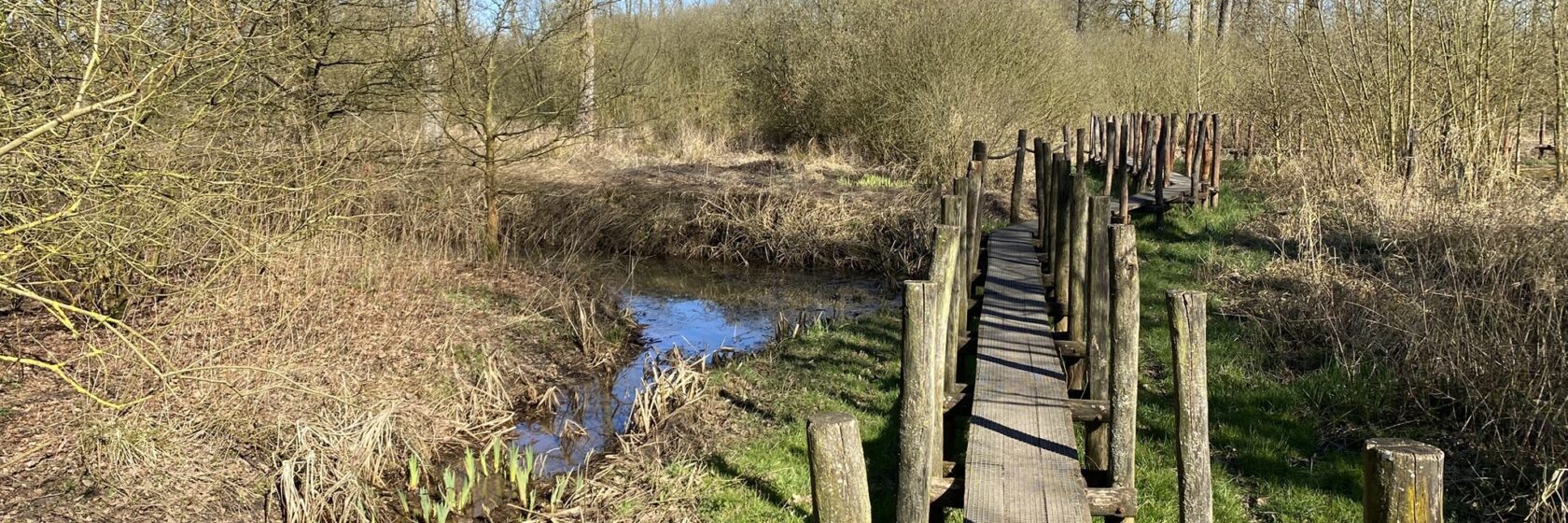
Sweco made intelligent use of existing knowledge, supplemented it in a targeted way and delivered tailored solutions that help projects move forward.
Eric Cosyns, nature management and conservation expert at the West Flanders Intermunicipal Association
A clear synthesis
based on a phased, integrated approach
Our consultants approached the project through a phased, integrated process: analysis, vision development and design were closely interwoven.
In the first phase, we carried out an ecohydrological system analysis. This analysis examines how hydrology, soil, water quality, vegetation and fauna influence one another.
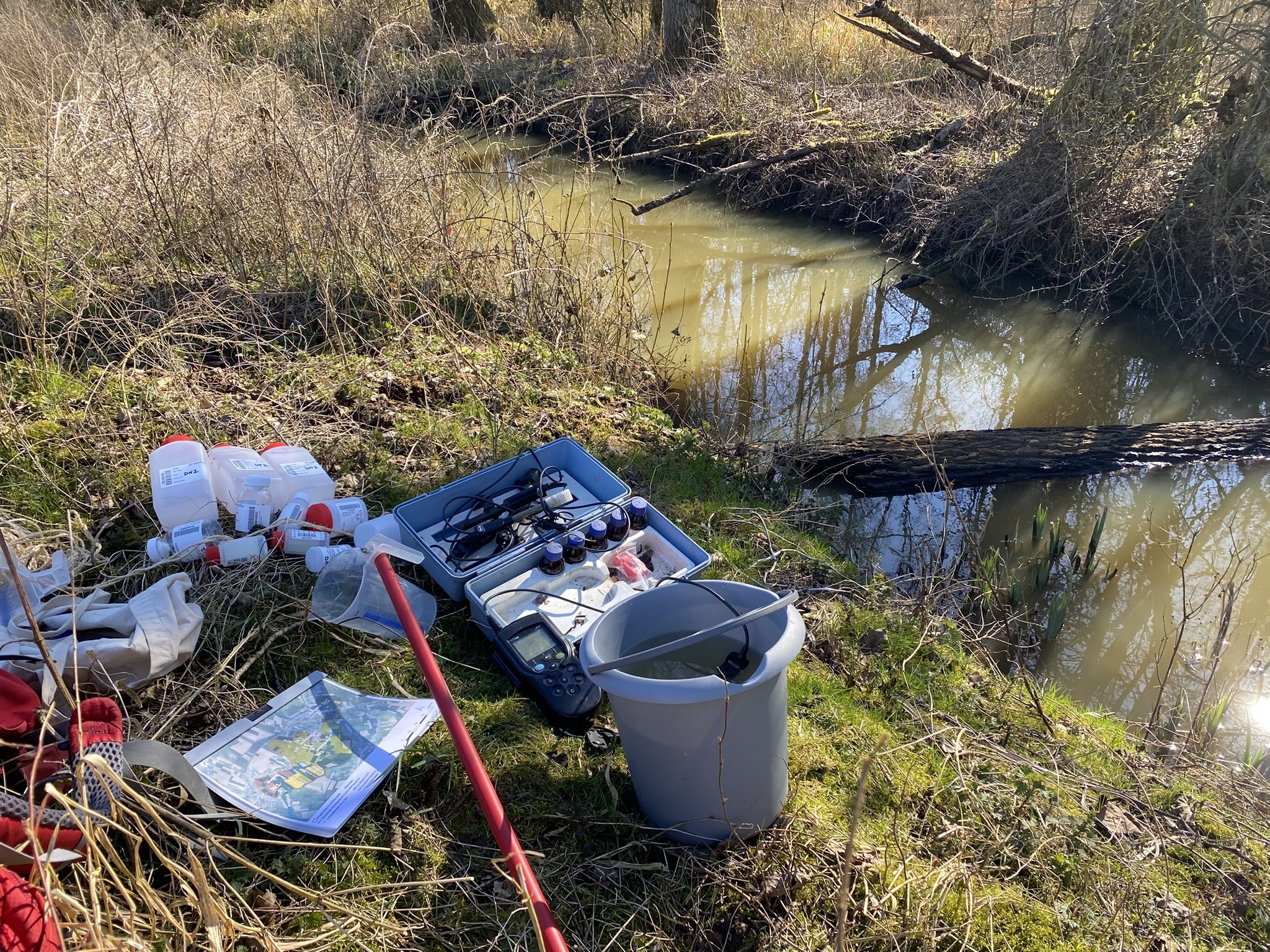
The system analysis was based on available studies, extensive GIS analyses, site visits and targeted supplementary measurements. This included investigations of surface water and groundwater, soil, water quality – including MMIF analyses – and topography.
Using clear synthesis maps, we made it easier to understand how the valley system functions. This created a shared picture of the current situation, the constraints and the ecological opportunities of both sub-areas.
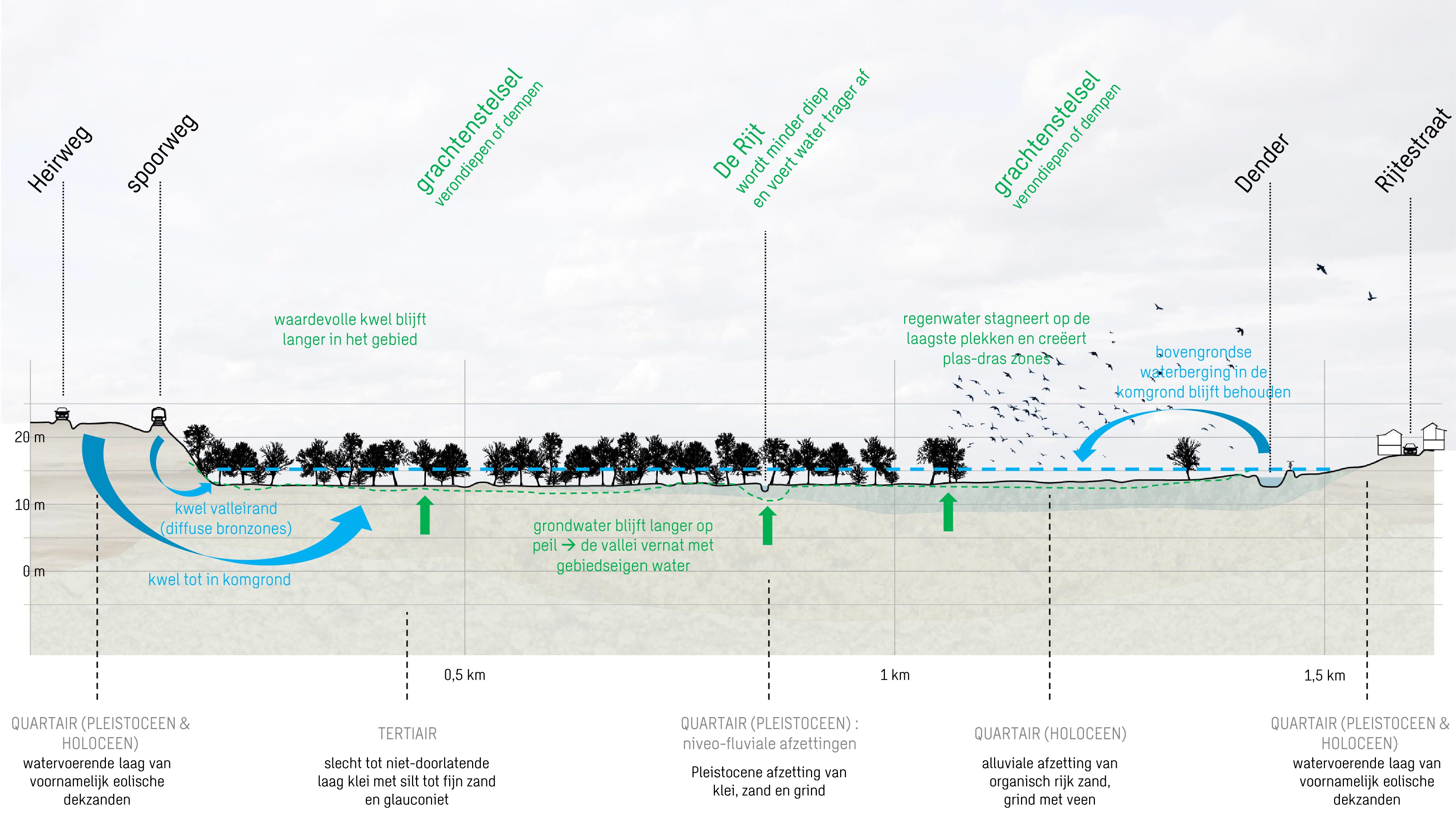
From system analysis
to habitat target visions
to a set of measures
Based on the ecohydrological system analysis, our consultants developed future-focused habitat target visions that take into account the current site constraints and feasibility.
From there, we compiled a set of restoration and design measures tailored specifically to the site. Each measure was assessed in an integrated way in terms of ecological added value, hydrological impact, feasibility and affordability.
This enables us to link ambitious nature objectives to realistic delivery options.
A practical framework for implementation
The end result?
A practical, actionable framework for further implementation on site, comprising:
- clearly developed design plans,
- a comprehensive overview of all measures, and
- a cost estimate.
The chances of success in subsequent implementation phases increase significantly by explicitly taking technical feasibility and costs into account at an early stage.
Added value for
the Agency for Nature and Forests
The added value Sweco delivered for the Agency for Nature and Forests is both technical and process-related. We avoided unnecessary analyses and arrived more quickly at well-founded choices by intelligently combining existing studies and supplementing them with targeted new research.
Our integrated project team included experts in hydrology, ecology, soil, water quality, landscape and hydraulic engineering. This enabled us to design measures that are not only ecologically ambitious, but also realistic and deliverable.
In addition, our approach ensured clear decision-making and a transparent assessment framework for measures that were selected and those that were not.
A resilient future for the Dender Valley
With the design plans for De Nuchten and Kwaadbroeken-Pollaremeersen, Sweco is contributing to the restoration of the Dender Valley. The plans focus on nature restoration, improved water quality, increased biodiversity and greater climate resilience across the landscape.
Sweco provides the Agency for Nature and Forests with a robust framework for further delivery by combining:
- ecohydrological expertise,
- an integrated design approach, and
- a focus on deliverability.
This ensures that the plans align as closely as possible with the objectives of Room for Water – T.OP Dender, supporting a resilient future for the Dender Valley.