Village Center Renewal
New village centre for Veltem-Beisem
In the village centre of Veltem-Beisem, a sub-municipality of Herent, work is currently under way to redesign the heart of the village. What for a long time was mainly a functional expanse of asphalt is evolving into an attractive and vibrant village environment, with more space for encounters, greenery and active travel.
- Client
- Aquafin and the municipality of Herent
- Location
- Veltem-Beisem, Herent
- Expertise
- Hydraulic infrastructure, integrated water management, mobility, landscape and public space
The project was initially prompted by the construction of a separate sewer system, but the municipality took this opportunity to reimagine the village centre. Sweco is responsible for the hydraulic study and technical design, bringing together a range of expertise in water management, mobility and spatial quality.
More than a sewer project
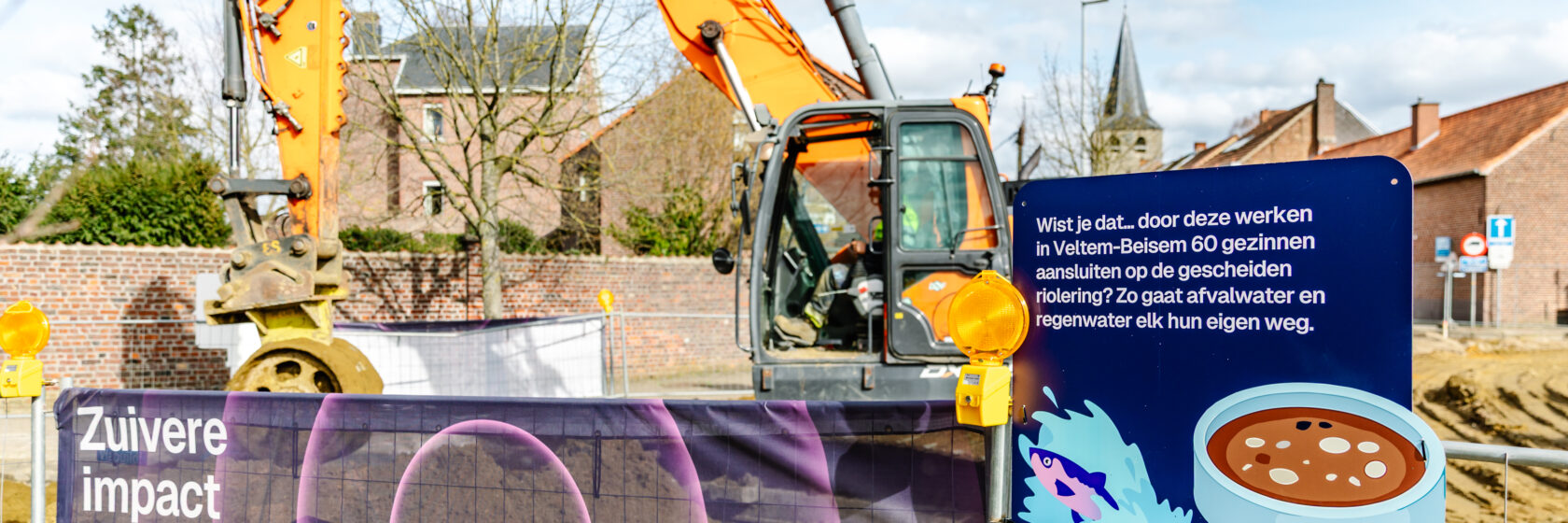
Although the project originated from an urgent need to upgrade the sewer system, it has grown into a comprehensive village renewal. The redesign not only addresses future-proof water management underground, but also completely reconfigures the public realm. The road layout is being locally adjusted to create more space for terraces and meeting places, and hard surfaces are being removed and replaced with greenery wherever possible.
Many of the new green areas are designed as swales. These collect rainwater from paved surfaces and allow it to infiltrate locally. In this way, the design contributes to more sustainable water management and a climate-resilient village environment.
A low-traffic, safe village centre
The centre’s mobility structure is undergoing a fundamental transformation. At present, the village core is characterised by wide paved areas, parking spaces and through-traffic by car, with limited cycling infrastructure.
In the new situation, Dorpsplein and Pastoor De Clerckstraat will become low-traffic streets, creating more space for pedestrians and cyclists. Cycle paths along Lodewijk van Veltemstraat will be widened and new accessible bus stops will be provided. Most parking spaces will be removed from the centre itself, while nearby parking options will be retained. This will result in a safer and more pleasant environment for residents and visitors.
Connecting park and church
The park around the church is also being reimagined. The planned conversion of the church into an events venue is a key driver in strengthening the relationship between the building and the park.
New paths and lighting will make the park more accessible and inviting, while play equipment will provide additional space for families. Access to the cemetery will be maintained, but redesigned as a grassed track so that it blends subtly into the park landscape rather than cutting through it.
Construction site of the future
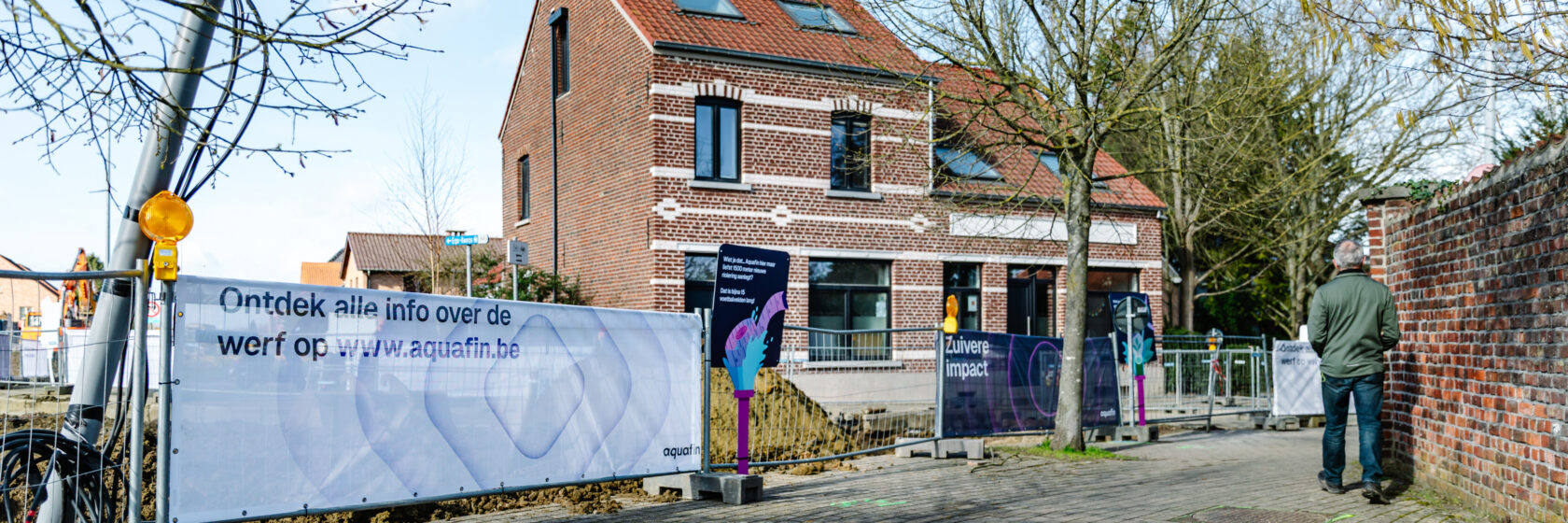
For Aquafin, the project’s implementation serves as a pilot within the “Construction Site of the Future” concept. In the tendering process, the assessment went beyond price alone to include the proposed approach to minimising disruption, ensuring safety and maintaining order on site, with particular attention to the impact on the neighbourhood.
Participation for a widely supported project
The project is being delivered on behalf of Aquafin and the municipality of Herent.
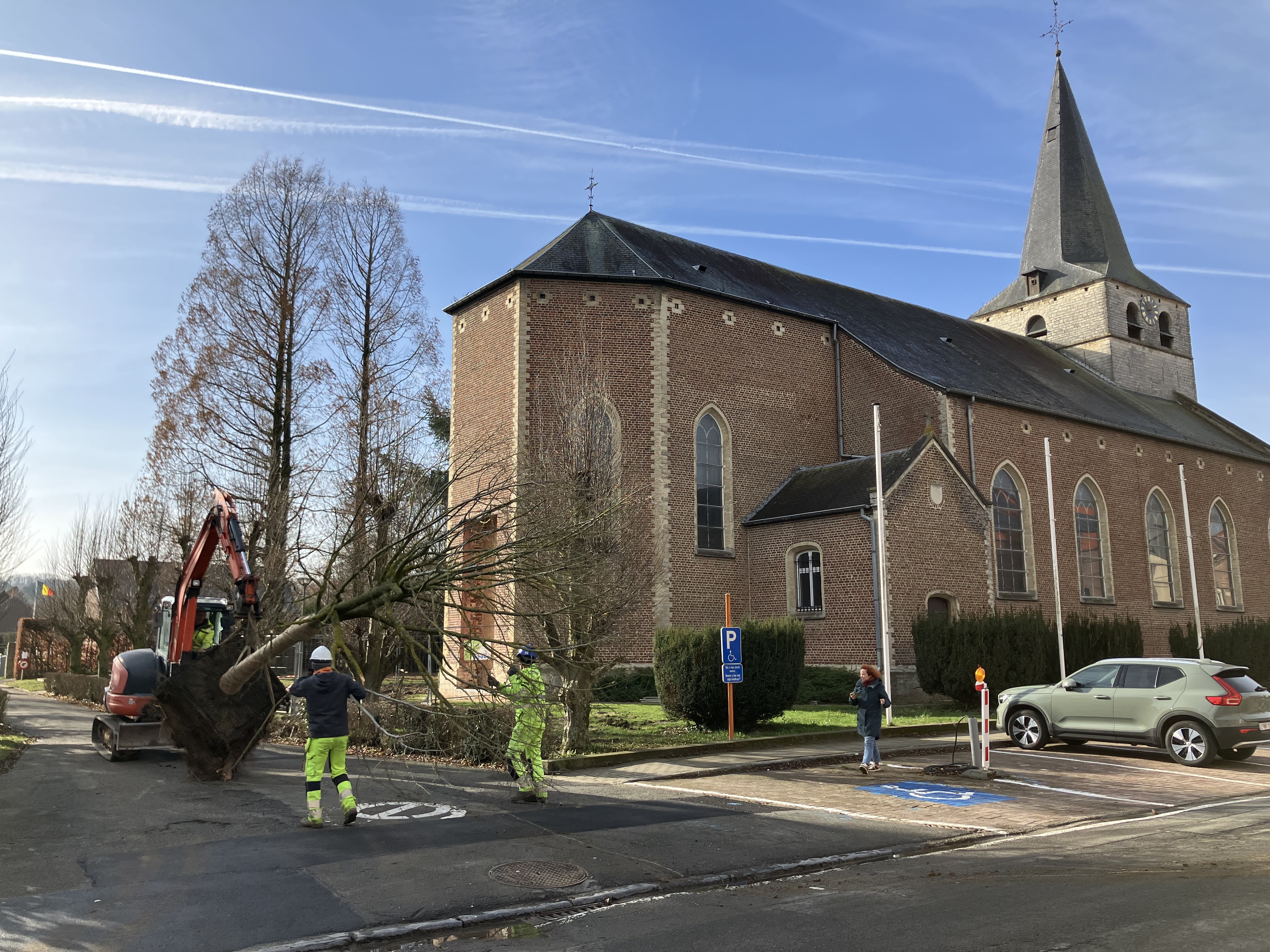
During the preparation phase, various concerns were raised by local residents. Wherever possible, these were taken into account in the design, including the decision to remove only a limited number of trees along the avenue leading to the cemetery. Two trees that had to be felled were transplanted and given a new place in the cemetery.
During construction, the partners are committed to transparent communication with residents. “Site cafés” are organised, where local residents can speak directly with the contractor, the municipality and the project team.
Multidisciplinary approach
The redesign of Veltem-Beisem is the result of close collaboration between multiple disciplines. Specialists in water management, mobility, landscape, infrastructure, geodata and structural engineering have worked together on an integrated design in which technical infrastructure and spatial quality go hand in hand.
This integrated approach has made it possible to design technical infrastructure, mobility and spatial quality together right from the start.
Images 1 and 2: ©StudioFossiel, image 3 ©Sweco