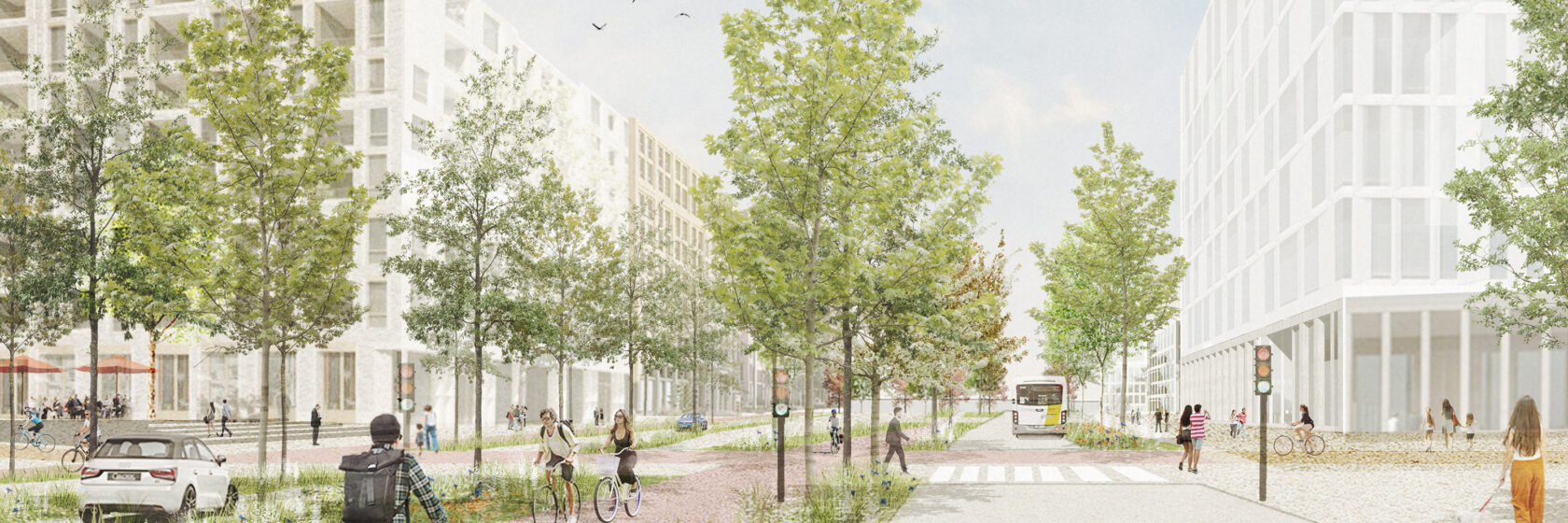
Smart densification as a catalyst for sustainable spatial development in Flanders
Flanders faces a major spatial development challenge. Available space is becoming increasingly scarce, while the population continues to grow and pressure on nature, water resources, mobility networks and quality of life is increasing. To address these challenges, Flanders has adopted a policy of spatial densification. But how can we ensure that accommodating more people and activities within less space genuinely results in more sustainable and healthier living environments?
Commissioned by the Flemish Government’s Department of Environment, Sweco contributed to the study “Smart densification: conditions for sustainable spatial development”. Together with experts from various disciplines, the project team explored how carefully considered densification can contribute to the future of Flanders.
- Client
- Flemish Government, Department of Environment
- Sweco scope
- Spatial planning, Environmental impact assessment, Environmental policy, Sustainable mobility, Climate adaptation, Water management, Ecology, Strategic policy studies
The challenge
Spatial densification is often regarded as an important solution to the spatial challenges facing Flanders. By bringing homes, amenities and workplaces closer together, travel distances can be reduced, dependence on cars can decrease, and more space can be created for nature, water and biodiversity.
In practice, however, the situation is more complex.
The locations where densification is most desirable, such as urban centres and well-connected areas, are often already subject to significant environmental pressures. Air quality, noise pollution and traffic pressure can make it more difficult to deliver new projects. This creates a densification paradox: projects that contribute to a more sustainable spatial future are more likely to encounter obstacles within existing assessment frameworks, while less sustainable developments outside urban centres can sometimes receive a more favourable environmental impact assessment.
Overcoming this paradox was the central challenge of the study.
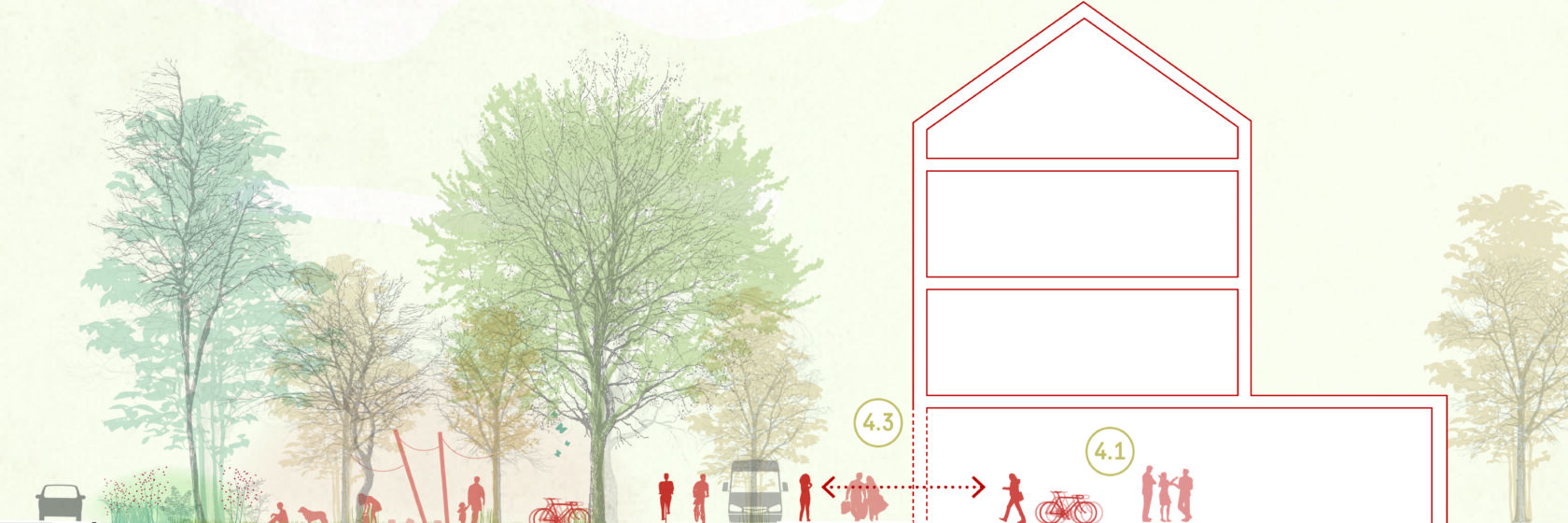
Our approach
Sweco examined how existing assessment frameworks and environmental impact assessments currently operate and where their limitations lie. The analysis showed that many assessments focus primarily on the direct impact of an individual project within a relatively limited geographical area and timeframe. As a result, the broader societal benefits of strategic densification are often insufficiently recognised.
Together with the Department of Environment, Sweco therefore developed a broader approach in which projects are assessed not only on their local impacts, but also on their contribution to long-term spatial transformation. Throughout the process, Sweco worked closely with a core team from the Department of Environment. A series of think tanks, workshops and expert groups also brought together specialists from different disciplines to combine their knowledge and perspectives.
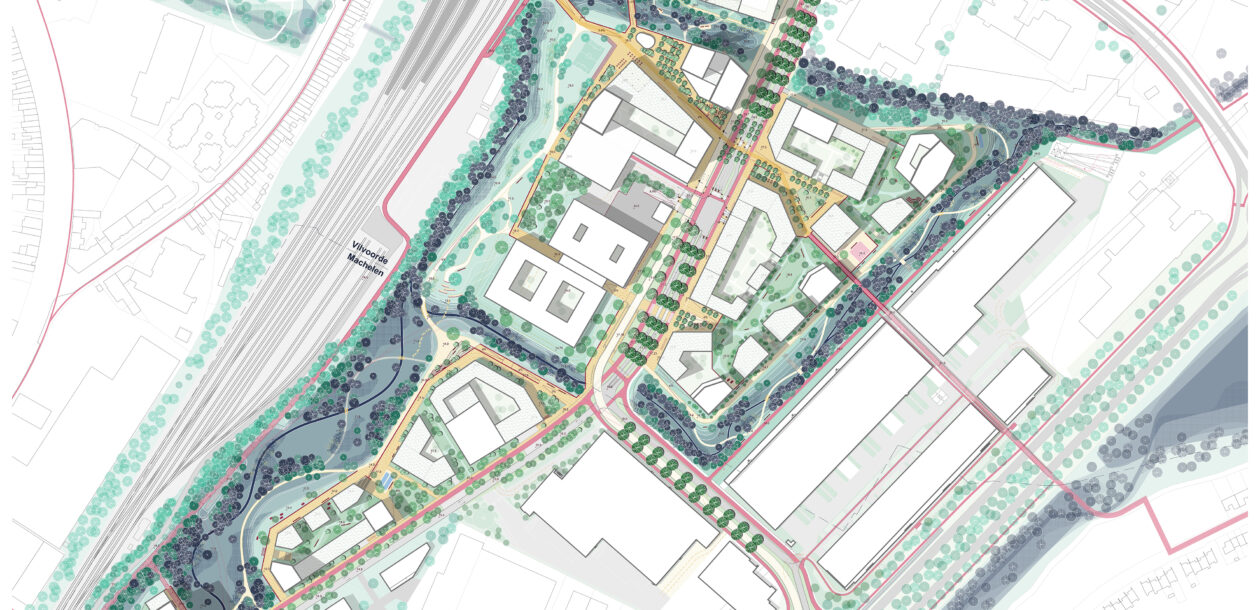
An integrated vision for sustainable development
The study demonstrates that densification alone will not solve spatial challenges. Smart densification requires an integrated approach in which different societal challenges are considered together. This includes creating sufficient space and attention for:
- Sustainable mobility
- Quality of life
- Water management
- Biodiversity
- Climate adaptation
- Spatial quality
Smart densification also requires smart assessment methods that recognise the connections and interactions between these themes and evaluate them from a long-term perspective. This study provides a framework for such an approach.
The result
The study resulted in a series of policy recommendations and conditions designed to support Flanders in future densification projects.
The research provides policymakers, cities and municipalities with a better understanding of how densification can contribute to sustainable spatial development without becoming constrained by existing assessment methodologies. At the same time, it encourages a more forward-looking approach to assessment, in which positive long-term impacts are also taken into account.
Sweco also incorporates the insights gained from this study into new assignments. In densification projects, we aim to encourage public authorities and developers to go that extra step. By adopting a forward-looking, integrated approach to planning and programming, we can deliver higher-quality projects that genuinely add value to the existing urban or village fabric.
Sweco’s added value
Spatial challenges are becoming increasingly complex and require an integrated approach. Sweco combines expertise in spatial planning, environmental impact assessment, mobility, climate, water management, ecology and policy development to support public authorities in making strategic decisions.
By combining scientific insights, practical experience and participatory processes, Sweco develops policy frameworks that not only meet current regulatory requirements, but also contribute to sustainable living environments for future generations. The integration of transport models and spatial models provides additional value. By analysing mobility data and spatial development together, the effects of policy choices and spatial interventions can be predicted more effectively. This creates robust, evidence-based scenarios that support better decision-making and future-proof solutions.
*AI-generated images