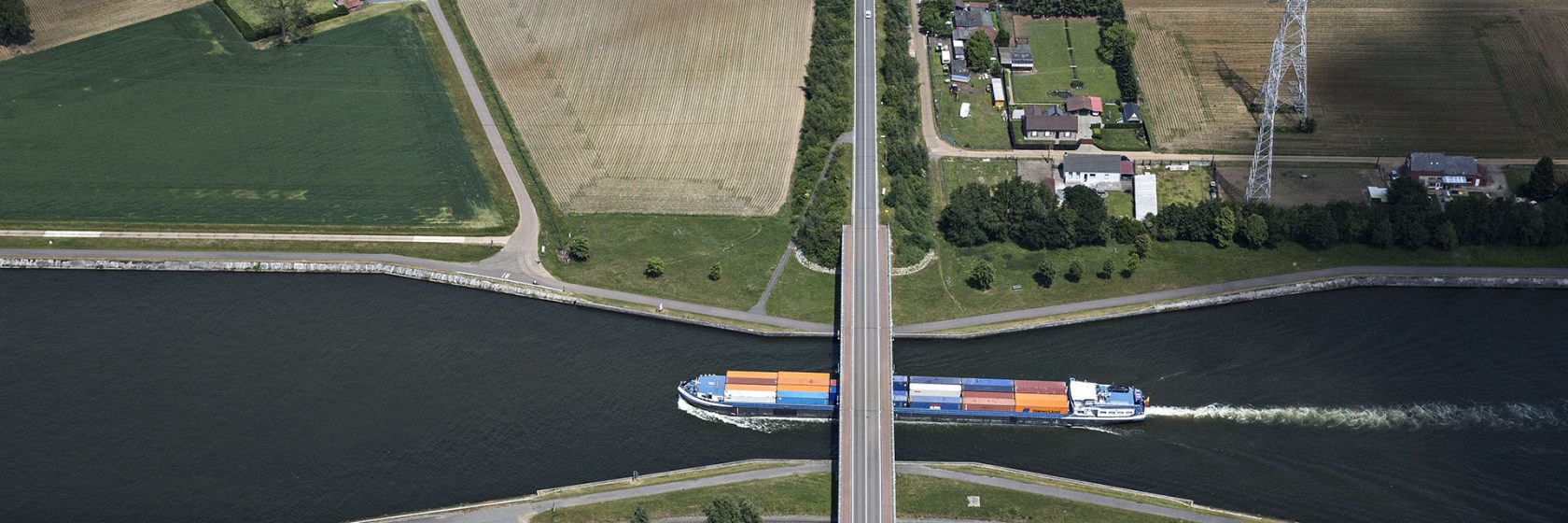
Upgrading the Albert Canal gives inland navigation and local mobility more room
By raising the bridges over the Albert Canal to a free clearance height of 9.10 metres, the route between Antwerp and Liège is now ready for vessels carrying four layers of containers. Together with Arcadis, Sweco supported the sub-assignment for 31 bridges with integrated engineering, preliminary studies, programmes of requirements, traffic and accessibility measures, tender support and site supervision.
The upgrade not only increases inland navigation capacity, but also improves road safety, traffic flow and the quality of local connections along the canal in several locations.
- Expertise:
- Transport & Mobility
- Client
- De Vlaamse Waterweg nv
- Location
- Albert Canal, Antwerp-Liège route
- Services
- Preliminary studies, programme of requirements, tender support, traffic and accessibility measures and PPP site supervision
- Partner
- Arcadis
A waterway highway for Flanders
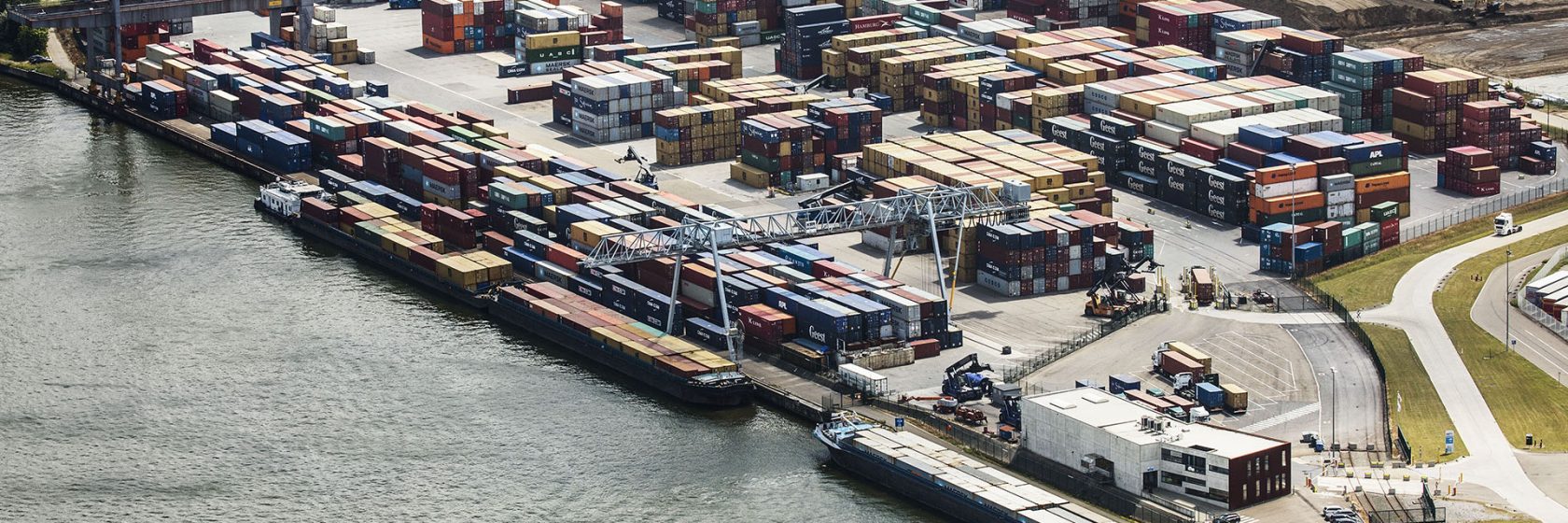
The Albert Canal is Flanders’ most important economic waterway. Every year, almost 40 million tonnes of goods are transported along it: the equivalent of around two million trucks. The canal connects the Port of Antwerp with the Meuse in Liège and also plays an important cross-border role towards the Netherlands, France and Germany. This makes it not only a Flemish transport axis, but also a strategic link in the European freight network and the North Sea-Mediterranean Corridor.
By raising the bridges and improving the canal width at strategic locations, inland navigation can play a stronger role as a sustainable alternative to road transport. One additional container layer significantly increases the efficiency of each vessel: shipping efficiency can rise by around 33 percent. This makes waterborne transport more attractive for companies while helping to reduce congestion and CO2 emissions, including on the busy E313 corridor.
From bottleneck to logistics lever
For years, the low clearance height of several bridges and the limited canal width between Antwerp and Wijnegem created major bottlenecks. To accommodate the expected growth in freight and container transport, De Vlaamse Waterweg nv launched a large-scale upgrade of the Albert Canal based on three major interventions: raising bridges, locally widening the canal and reorganising infrastructure along the waterway. This linked the modernisation of the waterway to better local mobility, safer crossings and a clearer separation between heavy traffic, local traffic and vulnerable road users.
Between 2007 and 2024, 50 of the 62 bridges over the Albert Canal were upgraded. This created new opportunities for four-layer container transport, three-layer high cube container transport, Short Sea Shipping and larger project cargo. On 5 February 2024, the first four-layer container vessel sailed along the Albert Canal: a symbolic milestone for the modal shift in Flanders.
Integrated engineering and programme-based approach
On behalf of De Vlaamse Waterweg nv, Sweco, together with Arcadis, supported the upgrade of 31 bridges over the Albert Canal. Fifteen bridges were delivered through PPP-DBFM, integrating design, construction, financing and maintenance within one partnership. The remaining sixteen bridges were upgraded through a regular tendering procedure.
Our assignment combined technical expertise with programme management: from preliminary studies, concept development and programmes of requirements to specifications, tender and award procedure support, traffic and accessibility measures and site supervision. An integrated project team worked on bridge design, stability, phasing, traffic management and execution. Sweco also supervised the PPP-DBFM bridges during construction.
This programme-based approach combined standardisation with site-specific customisation. Repeatable principles were used wherever possible for bridge typology, technical requirements and execution methods. At the same time, each bridge location required specific choices in terms of integration, diversions, interfaces with existing infrastructure and impact mitigation for road and inland waterway traffic.
The sequence of bridge projects also created a valuable learning curve. Insights from earlier design and construction phases could be carried forward to subsequent bridges, sharpening processes, making risks visible sooner and allowing solutions to be aligned more efficiently with site realities.
Result: more capacity, less pressure on the road network
Now that all works have been completed, the Albert Canal can fully realise its potential as a sustainable transport axis. The raised bridges enable four-layer container shipping, increase freight capacity by water and strengthen the competitiveness of inland navigation. The Wijnegem-Antwerp canal section was also upgraded to Class VIb navigability, making it suitable for vessels of up to 10,000 tonnes. The project received European support through the CEF Blending Call, which helped fund the upgrade of the PPP Albert Canal bridges as part of a stronger and more sustainable European freight network.
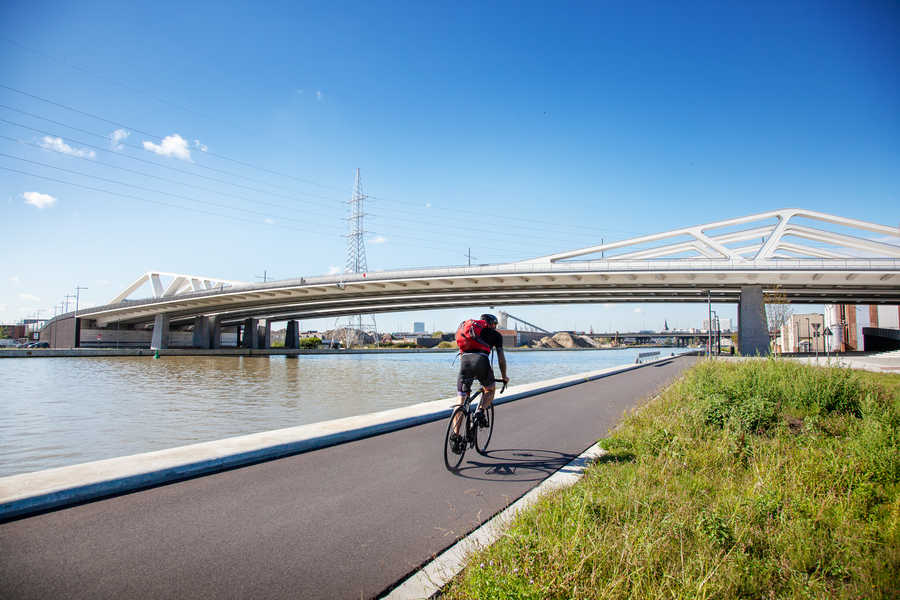
The sustainability story goes beyond modal shift alone: new cycling connections strengthen soft mobility, maintainability was included in design choices and soil flows were managed smartly wherever possible. Further interventions towards Wallonia will complete the connection with Liège and the wider hinterland, allowing the logistics corridor to function increasingly as one coherent network. In this way, the project directly contributes to more robust logistics, better accessibility and a lower climate impact.
Wijnegem as the final piece of the upgrade
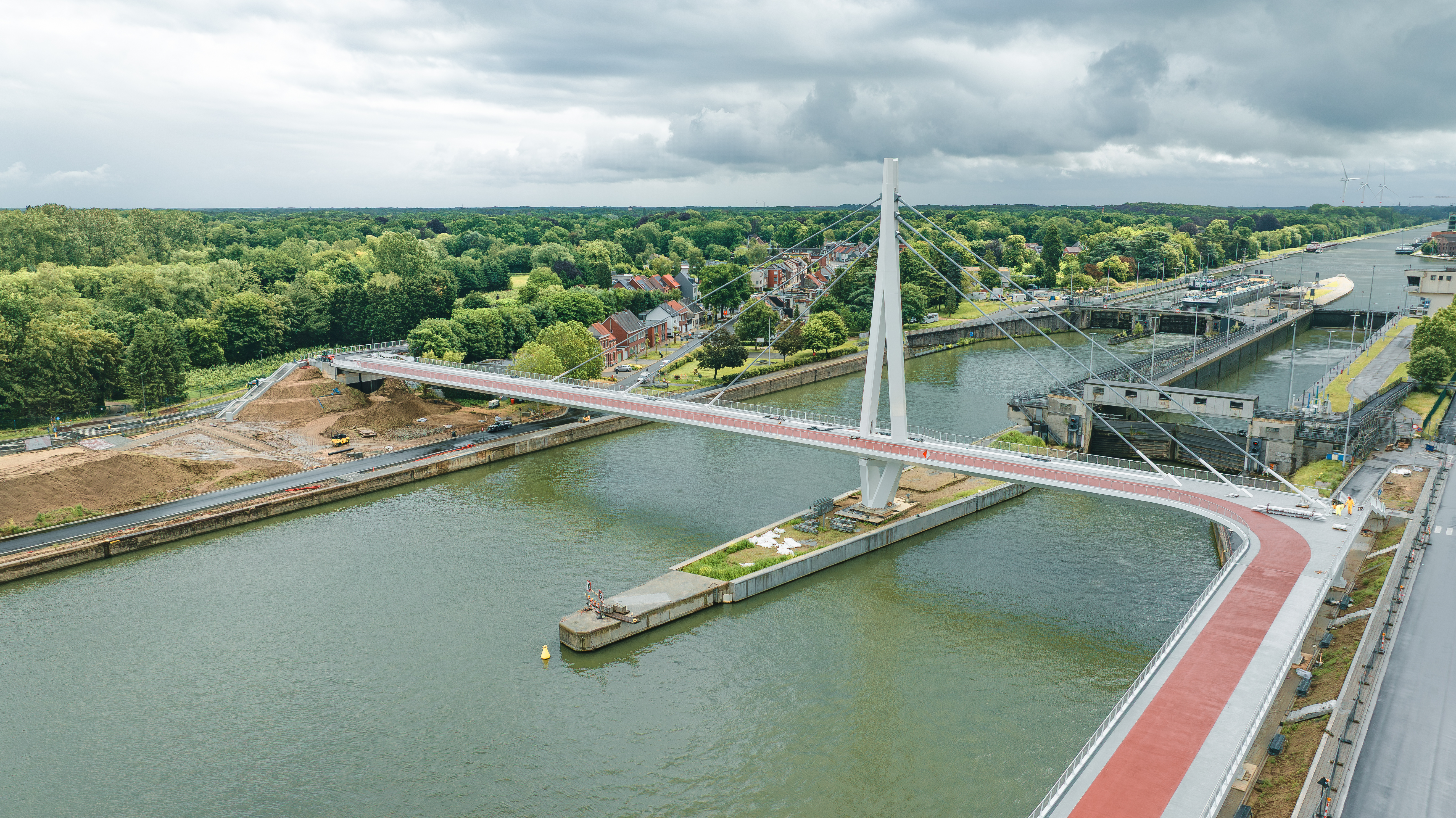
The former Bananenbrug in Wijnegem, for years the last obstacle to four-layer container shipping in Flanders, was replaced in the summer of 2026 by two separate connections: a new road bridge for motorised traffic and a separate cycling and pedestrian bridge near the lock complex. Because of its complex integration into a heavily used canal environment, 3D design played an important role in visualising design choices, interfaces and construction phases and aligning them more effectively with the surroundings.
The cycling connection features a comfortable profile with a wide cycle path, a separate footpath, a limited gradient and rest platforms along the route, making longer and everyday journeys smoother. As a result, the crossing has become not only safer, but also more accessible for commuters, schoolchildren, recreational cyclists and pedestrians. Wijnegem thus marks the final piece of an ambitious infrastructure programme and the beginning of a new phase in which sustainable inland navigation, strong logistics and comfortable local connections reinforce one another.