Digitalisation and Model Predictive Control in buildings
The digitalisation of buildings is evolving rapidly. Whereas building management used to focus mainly on monitoring and traditional control techniques, a much smarter way of managing buildings is now emerging. One of the most promising applications is Model Predictive Control, or MPC.
MPC makes it possible not only to keep technical installations operating correctly, but also to continuously optimise them based on data, forecasts and building behaviour. This results in buildings that are more energy-efficient, more comfortable and higher-performing. This approach relies on a digital twin of the building, combined with weather forecasts and smart control algorithms to calculate the best possible HVAC control strategy.
What is Model Predictive Control?
Model Predictive Control is an advanced control strategy that uses a mathematical model of a building and its technical systems to predict future situations. Based on this, the system determines which control actions are needed today to achieve the best result later on.
Instead of simply reacting when a temperature becomes too high or too low, MPC looks ahead. The system takes into account factors such as weather forecasts, thermal storage in the building, occupancy and the behaviour of installations. This allows heating, cooling and ventilation to be managed more intelligently than with traditional static control systems. Builtwins describes MPC as the backbone of its building and HVAC control and optimisation algorithms.
Why digitalisation is essential in modern buildings
Buildings generate far more data today than they did in the past. Sensors, building management systems, energy meters and HVAC installations continuously provide information about temperatures, consumption, occupancy and performance. This data is valuable in itself, but the real progress lies in actively using that information to make buildings smarter and therefore more efficient.
Digitalisation makes this shift possible. By linking data to simulation, monitoring and predictive control, a building no longer simply reacts, but also anticipates. This is essential in a context where energy efficiency, comfort, sustainability and cost control are becoming increasingly important. In the revised EPBD, the European Commission also explicitly emphasises the role of digitalisation and smart technologies in improving the energy performance of buildings.
How does MPC work in practice?
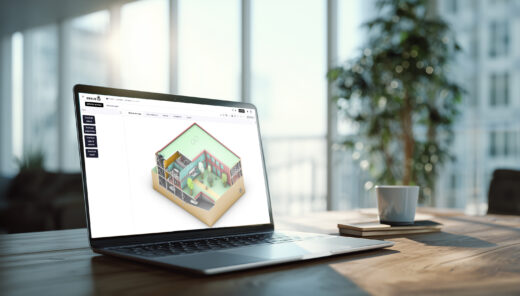
With Model Predictive Control, a digital twin of the building is first created. This digital representation describes how the building responds thermally, how the installations operate and how external factors such as outdoor temperature and solar gains influence performance.
The system then combines this building knowledge with real-time data and forecasts. Based on this, MPC continuously calculates the optimal control strategy for heating, ventilation and cooling. The goal is to guarantee comfort with the lowest possible energy consumption and the most efficient possible operation of the installations. Builtwins applies this approach by combining digital twins with weather forecasts, monitoring, diagnostics and periodic reporting.
What are the benefits of Model Predictive Control?
Lower energy consumption and reduced costs
The benefits of MPC are clear from both a technical and an economic perspective. Smarter control can significantly reduce energy consumption. At the same time, comfort complaints are reduced because the system responds more accurately to the real needs of a building.

More comfort for users
In addition, MPC helps to limit peak consumption and allows installations to operate more efficiently. This is interesting not only from an energy and cost perspective, but also for the lifespan of technical systems. Builtwins states that HVAC energy consumption in existing buildings can be reduced by 20 to 40 percent without major changes to the existing system.
Better performance and longer installation lifespan
For owners and building managers, this means lower operational costs, better follow-up and greater control over building performance. For users, it means a more comfortable and more stable indoor environment.
From reactive management to predictive performance
In many buildings, installations are still controlled in a reactive way today. A correction is only made when a temperature deviates or when a problem occurs. This often leads to inefficiencies, unnecessary energy demand and a less stable indoor climate.
MPC breaks that pattern. Because the system looks ahead, decisions can be made earlier and more intelligently. For example, a building can already start heating up or cooling down at the right time depending on the weather and its use. This makes building management not only smarter, but also more predictable.
That predictability is particularly relevant for Sweco. In complex buildings and technical environments, performance is not a snapshot, but the result of continuous alignment between design, operation and data. Model Predictive Control helps to build that bridge.
Builtwins as a technology for smart building control
For this application, Sweco works with Builtwins, a technology focused on sustainable and cost-efficient building control. The platform builds on research and development in thermal simulation and digital building models. For each building, a digital twin is created to enable smarter and more accurate control of HVAC systems. Builtwins originated from technology developed over ten years within the Thermal Systems Simulation research group at KU Leuven.
What makes Builtwins strong is the combination of optimisation, monitoring and follow-up. The system not only controls installations, but also monitors comfort, sustainability and correct operation over time. This fits perfectly within a vision in which digitalisation does not stop at design or handover, but also plays a role during the operational phase of buildings.
For the future of buildings
The pressure on buildings is increasing. They need to be more energy-efficient, operate more comfortably, emit less CO2 and respond better to changing patterns of use. At the same time, owners, investors and users expect greater transparency about performance and consumption.
European regulation is giving this evolution extra momentum. The revised Energy Performance of Buildings Directive, which has been in force since May 2024, strengthens the focus on energy performance, renovation and smart building technologies. Member States must transpose the directive into national legislation by 29 May 2026 at the latest. This underlines that smart control and digitalisation are no longer optional innovations, but part of the future standard for high-performing buildings.
The role of Sweco
Sweco helps clients not only design buildings well, but also make them operate more intelligently in practice. This requires a combination of technical expertise, insight into building performance and knowledge of digital applications.
Within that approach, Model Predictive Control is a strong lever. It makes it possible to bring together data, simulation and building technology in one smart control strategy. This creates added value on several levels: lower energy costs, better comfort, improved performance and more future-oriented building operations.
For Sweco, this fits perfectly within the ambition to use digitalisation as a reinforcement of expertise. Not technology for technology’s sake, but digitalisation that leads to better decisions and more predictable results.
A future-focused approach for high-performing buildings
Model Predictive Control shows how digitalisation can have a concrete impact on the way buildings operate. By intelligently combining data, building models and predictive algorithms, building management becomes more proactive, more efficient and more sustainable.
For clients, this means a building that performs better, consumes less energy and offers greater comfort. For Sweco, it is a logical step in the evolution towards smart, high-performing and future-focused buildings. In this way, digitalisation becomes tangible in the daily practice of design, management and operations.
Schedule a short introductory meeting
Would you like to know what optimisation opportunities exist for your building or property portfolio? We would be happy to explore together what is already possible today through a digital renovation based on smart control.
Schedule a short call with our experts to discuss the possibilities for your building.
Kurt Corvers

Michael De Smet

Roel Dehoorne

Niels Balcaen

Paul Van Reeth
Do you have a question or would you like to know more?
Curious about the possibilities for your building? Get to know our experts or contact us directly. For general questions or additional information, you can always send us an email. We will be happy to help.