
Sweco Belgium
Circular Water Network Antwerp: Managing risks and seizing opportunities to increase biodiversity
Sweco’s latest Urban Insight report highlights the importance of biodiversity and offers practical advice to help businesses tackle the issue. Managing risks and seizing opportunities are an important step towards sustainable biodiversity management. Circular Water Network Antwerp illustrates how one city is putting it into practice and boosting its climate resilience as a result.
Water reuse keeps Antwerp green
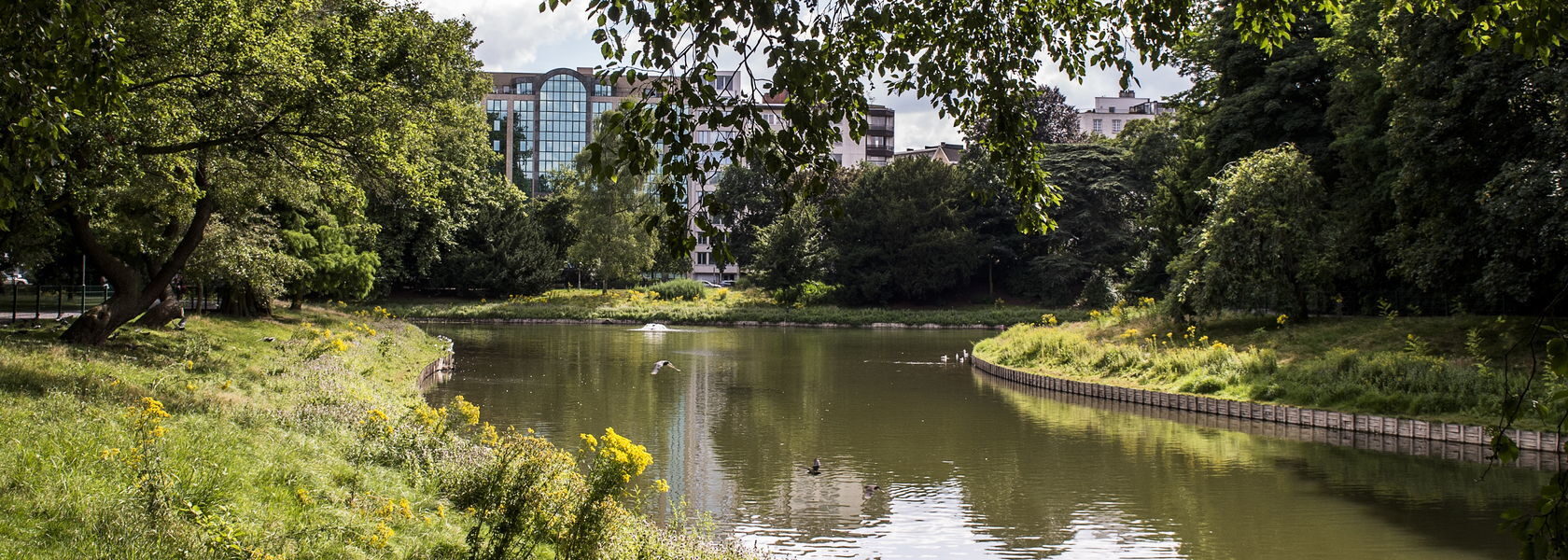
The City of Antwerp is fully committed to circular water use. By treating and reusing surface and drainage water that would otherwise be lost, the city reduces pressure on drinking water resources and keeps its natural environment healthy. This not only enhances biodiversity in parks, ponds, and the Antwerp Zoo, but also helps restore groundwater levels.
Managing risks: A buffer against desiccation
Climate change is resulting in more frequent droughts and low groundwater levels. For Antwerp, this means additional risks: brackish water from the River Scheldt can enter the groundwater table, damaging urban nature and the foundations of buildings. The City is keeping these risks under control by cleverly deploying treated water through a circular network of pipes.
Seizing opportunities: Making smart use of water
The circular water network creates new opportunities. An estimated 3,500 m³ of water can be recovered daily – good for 25,000 swimming pools a year. The water is used to replenish the groundwater table, irrigate urban greenery, refill fountains, and as grey water in public buildings. It enables the city to contribute to a living environment that is cooler, healthier, and more biodiverse.
Sweco as the guide in complex water management
The project is a joint initiative of the City of Antwerp, water-link, ZOO Antwerpen, AG Vespa, Flanders Environment Agency (VMM), and Aquafin, with support from Flanders and the European Union. Sweco supports Antwerp every step of the way: from feasibility study and design to stakeholder management and implementation. With expertise in hydraulic infrastructure, water management, climate adaptation, and treatment, Sweco ensures that the circular water network pays off in both technical and ecological terms. Smart construction techniques also minimise disruption to residents.

How to identify risks and opportunities
Do you want to start working to improve biodiversity? Follow these concrete steps to identify financial risks and opportunities:
- Map out your value chain, use impact analyses, and involve your stakeholders to make your biodiversity risks and opportunities visible.
- Work with recognised frameworks, such as the Taskforce on Nature-related Financial Disclosures (TNFD), to safeguard your actions, including at the strategic level.
- Don’t just examine your operational and systemic dependencies, also look out for new business opportunities that enhance biodiversity.
- Above all, focus on resilient solutions for both the planet and your business.
Discover the five steps to strengthen biodiversity as a company in the Urban Insight report.
Other News
Stakeholder management creates space for better projects
Read more

Spatial policy plans: making today’s choices for tomorrow’s city
Read more

From housing study to action-oriented housing policy
Read more