Sweco Belgium
Energy security starts with a well-considered, future-oriented energy strategy
Companies with a forward-looking vision are confronted with the rapid evolution and increasing complexity of the energy landscape. Various themes play a crucial role in an organization’s energy policy, yet they are often strongly interconnected, making decision-making complex. With in-depth expertise across the entire energy value chain, Sweco supports companies in understanding this complexity and translating it into a clear, integrated strategy and a concrete action plan.
Key energy questions:
- How does your organization protect itself today against volatile energy prices and future market fluctuations?
- Do you expect grid capacity or electrification to impact your company’s growth?
- To what extent is your company prepared for stricter energy, climate and ESG regulations?
- What concrete steps is your organization taking today towards decarbonization and CO₂ reduction?
- Does your organization already have an integrated energy strategy focused on cost, sustainability and operational security?
Volatile energy prices
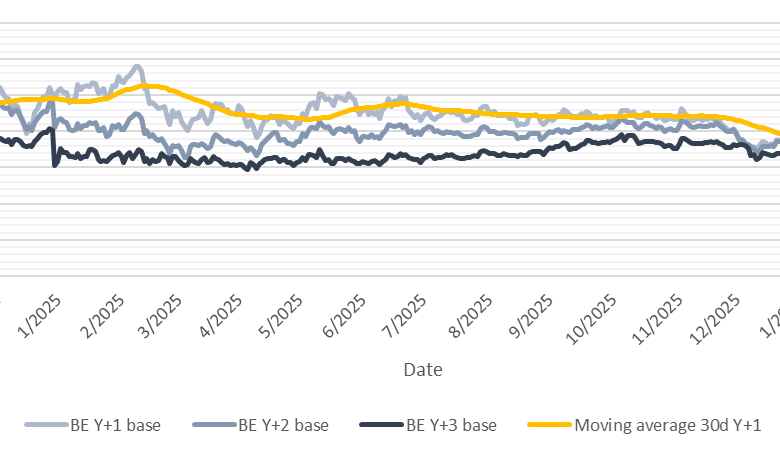
Volatile energy prices remain one of the biggest challenges for companies in energy-intensive sectors. Fluctuations in the energy market driven by the increasing share of renewables, geopolitical tensions and economic factors are making budgeting and financial planning increasingly difficult. Companies are confronted with unpredictable costs that directly impact margins and competitiveness.
The traditional approach of merely purchasing energy is no longer sufficient. Organizations are therefore seeking greater control over their energy consumption and costs. Smart contracting strategies, flexibility and own energy production are rapidly gaining importance. Energy storage and demand response are also becoming strategic tools to limit price risks. Companies that actively manage their energy use create greater stability in their operational costs. A well-designed energy strategy helps organizations reduce their dependence on market fluctuations.
Grid capacity & electrification
Electrification offers major opportunities for sustainability but also puts additional pressure on the electricity grid. Many companies are currently facing limitations in available grid capacity. New production installations, charging infrastructure or electrification projects may be delayed as a result.
Grid congestion is increasingly becoming a strategic challenge for growing businesses. Companies must therefore manage their energy consumption and peak loads more intelligently. Local energy production, battery storage and flexibility solutions are becoming increasingly important. Real-time energy management is also essential to avoid future capacity problems. Electrification requires more than simply replacing fossil processes with electric alternatives. It demands an integrated vision of energy infrastructure, consumption and flexibility.
Security of supply, optimization & flexibility
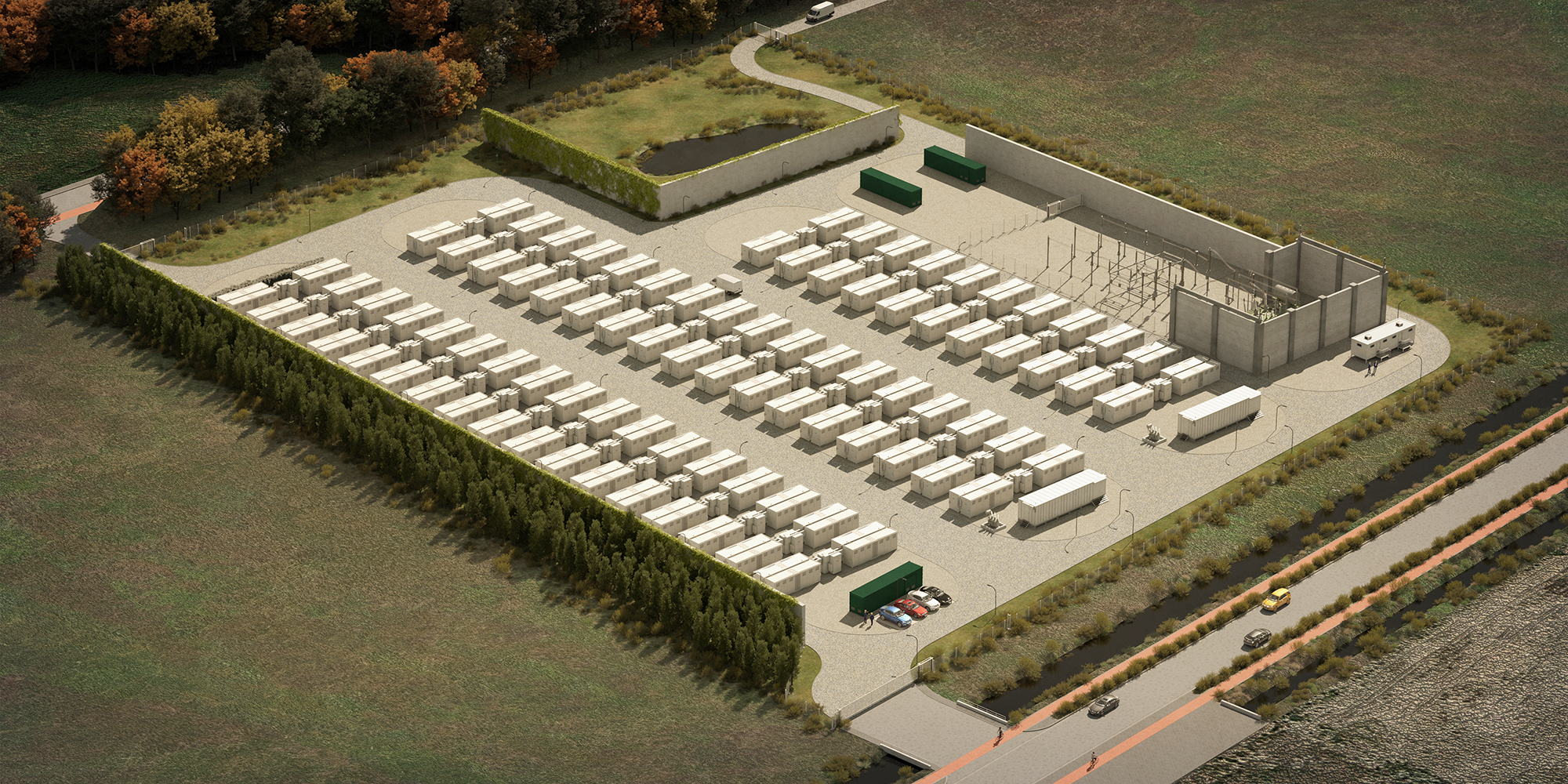
Due to the limited capacity of the electricity grid, smart energy management is becoming essential. Capacity remuneration mechanisms (CRM), flexibility and optimization offer companies new opportunities to strategically manage their energy consumption. By controlling processes intelligently, companies can reduce peak demand and optimize energy costs. Flexibility thus becomes both an economic and operational lever. Battery storage, load shifting and smart control enable faster responses to market signals. Participation in flexibility and capacity markets also creates additional opportunities.
Companies are evolving from passive energy consumers into active players within the energy system. Data analysis and real-time monitoring form the basis for these optimizations. An integrated approach not only increases efficiency but also improves the use of existing infrastructure. Organizations investing in flexibility today build a stronger and future-proof energy position.
Regulation & operational security
The energy transition is bringing a growing number of rules, reporting obligations and compliance requirements. For companies, it is becoming increasingly challenging to keep up with all developments in energy and sustainability. Regulations on emissions, energy efficiency and ESG reporting directly impact business operations. At the same time, customers, investors and governments expect more transparency and commitment.
Operational security today also means being prepared for future energy and climate requirements. Companies that proactively invest in energy management strengthen their long-term position. A lack of preparation can lead to higher costs, limited growth opportunities or reputational risks. Energy security is increasingly becoming a prerequisite to remain competitive. Strategic decisions today determine tomorrow’s operational flexibility.
Decarbonization & ESG objectives
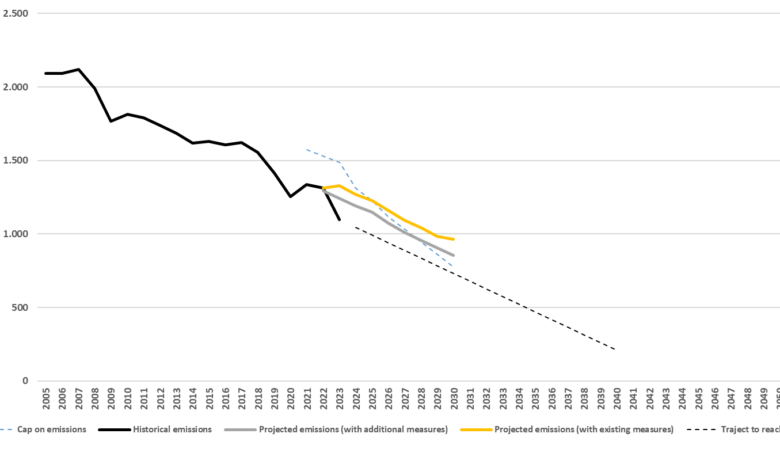
Decarbonization is rising rapidly on the agenda of companies across almost all sectors. Organizations face increasing pressure to structurally reduce their CO₂ emissions. ESG objectives are no longer just a sustainability issue but also a strategic priority. Customers, investors and partners expect measurable progress and transparent reporting.
Companies are therefore seeking concrete solutions to reduce energy consumption and emissions. Electrification, renewable energy and energy efficiency play a central role. The challenge lies not only in technology but also in integration within the business strategy. A successful decarbonization approach requires investments supported by a clear long-term vision. Organizations that accelerate today build a competitive advantage for the future. Sustainability is evolving from an obligation into a strategic growth lever.
Fig.2 Evolution of CO₂ emissions and future trends
Developing an energy strategy
An energy strategy is no longer a luxury but a necessity for forward-looking companies. Energy directly affects operational costs, investment decisions and competitiveness. Yet, many companies still lack an integrated long-term vision of energy.
A strong energy strategy brings together consumption, production, flexibility and sustainability into one plan. It helps companies deal better with price volatility, regulation and electrification. Investments in solar energy, batteries or thermal technologies are also better substantiated. Data and energy insights form the basis for smart decisions. Companies that adopt a strategic approach to energy strengthen their resilience and growth potential.
Gaining control over energy security through five pillars
A robust energy management strategy is built on five interconnected pillars:
- Energy procurement: smart purchasing strategies (contracts, pricing mechanisms, risk management).
- Site-specific topics: energy profile, grid connections, infrastructure and local constraints.
- Off-premises topics: PPAs, external renewable production and market participation.
- Optimization & flexibility: managing consumption, production and storage to optimize costs.
- Decarbonization strategy & carbon accounting: path to net zero, monitoring and reporting.

Sweco’s role: from analysis to implementation
Sweco supports companies in designing and implementing future-proof energy strategies. Through in-depth energy and grid studies, flexibility analyses and market expertise, we help companies anticipate congestion, rising costs and policy changes.
Whether it concerns grid access, flexibility solutions, renewable integration or a decarbonization roadmap, Sweco supports companies from initial analysis to full implementation—ensuring reliable, affordable and sustainable energy supply.
Start the conversation about your energy strategy and discover how your organization can turn energy security into a sustainable competitive advantage.
Other News

The parking ladder: take control of parking policy, one step at a time
Read more

Approved by children: designing safe school environments
Read more

More eyes at sea: Sweco designs offshore platform concept for marine monitoring and enforcement in the North Sea
Read more