
Sweco Belgium
How the Ring Parks are making the city of Antwerp greener from the ground up
The Ring Parks in Antwerp are emerging within a unique field of tension: between the ambition to create high-quality, green living spaces on the one hand, and the structural limitations of the underlying tunnel infrastructure on the other. It is precisely here that the soil plays a vital role.
Our cities literally rest on the soil: it supports our homes, buffers our water, stores carbon, and hosts astonishing biodiversity. In Antwerp, it is now growing into a central building block of the Ring Parks. Not just as a technical substrate, but as a living ecosystem that makes the city healthier and more resilient.
Integrated design for urban nature
Commissioned by the City of Antwerp, Sweco is conducting an integrated design study to achieve a feasible and manageable end vision for the Ring Parks on top of the tunnel infrastructure. Our engineers, ecologists, and water experts work closely together. We do not start from standard solutions, but design the park’s subsurface based on the interplay between soil, water, and vegetation. Using climate models, we estimate future water needs and investigate how locally excavated soil, supplemented with compost and sand, can be reused as a fertile, circular soil mix.
Through a phased methodology, stability, soil, water, and vegetation are examined together from the outset. In this way, we translate the spatial and ecological ambitions of the Ring Parks into robust, circular, and climate-resilient rooftop park systems, with explicit attention to ecological added value, risks, and long-term management. The result is a transparent decision-making framework connecting design, engineering, and maintenance.
Everything starts with the soil
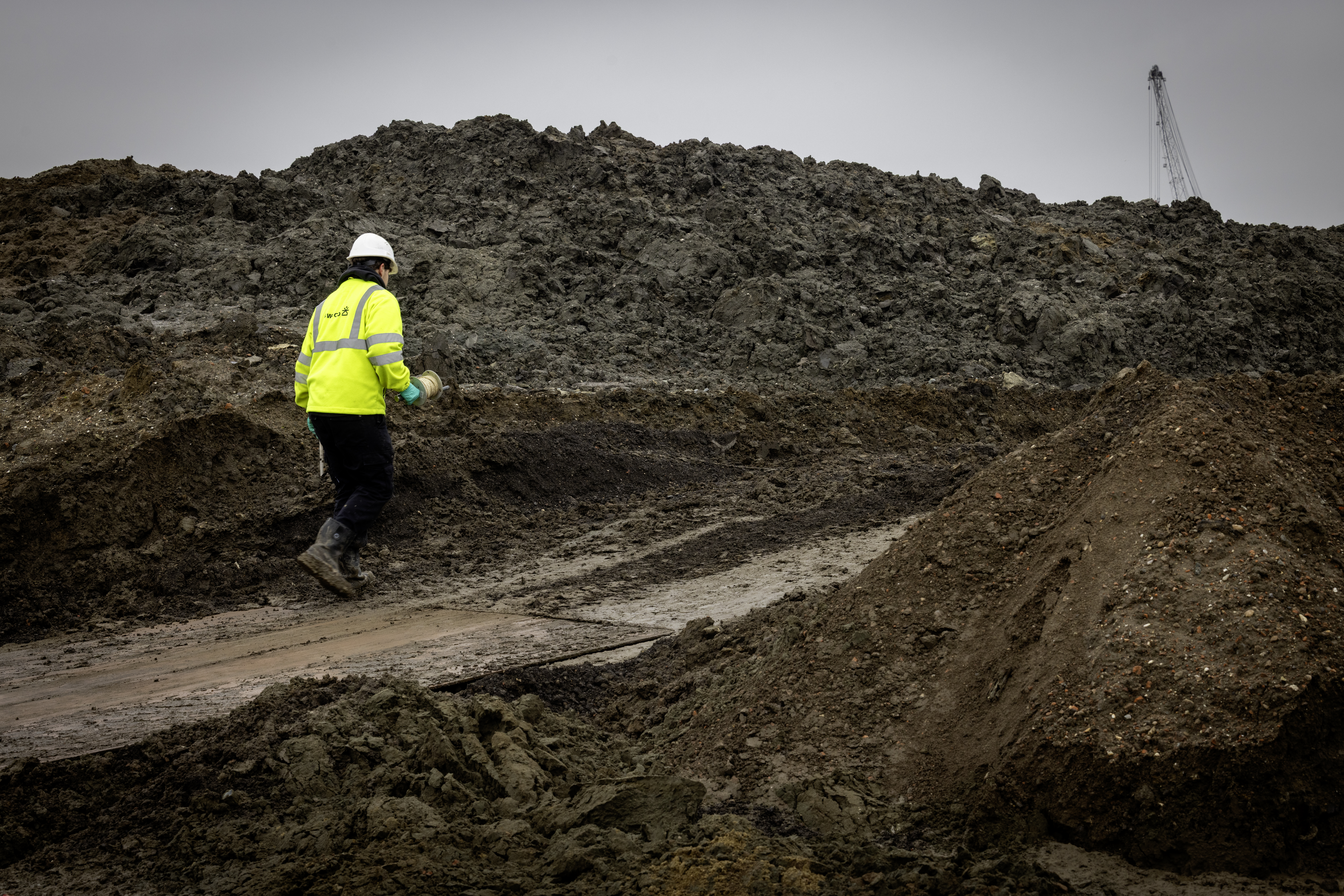
The Oosterweel project involves deep excavation: around 15 million m³ of soil is moved to build the sunken infrastructure, tunnels, and roads. This places the project among the largest earthmoving operations in Belgian construction history. Such volumes require a highly precise approach.
Sweco’s soil specialists carry out preliminary and detailed soil investigations, monitor groundwater through a network of monitoring wells, and manage soil flows safely and circularly. In cases of PFAS contamination, soil is transported to certified treatment facilities or licensed landfills, in line with OVAM guidelines and the Flemish regulatory framework.
New soil life on tunnel roofs
On the tunnel roofs of the Oosterweel route, entirely new urban nature is being created within the future Ring Parks. For Ringpark Groenendaal, Sweco has started research into building 1.5 to 2 metres of new soil. A process that normally takes nature hundreds of years, but here must carefully establish the basis of a stable soil system within 2 to 3 years—forming the foundation for the park’s development.
The key lies in the interaction between soil composition, organic matter, water management, and soil life. Bacteria, fungi, worms, and mites together form a fine-meshed soil food web that nourishes plants, regulates water flows, and determines ecosystem resilience.
Living soil = resilient city
In most urban developments, soil is a by-product: something to be excavated, filled, or sealed. A cost item, rarely a focus. The Ring Parks radically reverse this logic.
Soil is therefore central—not as a by-product, but as a system that determines the park’s performance. Millions of organisms per square metre support plant growth and make urban nature more resilient. The lesson is clear: to future-proof cities, we must think from the ground up.
The Ring Parks demonstrate how soil, soil life, and design come together as more than infrastructure—they create a healthier city. This aligns perfectly with the Flemish Soil Care Plan and the OVAM framework for ecosystem services, which explicitly recognize soil as the foundation of a livable environment.
No healthy park without healthy soil life
A healthy soil is not a simple mixture (of sand, clay, compost, and fertilizers), but a living system. It forms the essential condition for a well-functioning park. Only when this underground life is healthy can a park fully perform its role: plants grow sustainably, water is retained, and ecosystems remain resilient.
Bacteria produce, among other things, polysaccharides: sticky organic substances that bind mineral soil particles and organic matter into stable aggregates. These aggregates largely determine soil structure, porosity, water infiltration, and oxygen exchange around roots.
Mycorrhizal fungi connect with plant roots and increase the soil volume from which plants can absorb water and nutrients. Protozoa and nematodes regulate bacterial populations and make nutrients available again to plants. Worms mix organic material into the soil, improve structure, and accelerate humification.
Local, circular, and adaptive
Soil construction starts locally and circularly: enriching with organic material, composting on site to activate local microorganisms, and regular soil analyses for adjustment. Water management also plays a key role. Pumped and treated Ring water can support plant capillary action through irrigation, especially in Antwerp’s typically loam-poor soils. Different scenarios are explored, including how fertile soil from other sites can be reused at high value.
Ringpark Groenendaal: urban park with an ecological backbone
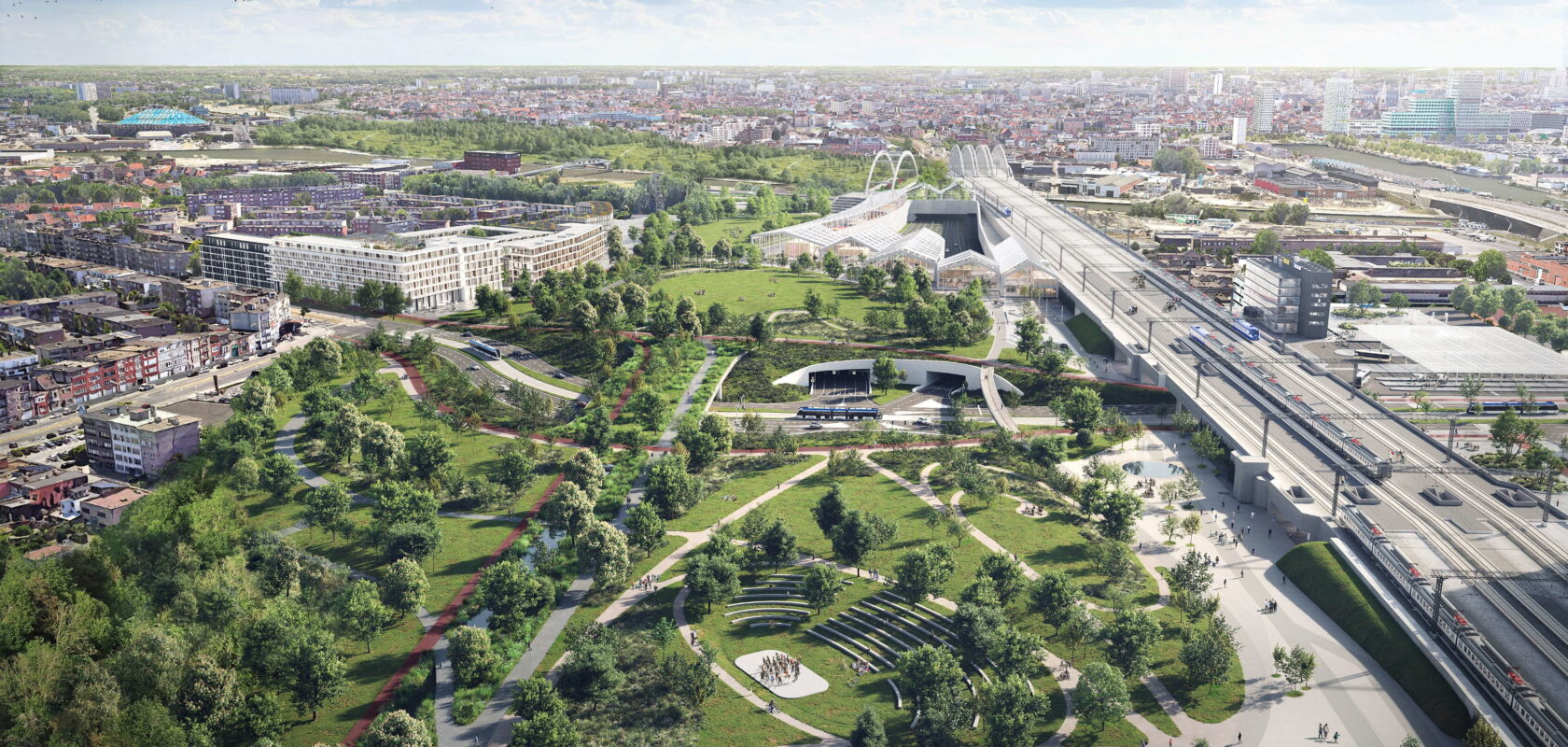
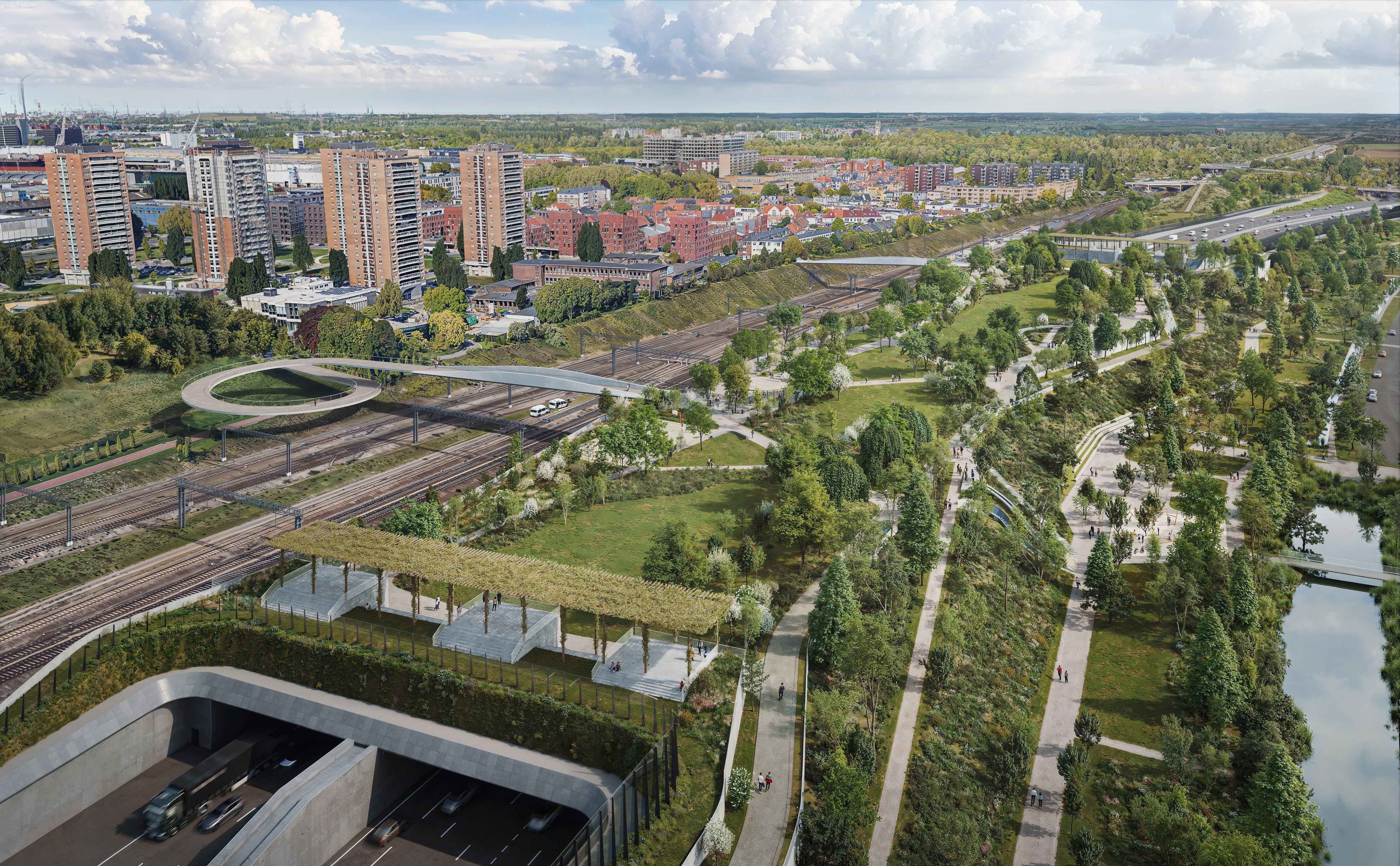
Between Luchtbal and Merksem, along the Albert Canal, Ringpark Groenendaal is becoming an urban park with space for openness, encounter, and urban nature. Four park zones—from the Metropolitan Green to the Luchtbal Nature Gardens—connect neighbourhoods and nature. A wet ecological corridor with wadi’s and ponds enhances biodiversity and water buffering, while nutrient-poor soils create niches for heat-loving species. This results in a park that grows, evolves, and is driven by a living soil.
Visuals: © Design Team Groenendaal (Sweco – Latz – Greisch – Studio Woodroffe Papa) in collaboration with Lantis
Photos: © Tom D’haenens
Other News
Stakeholder management creates space for better projects
Read more
Spatial policy plans: making today’s choices for tomorrow’s city
Read more
From housing study to action-oriented housing policy
Read more