
Sweco Belgium
Soil as a Foundation for the City of Tomorrow
How do you transform a heavily impacted industrial site into a sustainable, climate‑resilient urban district? At the former Coronmeuse site in Liège, our experts deliberately moved away from a conventional remediation approach and chose instead to restore a living, functional soil. Landscape architect Kobe Vanhaeren explains how soil restoration, water management and public space come together in a single, integrated vision. This project shows how soil expertise can become a strategic lever for cities and developers committed to quality, climate adaptation and long‑term feasibility.
Coronmeuse: A Historic Site with Complex Challenges
The Coronmeuse peninsula has a long and layered history. In 1930, it hosted the World Expo marking one hundred years of Belgian independence. For decades, the area remained a strategic industrial and logistics hub, leaving a significant legacy in terms of soil quality. When Liège submitted its candidacy to host an international exhibition in 2017, Coronmeuse was selected as the future site. Although the Expo ultimately did not take place in Liège, the ambition endured: to redevelop the area into a sustainable eco‑district. The Néolegia consortium was tasked with turning that vision into reality.
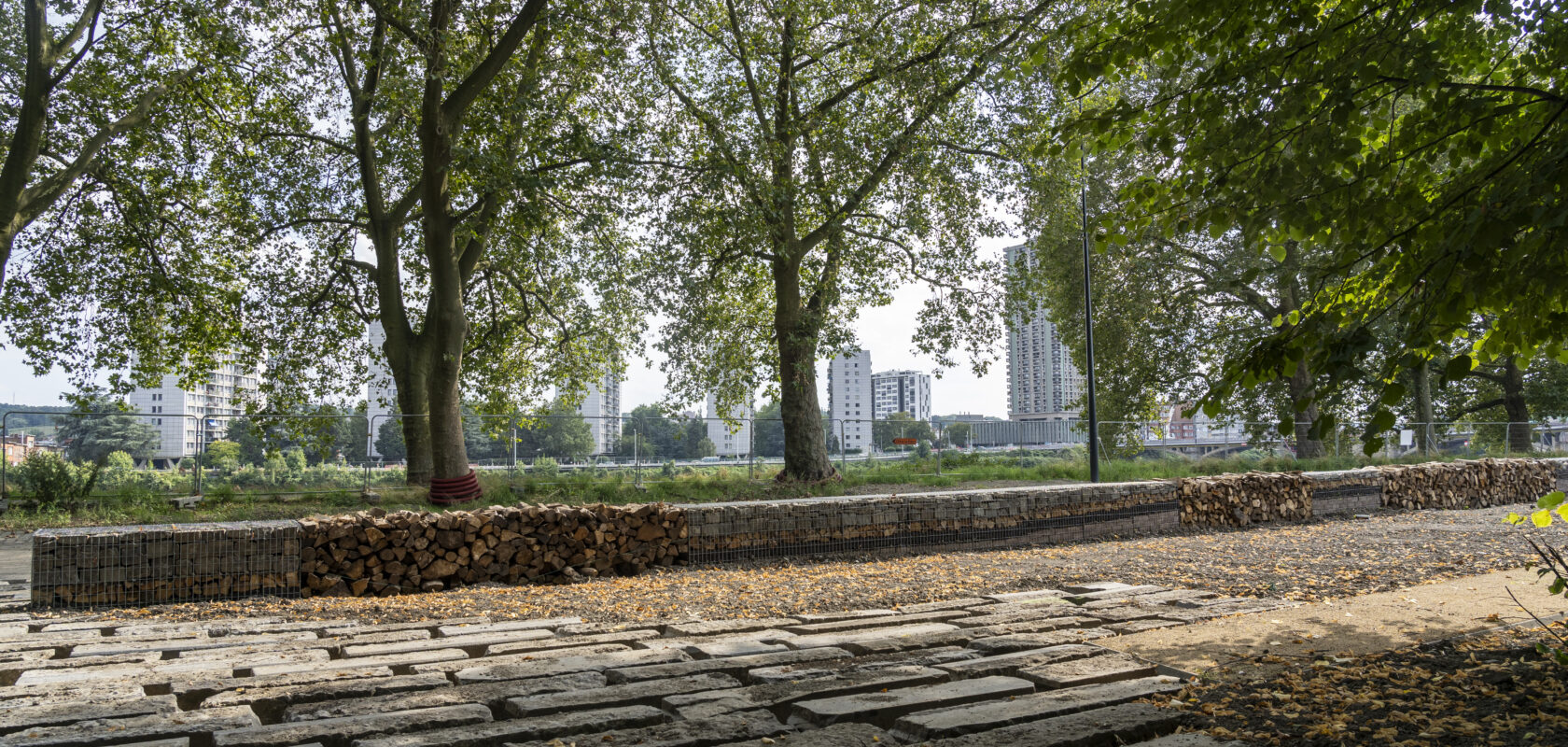
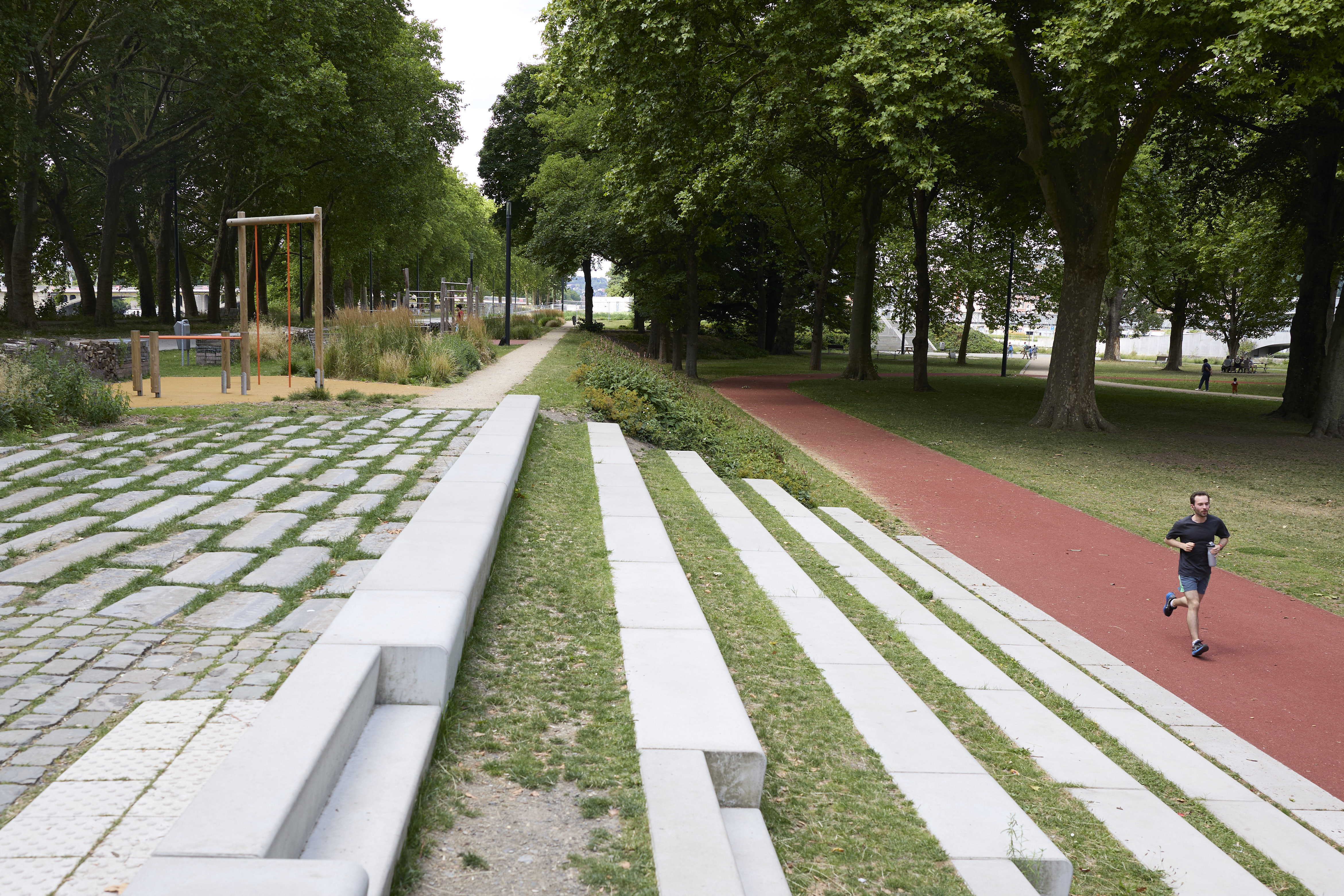
This ambition came with a particularly complex challenge, in which Sweco acted as a link between engineering, design and policy. The 25‑hectare site consisted largely of made ground, rubble and historically contaminated layers, including heavy metals and residual pollution from fuels and industrial activities. At the same time, the new district was expected to deliver high‑quality public space, with parks, play areas, cycling connections and climate‑resilient green structures.
Soil is still too often approached purely from a negative perspective: contamination, remediation, risk. But soil is, in essence, a living system. At Coronmeuse, we started from the question of how that system could be made to function again.
Kobe Vanhaeren, Landscape architect
Why Conventional Remediation Was Not Enough — and What Did Work
A fully traditional remediation strategy proved neither financially nor practically viable. Complete excavation and replacement of the soil would not only have required a multiple of the available budget, but also enormous volumes of high‑quality topsoil to rebuild the site — material that is simply not available at that scale.
A different strategy was therefore adopted: applying conventional remediation where strictly necessary, while maximising the use of the existing, non‑contaminated soils and reactivating them ecologically. This choice resulted from a thorough comparison of scenarios, in which Sweco worked closely with the client to identify the best balance between ecological performance, cost efficiency and practical feasibility.
Soil investigations revealed that the existing ground did not consist solely of negative characteristics. Its stony composition provided structural stability and sufficient porosity for air circulation and root growth. In addition, the soil still contained organic matter and nutrients. The real issue lay deeper: historical contamination had largely eliminated the soil’s biological life.
“A soil without biological life loses a large part of its ecological functions,” Kobe explains. “Plants then struggle to access nutrients, no matter how chemically rich the soil may be. The bacteria, fungi and other organisms that make these processes possible were almost entirely absent.”
Reactivating Soil Life Using Local Resources
Our experts therefore focused strongly on restoring the soil’s microbiological ecosystem. Organic material generated on site — such as pruning residues and green waste — was processed and composted locally wherever possible. This was a deliberate choice: micro‑organisms originating from the same environment are often better adapted to the specific soil, water and climate conditions of the Meuse valley.
Compost extracts were then produced from this local compost. These extracts, created by mixing locally produced compost with water, were applied to gradually stimulate soil life in the upper soil layers and to restart biological activity.
Targeted organic amendments were also applied, including commercial green compost and well‑matured horse manure. This combination not only strengthened soil life, but also allowed for better control of soil structure and nutrient balance. Because the commercial green compost was not yet fully stabilised, the mature horse manure played a key stabilising role. It helped achieve a more balanced carbon‑to‑nitrogen ratio, allowing the composting process to proceed in a more controlled way and nutrients to become gradually available to soil organisms.
For our teams, this represented an intensive research and learning process, developed in close collaboration with specialists in soil science, agriculture and fertilisation. By bringing together soil experts, landscape architects, water managers and engineers, this knowledge could be translated into a practical and workable approach on site.
What we achieved here is version 1.0. We are already applying the same principles in other cities, each time with greater knowledge and efficiency. This will be crucial if we want to link our infrastructure projects to healthy soils and climate‑resilient green structures.
Kobe Vanhaeren, Landscape architect
Water as a Structuring Element
Soil restoration was fully embedded in Coronmeuse’s broader climate and landscape vision. The design of the public realm was based on strengthening the blue‑green network, with water management, vegetation and soil quality considered as one integrated system.
The district was designed to retain and infiltrate rainwater locally as much as possible. Swales, open channels, infiltration basins and flow‑retarding structures ensure that rainwater is not discharged into the sewer system, but instead infiltrates back into the soil. Underground injection systems and permeable pavements also form part of this approach.
This strategy plays a key role in how the soil functions. By retaining rainwater locally and allowing it to infiltrate in a controlled manner, conditions are created in which the soil can gradually recover and continue to develop. Water thus becomes more than a technical consideration: it is an active component of the spatial system, contributing to the resilience of the public space.
An Approach That Also Makes Economic Sense
The success of the approach quickly became visible on site. Where developers were initially sceptical about investing in soil improvement, the impact on landscape quality proved significant.
“If you plant trees in soil that doesn’t function properly, you get weak growth and high failure rates,” Kobe explains. “At Coronmeuse, out of roughly 500 trees planted so far, only two have failed. That is exceptional.”
The approach also proved convincing from a financial perspective. Active soil reconstruction cost only a fraction of a conventional excavation‑and‑replacement strategy.
“Suddenly, soil restoration becomes not only ecologically valuable, but also economically feasible for public authorities and developers,” Kobe adds.
Coronmeuse demonstrates that soil restoration is not a niche solution, but a strategic choice for cities that invest in climate adaptation, quality of life and sustainable public space. By integrating soil considerations from the very beginning of design and decision‑making, it is possible to deliver solutions that are ecologically effective, technically robust and financially sound.
This project has shown that with a different, well‑considered perspective on soil, you can achieve much more — not by excavating everything, but by rebuilding what the soil needs in order to function.
The insights gained from Coronmeuse are already being applied to other urban redevelopment projects, infrastructure schemes and climate‑adaptive landscapes. In these contexts, Sweco consistently links soil expertise with design quality, cost control and policy frameworks, tailored to the specific soil and site conditions and with a clear focus on long‑term feasibility.
Photos ©Faye Pynaert
Are you dealing with comparable challenges related to soil quality, climate adaptation or the redevelopment of complex sites? Sweco’s experts are happy to think along with you — from initial analysis to a feasible and widely supported design. Get in touch and discover what a living soil can bring to your project.
Soil team
Coronmeuse
- Eva Recio Rodriguez – landscape architecture
- Hélène Rillaerts – urbanisme
Overig nieuws

Virtual Reality: experience your project before it is built
Read more

Why a charging station is much more than just a charging station
Read more
Part B connections are changing: what does this mean for BESS projects?
Read more