

Sweco Belgium
Why you need a pharmaceutical process architect for your project
A pharmaceutical process architect plays a central and strategic role in the design and realization of pharmaceutical manufacturing facilities. Their primary responsibility is to translate complex scientific processes, regulatory requirements, and business objectives into compliant, efficient, and future-proof physical environments. Acting as the crucial interface between drug development, engineering disciplines, quality and regulatory experts, and the built environment, the process architect ensures that manufacturing facilities operate seamlessly, safely, and sustainably throughout their lifecycle.
Last year, Sweco strengthened its pharmaceutical expertise in Belgium with the arrival of Bart Hennes, Pharmaceutical Process Architect. With more than 25 years of hands-on experience in the pharmaceutical industry, Bart brings deep knowledge in the design of high-performance manufacturing facilities across a wide range of technologies and product types. Bart discusses with us the various aspects of this highly specialized discipline.
What is the function of a pharmaceutical process architect in a project?
Bart Hennes: Central to the process architect’s role is the design of optimized manufacturing processes and facility layouts that support clear and logical flows of materials, personnel, equipment, and waste. By carefully planning zoning, room classifications, pressure regimes, and adjacencies, they minimize the risk of cross-contamination while enabling efficient day-to-day operations. These design principles ensure that facilities are not only compliant but also audit-ready, allowing regulatory inspections to be conducted with minimal disruption to production.
A defining strength of the pharmaceutical process architect is their deep understanding of Good Manufacturing Practices (cGMP) and global regulatory frameworks, including those of the U.S. Food and Drug Administration (FDA), the European Medicines Agency (EMA) , and the World Health Organization (WHO). Beyond simple compliance, process architects understand the intent behind these regulations and apply them intelligently based on the specific characteristics of the product, process, and facility. This risk-based approach ensures that regulatory expectations are met in a way that supports operational efficiency, product quality, and patient safety.
What other parameters are specific for pharmaceutical projects, besides regulations and compliance?
B.H.: Pharmaceutical manufacturing sites are inherently complex systems in which architecture, process engineering, utilities, HVAC, and automation must function as an integrated whole. The process architect brings these disciplines together into cohesive, cost-effective design solutions. With this integrative approach, the process architect transforms technical complexity into clear, buildable, and operationally robust facilities.
Process architects possess specialized expertise in controlled environments, including sterile manufacturing areas and facilities handling highly potent or hazardous compounds. Their knowledge of containment strategies and hazardous compound classifications enables them to protect both the product and the people working within the facility. Every design decision, whether at the macro level of functional adjacencies or the micro level of equipment design and cleanroom details, is evaluated through the lens of contamination control, operator safety, and patient impact.

When should a process architect get involved, to make his or her contribution significant?
B.H.: The process architect leads the development of the facility concept from the earliest stages of a project. This includes defining the functional requirements, spatial needs, capacity assumptions, and phasing strategies in close alignment with the client’s business goals and long-term manufacturing strategy. By engaging early, the process architect embeds critical decisions into the layout before constraints are locked in, reducing risk, preventing costly redesigns, and ensuring that the facility can evolve alongside changing product portfolios and market demands.
Pharmaceutical sites typically are in constant flux, being highly innovative in research and development, and finetuning production and distribution. Meaning construction projects in the heart of sites, during production. What are the challenges there?
B.H.: Pharmaceutical process architects play a key role in the modification and renovation of existing manufacturing sites. They assess feasibility, constructability, and operational impact when adapting facilities to new processes or regulatory expectations. By balancing legacy constraints with modern requirements, they enable existing plants to remain competitive, compliant, and productive without unnecessary downtime.
In summary, the pharmaceutical process architect bridges the gap between vision and execution, with their ability to align complex process requirements with spatial design. For futureproof pharmaceutical facilities that support innovation, protect patients, empower employees, and enable long-term business success.
Bart Hennes, process architect at Sweco
And no doubt, the sustainability requirements also have an impact on existing sites?
B.H.: Sustainability has become a top priority within the pharmaceutical industry, and process architects are increasingly responsible for integrating sustainable strategies into facility design. Working closely with sustainability specialists, they focus on reducing water and energy consumption, minimizing the extent of high-classification cleanroom environments, and lowering HVAC demands through smart zoning and closed processing systems. They also support the reduction of emissions and the transition to more sustainable energy sources, aligning facility design with European Union sustainability goals and broader environmental commitments. Importantly, many of these sustainability measures also improve containment performance, addressing growing concerns related to the increased potency of pharmaceutical products and the protection of operators from hazardous materials.
In redesigning processes, how does the process architect integrate the human component? In the pharmaceutical sector, many processes are mostly executed by skilled employees.
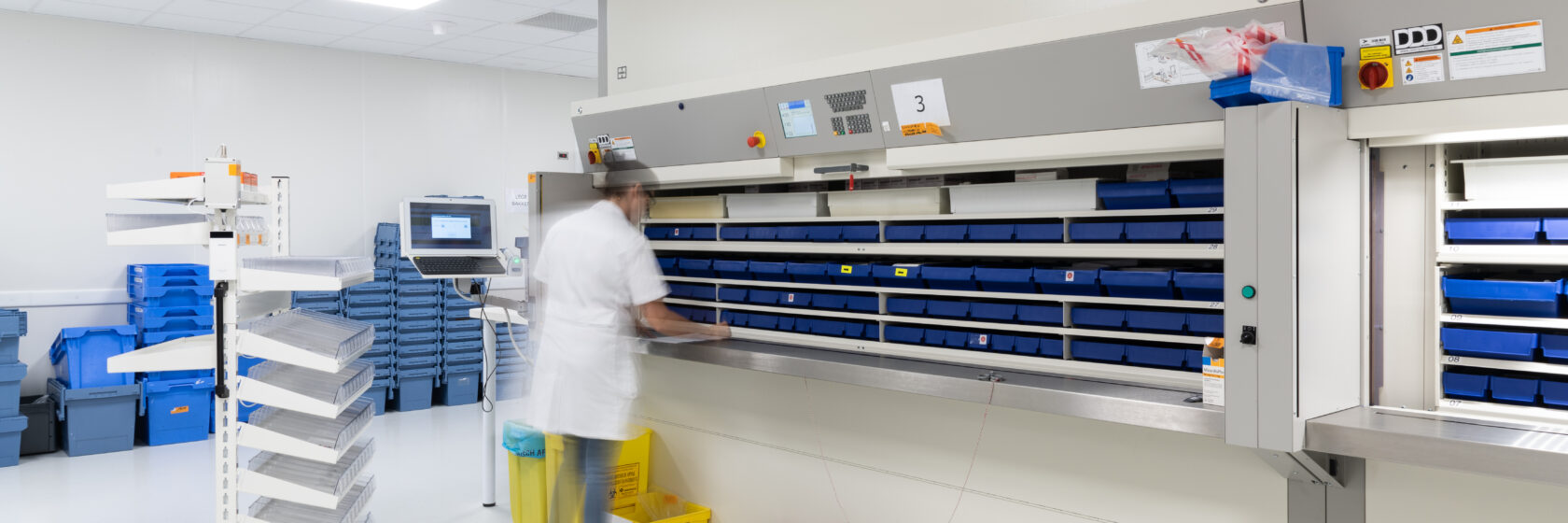
B.H.: Beyond technical performance and regulatory compliance, the pharmaceutical process architect considers the human experience within the facility. Manufacturing environments are designed not only to function efficiently but also to support the health, safety, and well-being of employees. Process architects address ergonomic challenges by reducing unnecessary manual handling, locating process steps adjacent to one another, and incorporating appropriate lifting and handling solutions. These interventions help reduce physical strain, lower absenteeism, and improve productivity while demonstrating a commitment to employee welfare.
So, in a nutshell, summarize for us why a process architect is indispensable in pharmaceutical projects.
B.H.: In summary, the pharmaceutical process architect bridges the gap between vision and execution in life sciences facilities. By uniting scientific insight, regulatory expertise, engineering coordination, sustainability principles, and human-centered design, they deliver manufacturing environments that are safe, compliant, efficient, and adaptable. Their ability to align complex process requirements with spatial design makes them indispensable partners in creating future-ready pharmaceutical facilities that support innovation, protect patients, empower employees, and enable long-term business success.
At Sweco, our Health & Life Sciences consultants work closely in a multidisciplinary team of process architects, process engineers, architects, HVAC specialists, and clean and black utility experts. Together, they guide clients through the critical do’s and don’ts of pharmaceutical manufacturing facility design and deliver compliant, efficient, and future-ready facilities. From early concept to detailed design, Sweco combines deep technical insight with practical experience to create manufacturing environments that support operational excellence, regulatory compliance, and long-term growth.
Other news

More eyes at sea: Sweco designs offshore platform concept for marine monitoring and enforcement in the North Sea
Read more

Virtual Reality: experience your project before it is built
Read more

Why a charging station is much more than just a charging station
Read more