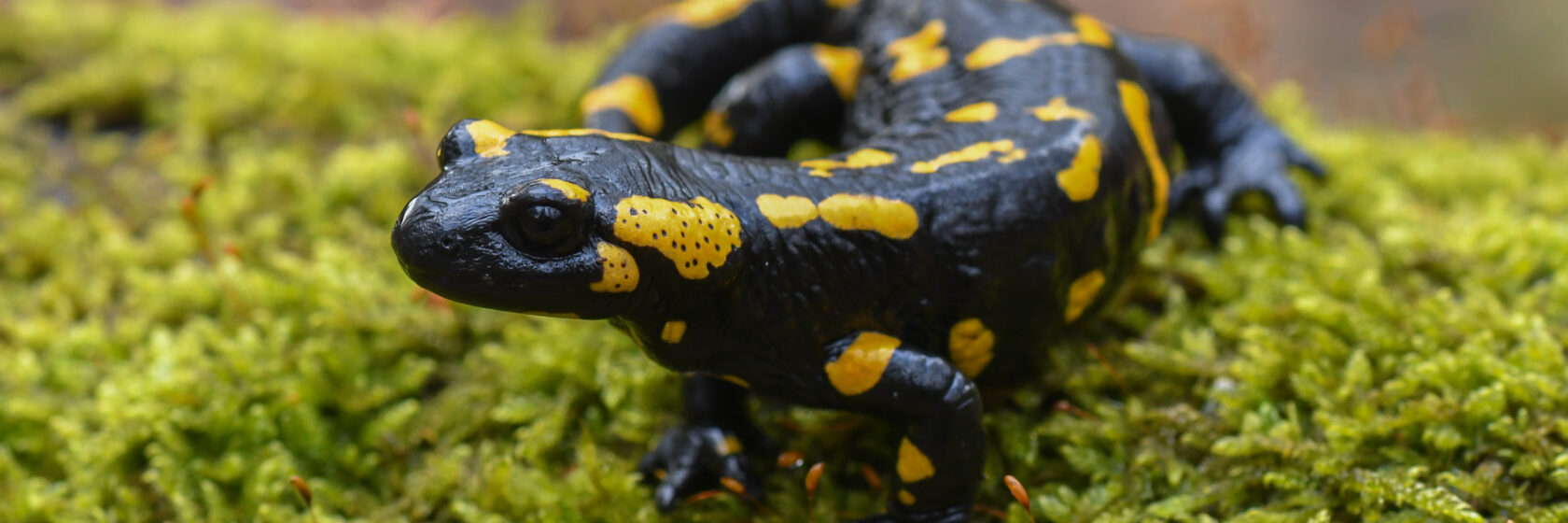
Fire salamander gets new opportunities in the Flemish Hills
It is black with bright yellow spots, loves humid forests and spring-fed streams. And it needs our help. The fire salamander has been virtually absent from West Flanders for decades. Sweco contributed to a cross-border study to help change that.
- Expertise:
- Climate resilience & nature
- Client
- Province of West Flanders
- Location
- Flemish Hills region
- Services
- Ecology & biodiversity, habitat mapping, hydrology & water management, nature restoration, landscape development, scenario development and stakeholder management
- Partners
- Agency for Nature and Forests (ANB) and Research Institute for Nature and Forest (INBO)
An iconic species on the brink of extinction
The fire salamander is one of the most striking amphibians in our region, but also one of the most vulnerable. In West Flanders, the species was last observed in Hellegatbos in 1977. Across the border, in the French Parc départemental du Mont Noir, a thriving population still exists. Bridging that gap, both literally and figuratively, was the assignment.
Commissioned by the Province of West Flanders, Sweco is carrying out a study into habitat improvement for the fire salamander in the Flemish Hills, as part of the European Interreg project EUTOPIA Clim@Monts. This project focuses on strengthening the ecological network and landscape quality in a cross-border Flemish-French context.
The fire salamander is a poor swimmer, a poor walker and has a very small home range. It cannot simply save itself. But if we place the puzzle pieces correctly – the right water, the right forest, the right connection – it will return on its own.
Steyn Van Assche, ecologist at Sweco
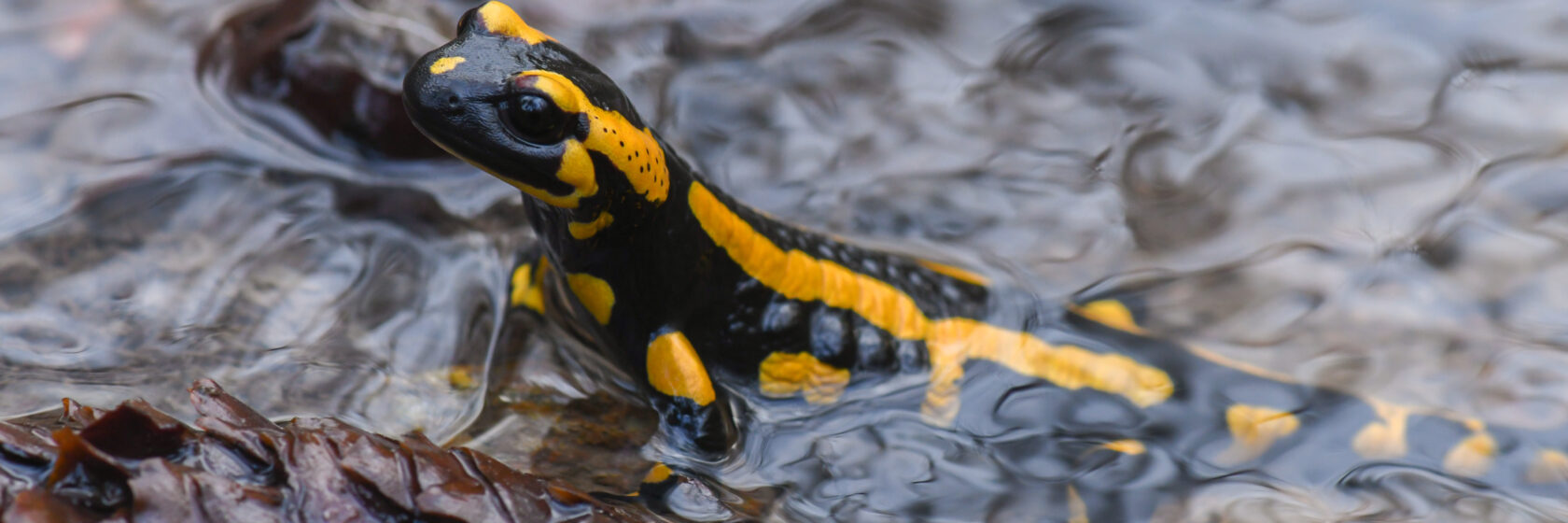
Habitat mapping: from Hellegatbos to Mont Noir
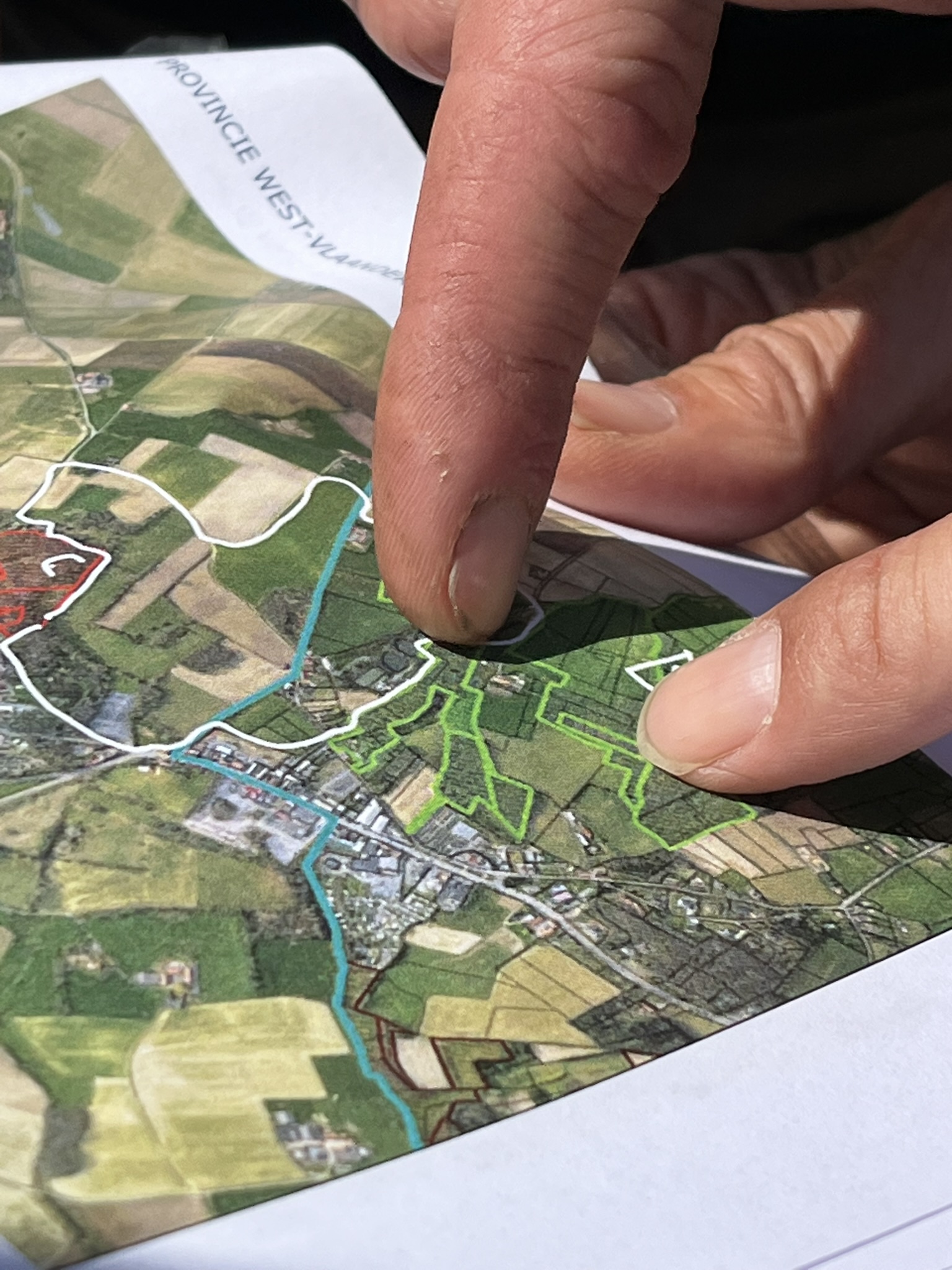
Sweco analysed five subareas in the region: Hellegatbos, Broekelzen, Kemmelberg, Mont Noir and the critical intermediate area with the cross-border zone between Mont Noir and Broekelzen. For each area, detailed habitat mapping was carried out, supplemented by desktop analysis, field visits and hydrological research.
We investigated how the areas can be optimised and how they can be connected. The results offer a layered package of measures: from the creation of forest ponds and weirs on streams, to controlling bramble overgrowth and creating fully fledged ecological corridors.
Hellegatbos as an ecological crown jewel
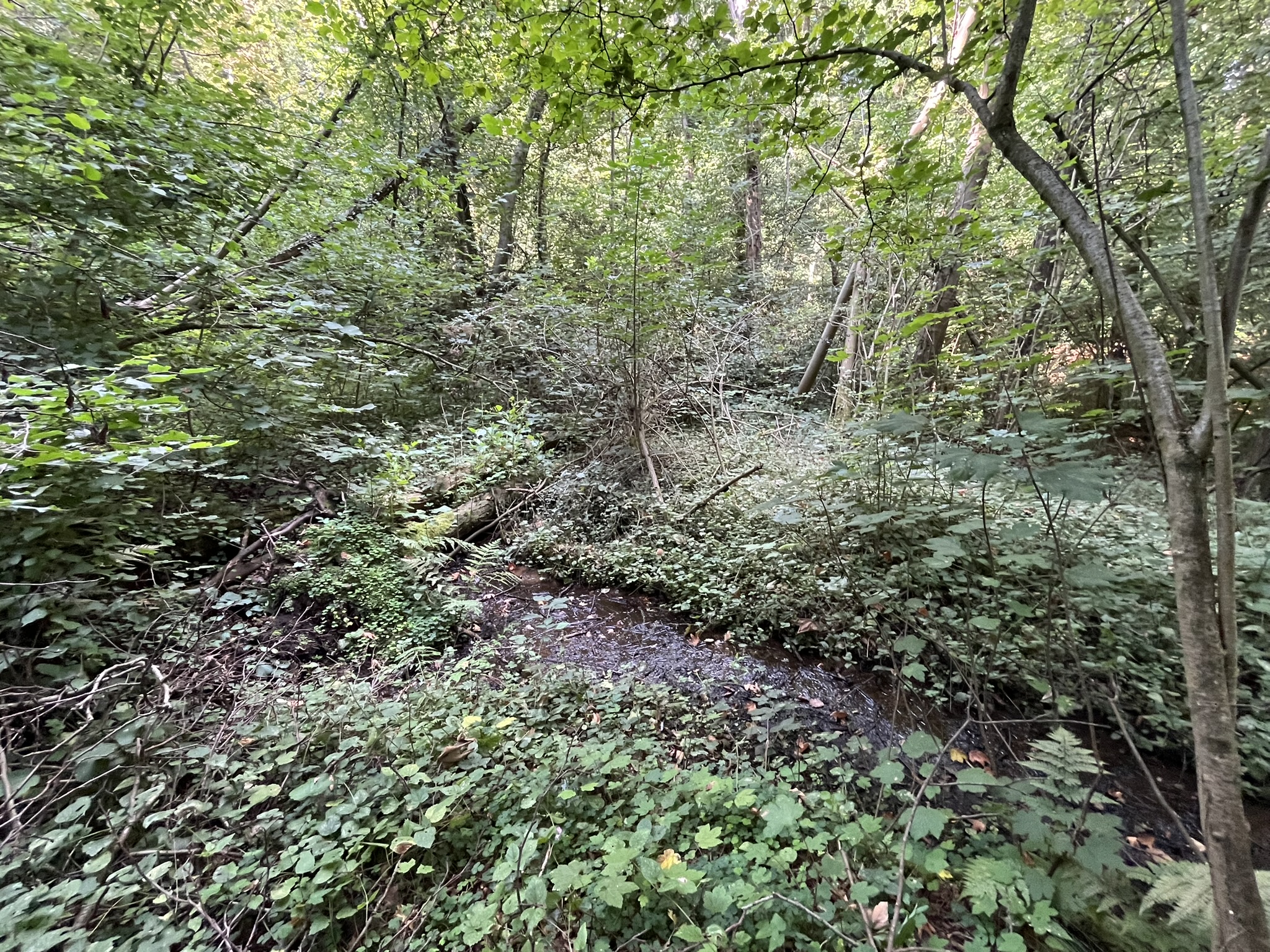
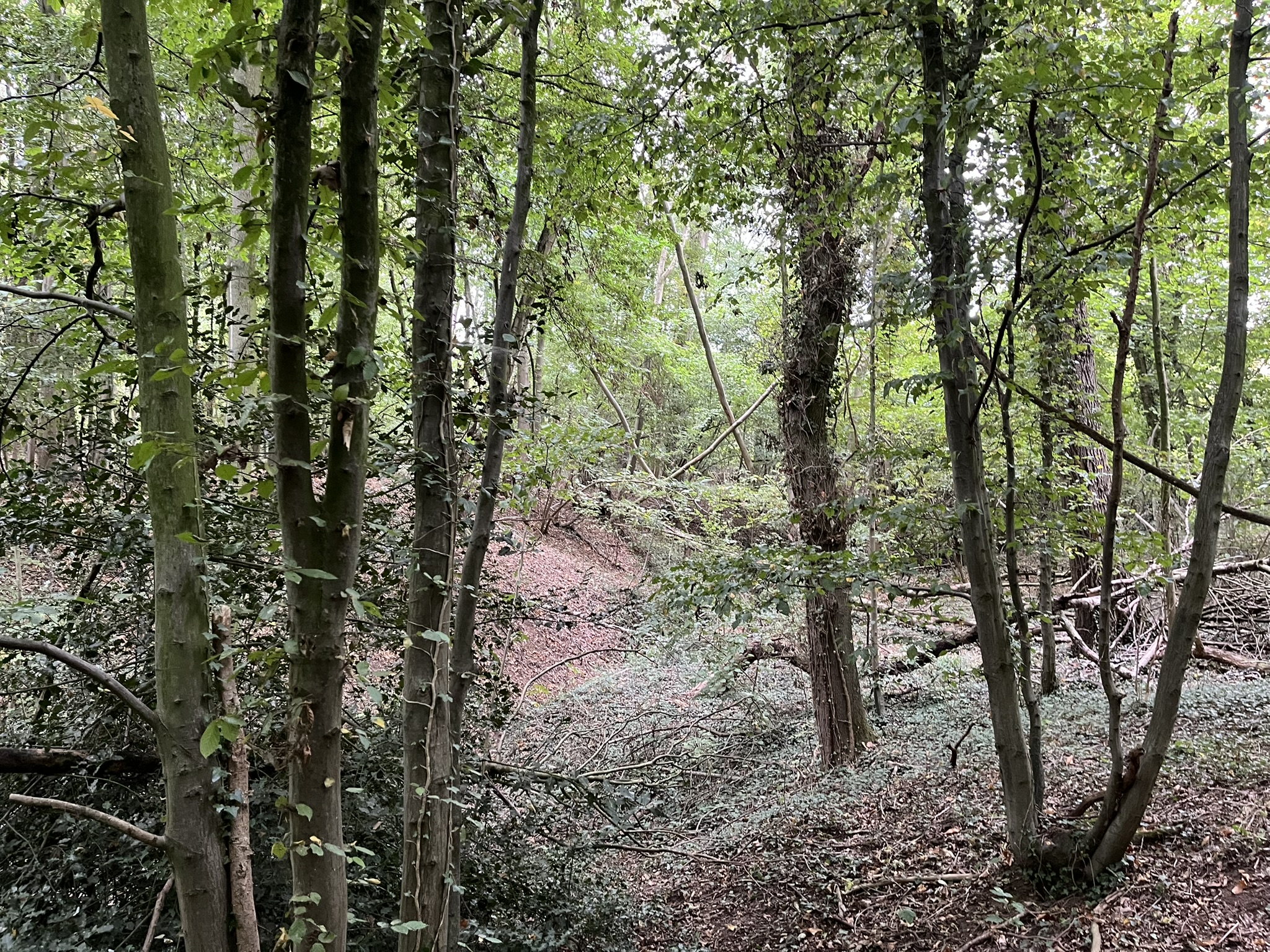
Hellegatbos stands out as the most promising location. With 18.43 hectares of contiguous old beech forest, a rich spring complex and virtually no exploitation pressure, the area scores optimally for both breeding and terrestrial habitat. It is an excellent candidate for the possible re-establishment of the species.
In the intermediate area, currently largely agricultural land with hedges and young forests, three scenarios were developed for the creation of an ecological corridor:
- Minimum: supplementing and widening the existing hedge structure with a double row of beech and oak trees, at least 25 metres wide.
- Maximum: planting a wide strip of oak-beech forest from Mont Noir to Yourcenarbos.
- Intermediate preferred scenario: a strengthened bocage landscape with damp, flower-rich hay meadows. A win-win for the fire salamander and for species such as yellowhammer, badger and great crested newt.
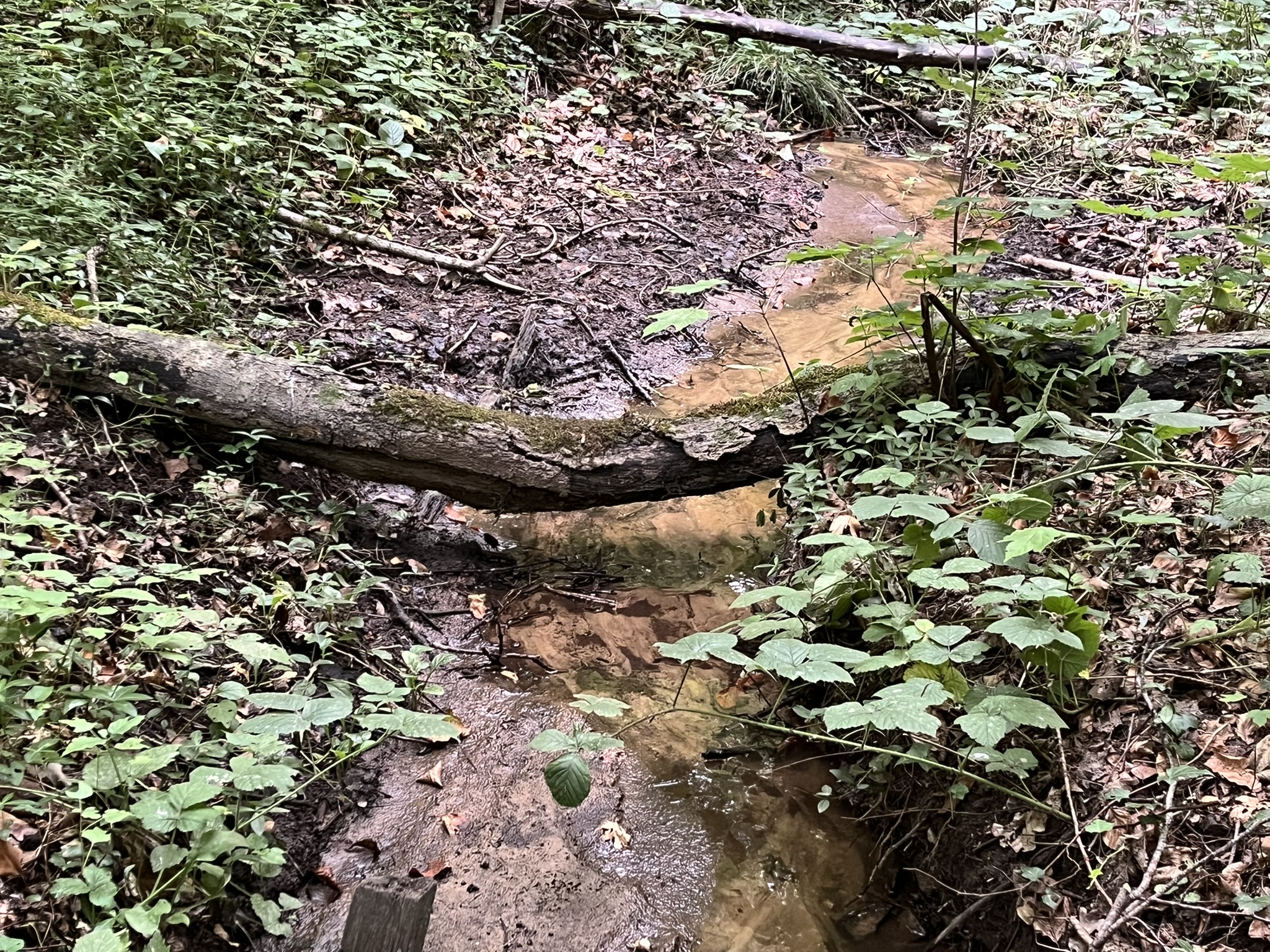
For Mont Noir, Broekelzen and Kemmelberg, targeted measures were proposed: creating forest ponds, deepening wet depressions, restoring stream meanders and tackling discharges of untreated domestic wastewater.
Sweco as a multidisciplinary link
In addition to ecological expertise, Sweco brought the capacity to translate complex, multidisciplinary challenges into concrete, feasible scenarios. Collaboration with experts from ANB and INBO, combined with cross-border consultation with French partners within Clim@Monts, made it possible to deliver well-founded advice with broad support.
Breaking hydrological boundaries
The biggest surprise was not a lack of forest or water, but the watershed. This hydrological boundary means that larvae washed away from Mont Noir always flow further into France, away from the potential habitat in Broekelzen. The fire salamander will therefore literally have to cross the intermediate area on foot. At present, this is impossible due to the lack of suitable terrestrial habitat and breeding water.
Other challenges:
- Recreational pressure and dogs near breeding sites, with a risk of spreading the fungal disease Batrachochytrium salamandrivorans (Bsal). Solution: creating no-go zones using dead hedges or fencing.
- Stream pollution from untreated domestic wastewater, which prevents reproduction. Solution: tackling discharges and individual water treatment.
- Timing of works: major management works are planned outside the species’ active periods, avoiding mid-June to mid-August and the winter period.
- Long term: creating optimal terrestrial habitat requires, quite honestly, patience. Think in terms of several decades to centuries.
The answer to all these challenges? We choose a layered approach that combines ecological ambition with realism about land use, ownership and management.
This project is part of the European Interreg project EUTOPIA Clim@Monts, a cross-border collaboration between Flemish and French partners for nature and landscape restoration in the Flemish and French-Flemish Hills region.