Logistics automation project for QLS
QLS, a fast-growing fulfilment partner for e-commerce companies, was facing a major scaling challenge. The existing capacity in Dordrecht could no longer accommodate the expected growth in volumes. A new, highly automated warehouse was therefore set up in Alblasserdam. Sweco supported this trajectory from concept to realisation, with a clear focus on efficiency, scalability and future-proof design. The result is an integrated logistics flow that is ready to support further growth towards 2030.
- Client
- QLS
- Location
- Alblasserdam, Netherlands
- Expertise
- Concept design, vendor selection (tender), project management, structural/building adaptations
From analysis to a future-proof warehouse design
From the outset, QLS’s existing logistics processes were thoroughly analysed. By identifying inefficiencies at an early stage, Sweco was able to design an optimised flow that supports both current operations and future growth.
Based on these insights, a block layout (vlekkenplan) was developed for the new warehouse. The focus was not only on operational efficiency, but also on scalability towards 2030. This translation into a concrete concept resulted in a detailed tender dossier, enabling suppliers to be compared in a targeted and qualitative way.
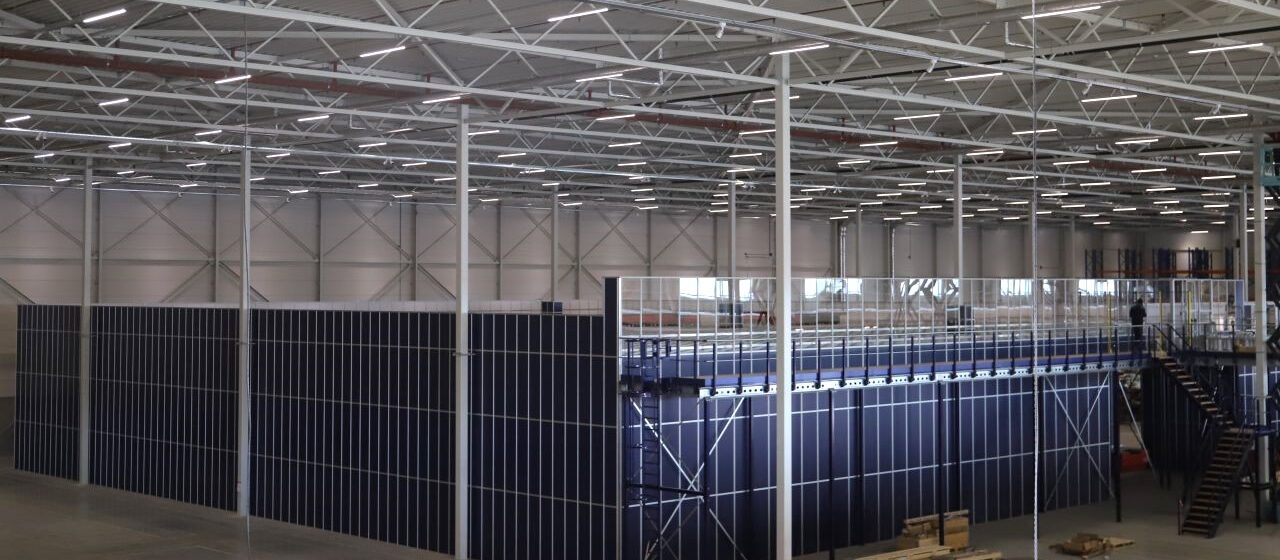
By automating storage and sorting, you gain both efficiency and control over your supply chain. For QLS, this means steering based on reliable data and making faster, more targeted decisions.
Nicolas Vertommen, Logistics Expert
Integrated automation from inbound to outbound
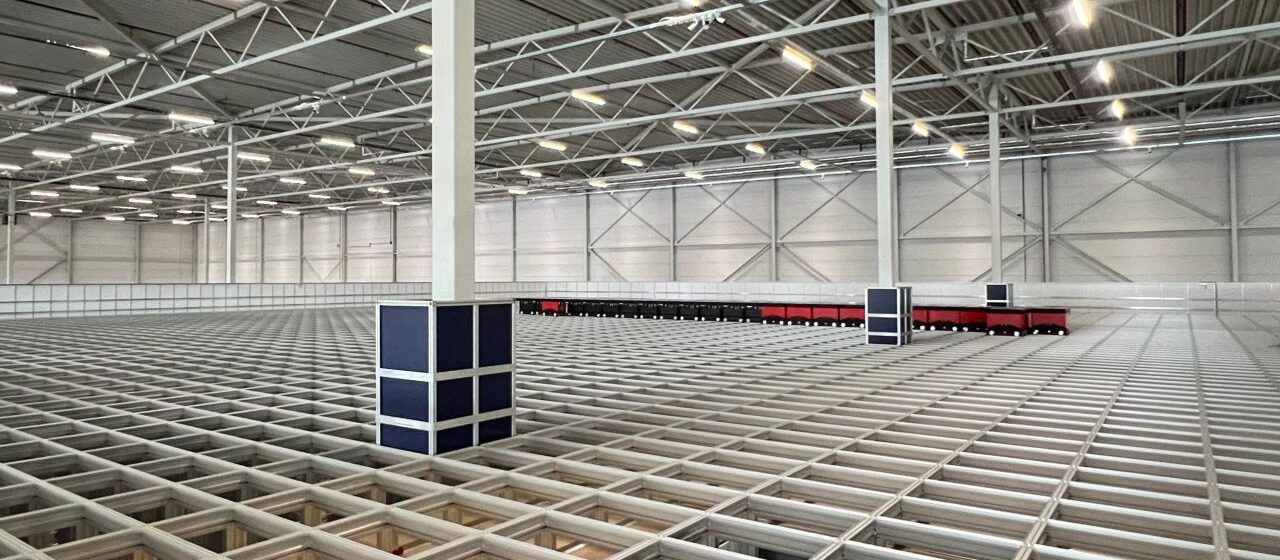
The new site has been equipped with a highly automated logistics chain. At its core is the AutoStore system, where goods are stored compactly and brought to picking stations by robots, according to the goods-to-person principle.
The process is fully integrated: from automatic case erecting and picking to closing, labelling and sorting. A powerful wave sorter with 180 exits and a capacity of up to 10,000 parcels per hour ensures efficient distribution. This level of automation reduces manual handling, increases accuracy and optimises throughput time.
Strong project governance
After the tender phase, Sweco also took on the project management. Thanks to a clear governance structure, the project was successfully delivered within scope, on time and within budget. Despite challenges in coordinating and monitoring the technical requirements for the floor, these were resolved satisfactorily through structured dialogue and close cooperation with all parties involved.
Sustainable and data-driven logistics
Beyond efficiency, the project also contributes to a more sustainable logistics operation. Automation in the warehouse reduces energy, material and transport consumption per shipment. Systems such as AutoStore and conveyors limit forklift and walking movements and create an efficient, predictable flow. Case erectors and case sealers enable right-size packaging, which reduces the amount of cardboard, tape and filler material required and improves vehicle loading.
Automated sorting reduces errors, returns and product damage, thereby preventing waste and additional transport. At the same time, the data generated by these systems provides insights to continuously steer on KPIs such as energy consumption, material usage and return rates.
Another advantage is that the move towards automated storage and sorting creates calm and transparency in the supply chain. You can see at a glance what is moving, where the bottlenecks are and where there is room to plan ahead. Having reliable data readily available means you are no longer just reacting to what happens today, but can actively steer towards what you want to achieve tomorrow.