Spatial-economic strategy and restructuring programme
How can existing business parks evolve into future-proof, sustainable and competitive working environments?
For the municipalities of Wommelgem and Ranst, Sweco developed a spatial-economic strategy and restructuring programme that provides a concrete framework for the intensification, upgrading and sustainability of their business parks.
- Client
- VLAIO
- Location
- Wommelgem
- Sweco scope
- Spatial economy, spatial planning, urban design, circular economy
- Period
- 2022-2024
Challenge
The business parks in Wommelgem and Ranst have a high occupancy rate, but relatively low spatial efficiency. The plots are fragmented and occupied by a diverse mix of economic activities. Solutions for mobility, parking, water management and green infrastructure are often organised individually, while collective management and ecological quality remain limited.
At the same time, pressure on economic space in the Antwerp region is increasing, reinforcing the need for more efficient land use, high-quality working environments, climate resilience and a modal shift.
Our approach
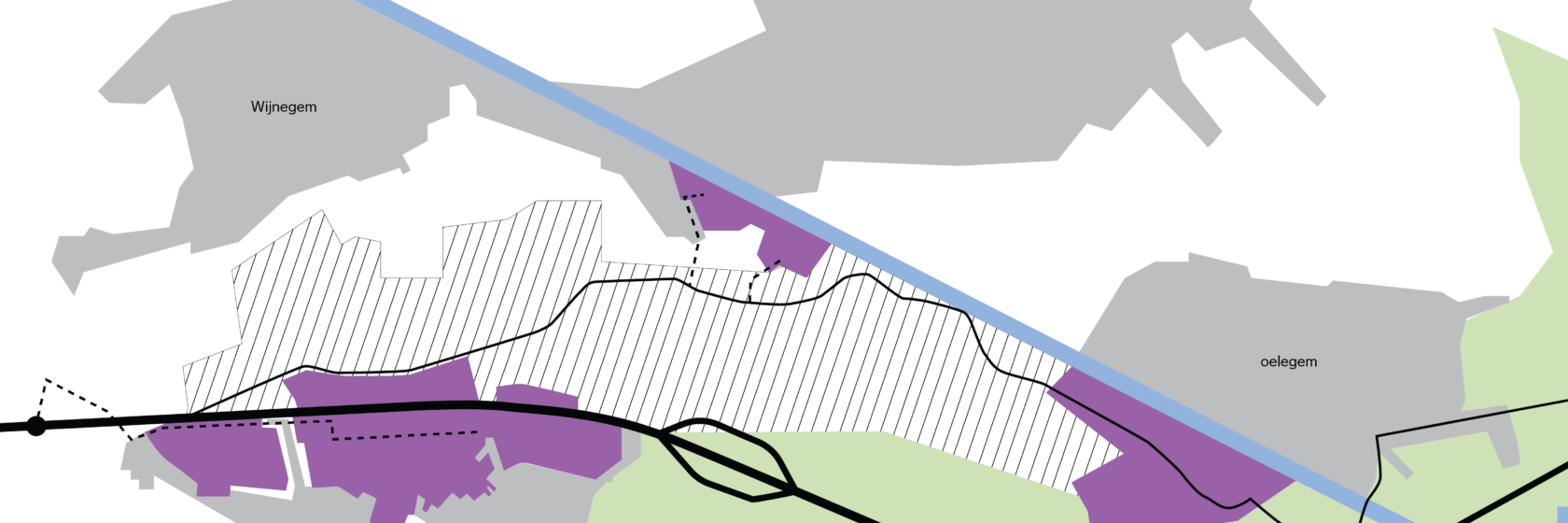
Sweco started from an integrated spatial and economic analysis at multiple scale levels. At supra-local and municipal level, we examined the role of the business parks within the broader economic and spatial system, including their relationship with mobility networks, green and blue infrastructure, and surrounding urban nodes.
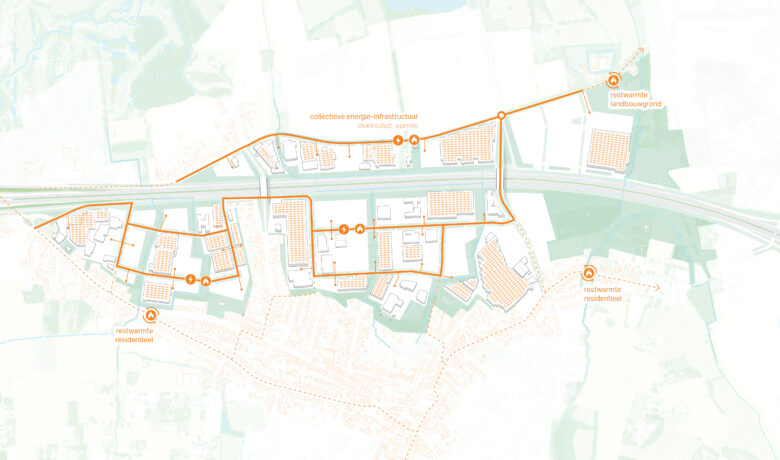
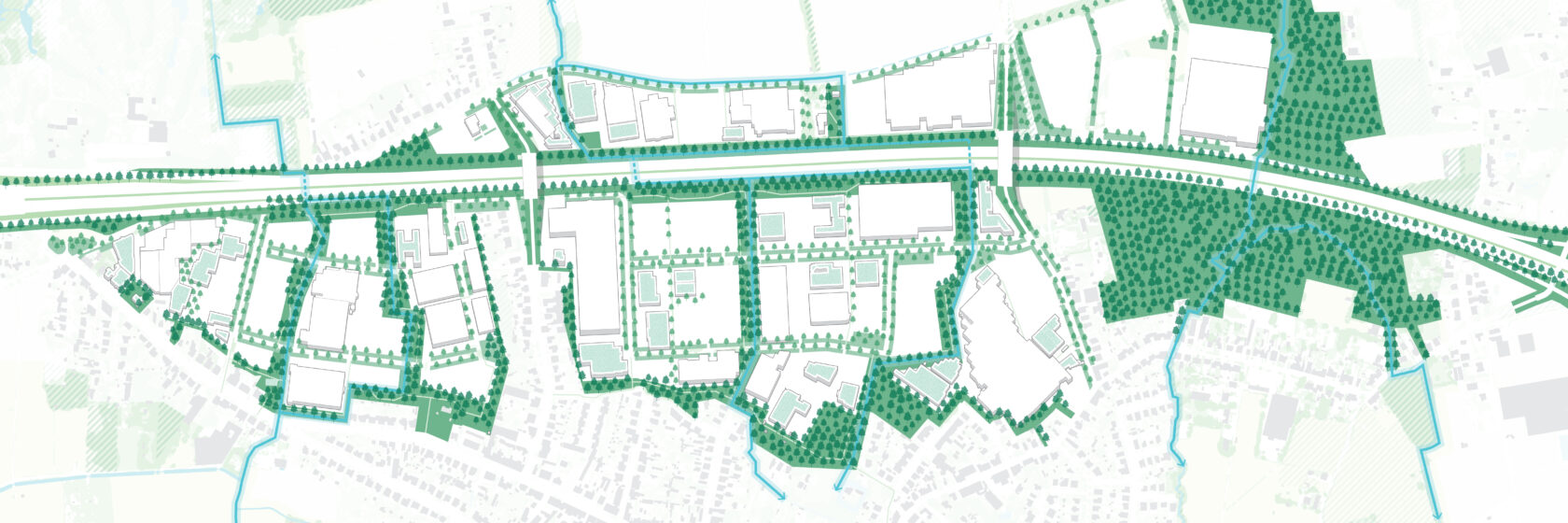
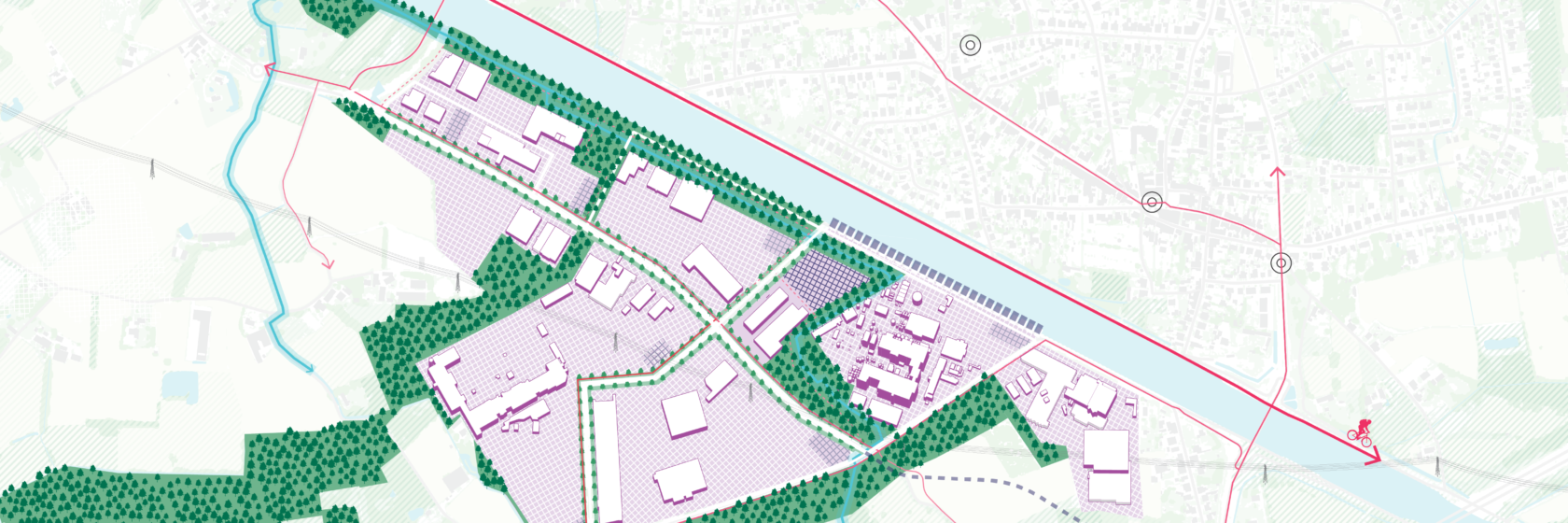
At site level, we analysed aspects such as land use, building typologies, densities, legal context, infrastructure, public space, mobility, energy potential and climate challenges such as flooding and heat stress.
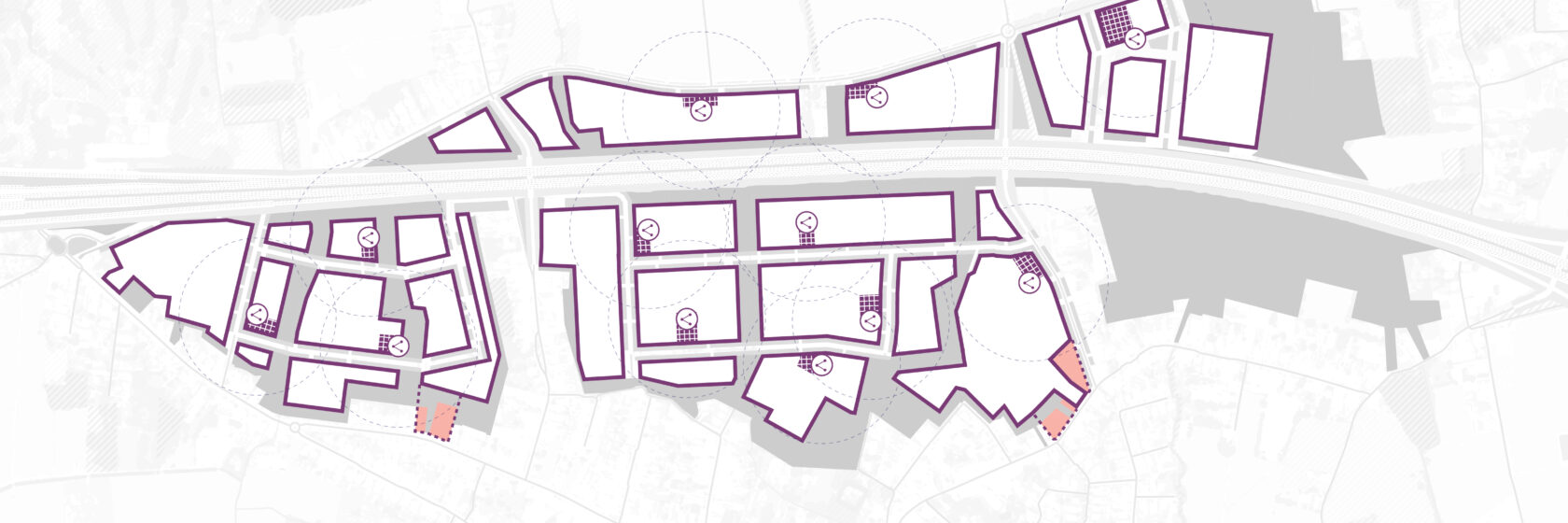
Based on this analysis, Sweco defined a set of guiding themes, bringing together the current situation and future opportunities. These were translated into opportunity maps and complemented with inspiring reference projects.
Design research as a driver
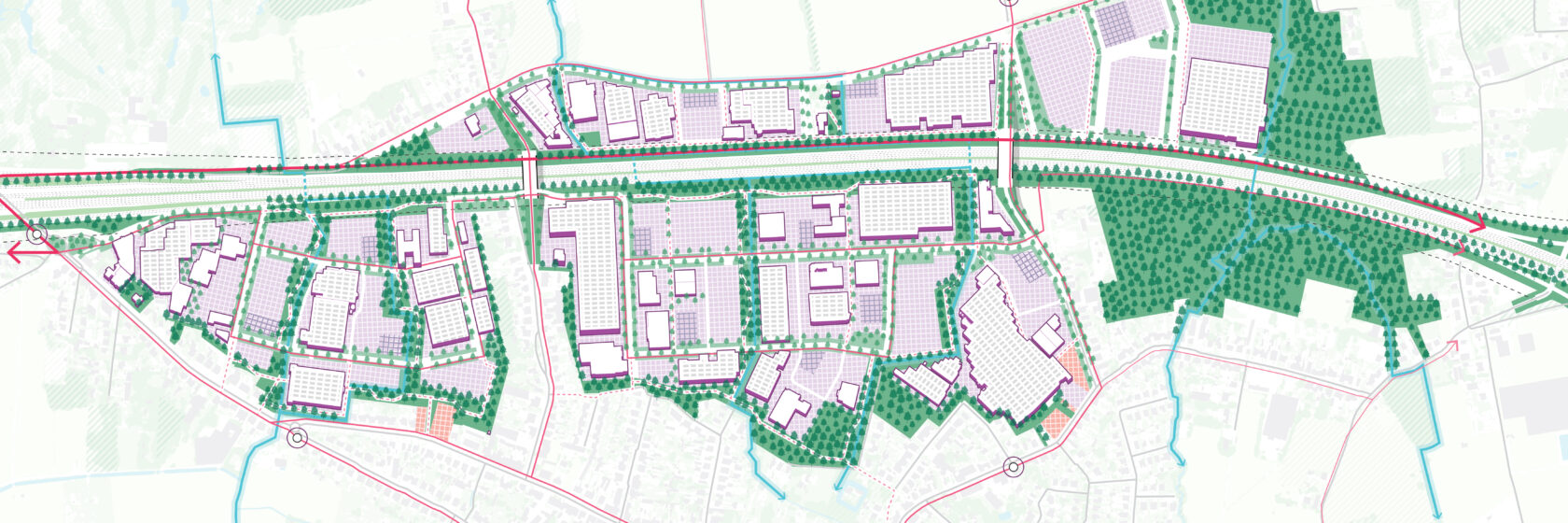
Through design research, the guiding themes were spatially translated and tested. This research not only had an exploratory and inspiring function, but also helped align the future vision with other ongoing projects in the area, such as the potential widening of the E313 within the Complex Project ‘De Nieuwe Rand’.
Key themes included:
Business parks at a valuable scale
- Business parks as mobility hubs
- Intensive and space-efficient business parks
- Collective facilities and shared use
- Climate-resilient business parks
- Business parks as energy hubs
- Connected and collaborating companies
From vision to action
In close collaboration with public and private stakeholders, Sweco translated the vision into a concrete action programme. This combines site-wide actions with targeted pilot projects that can initiate the spatial transition in the short term.
The actions are structured around four lines: governance and collaboration, spatial and planning instruments, public-private partnerships and financial mechanisms to support restructuring. For each action, responsibilities, partners, risks, timing and financial implications were mapped out, ensuring a realistic implementation pathway.
Impact
This project provides a solid and actionable framework for the redevelopment of existing business parks, combining economic performance with spatial quality, sustainability and climate adaptation. It demonstrates how strategic planning, urban design and circular economy together form the foundation for future-oriented working environments.