A versatile care campus focused on small-scale homeliness
‘t Huis
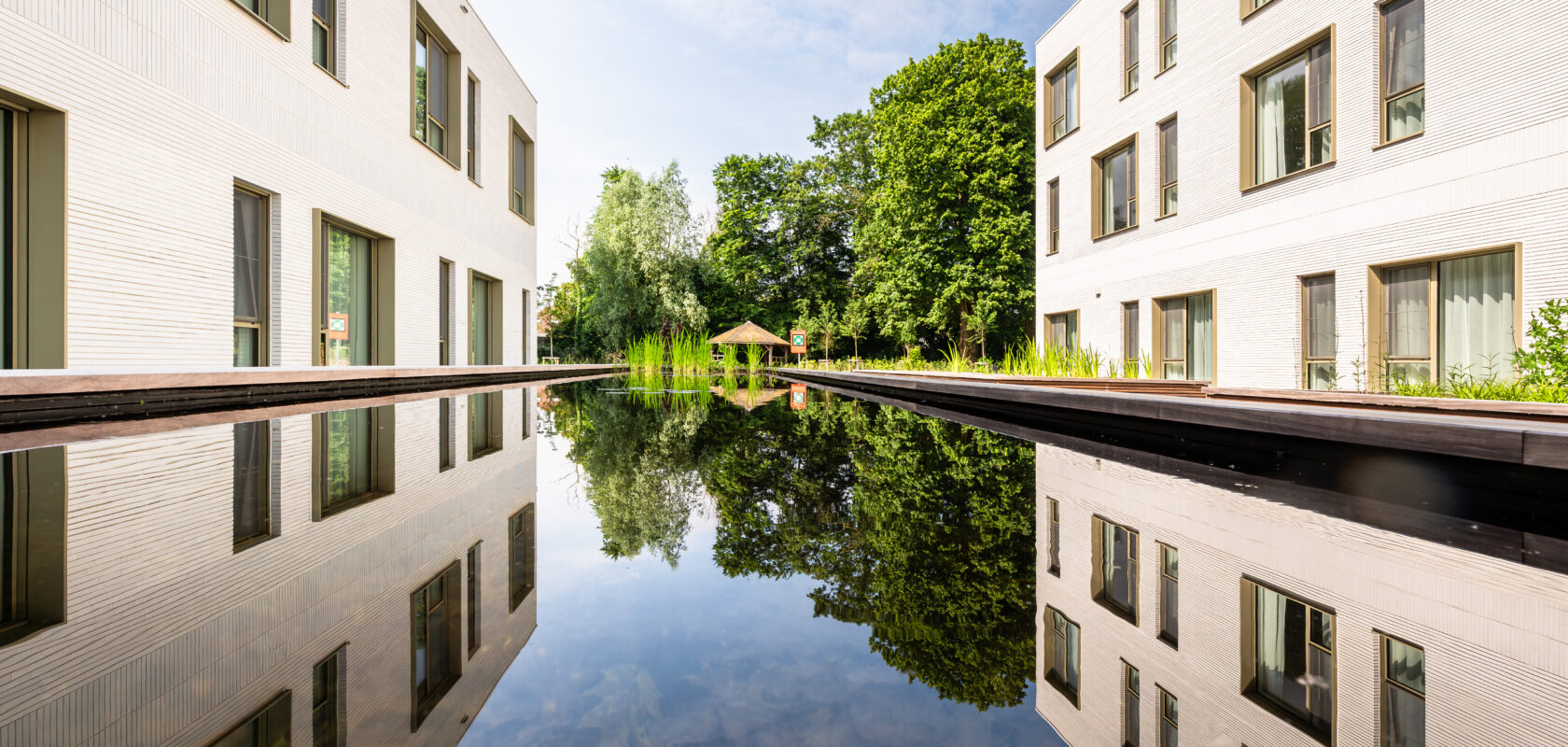
In Kortrijk, the ’t Huis care campus was built as a modern replacement facility for the Sint-Jozef residential care home. The project includes 135 resident rooms, a local service center, a day care center, and a childcare facility. The masterplan was developed by assar, who also supported the client in obtaining VIPA subsidies.
Facts about the project
- ZorgKortrijk (formerly Public Welfare Center – CPAS)
- Client
- Kortrijk
- Location
- 3,150 m² underground, 8,975 m² above ground
- Surface area
- architecture, interior design, BIM, landscape design, urban planning, project management, programming
- Expertises
History and site layout
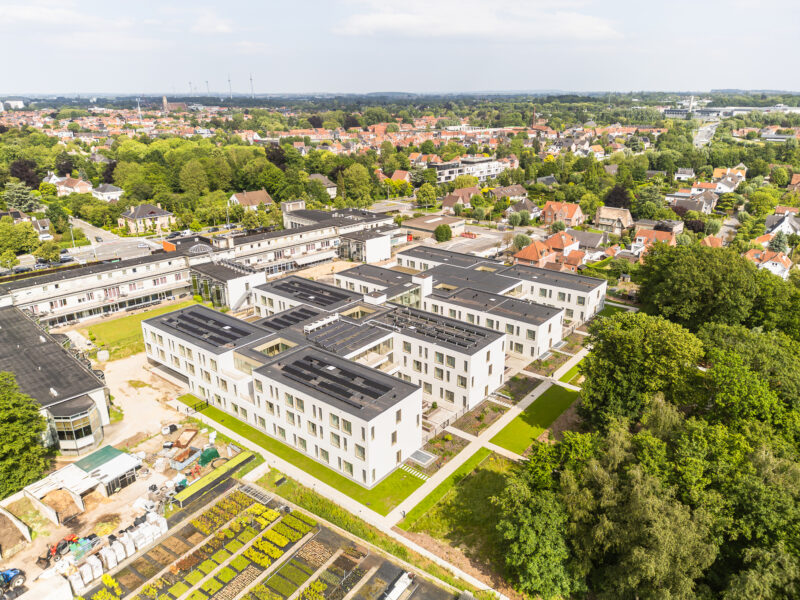
The former Sint-Jozef residential care home, later renamed ’t Huis, was for many years a familiar presence in Kortrijk’s care landscape. The building dated back to 1966 and no longer met modern fire safety standards or room size requirements. Architecturally, the complex had also lost quality, with mirrored glass extensions added to provide sanitary facilities in each room. Since renovation was deemed unsustainable, the Public Welfare Center of Kortrijk – now ZorgKortrijk – decided to redevelop the campus entirely based on a masterplan.
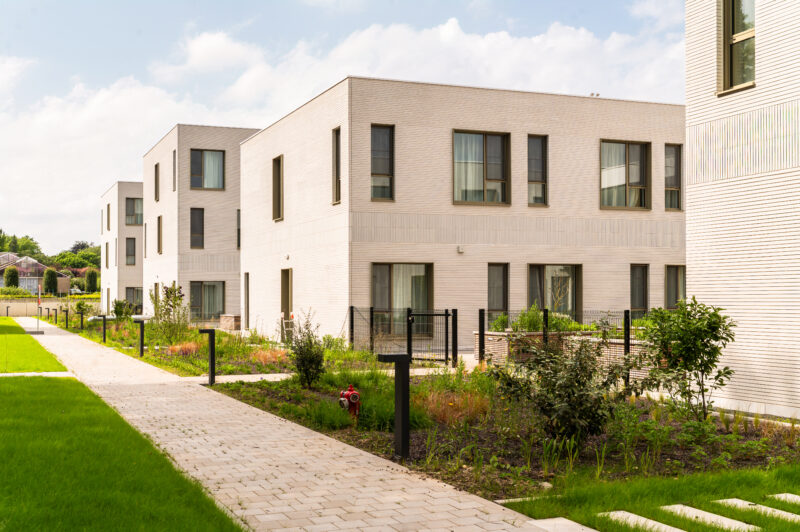
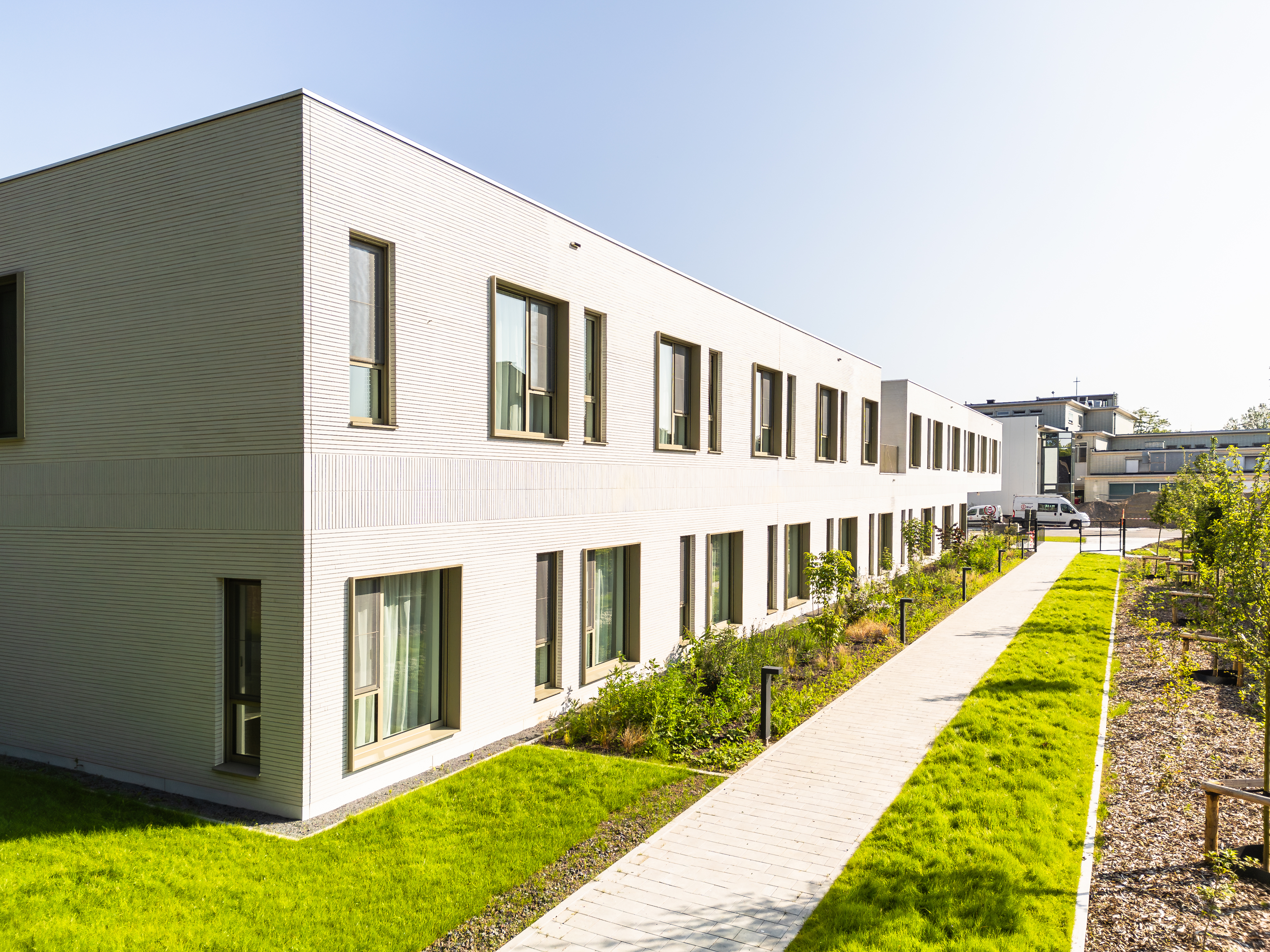
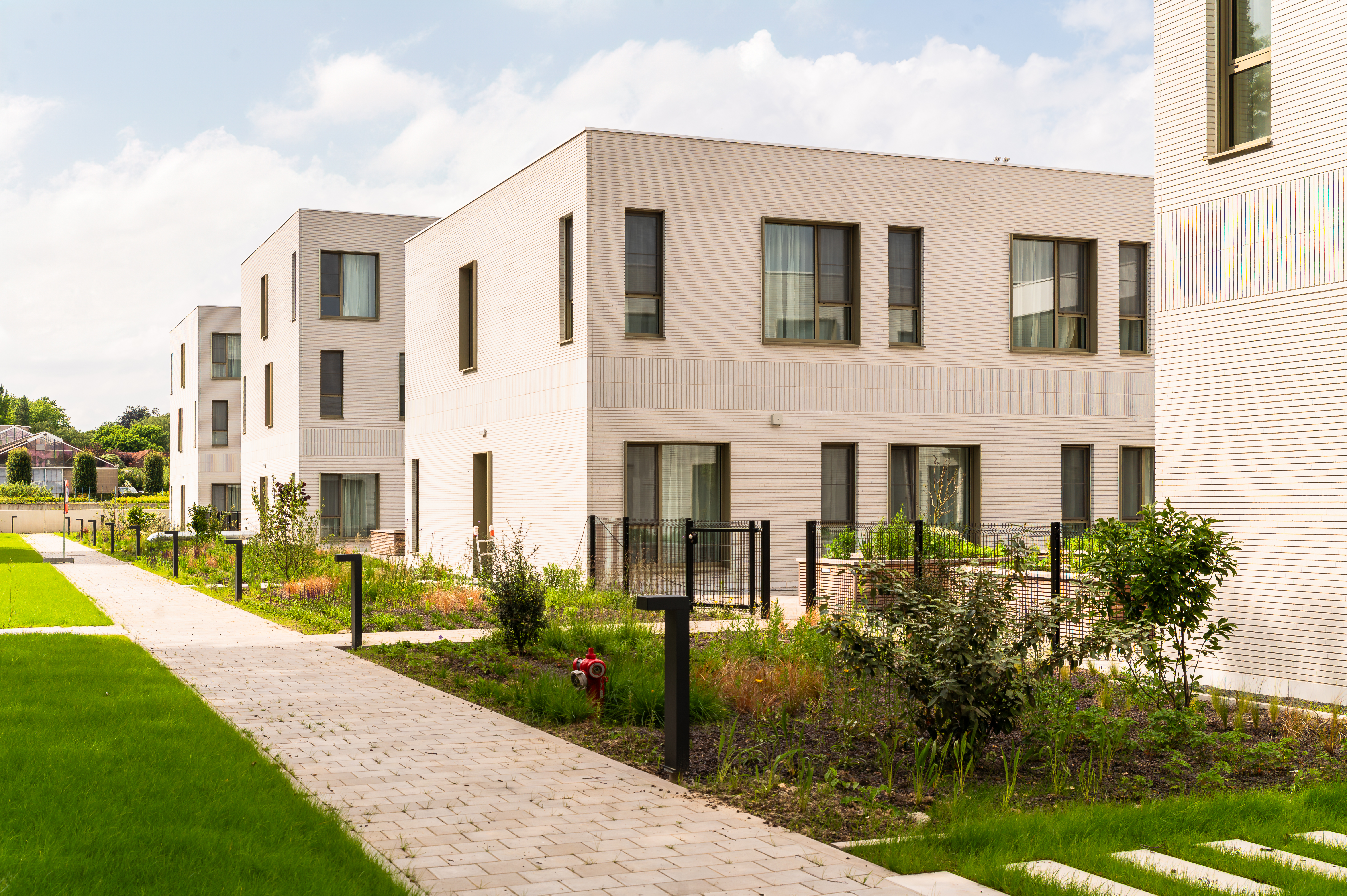
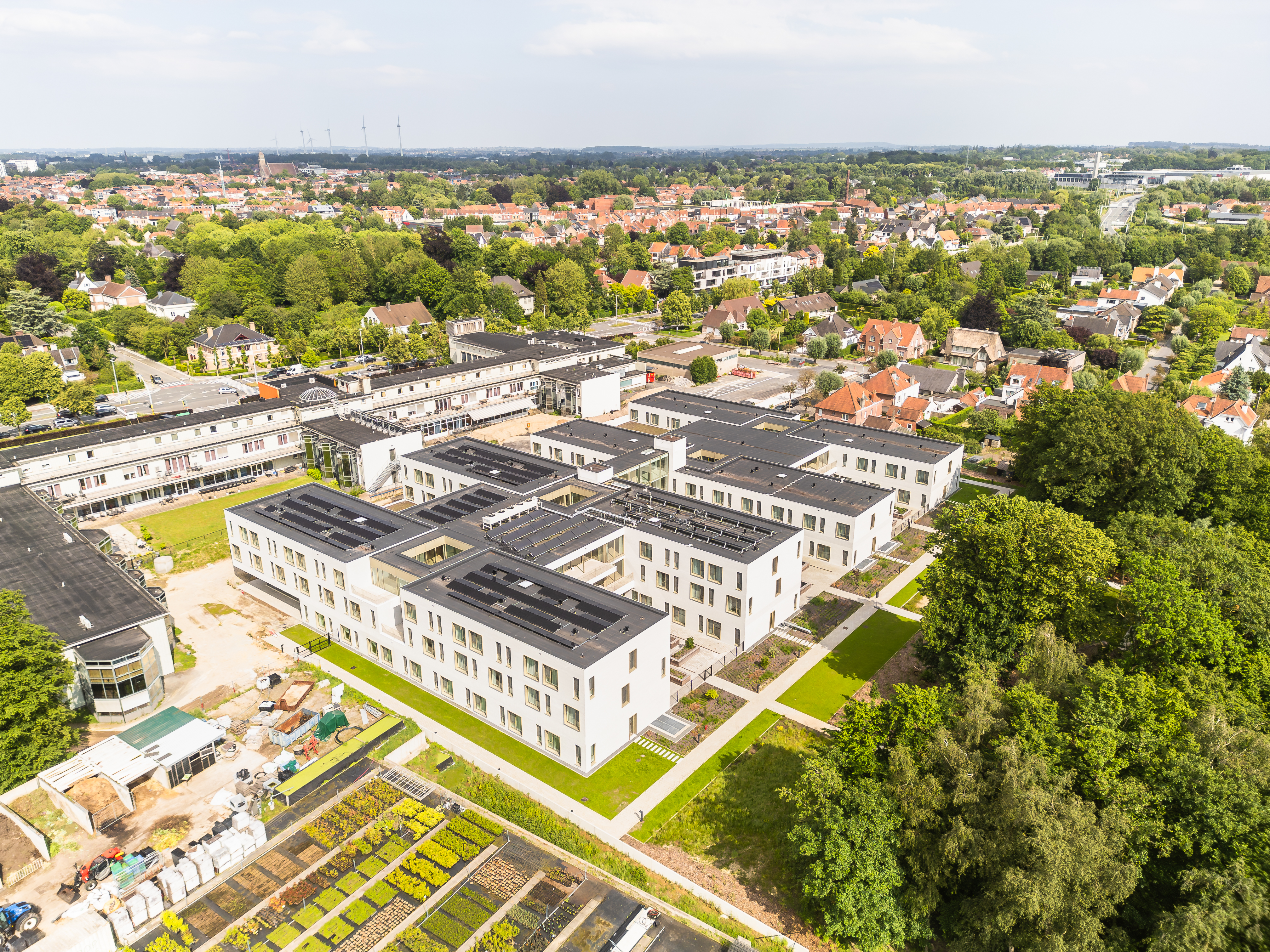
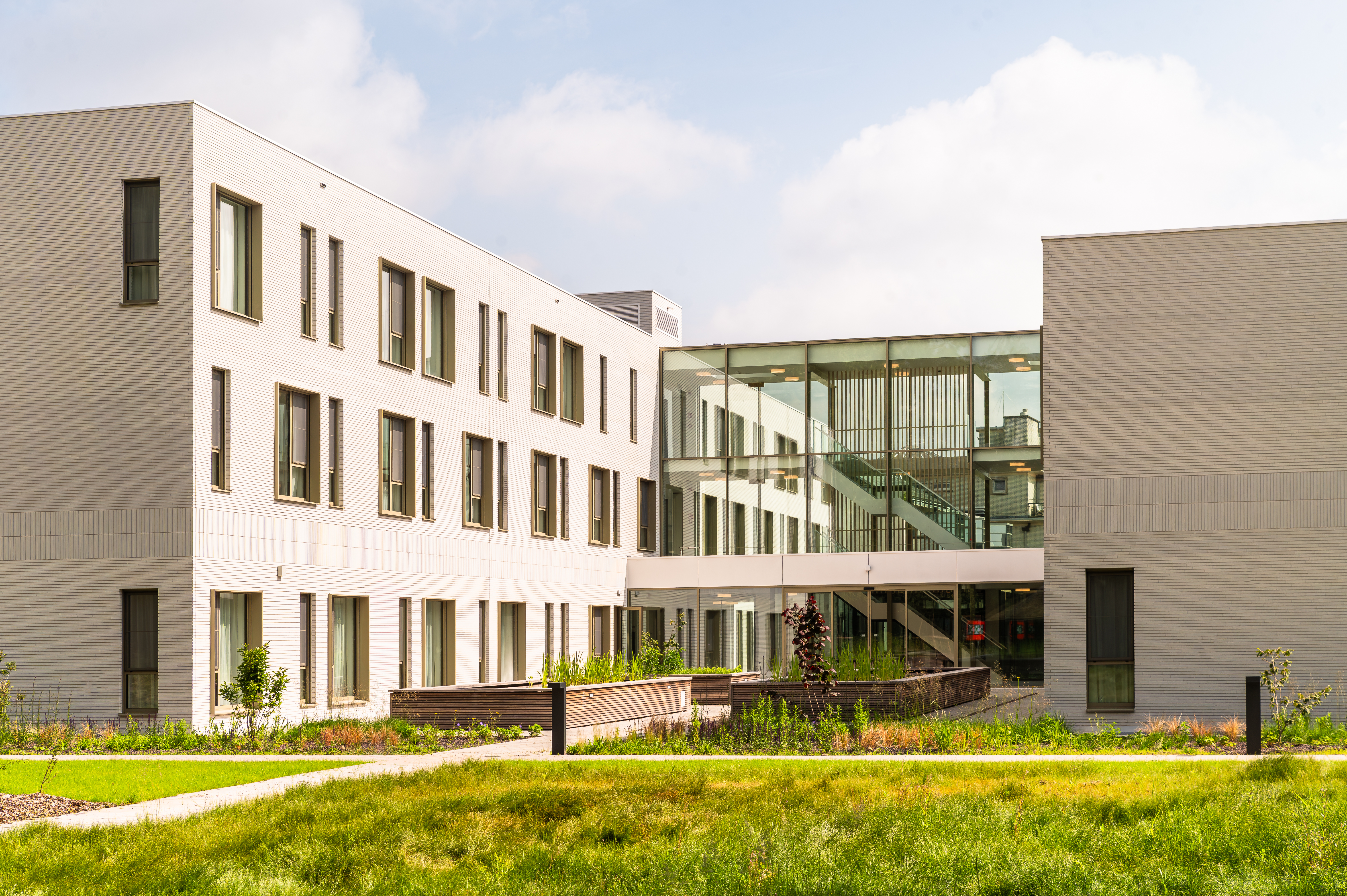
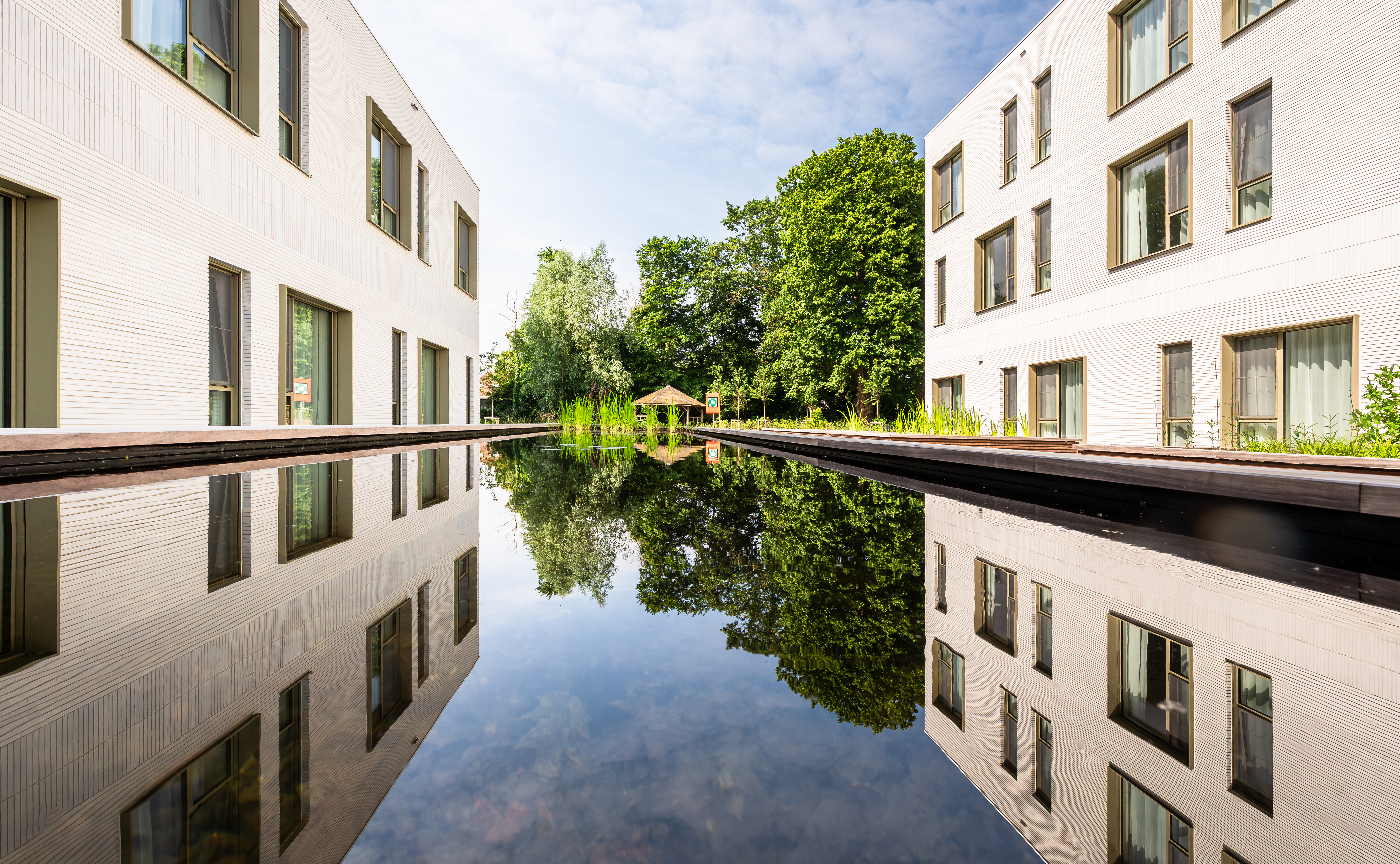
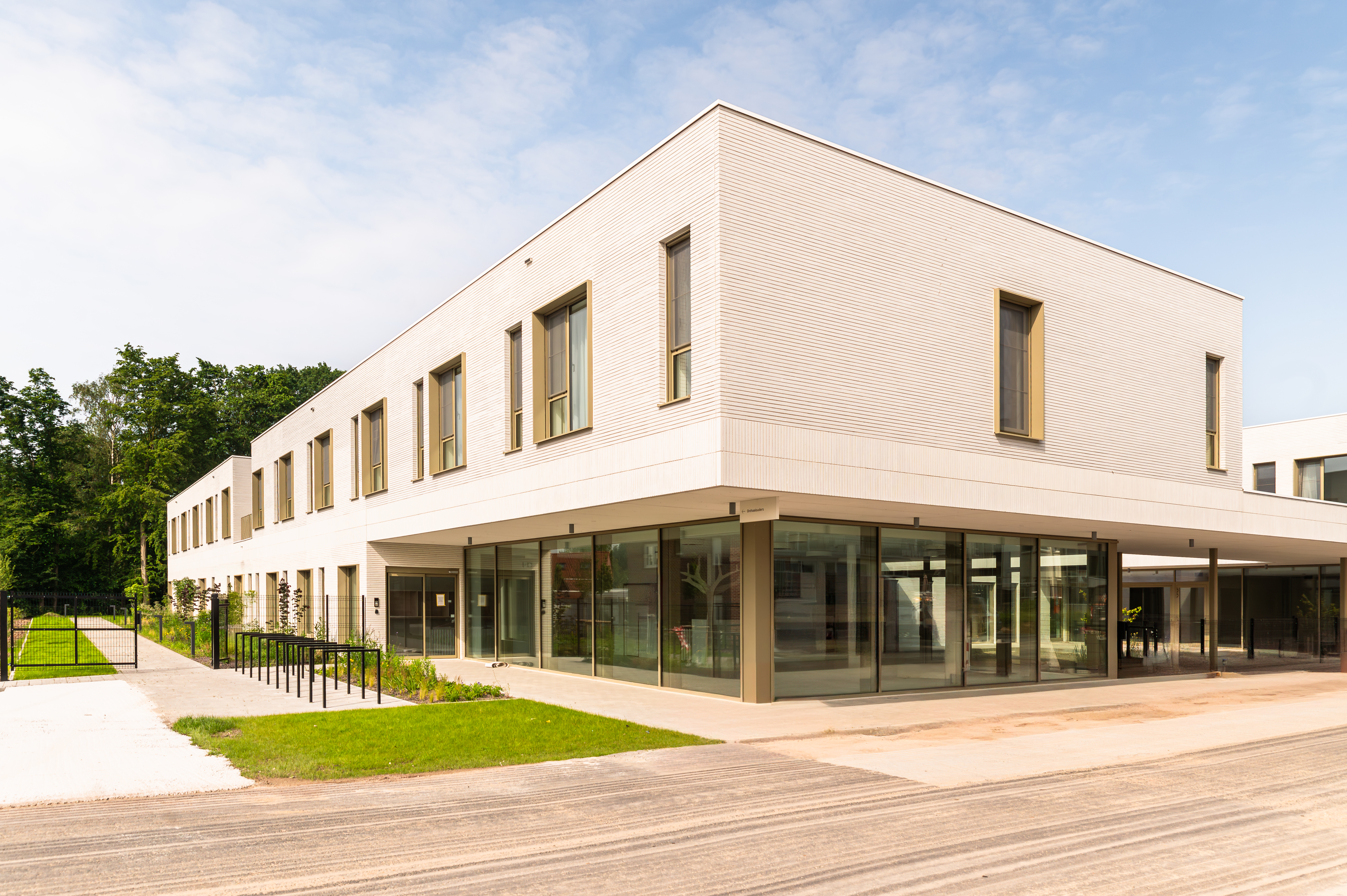
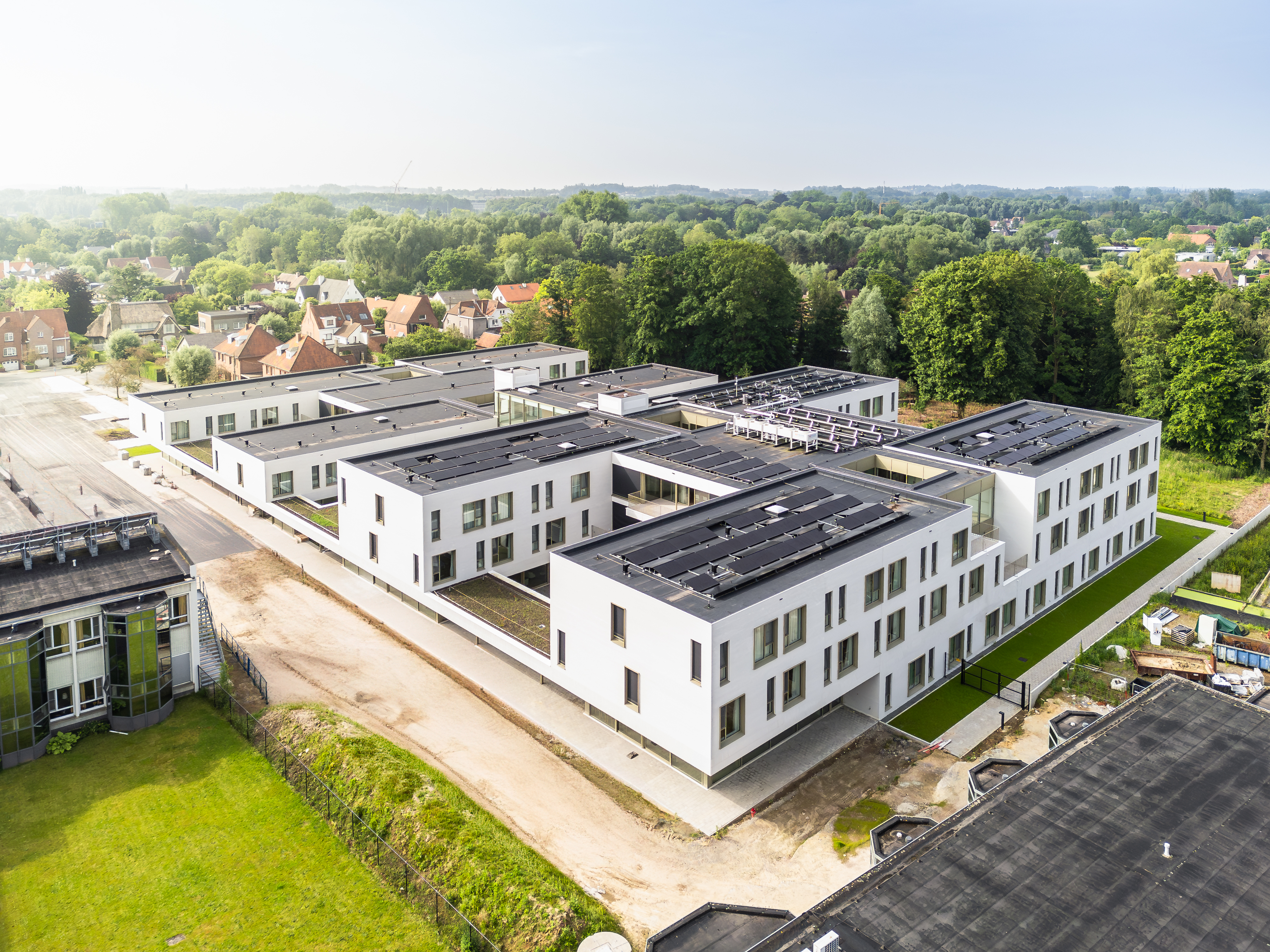
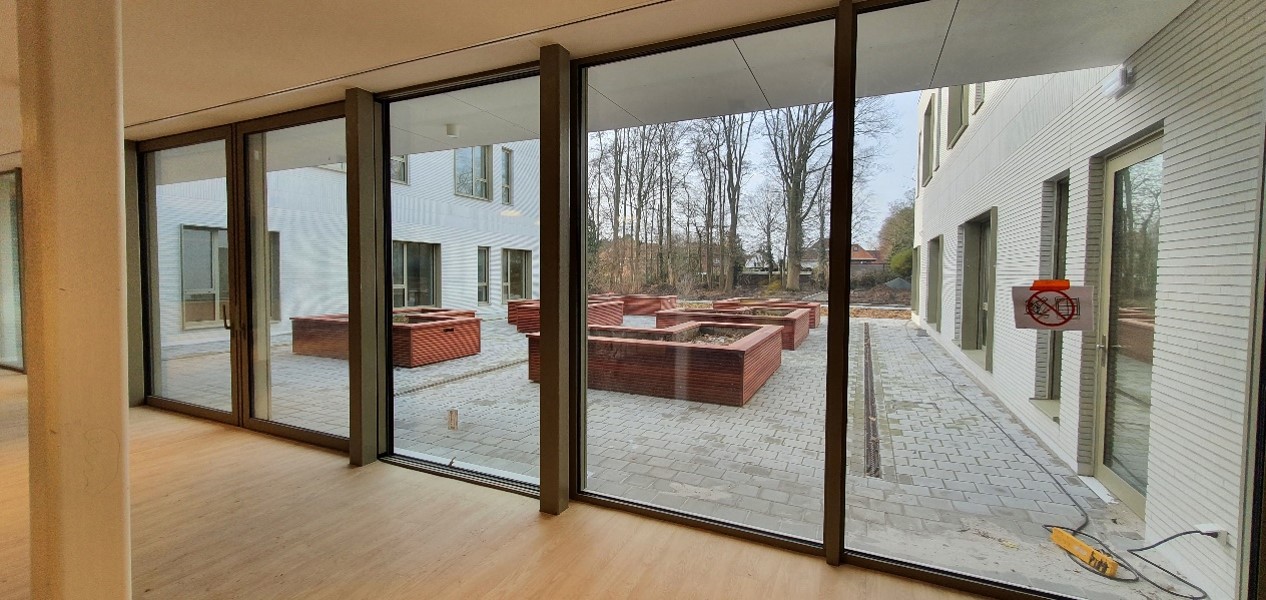
The new care campus was constructed at the rear of the site, preserving as many existing trees as possible. The building height was deliberately limited to two storeys on the residential side and three on the school side, ensuring harmonious integration into the surroundings. Accessibility was carefully considered: heavy traffic uses the existing entrance on Condédreef and is directed to the right-hand side of the site, allowing a large green area to remain at the front. This area has been designed as a park with gardens and a new playground. The green zone behind the building, primarily intended for residents, has a private character with enclosed park gardens.
Architectural concept
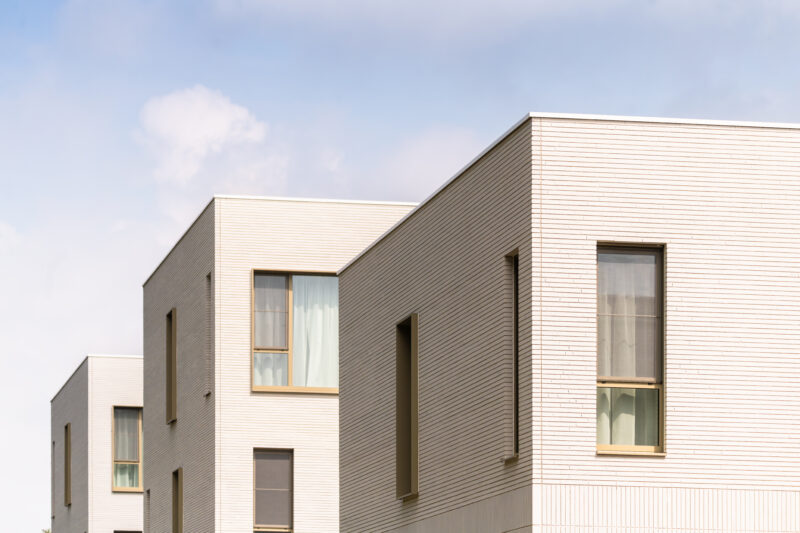
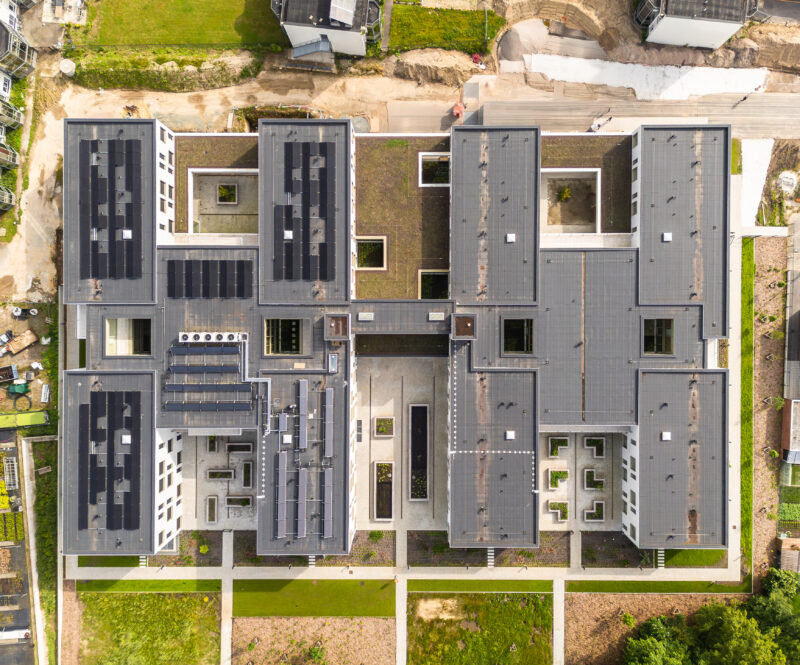
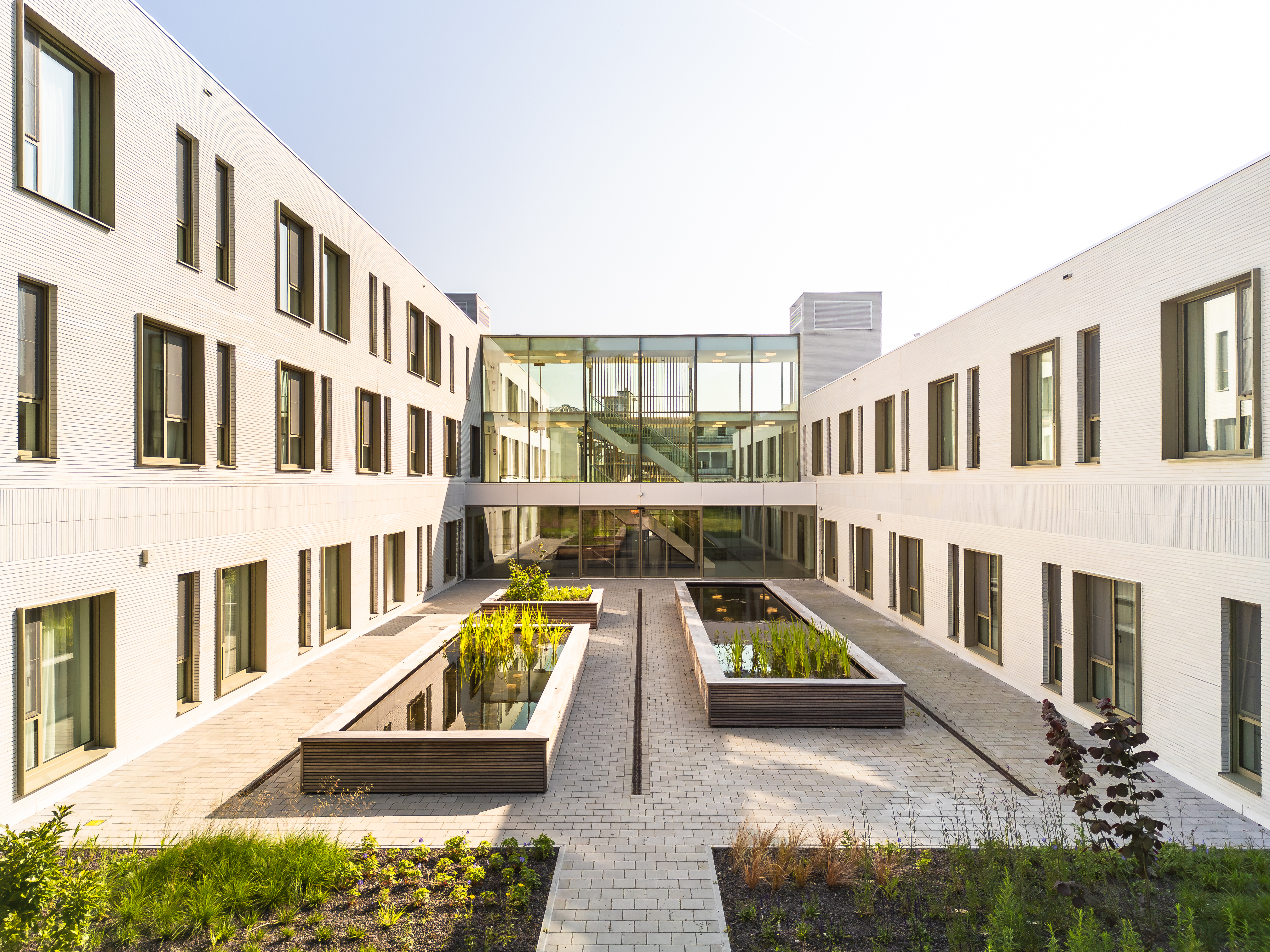
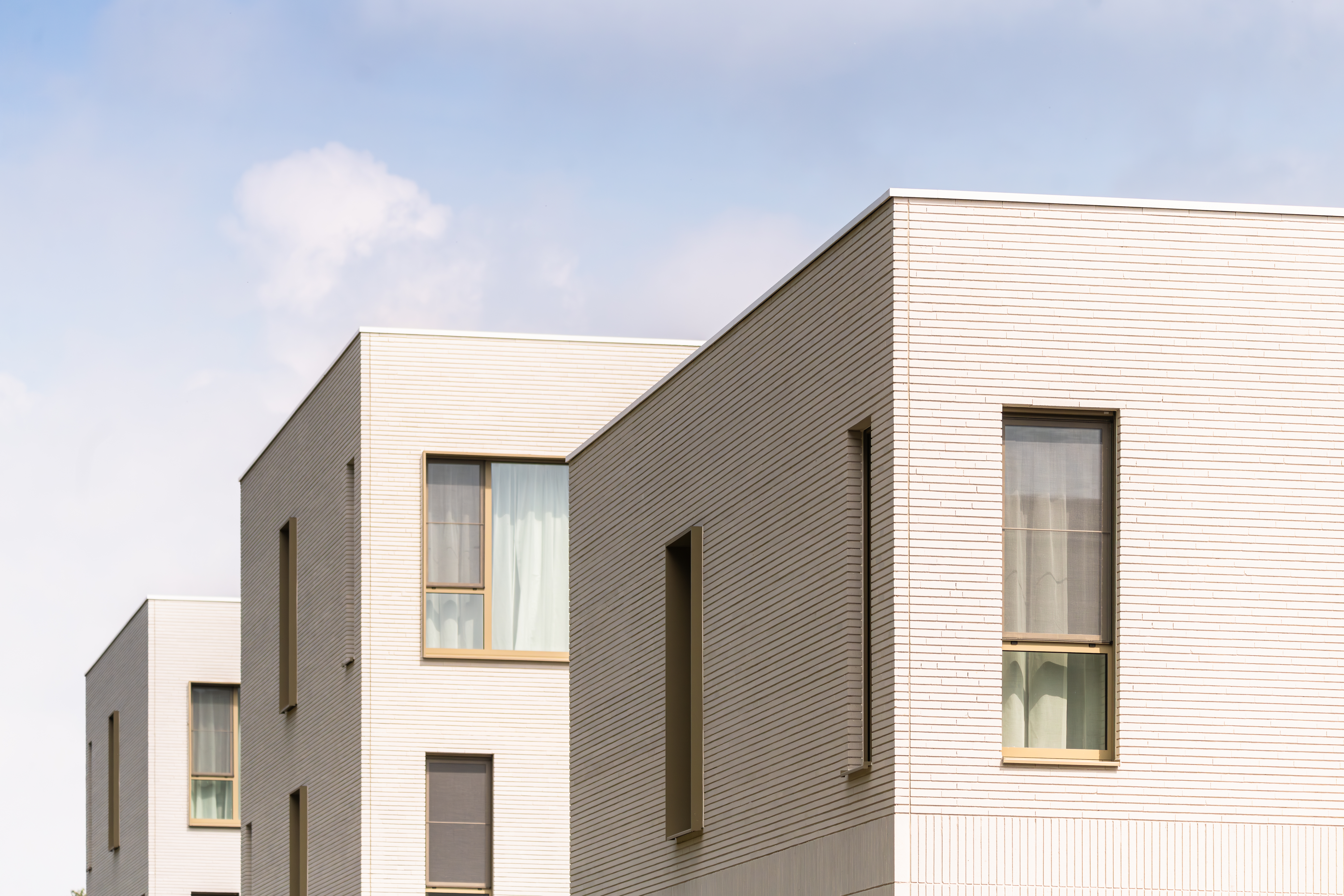
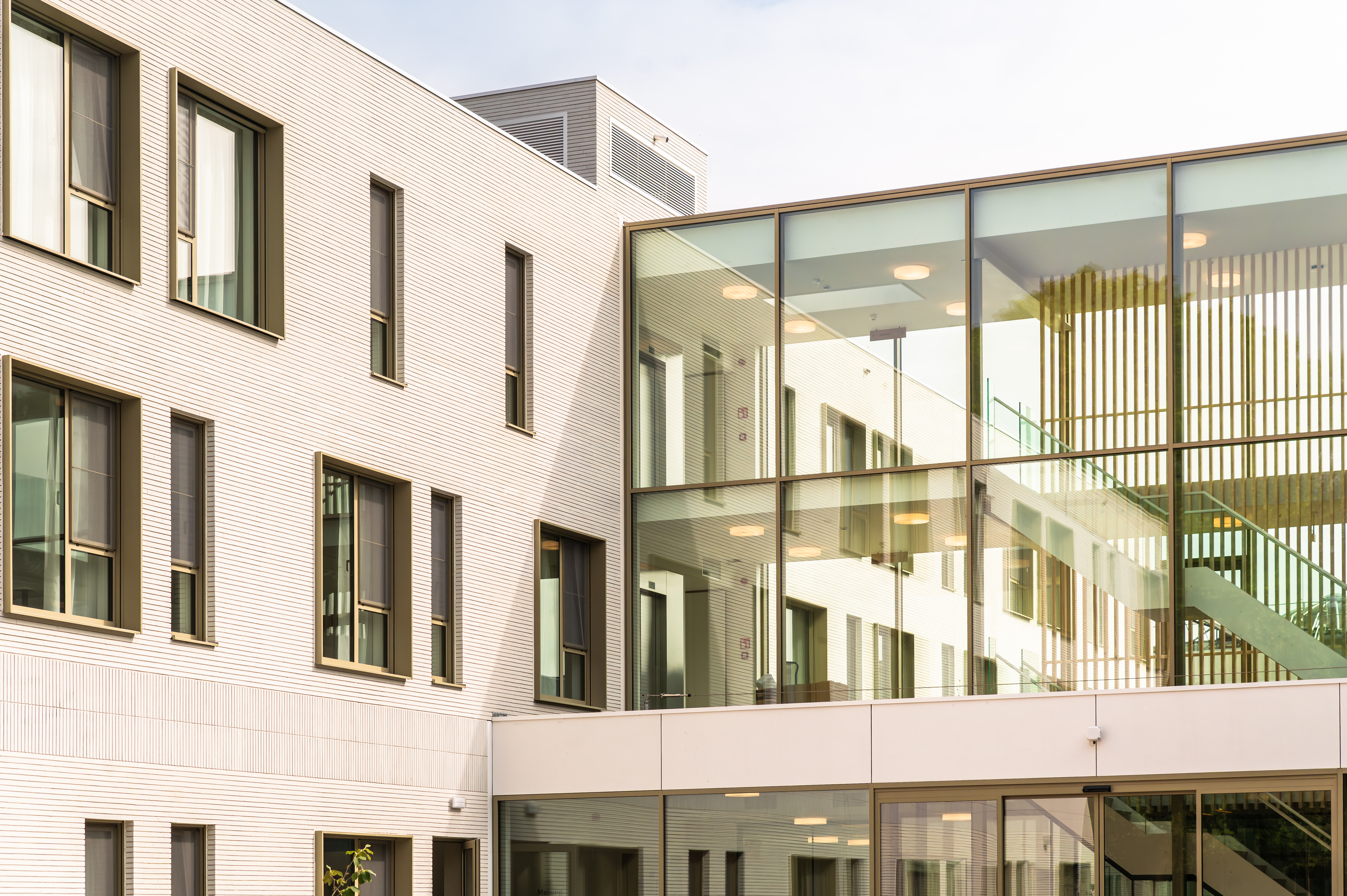
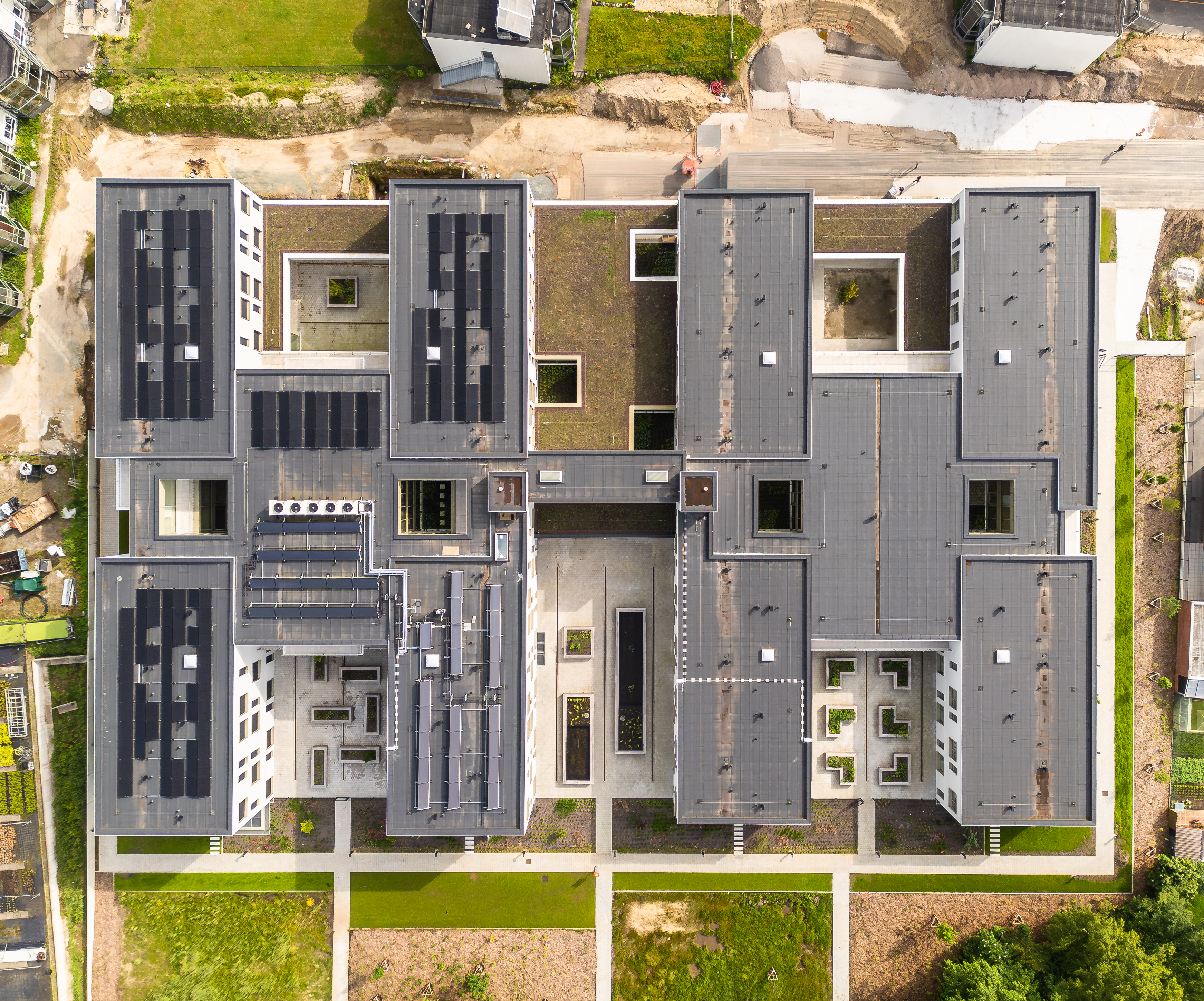
The campus consists of eight orthogonally linked building volumes, each at the scale of a family home. This arrangement creates a play of open and closed spaces, enhancing transparency and sightlines. All rooms are oriented east-west, with views of the surroundings. Each ward consists of two living groups of sixteen rooms, organized into houses of eight rooms, which is also expressed in the architecture. This contributes to a small-scale, homely atmosphere.
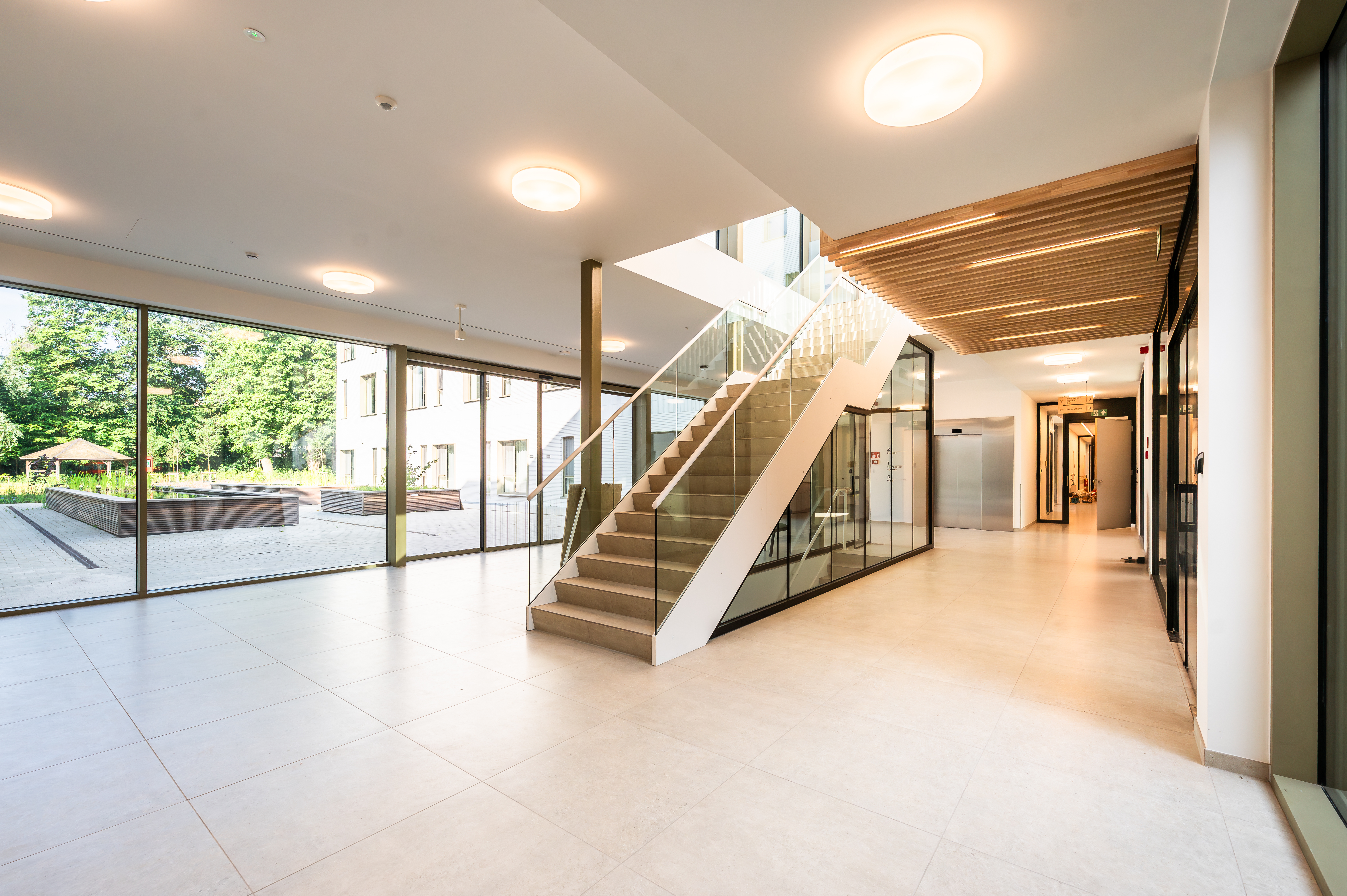
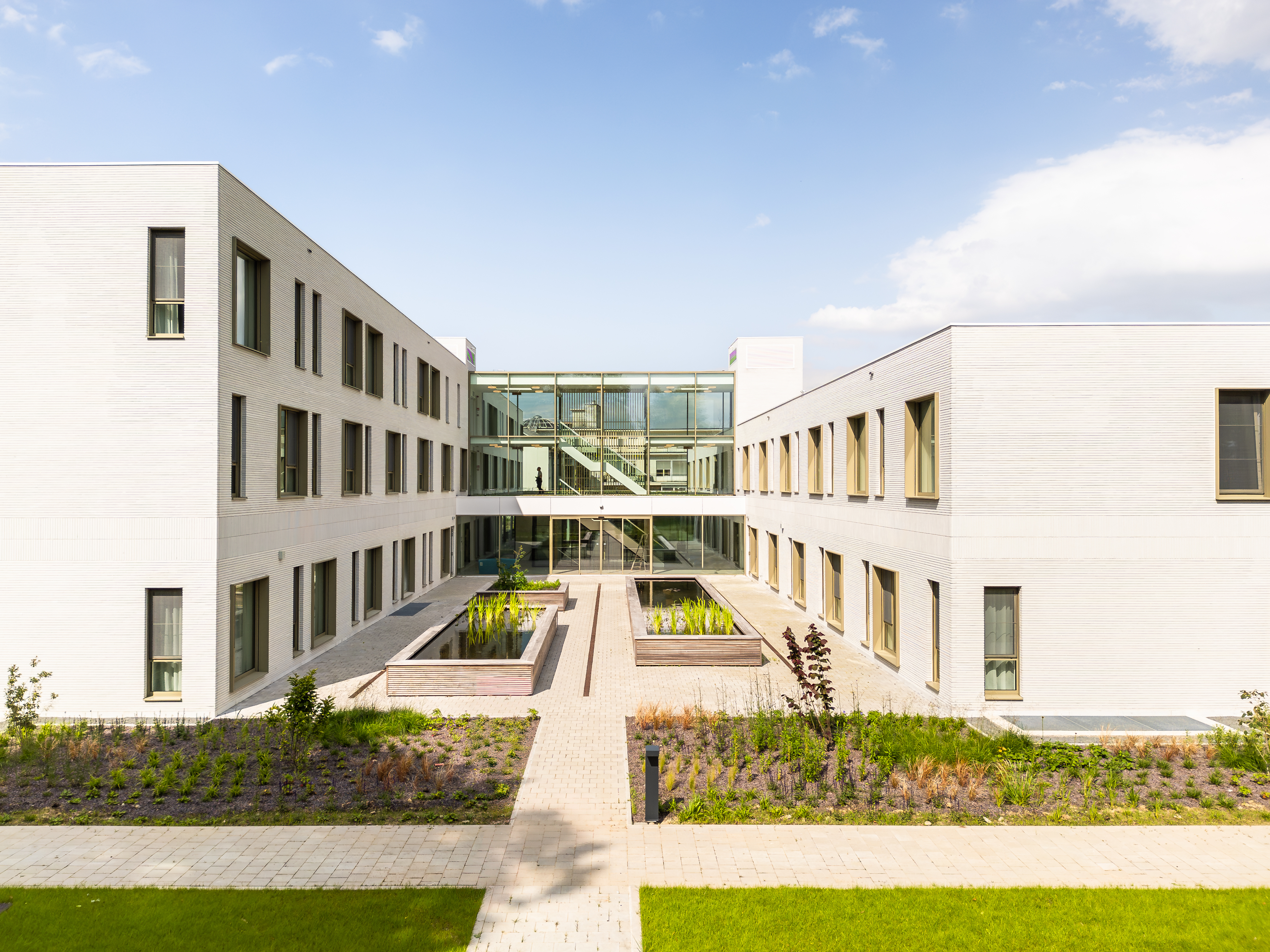
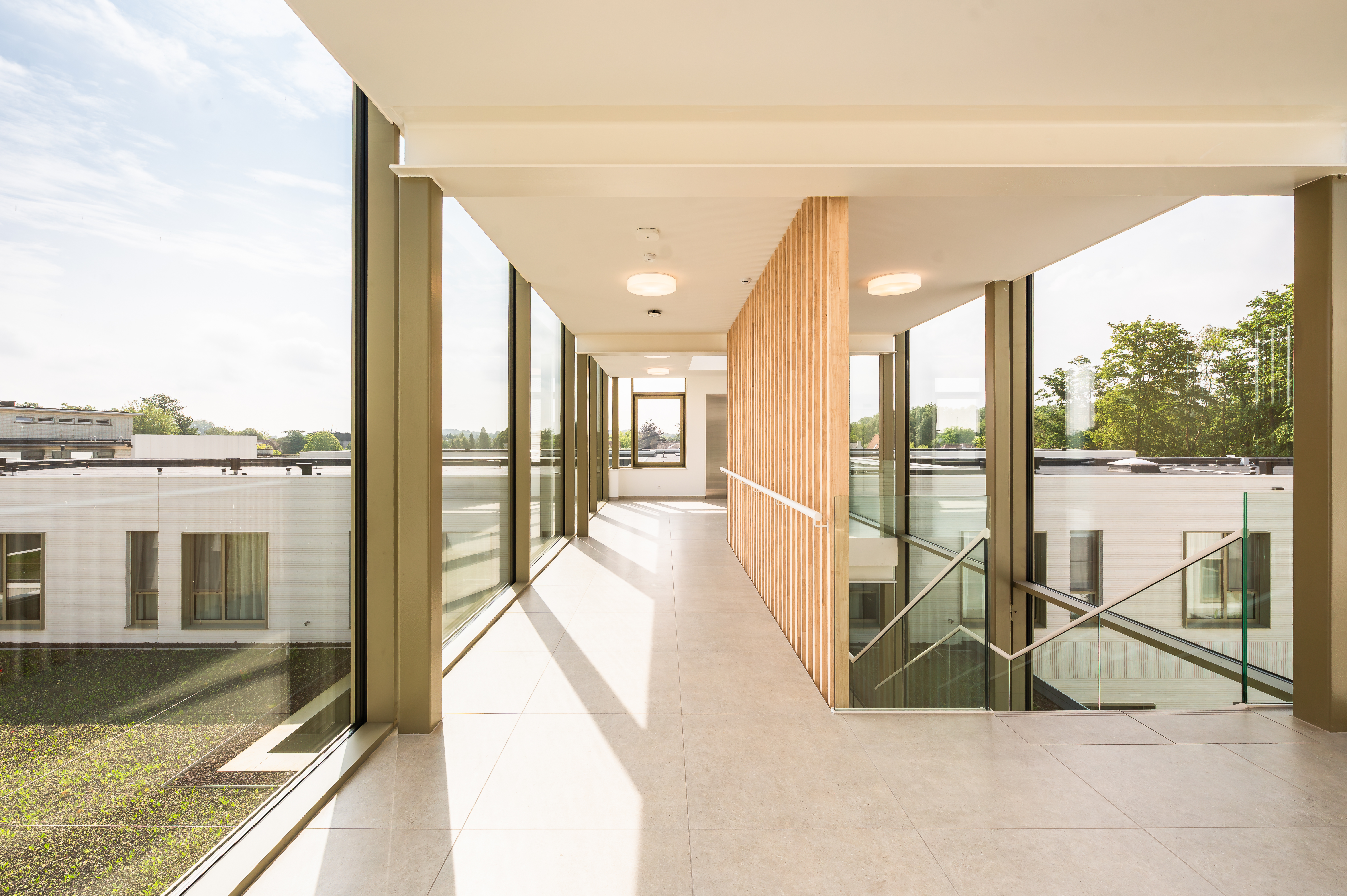
The layout of each ward follows an H-shape. The horizontal wing accommodates semi-public functions such as the nursing station, day and dining rooms, wellness facilities, kitchen, and storage. The two intersections of the H are broken by patios that provide light, air, and orientation. They encourage social interaction and act as reference points for residents, visitors, and staff. The vertical wings contain the houses and are intentionally designed to be more private.
Homely environment
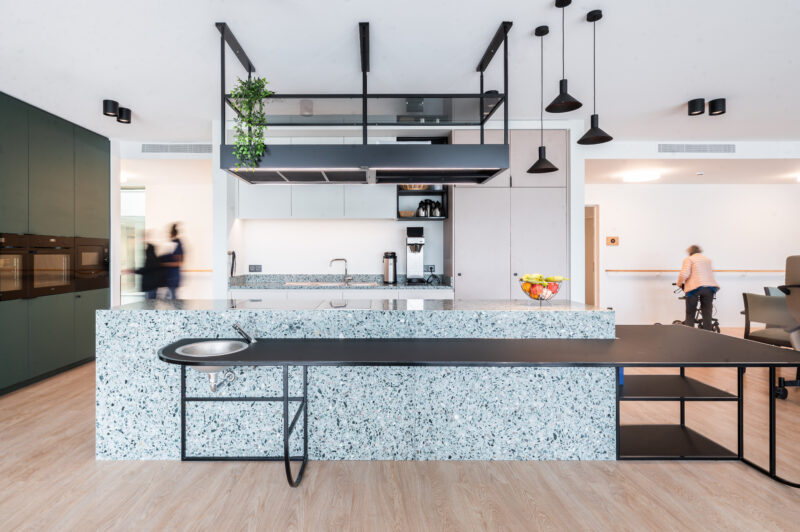
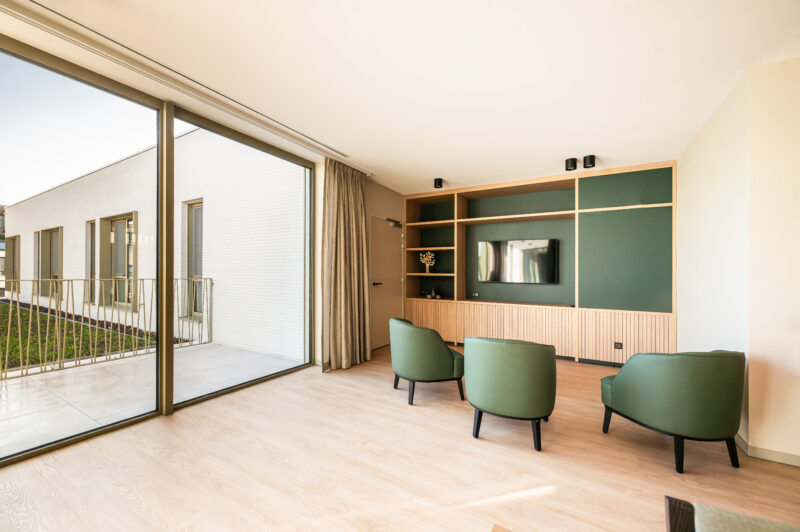
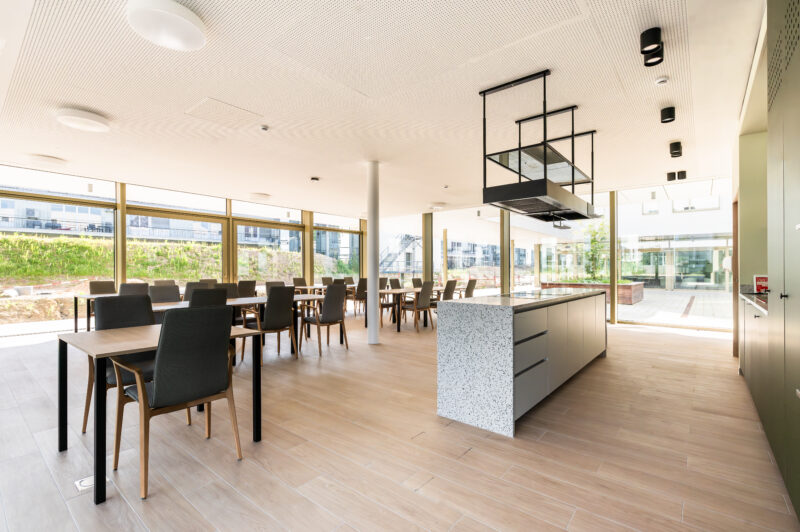
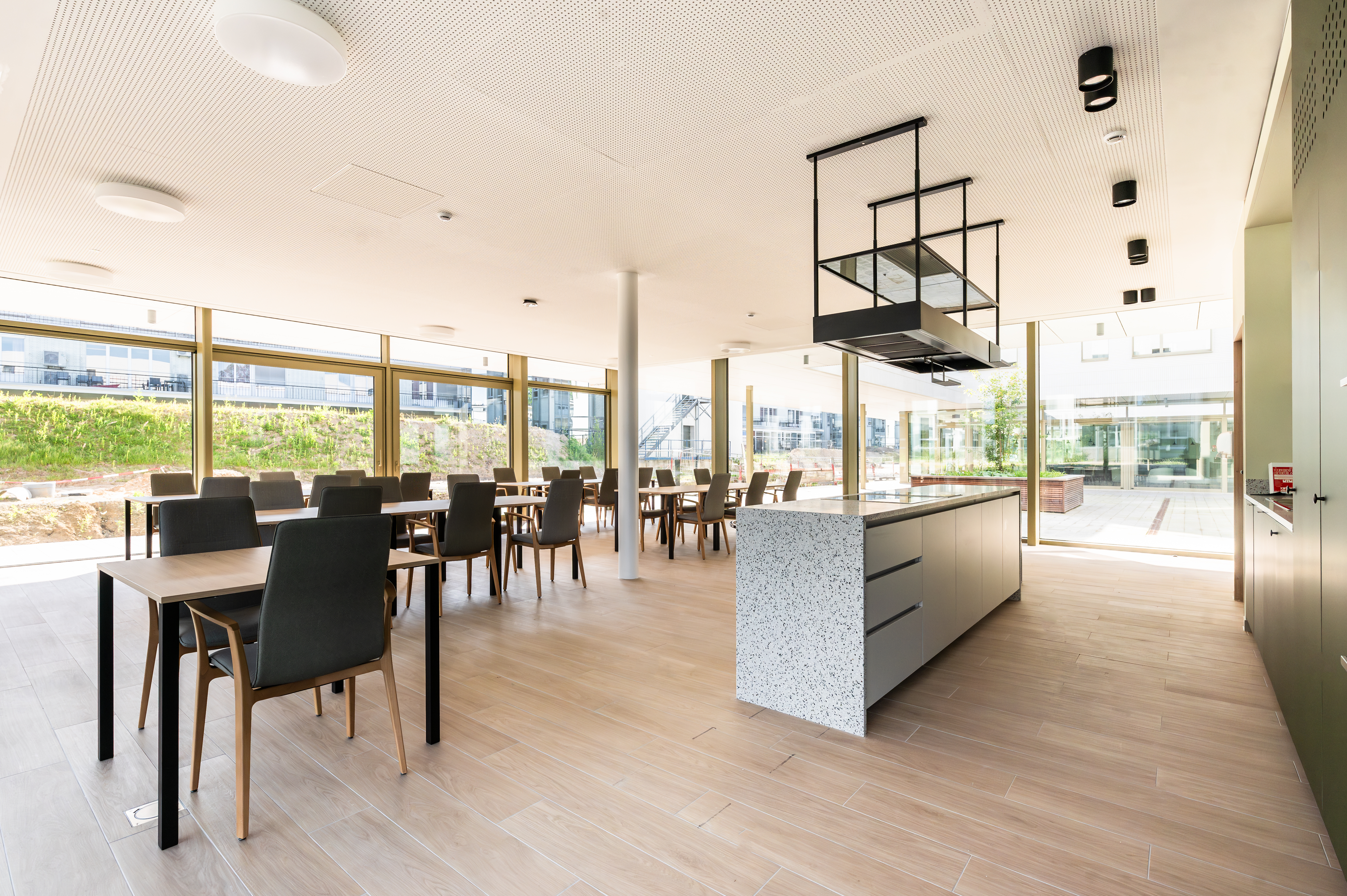
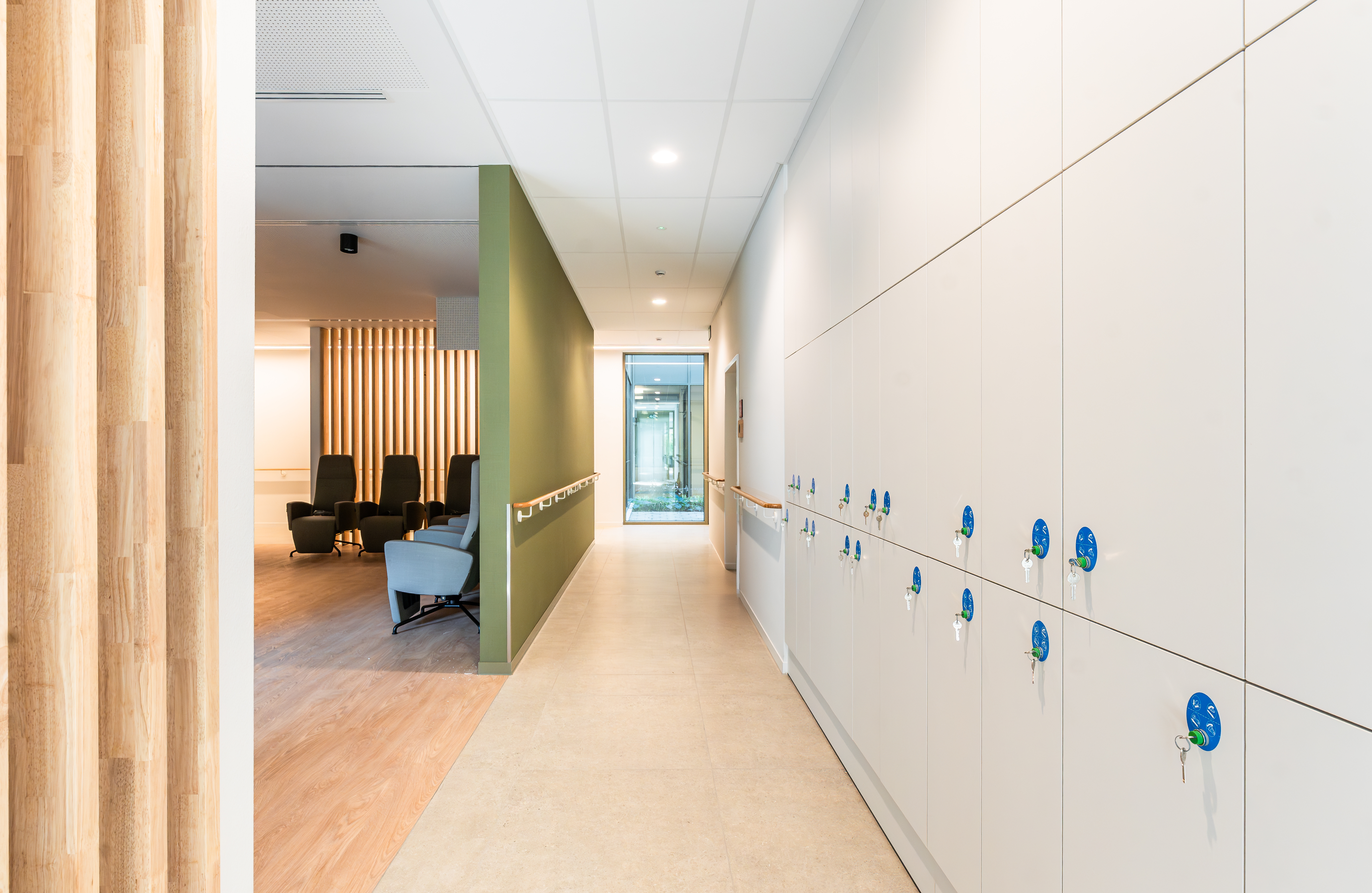
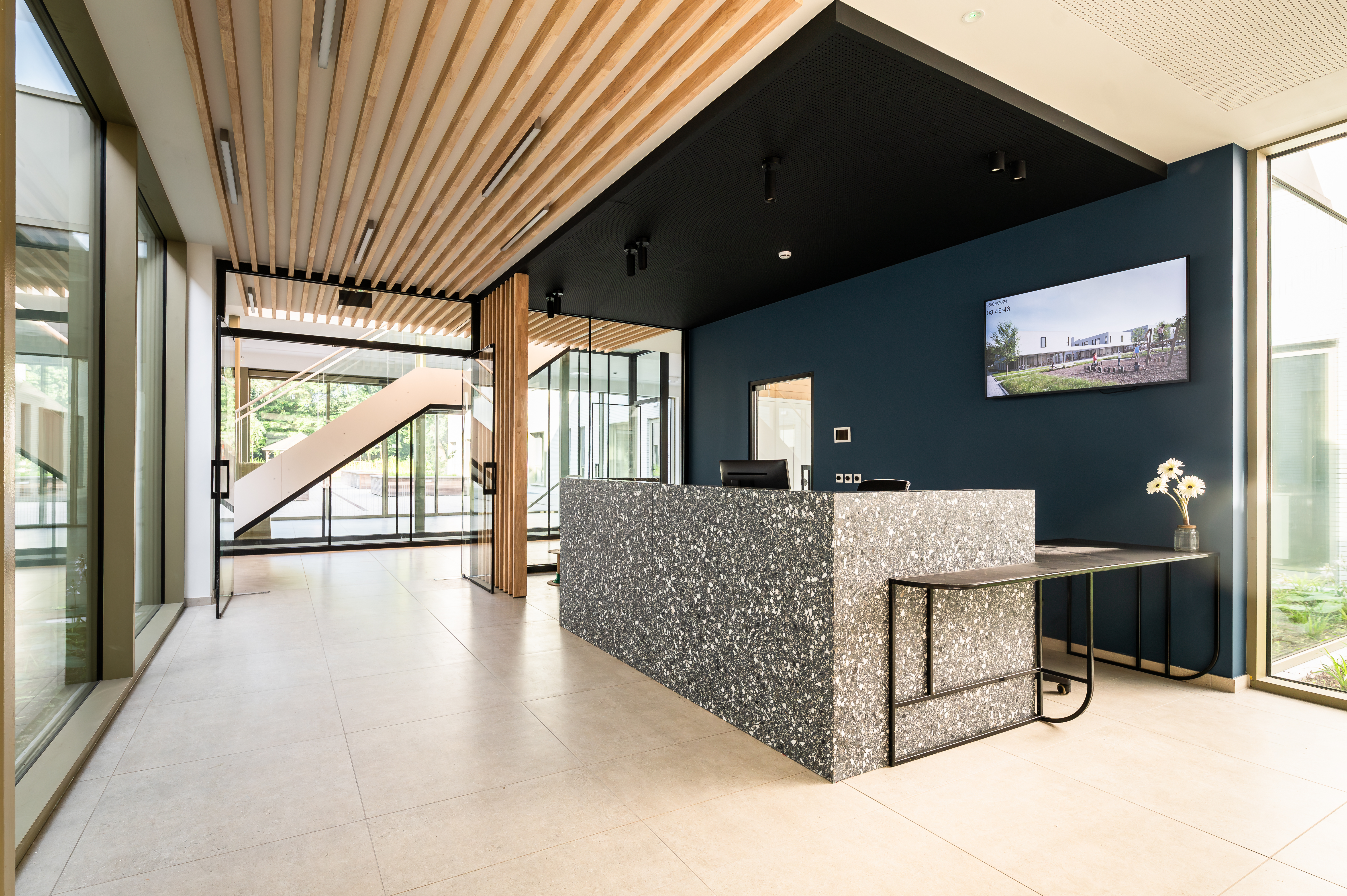
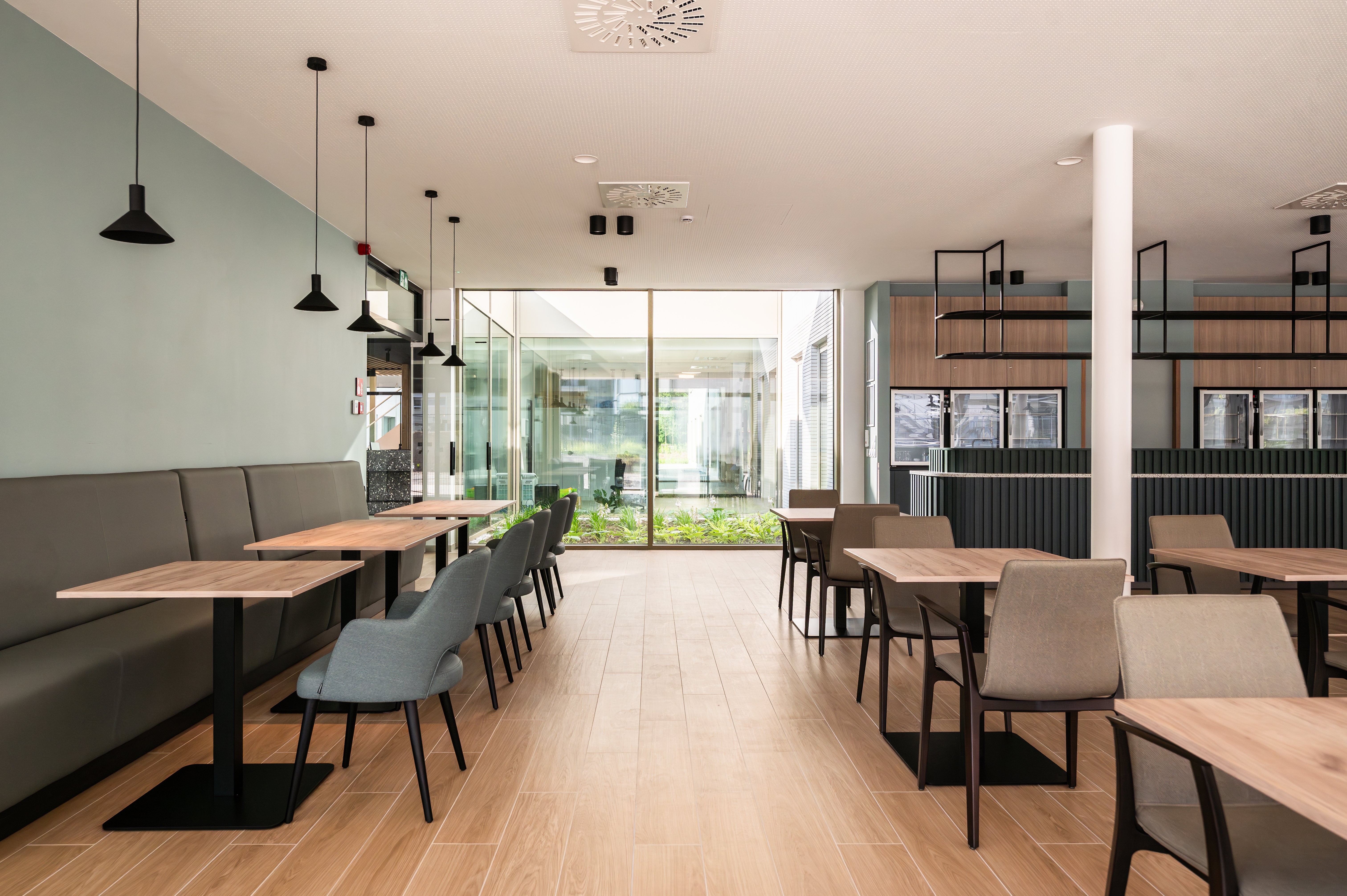
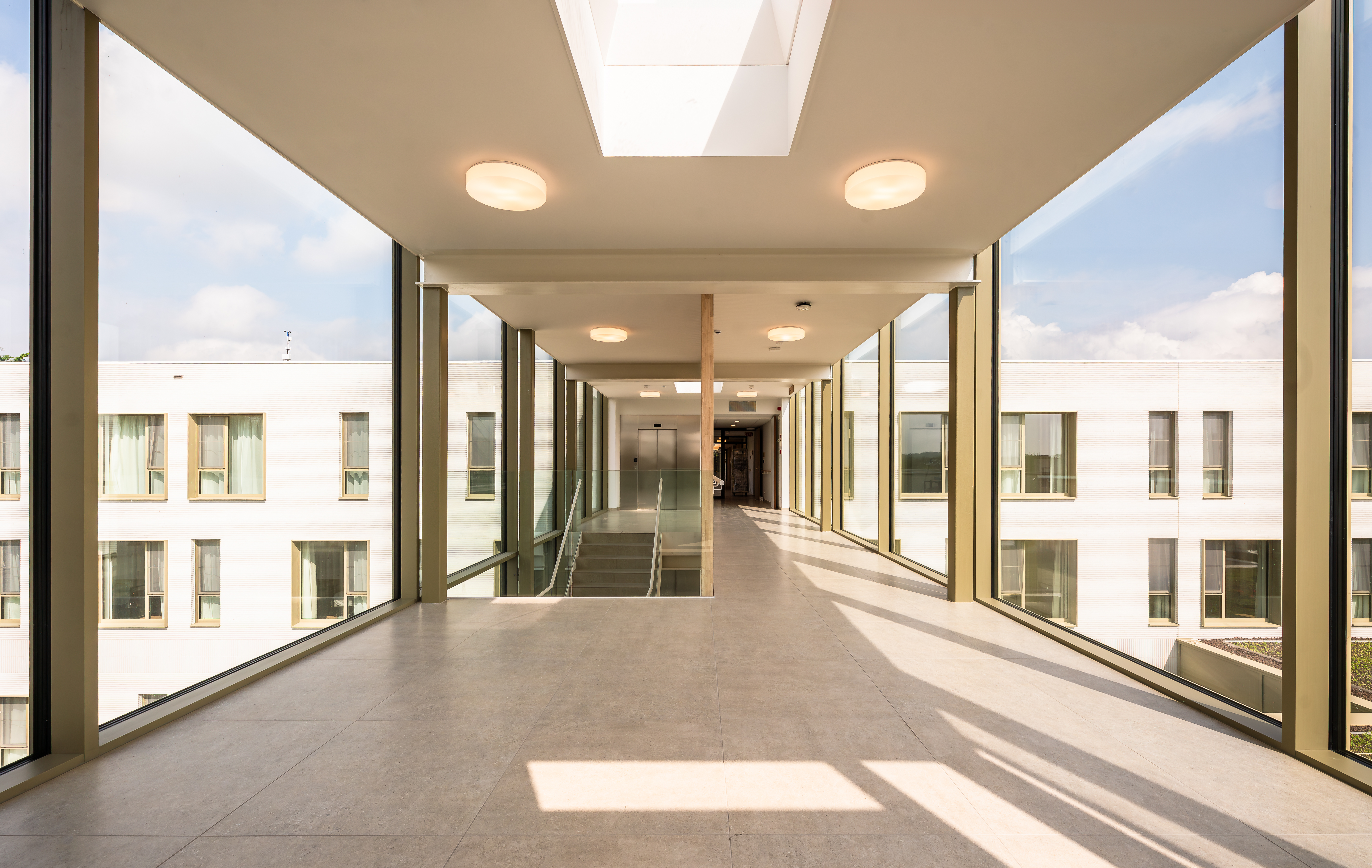
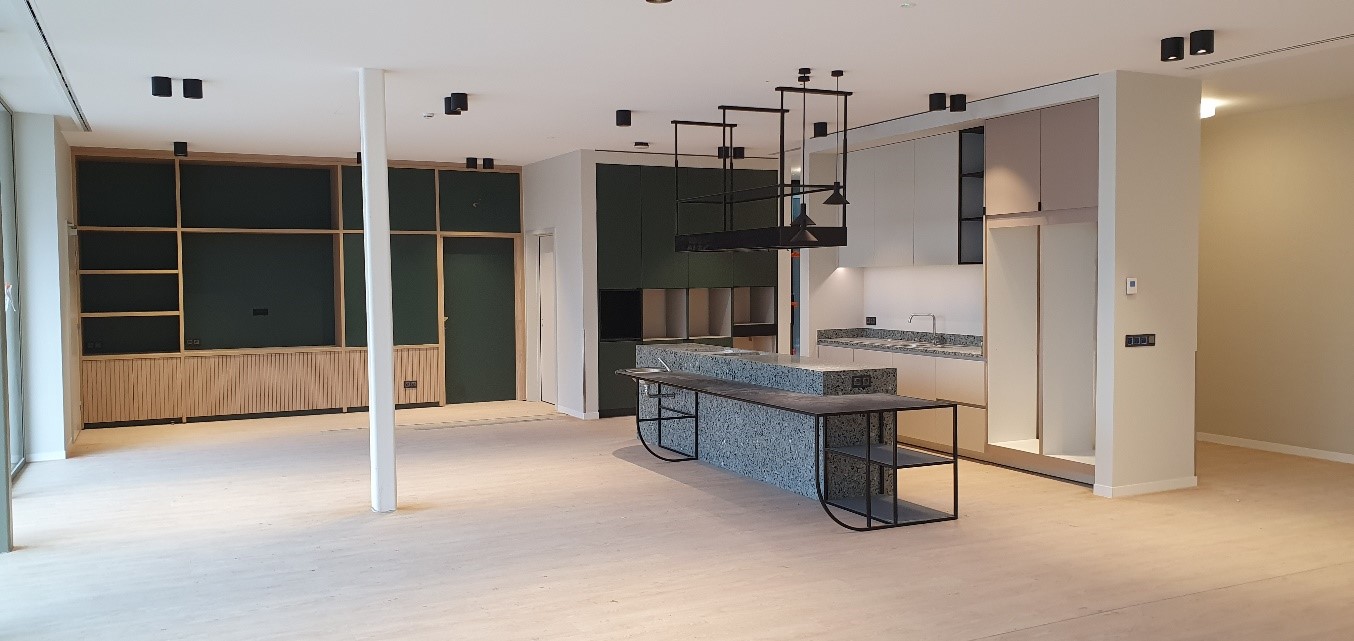
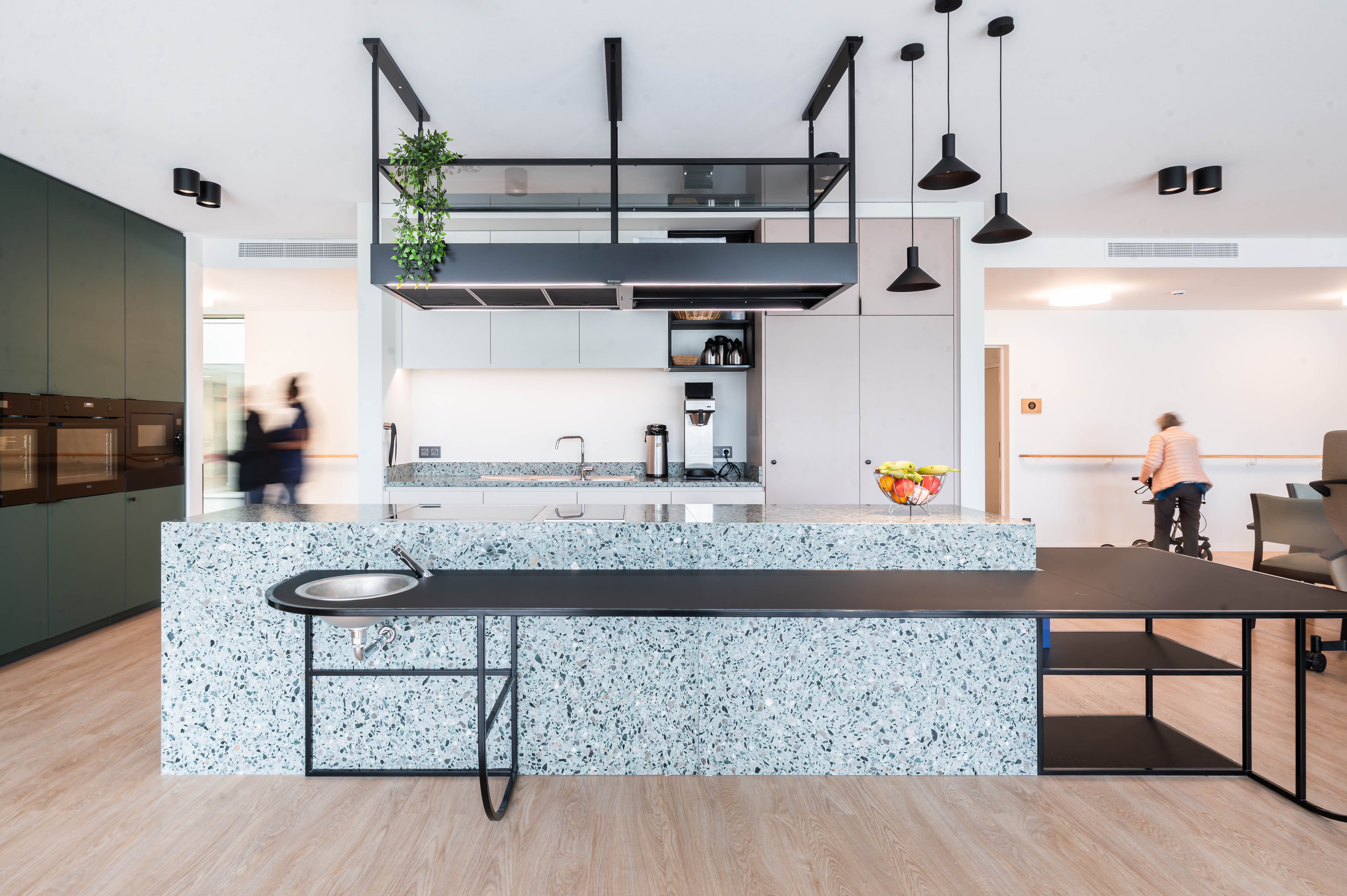
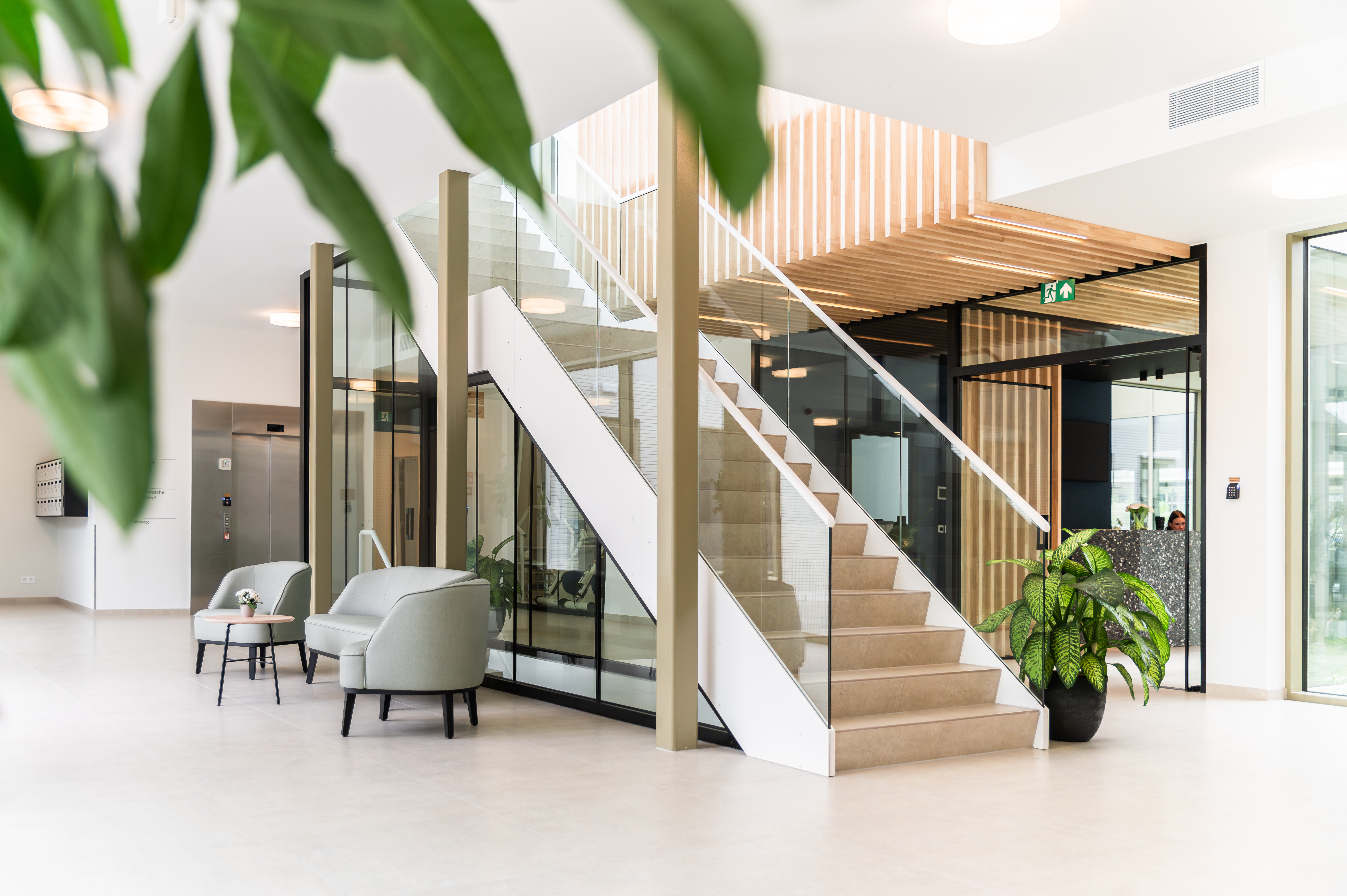
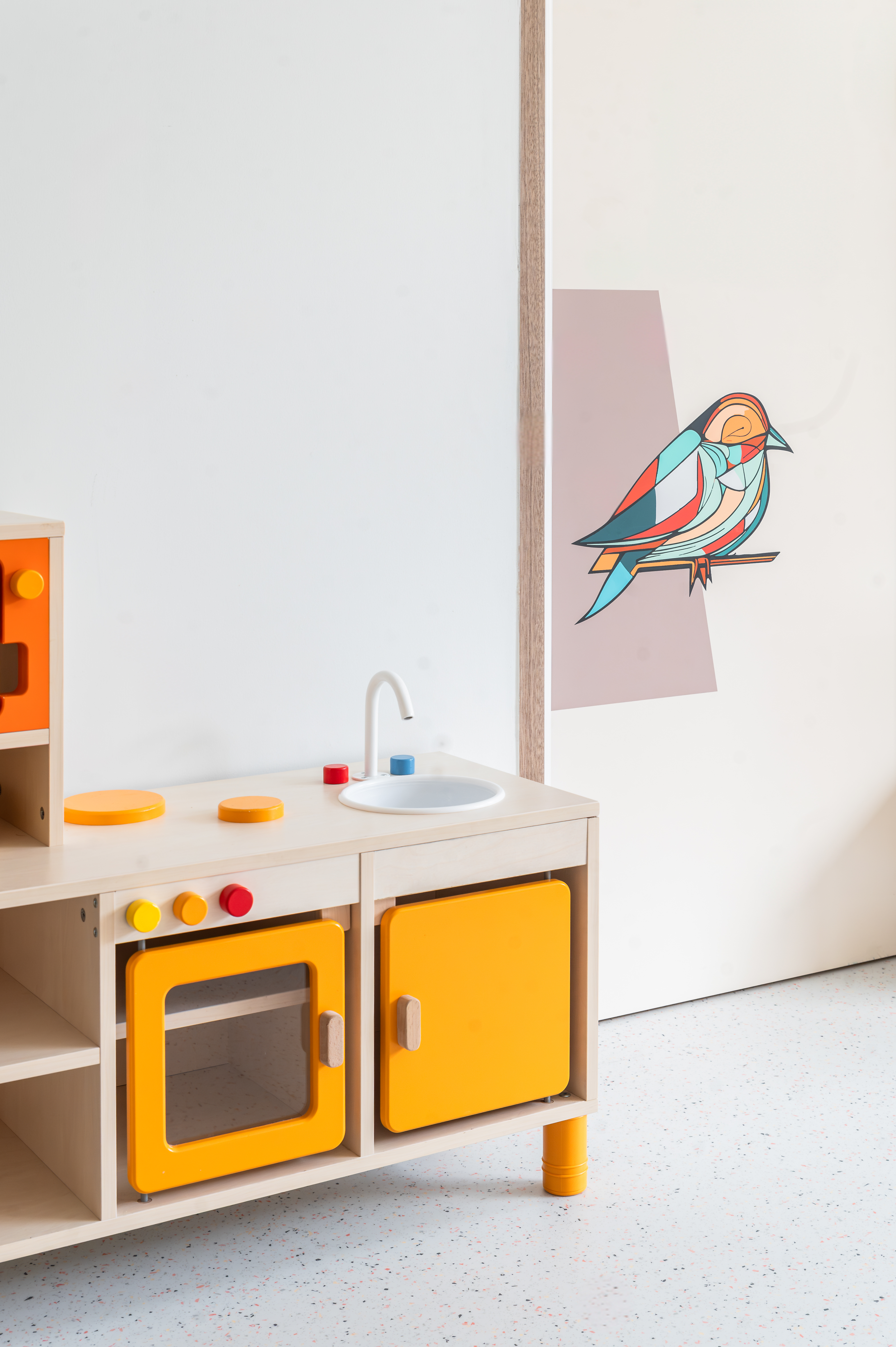
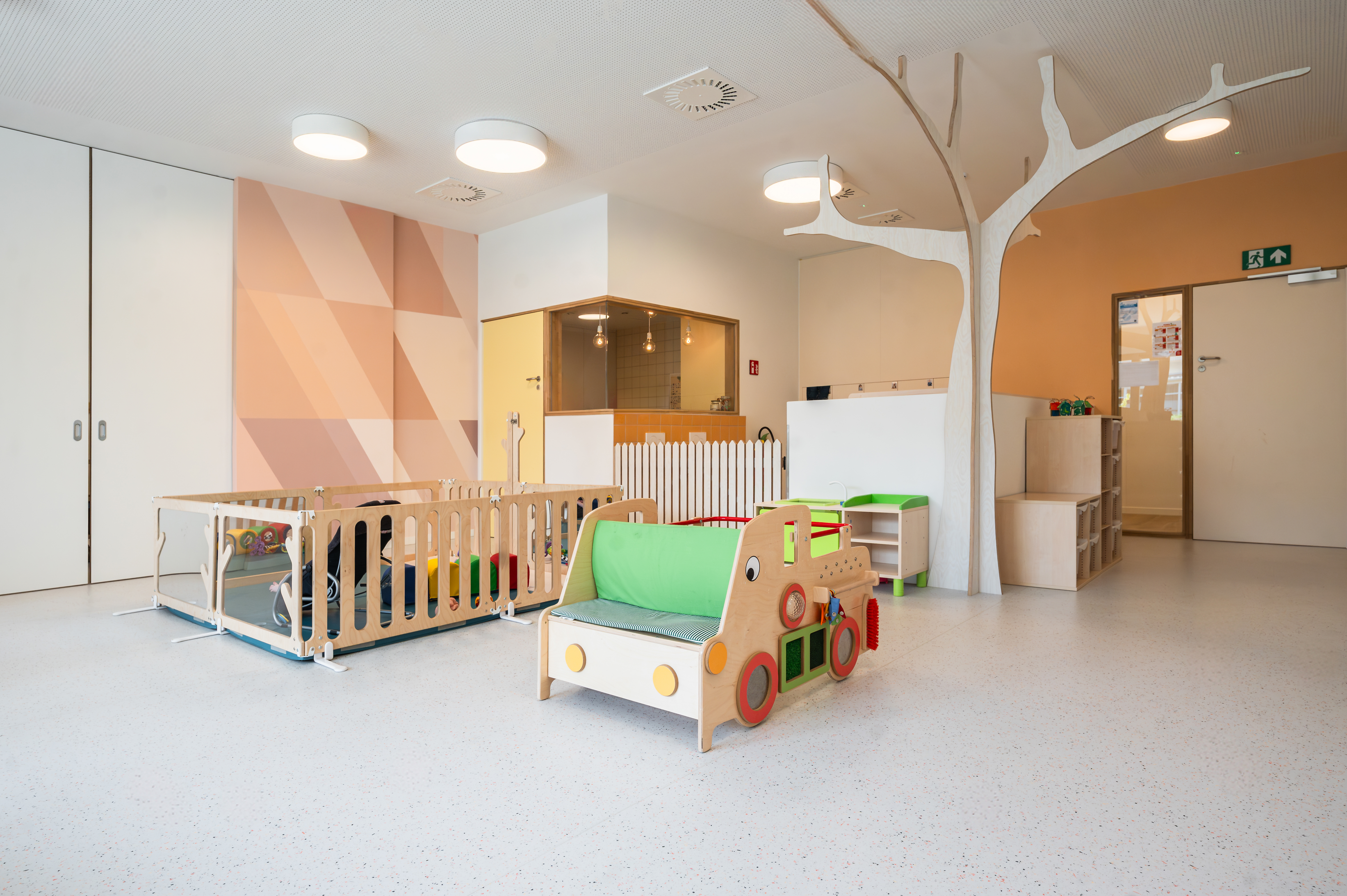
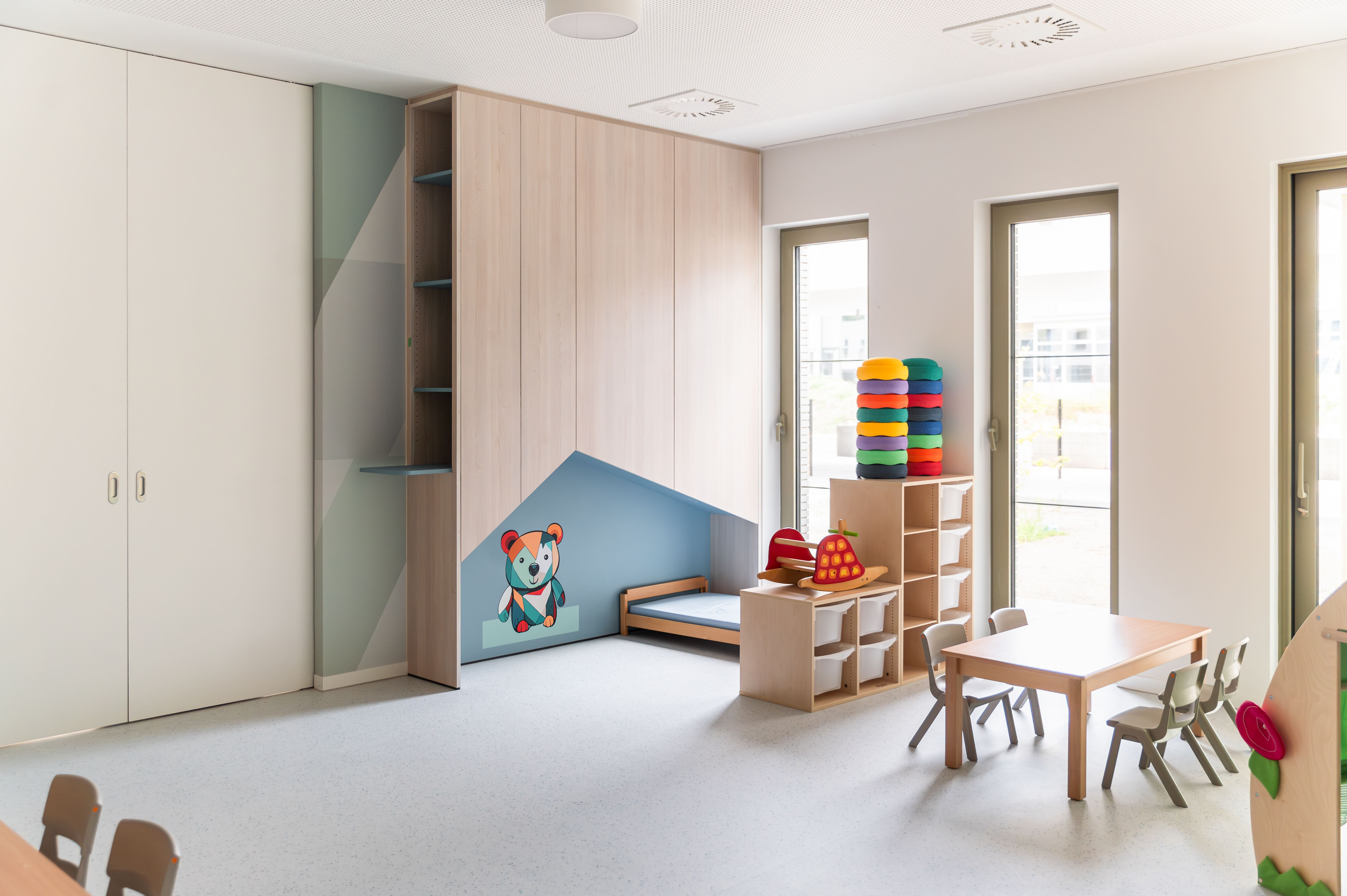
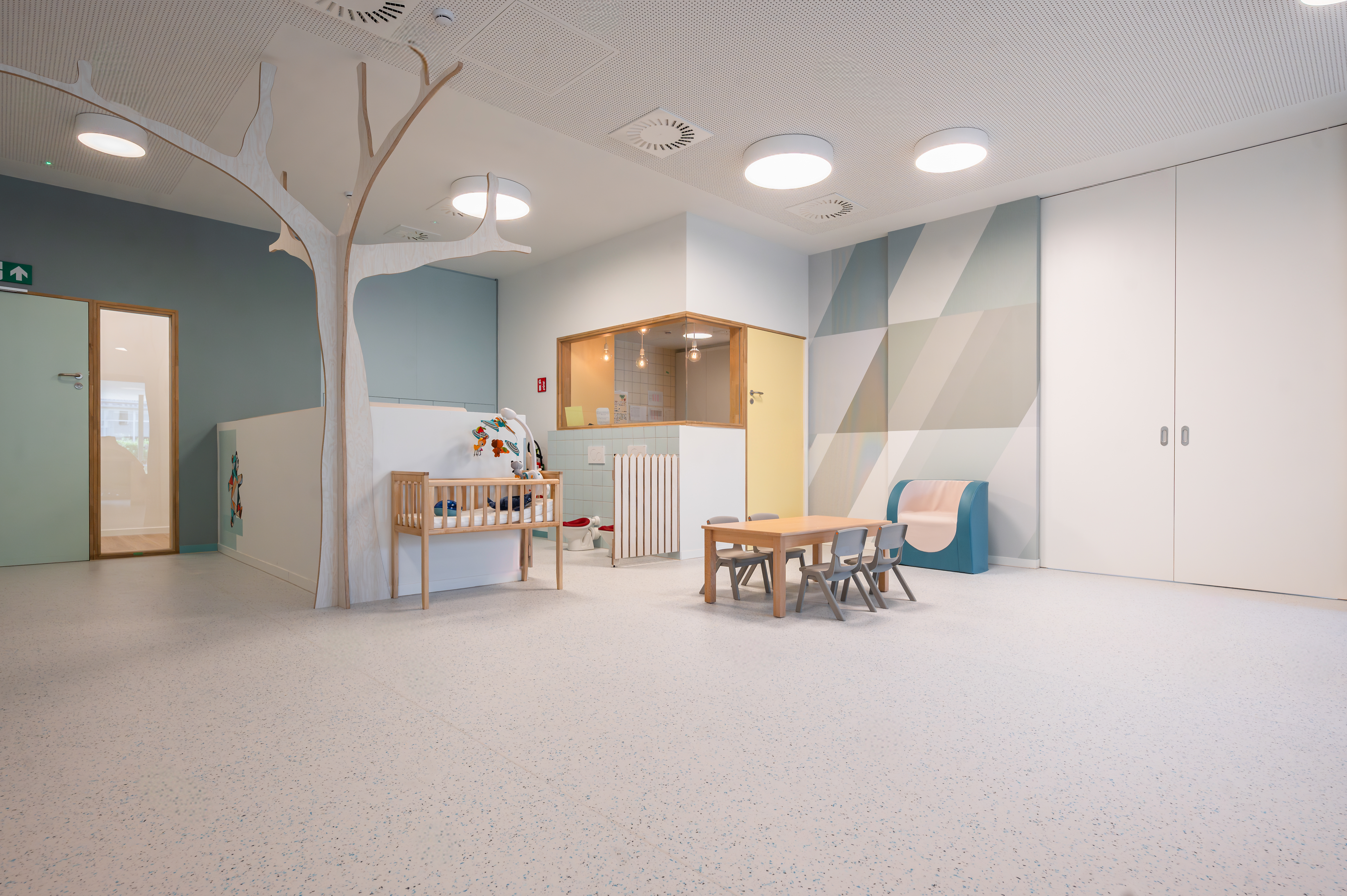
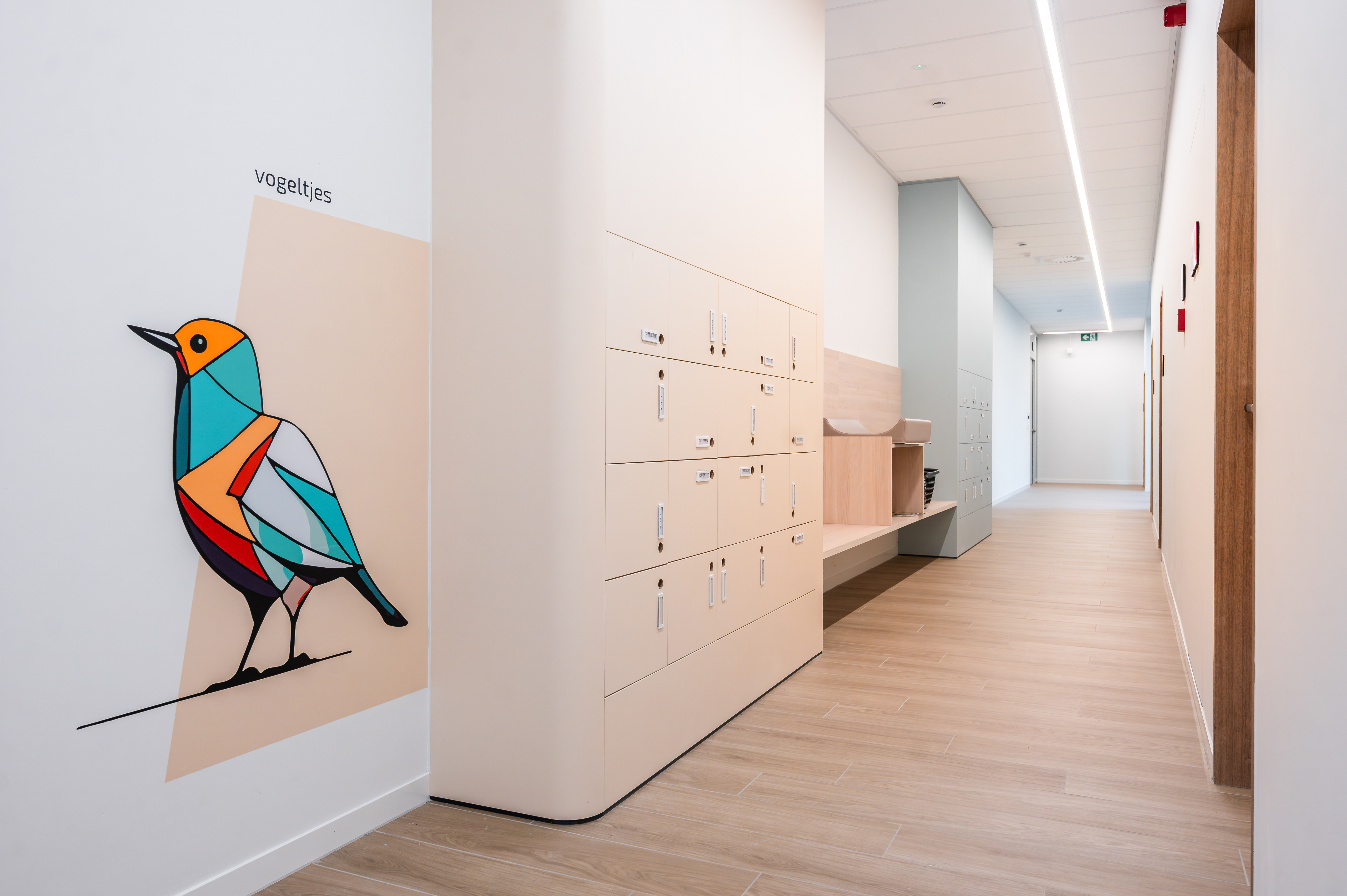
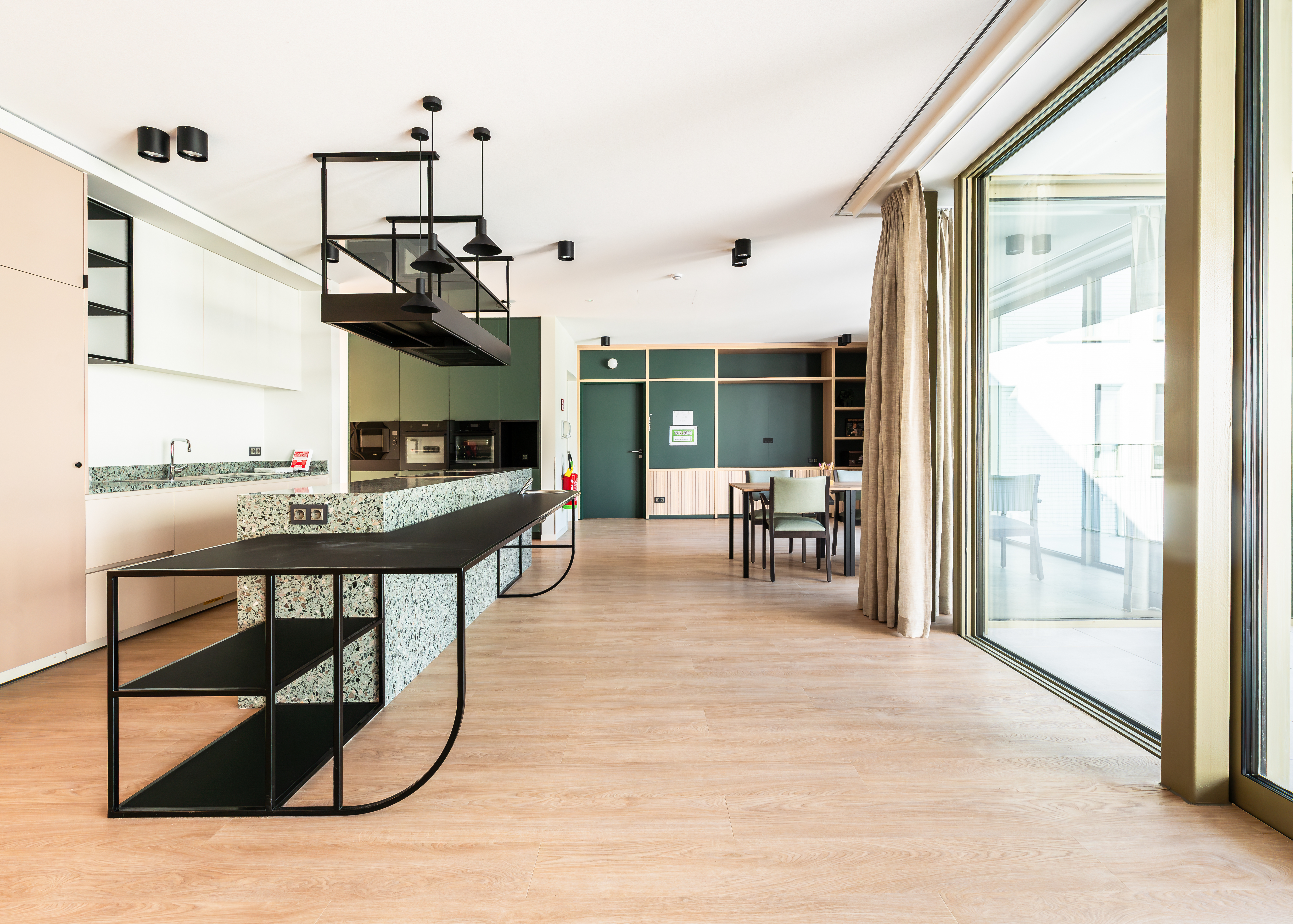
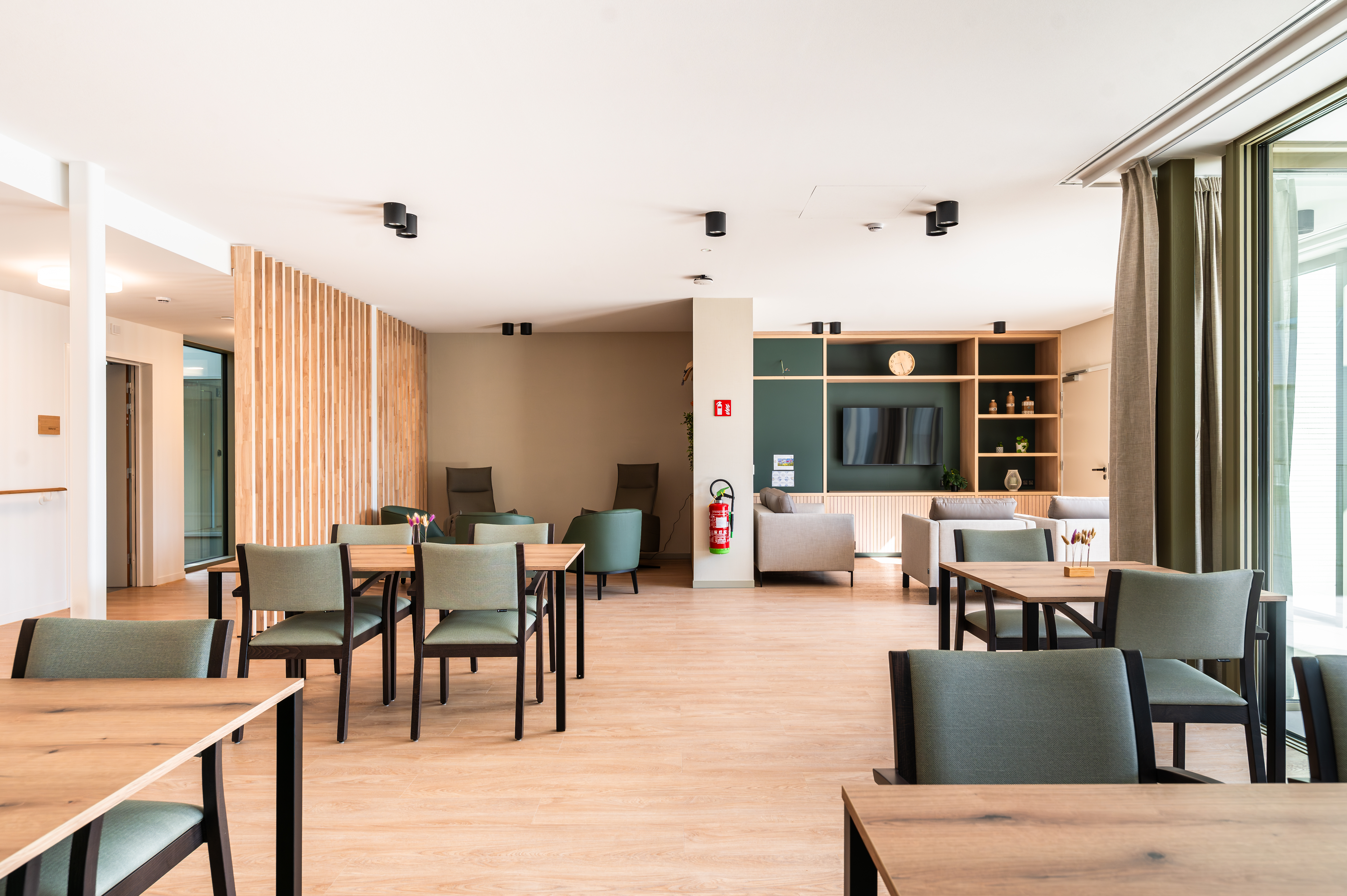
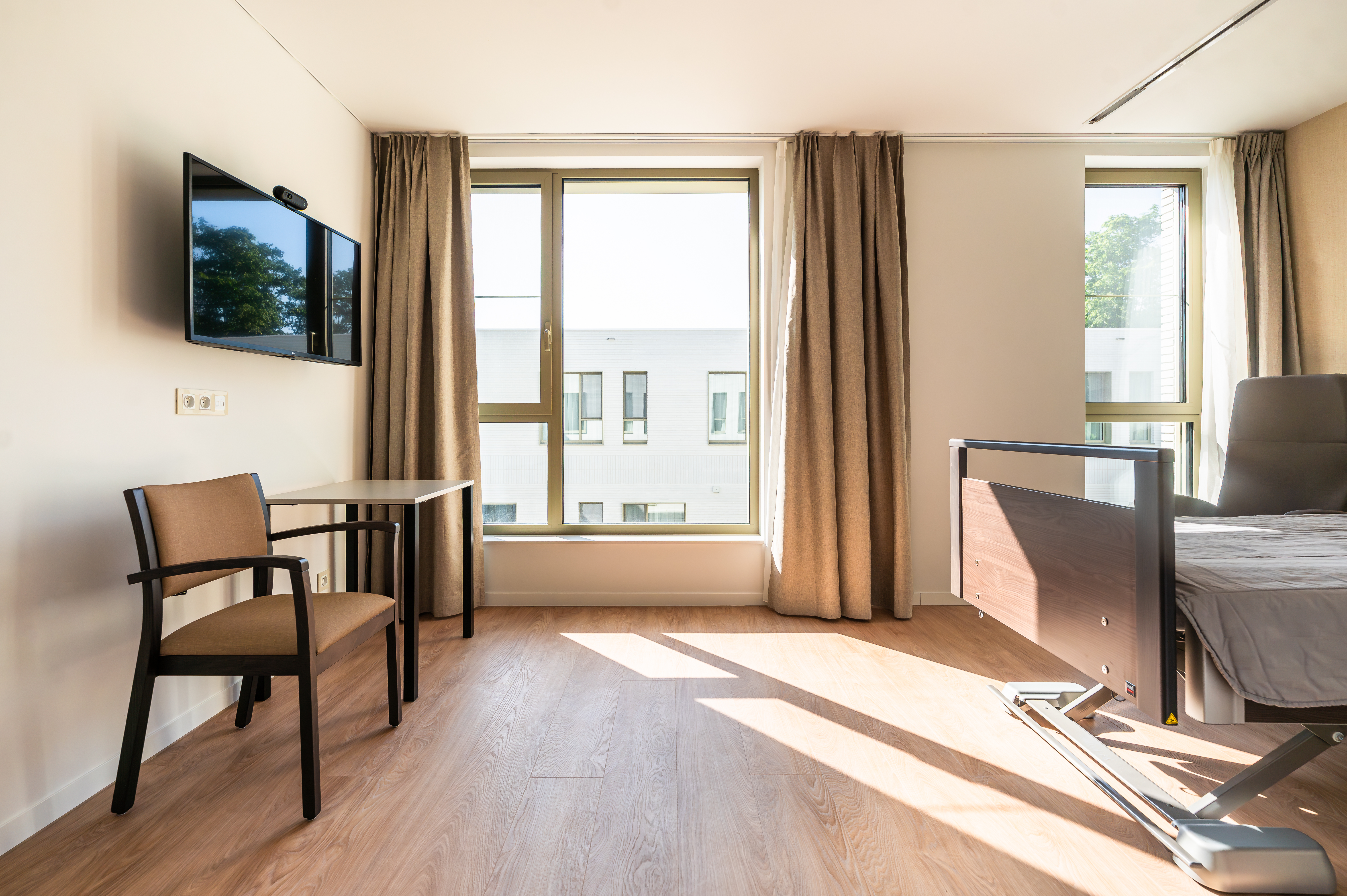
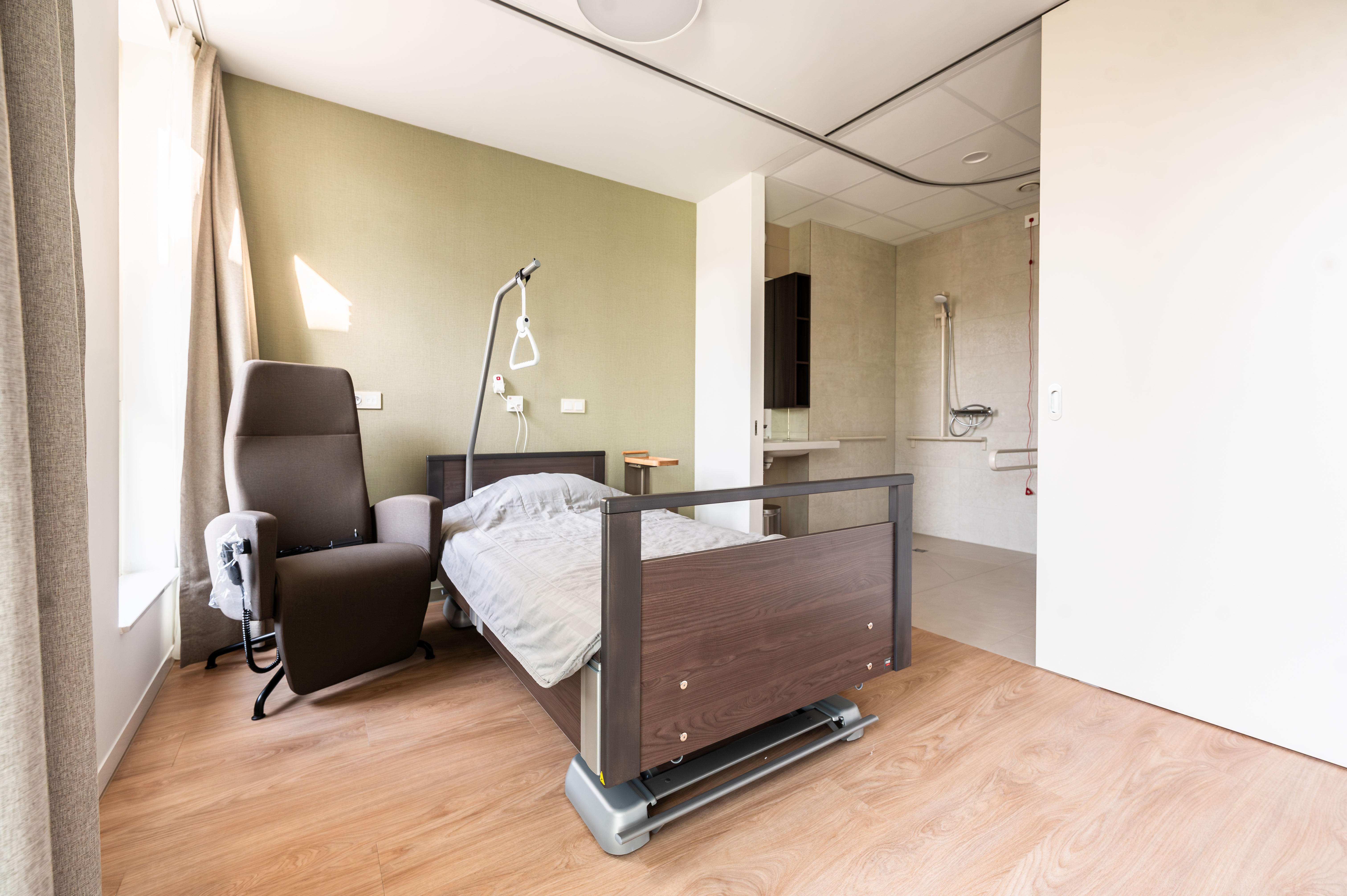
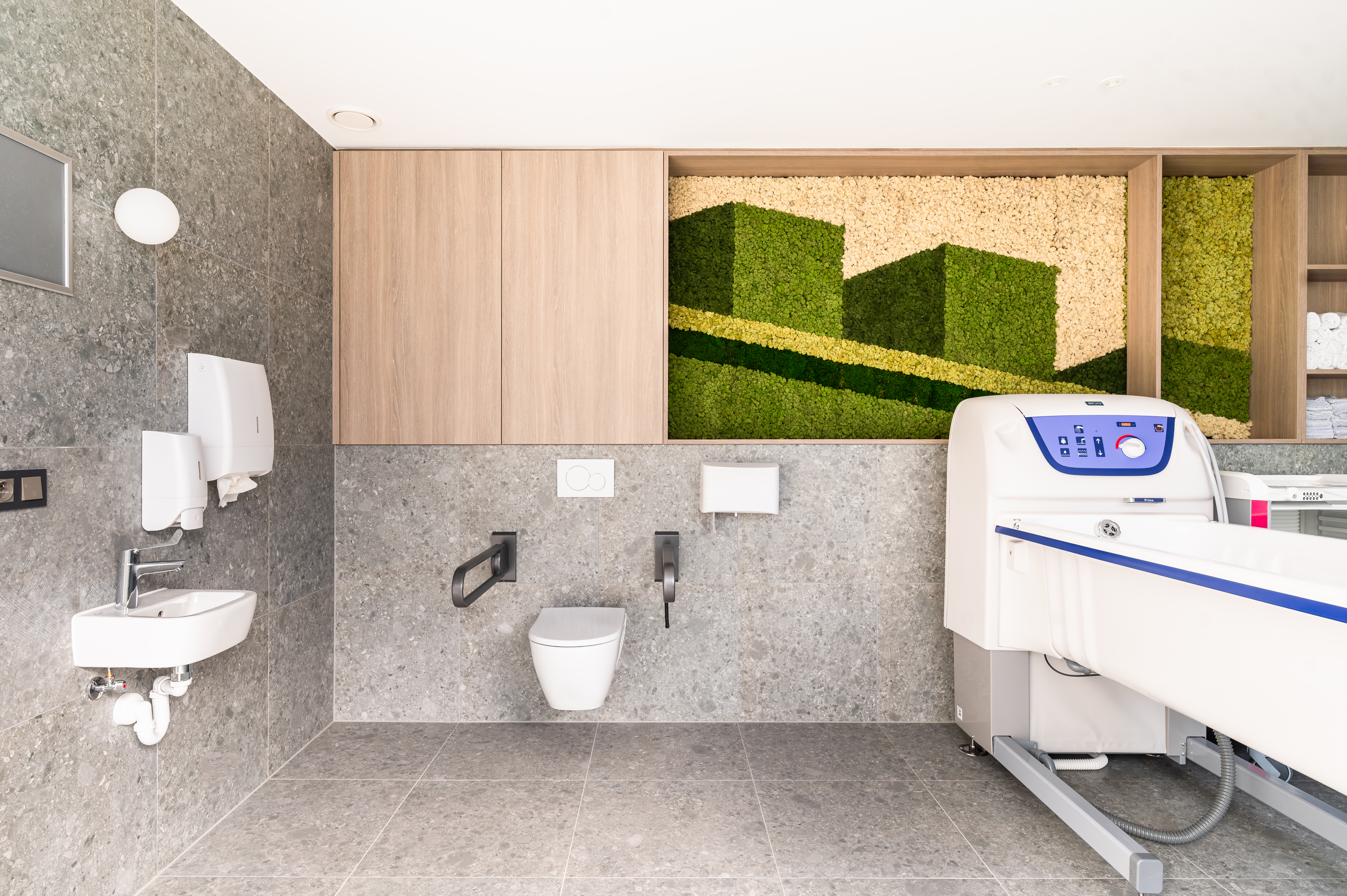
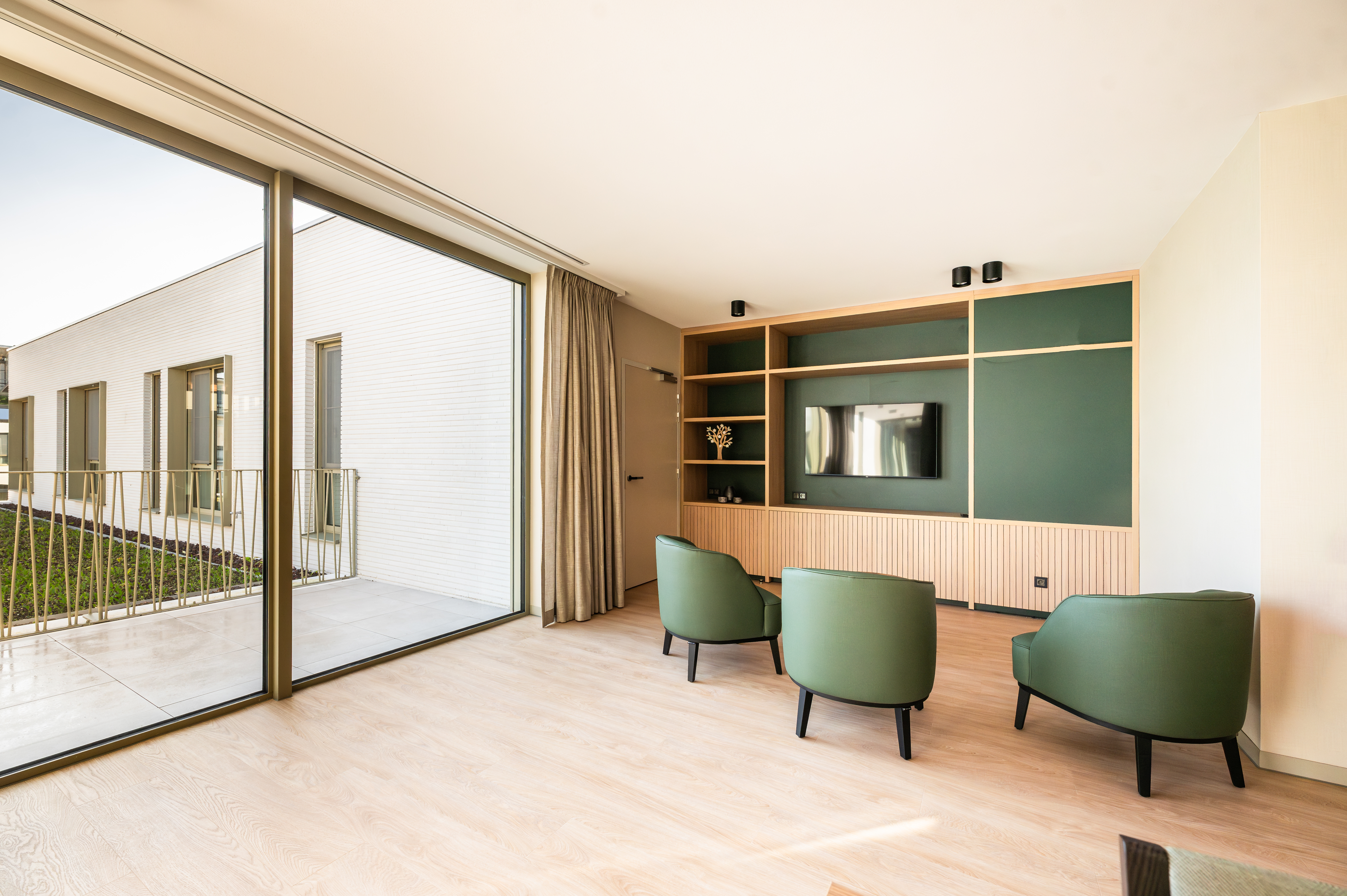
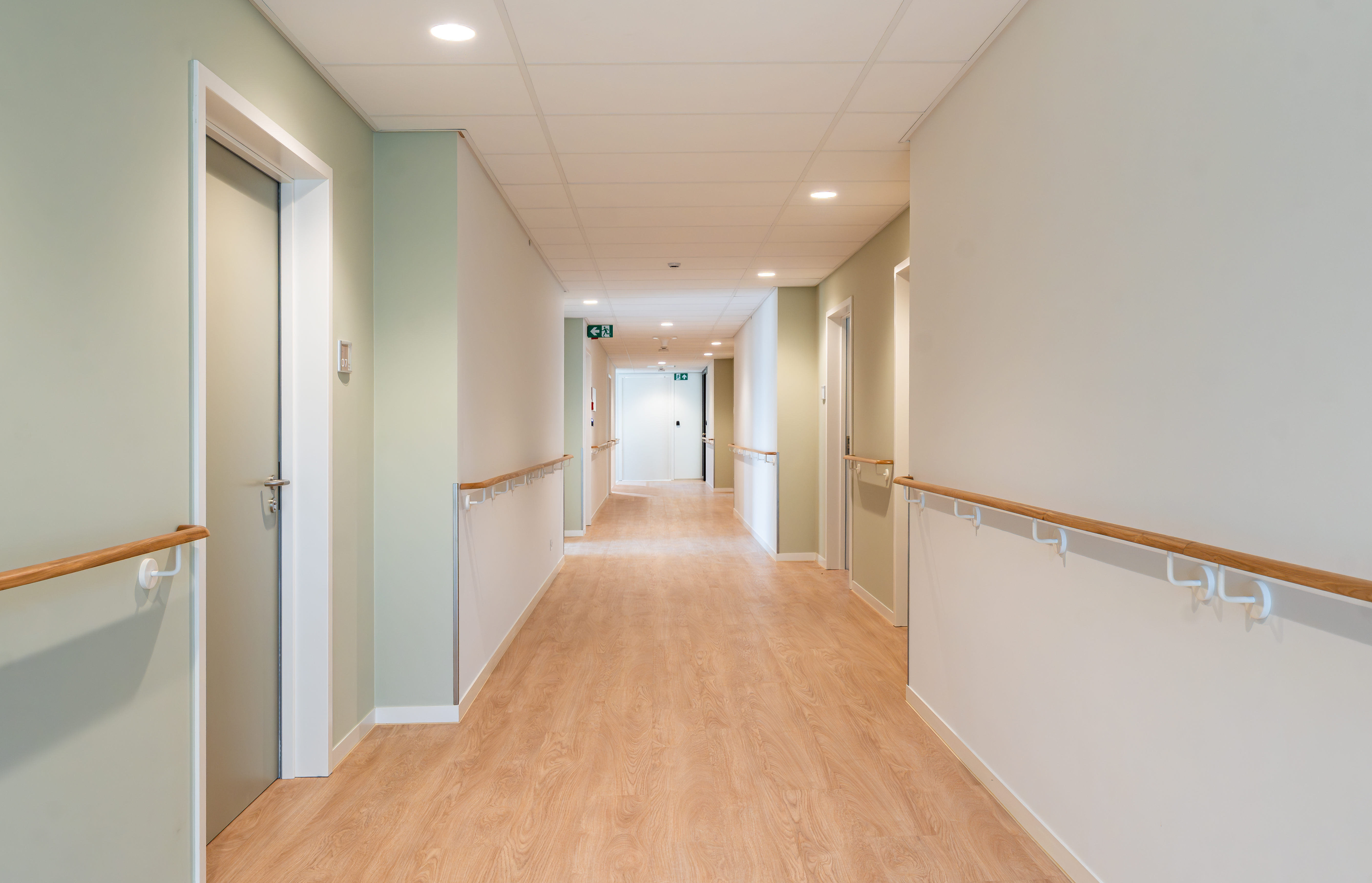
From the outset, the ambition was to avoid the utilitarian, almost clinical feel of traditional care homes. Communal and circulation spaces were therefore designed with warm tones, natural materials, and refined finishes: wooden accents, terrazzo in kitchens, sophisticated lighting, and comfortable furniture. Even in the rooms, the design deviates from standard care furnishings. Residents enjoy spacious rooms with opportunities for personalization, evoking more of a hotel atmosphere than a hospital environment. The generous dimensions allow residents to arrange their living and sleeping areas flexibly according to their preferences.
Small-scale normalized living
The care campus is entirely focused on small-scale normalized living. This means the living environment is homely and familiar, with residents living in smaller groups. Each living group has its own kitchen, living room, and communal spaces. This fosters a secure environment and allows grouping based on specific care needs, such as dementia. The operational model also follows this scale: there is no central kitchen, but each living group prepares its own meals daily. This approach supports autonomy and wellbeing and ensures better manageability in crisis situations such as the COVID-19 pandemic.
A vibrant care campus
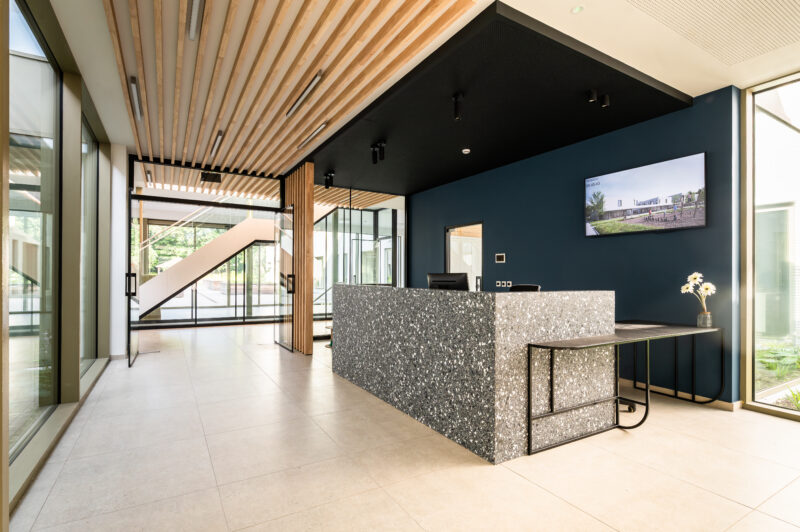
’t Huis is not an isolated care home but part of a broader care campus that also engages with the neighborhood. At the front, a canopy creates a lively pedestrian boulevard leading to various functions: childcare, day care center, multipurpose hall, and a cafeteria with a bistro feel. The more public areas are located on the street side, while the residential units of the care home are situated behind and above these functions. This creates a balance between openness and privacy.
After the demolition of the old care home, the freed-up space was transformed into a public park with a playground, encouraging interaction and creating a natural link between residents and the neighborhood. This removes the traditional connotation of a “nursing home” and turns the campus into a dynamic meeting place for young and old alike.
Sustainability and innovation
Sustainability and Total Cost of Ownership form a key pillar of the design. With a flexible column structure and extensive BIM integration, the building is prepared for future adaptations. The energy concept includes a water-water heat pump combined with a BEO field, enabling both passive cooling and efficient heating. The ventilation system is demand-controlled based on CO₂ levels, ensuring healthy air quality, while energy-efficient LED lighting minimizes consumption.
The campus also serves as a showcase project for innovative BIM use. The entire design and technical systems were integrated into a usable BIM model, which remains valuable after completion for operations and maintenance. The project even served as a pilot for BIM-based E-Procurement, allowing contractors to consult an IFC model during the tendering process. This ensured greater transparency and efficiency in procurement and paves the way for future use in urban projects.
Team
- Structural engineering: BM Engineering
- Building services: BM Engineering
- Energy performance (EPB): Kubiek
- Landscape architecture: Omgeving
- Main contractor: TM Stadsbader-EEG