At the meeting point of the Meuse and Albert Canal, Coronmeuse is a 25-hectare site that has been transformed into an eco-neighborhood. Our experts focused on integrating reused materials, circularity, landscape design, and green and blue networks. Landscape architect Eva Recio Rodriguez illustrates with concrete examples how the team incorporated flora and fauna for a sustainable and environmentally friendly design.
A Vision for the Future
The goal was to develop a progressive eco-neighborhood that integrates with the existing urban fabric of Liège and Herstal, strengthens the centrality of this area, and creates a new urban core. This transformation enhances the site’s unique identity, characterized by architectural heritage and natural resources, while meeting the modern demand for sustainable living. This versatile space offers a range of functions, from a vibrant urban hub to a tranquil waterfront retreat.
Key landscape and planting objectives include:
Increasing public green spaces
Making paved areas permeable and green
Strengthening the green-blue ecological network to maximize the local ecosystem and environmental performance
The Challenges of Circularity
Developers and project partners often lack experience with reusable materials on construction sites, as they typically opt for quick demolition. That’s why we guide them through collecting, storing, and sorting materials, ensuring circularity within the project.
Reusing building materials requires thoughtful decisions: gathering and sorting the right quantities and qualities, assessing structural integrity, managing logistics, and considering public perception.
A Long-Term Vision for Sustainable Material Use
To ensure the durability and maintenance of reused materials, we recommended various strategies, including selecting specific materials. For example, we suggested clay pavers, which absorb little water, are frost-resistant, and have high durability against wear and discoloration. Proper installation techniques ensure that materials maintain optimal functionality. We developed a detailed maintenance plan, including regular inspections and cleaning, an easy repair and replacement system, and continuous monitoring and evaluation to detect potential issues early.
Versterking van duurzaamheid met innovatieve technieken en materialen
Enhancing Sustainability with Innovative Techniques and Materials
The stackable wall, or “muret empilable”, is a versatile and ecological design. It serves as street furniture, a boundary marker, a habitat for small mammals and insects, and a support for drought-resistant plants. The wall was constructed using on-site materials, reducing the need for new resources while preserving the site’s historical heritage. Approximately 1,300 m³ of concrete pavers and tiles were reused on-site, significantly boosting the project’s circularity by reducing the demand for new raw materials and lowering environmental impact.
Did You Know?
Reused materials on-site include:
Red and gray concrete tiles (30×30 cm)
Existing concrete pavers
Large concrete slabs from the site itself (70×70 cm)
Sawn and split tree trunks
Bundles of stacked reeds from pruned or removed vegetation
Ecological Benefits:
Diverse materials create varied microhabitats for wildlife
“We began with a thorough ecological analysis to map the existing nature, soil, local climate, and topography. These insights formed the foundation for our future design choices to integrate more green and blue spaces.”
More Green and Blue for a Thriving Ecology
Let the Water Flow
A key strategy was to maximize planted areas and create semi-permeable surfaces. This significantly improved the neighborhood’s water infiltration capacity, allowing more rainwater to seep into the ground rather than drain into the sewer system.
By restoring the local ecosystem, we leveraged the natural capabilities of vegetation and soil to manage rainwater absorption and filtration, reducing reliance on artificial drainage systems. Native plants and healthy soils help absorb and purify rainwater, lowering the need for man-made interventions.
A notable spatial intervention in the design is a slightly sunken grassland area, strategically placed to capture excess rainwater and reduce flooding risks.
Biodiversity as a Guiding Principle
Biodiversity was a core focus in the landscape plan. We aimed to create a thriving, low-maintenance environment that supports a wide range of plant and animal species. Our approach included:
Native plants: Prioritizing indigenous species that are well-adapted to the environment, making them easier to maintain while boosting local biodiversity.
Prairie gardens: Featuring a diverse mix of grasses, perennials, and flower bulbs, these gardens are self-regulating and require only one mowing per year, making them low-maintenance and sustainable.
Pollinator-friendly plants: Selecting species like Calamintha nepeta and Salvia verticillata, which attract bees and butterflies, adding ecological value and natural beauty.
Soil adaptation: Matching vegetation to site-specific soil conditions, ensuring plants thrive in both dry and wet areas with minimal intervention.
Diverse plant species: Up to 80 different species in the prairie gardens, creating a rich and resilient ecosystem.
This approach not only enhances the landscape’s beauty but also provides habitat for local wildlife, promotes sustainability, and requires minimal maintenance. It’s a strong example of environmentally friendly landscape design.
How Does Coronmeuse Benefit from This New Design?
Eva: “These smart design choices make the new neighborhood more than just a physical space; they enhance community connection and engagement.”
Community Well-Being as a Guiding Principle
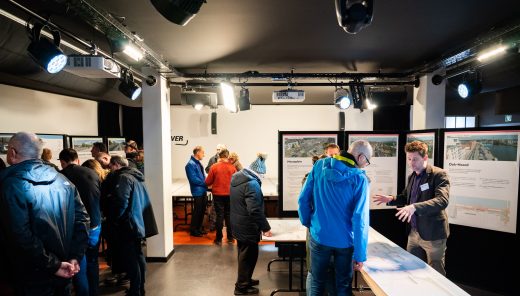
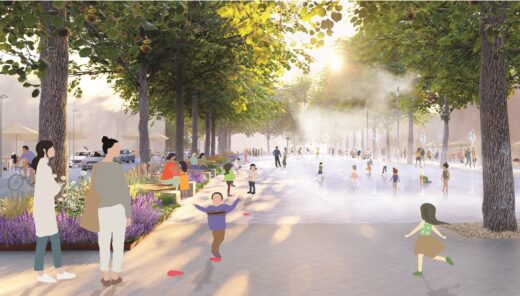
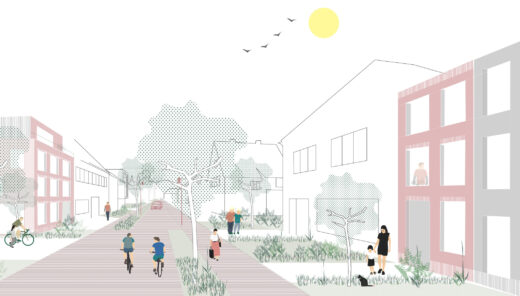
To create an accessible space, we ensured community involvement in the process. Residential streets were designed for social interaction, with extra space for pedestrians and cyclists. The expansion of Astrid Park and additional green spaces turn the site into a lively, green area where local fauna can thrive. Residents are encouraged to care for the greenery around their homes, fostering a sense of community. The northern part of the project focuses on urban agriculture, enabling local food production and promoting a sustainable lifestyle. Public spaces feature street furniture, such as benches, waste bins, and playgrounds, making them welcoming and enjoyable for everyone. Additionally, we created four activity centers with schools, childcare facilities, and shops, seamlessly integrating the neighborhood into the broader community.
Before and After: A Revitalized Urban Space
Recent transformations at Astrid Park, Pointe Atlas, and Vers la Meuse have significantly enhanced the ecological and social character of the area. Green spaces have been expanded, new parks have been developed, and public areas have become more accessible, making Coronmeuse a sustainable and inclusive neighborhood. With the development of urban spaces and improved connectivity, Coronmeuse is now firmly embedded in the city. This vibrant center demonstrates how sustainability and community spirit can go hand in hand, offering a living environment that elevates the quality of life for residents and visitors alike.
Receive updates on groundbreaking projects, sustainable solutions, and exclusive insights from Sweco. Subscribe now and be part of the future transformation.
Manage Cookie Consent
We and our partners use cookies and similar technologies to operate our website, analyse traffic, personalise content, and serve and measure personalised ads. You can accept all cookies, reject non-essential cookies, or manage your preferences below. For more info, please visit our Cookie Policy
Functional
Always active
The technical storage or access is strictly necessary for the legitimate purpose of enabling the use of a specific service explicitly requested by the subscriber or user, or for the sole purpose of carrying out the transmission of a communication over an electronic communications network.
Preferences
De technische opslag of toegang is noodzakelijk voor het legitieme doel voorkeuren op te slaan die niet door de abonnee of gebruiker zijn aangevraagd.
Statistics
De technische opslag of toegang die uitsluitend voor statistische doeleinden wordt gebruikt.The technical storage or access that is used exclusively for anonymous statistical purposes. Without a subpoena, voluntary compliance on the part of your Internet Service Provider, or additional records from a third party, information stored or retrieved for this purpose alone cannot usually be used to identify you.
Marketing
The technical storage or access is required to create user profiles to send advertising, or to track the user on a website or across several websites for similar marketing purposes.