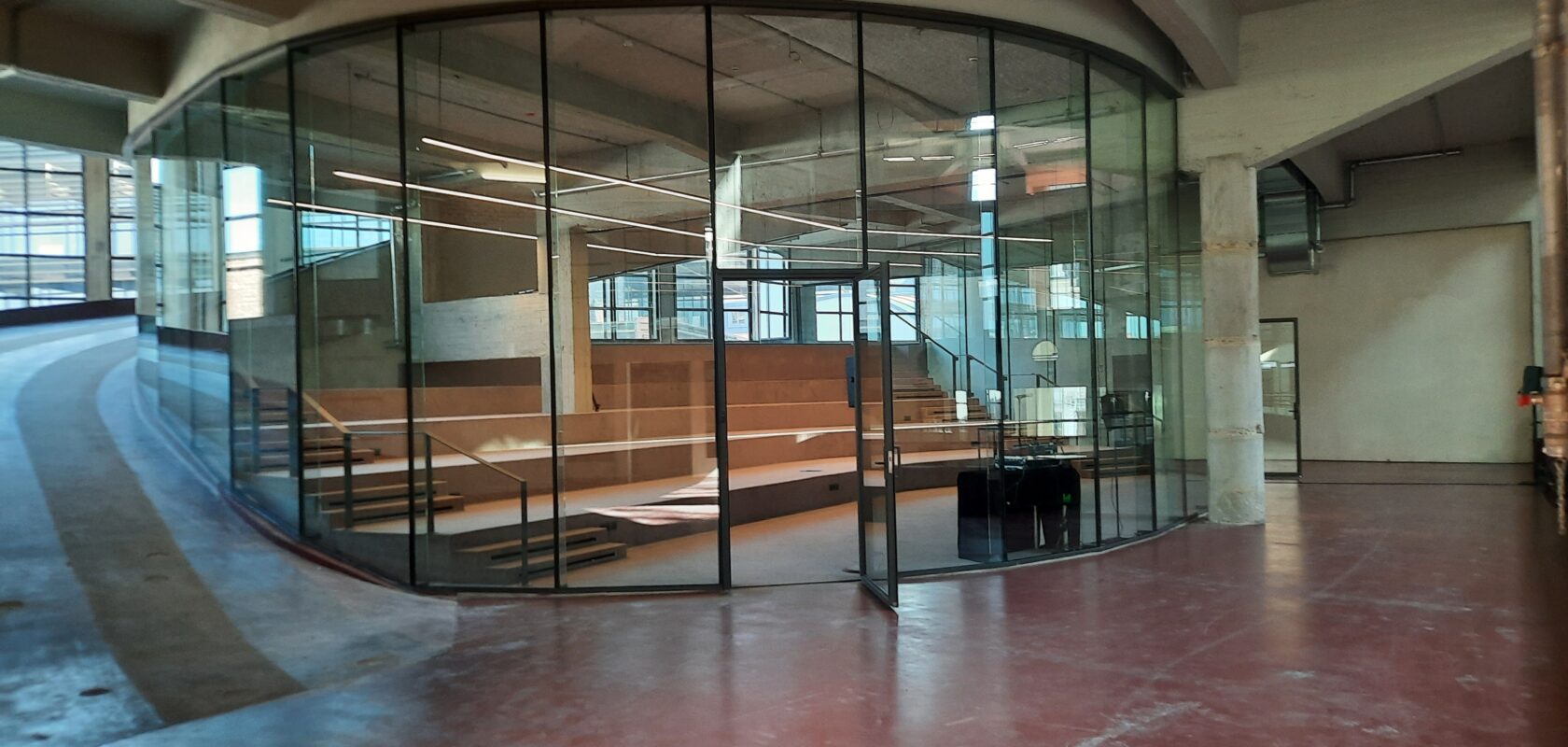
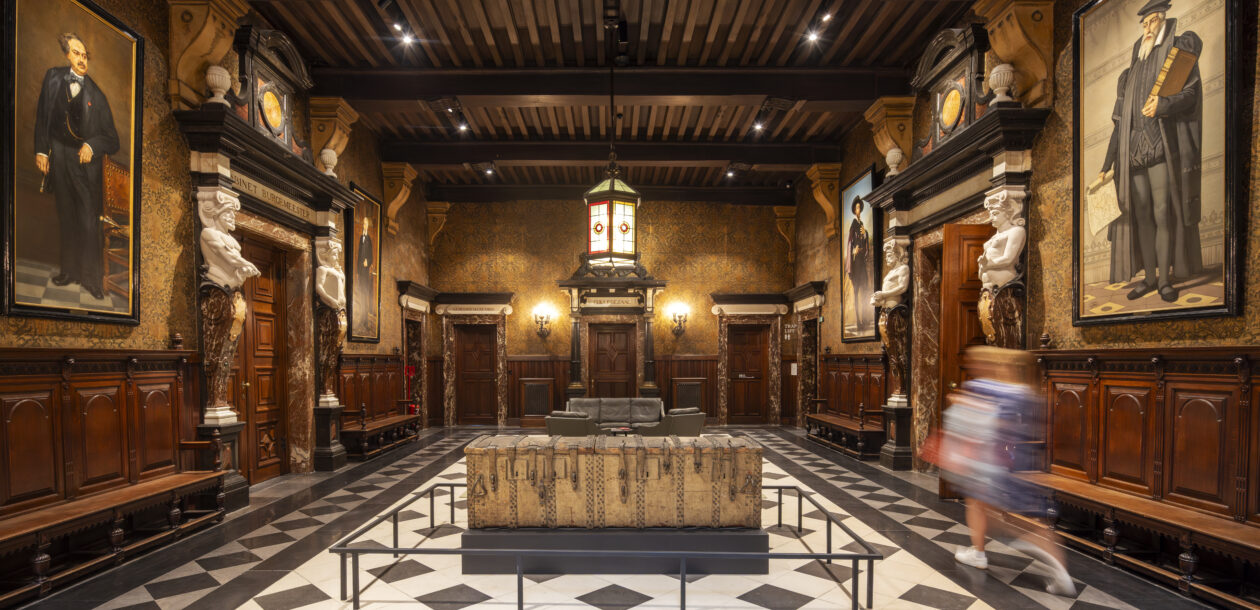
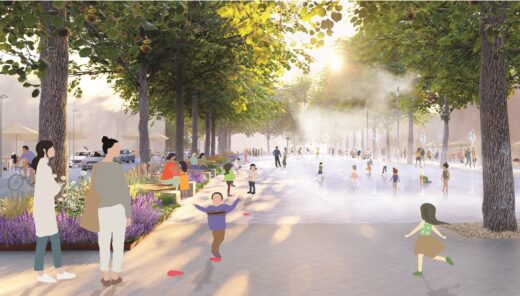
Heritage renovation today goes beyond preserving a building from the past. It is about giving existing structures a new future, allowing them to once again play an active role in our society. In this process, the integration of modern building technologies plays a crucial role. A well-considered technical approach enables heritage to meet the expectations of contemporary users. This is precisely where the engineer can make a difference. By approaching heritage not only from a technical standards perspective, but also through historical insight and user experience, an approach emerges that is both respectful and future-oriented. Heritage renovation thus becomes not a limitation, but an opportunity to connect technology and history.
Technology as a foundation for sustainable reuse
A building can only truly function again when its technical performance evolves in line with today’s requirements. Comfort, energy performance and safety are not secondary aspects, but essential conditions to make a building relevant again. It is the role of the engineer and consultancy to demonstrate the synergy that can be created between modern building technologies and heritage conservation.
The challenge does not lie solely in concealing technology, but in integrating it intelligently. When technical installations are considered from the early design stages, solutions can be developed that are both high-performing and respectful of the existing building. This requires a different mindset, where the reference is not an ideal new building, but the existing heritage itself.
Understanding the existing to make better decisions
Historic buildings are the result of well-considered choices, even if they do not always seem logical today. By understanding the original function, how light was introduced and how the indoor climate was managed, a deeper understanding of the building physics emerges. This insight forms an essential basis for integrating modern technologies.
The past often offers unexpected opportunities. Old chimneys, ducts or light shafts can be reused as carriers for new technologies, provided they do not hold high heritage value themselves. By respecting and reusing these existing structures, the impact of interventions is reduced and the authenticity of the building is preserved. At the same time, it allows for a more efficient integration of technical installations without disrupting the character of the building.
Avoiding mistakes from the past
Many heritage buildings bear the traces of less successful interventions. Technical installations that were added without a clear vision have often led to a loss of spatial quality and user comfort. Natural light has been blocked, volumes fragmented and valuable elements concealed.
This accumulation of interventions often creates the perception that the building no longer functions and therefore has no future. That is precisely why it is essential, in a renovation project, not only to look forward but also to critically reflect on the past. By identifying and correcting previous mistakes, the original quality of the building can be revealed again.
Smart technology in a historical context
Modern building technologies offer more possibilities than ever to intervene in a subtle way. Compact installations, wireless systems and smart controls make it possible to improve performance without heavy physical interventions. Sensors and automation help manage indoor climate more effectively while limiting the impact of installations.
A smart building does not necessarily have to be a new building. Within a heritage context as well, technology can contribute to more efficient management and an improved user experience. The condition is that it is applied with restraint and aligned with the specific characteristics of the building.
The end user at the centre of the renovation process
A heritage project is only successful if the building is actually used. Integration into the social fabric can only succeed if the new function aligns with user needs. Therefore, it is essential from the outset to understand how the building is currently experienced.
User behaviour often provides more insight than technical analyses alone. Spaces that are avoided, temporary solutions that are applied or complaints about comfort reveal valuable information about the building’s weaknesses. By responding to these insights in a targeted way, significant improvements can be achieved with relatively limited interventions.
This also requires a realistic view on comfort. In heritage buildings, it is not always possible to reach the same performance levels as in new constructions. Finding the right balance between feasibility and user quality is therefore crucial.
Successful heritage renovation emerges when technical expertise respects the past while enabling the future.
Photography: Tom D’haenens, Tim Fisher Photography
Receive updates on groundbreaking projects, sustainable solutions, and exclusive insights from Sweco. Subscribe now and be part of the future transformation.
Manage Cookie Consent
We and our partners use cookies and similar technologies to operate our website, analyse traffic, personalise content, and serve and measure personalised ads. You can accept all cookies, reject non-essential cookies, or manage your preferences below. For more info, please visit our Cookie Policy
Functional
Always active
The technical storage or access is strictly necessary for the legitimate purpose of enabling the use of a specific service explicitly requested by the subscriber or user, or for the sole purpose of carrying out the transmission of a communication over an electronic communications network.
Preferences
De technische opslag of toegang is noodzakelijk voor het legitieme doel voorkeuren op te slaan die niet door de abonnee of gebruiker zijn aangevraagd.
Statistics
De technische opslag of toegang die uitsluitend voor statistische doeleinden wordt gebruikt.The technical storage or access that is used exclusively for anonymous statistical purposes. Without a subpoena, voluntary compliance on the part of your Internet Service Provider, or additional records from a third party, information stored or retrieved for this purpose alone cannot usually be used to identify you.
Marketing
The technical storage or access is required to create user profiles to send advertising, or to track the user on a website or across several websites for similar marketing purposes.