
Sweco Belgium
PFAS in soil and water: balancing safety, feasibility and sustainability
In recent years, PFAS have become one of the most sensitive environmental topics in Belgium and beyond. And rightly so: these substances are highly persistent and can accumulate in the environment and the food chain. Concerns about potential health effects are considerable and call for robust policies and carefully considered measures.
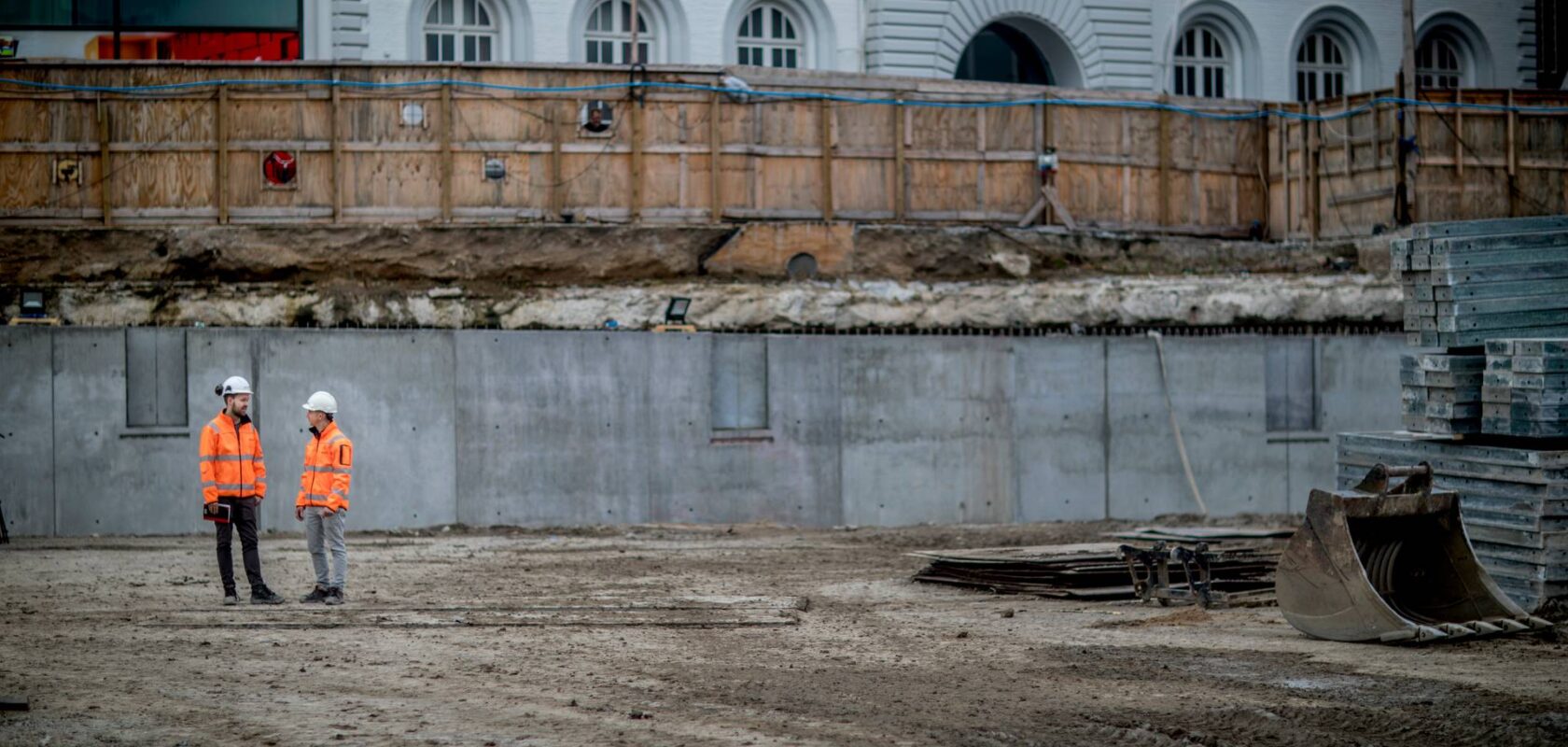
As a result, implementing projects in practice has become far more challenging, both technically and financially. At the same time, large quantities of valuable soil are being sent to landfill, even though some of it could be safely reused. At Sweco, we seek a careful balance in every project: maximising protection for people and the environment, while managing soil, resources and budgets in a sustainable way.
PFAS: widespread, persistent and complex
PFAS (poly‑ and perfluoroalkyl substances) are a very large group of synthetic substances used, among other things, in coatings, water‑ and grease‑repellent applications, firefighting foam, textiles, cosmetics, food packaging and technical products.
Several characteristics make PFAS particularly challenging:
- Highly persistent
They degrade only very slowly in the environment. - Mobile
They can spread through water, air and dust. - Widespread
Due to decades of use, PFAS are found in soil, groundwater, surface water and consumer goods. - Multiple exposure pathways
For the general population, exposure to PFAS occurs mainly via food, drinking water and consumer products. Specific sites or construction works are primarily relevant for local populations.*
A strict regulatory framework is therefore necessary, but the practical translation into projects is not always straightforward.
* Source: EFSA Journal, “Risk to human health related to the presence of perfluoroalkyl substances in food”, 2020
Cost‑efficient and sustainable compliance with strict standards
Europe and the Member States are rightly focusing on reducing PFAS emissions and limiting exposure. This is reflected, among other things, in regulations on soil reuse: up to a certain PFAS concentration, soil may remain in place during development, but once excavated (for example for underground structures or foundations), that same soil may no longer be reused elsewhere.
PFAS remediation and treatment are also relatively expensive compared with other contaminants. For large volumes (think tens of thousands of cubic metres), total project costs can quickly run into millions of euros.
Because of the limited opportunities for reuse, or the high cost of PFAS treatment, large volumes of soil are transported to landfill. Disposal itself is also a significant cost.
All of this has an impact on the feasibility and sustainability of large projects.
Sweco sees it as a core responsibility to protect health and optimise project feasibility within the applicable regulations, through smart solutions.
Always guided by one fundamental principle: never downplaying risks to people and the environment, but addressing them in a proportionate way.
Policy is also seeking workable solutions
PFAS are high on the European agenda. As part of, among other initiatives, the Water Framework Directive (WFD), water quality guidelines have been revised. In Flanders, this has resulted in circular letters from Minister Brouns and exceptions to the traditional relocation principle for groundwater in the context of dewatering. Under strict conditions, a temporary deterioration in water quality may therefore be permitted for dewatering and drainage.
Europe is also increasingly distinguishing between socially essential PFAS applications (in certain industrial or medical contexts) and non‑essential applications (such as some consumer products), with a view to a phased, but ultimately far‑reaching, phase‑out.
Our consultants translate these developments into practical advice and informed design choices.
In all PFAS cases, Sweco starts from one fundamental principle: protecting public health and the environment is non‑negotiable.
Werner Staes, Business Unit Manager, Environmental Services at Sweco
High-quality preliminary investigation: key to safe and efficient reuse
The better we understand the PFAS situation at a site, the more targeted our actions can be.
At Sweco, we focus in particular on:
1. Smart investigation strategy
- Targeted drilling and sampling,
based on historical activities, suspected sources and PFAS transport pathways. - Mapping soil heterogeneity.
PFAS are often unevenly distributed: we distinguish between zones suitable for safe reuse and zones that require treatment or disposal.
The additional cost of extra drilling is usually relatively limited compared with the potential benefits:
a smaller volume requiring treatment,
less material sent to landfill,
a reduced need for new soil
2. Maximising safe reuse
- maximising the volume of soil that can remain in place;
- identifying additional volumes that can be safely reused elsewhere, within the applicable standards and boundary conditions;
- ensuring that only soils which genuinely cannot be reused are treated or transported to an appropriate processing route.
This results in:
- lower costs for the client: less material needs to be sent to costly PFAS treatment or landfill;
- a stronger case for the permitting authority: decisions on soil relocation are transparent and well substantiated;
- higher sustainability: less treatment, less landfill, less transport and greater circular reuse.
This approach can also be applied to other contaminants.
PFAS requires an integrated approach
PFAS projects require a combination of chemical, hydrogeological, legal and design‑engineering expertise.
Sweco brings these disciplines together in an integrated approach:
- Soil and groundwater investigations
historical studies, field investigations, laboratory analyses and interpretation. - Hydrogeological advice
assessment of the impact of PFAS on groundwater, dewatering, infiltration and surface water. - PFAS risk assessment
evaluation of risks to people and the environment based on use scenarios. - Circular soil management
strategies to maximise safe reuse and limit residual streams. - Remediation design and supervision
selection and sizing of appropriate techniques, preparation of tender documents and site supervision. - Support in permitting and consultation processes
dialogue with authorities, stakeholders and local residents, with transparent communication on risks and mitigation measures.

Towards a future with less PFAS
In the long term, there is only one structural solution: phasing out PFAS wherever possible. This is a process that will take many years, requiring alignment between regulation, industry and society.
Until then, a significant legacy will remain in soil, water and materials.
Sweco sees it as its mission to:
- project by project seek the best balance between health, safety and sustainability;
- support clients in making responsible and transparent choices;
- contribute to practical guidelines and good practice that help move the sector forward.
For example, Sweco is working with OVAM on the new Soil Decree.
Do you have questions about PFAS in your project, site or soil management file?
Our multidisciplinary team is happy to work with you, from the initial exploratory investigation through to implementation and aftercare.
Other news
Water management without reuse is no longer fit for purpose
Read more
Industry and water: permit certainty starts with demonstrable water quality
Read more

Sweco Belgium welcomes All Soil Assistance and further strengthens its soil expertise
Read more