

Sweco Belgium
Investing in Nature through Payment for Ecosystem Services
Nature provides us with essential services every day. It stores carbon, regulates water, supports biodiversity and offers space for relaxation and well-being. Yet this societal value is still not sufficiently reflected in the way we finance and manage nature and landscapes. Payment for Ecosystem Services (PES) aims to change that.
Commissioned by WWF, the team at Sweco and SuMa Consulting, financial experts, is exploring how PES can evolve into a practical and scalable method to enable large-scale nature investments in Belgium. The goal? To bridge the gap between the societal value of nature and sustainable financing, and to turn ecosystem services into viable business cases for nature.
What is PES?
Payment for Ecosystem Services (PES) links the value created by nature to a financial mechanism. In simple terms: if ecosystems deliver services that benefit people and organisations, PES helps financially support those who protect, manage or restore this nature.
The idea is not to turn nature into a tradeable commodity. Rather, it is about making the value of ecosystems visible and ensuring that those who benefit from that value can also contribute to its preservation.
This can take different forms, for example through voluntary or regulated credits, contributions to nature projects or results-based financing models. Whatever the format, the aim remains the same: to translate the societal value of nature into concrete funding.
Responding to today’s challenges
Pressure on our environment is increasing. Biodiversity loss, climate change and water scarcity are driving growing demand for nature-based solutions, while available public funding remains limited. At the same time, interest is rising in using private and blended finance for nature restoration and conservation.
PES can play an important role in this. It helps to:
- attract additional funding for nature
- connect users and beneficiaries of ecosystem services with the management of those services
- make the value of ecosystems more visible
- and help landscapes become more resilient for the future
The question today is no longer whether nature has value, but how we can turn that value into a sustainable financing model.
Sweco and WWF: working together on a workable PES model
What makes the project with Sweco, SuMa Consulting and WWF stand out is its practical approach. It goes beyond theory and develops a clear framework that is tested in concrete pilot areas and further refined with financial expertise and input from relevant stakeholders.
The ambition is to develop an approach that is not only ecologically sound, but also realistic, feasible and applicable in the Belgian context.
Two national parks as a testing ground
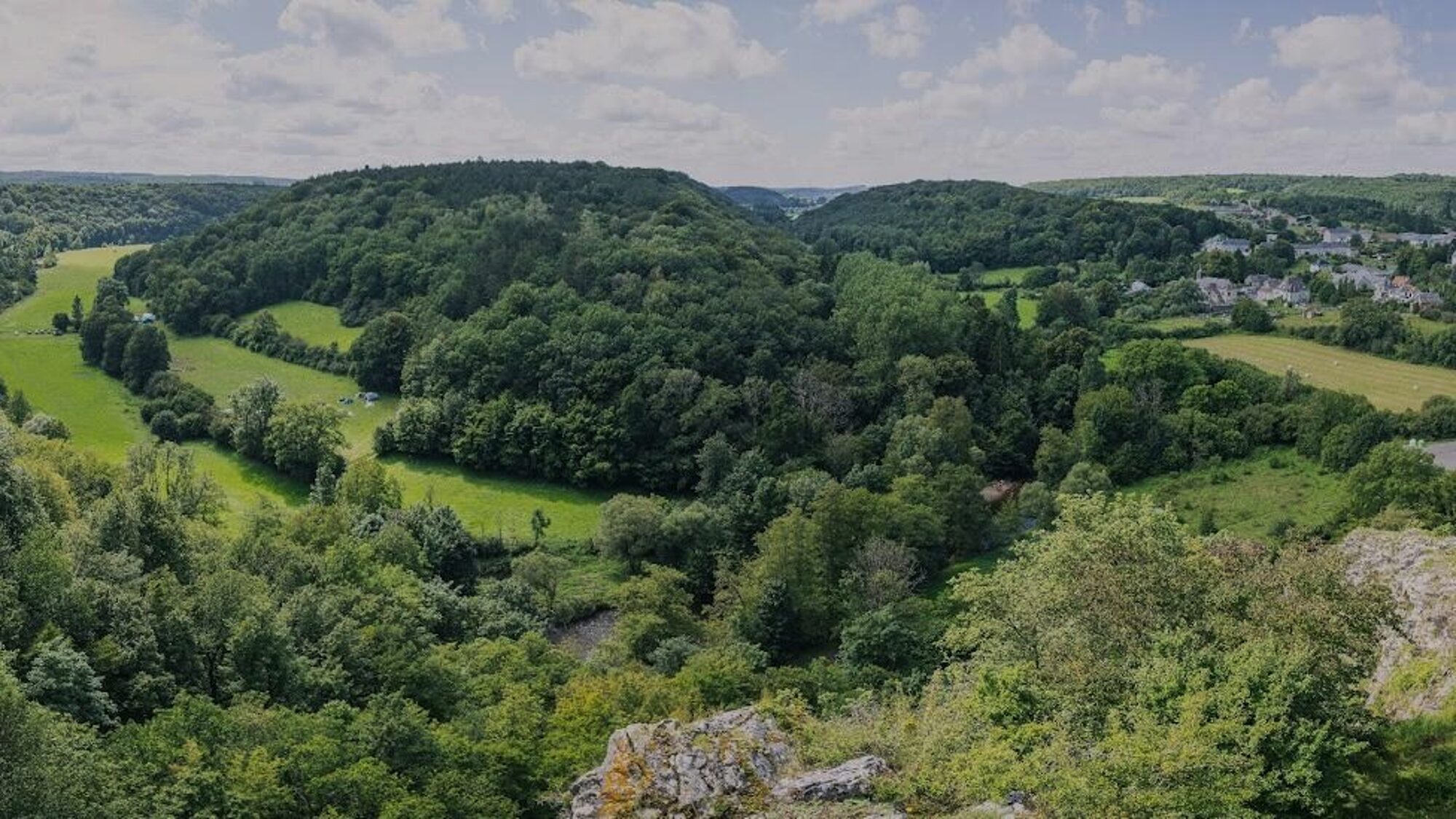
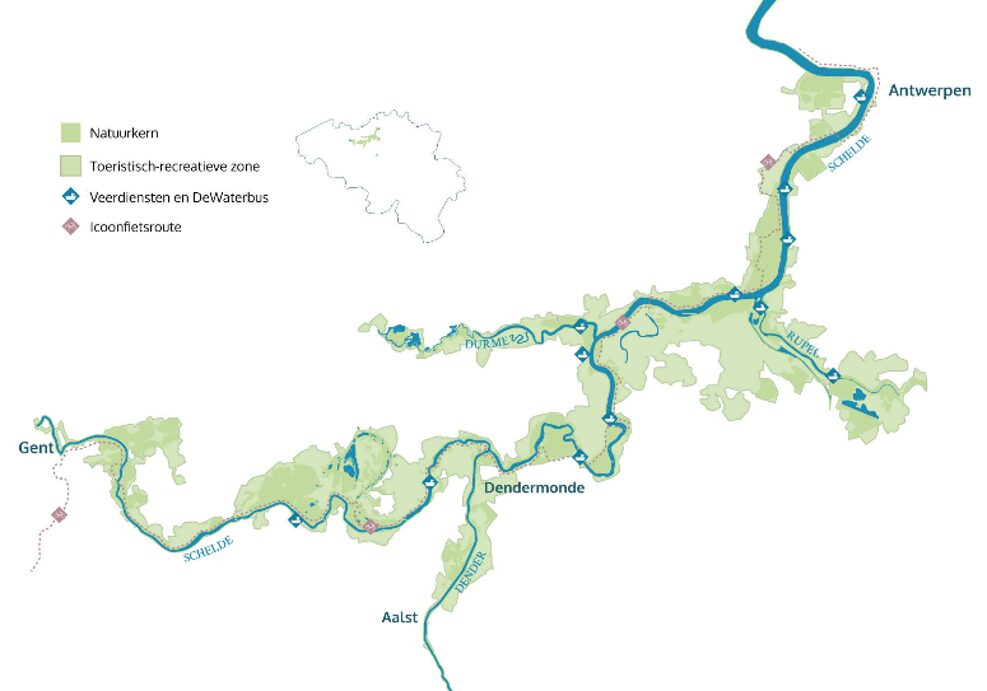
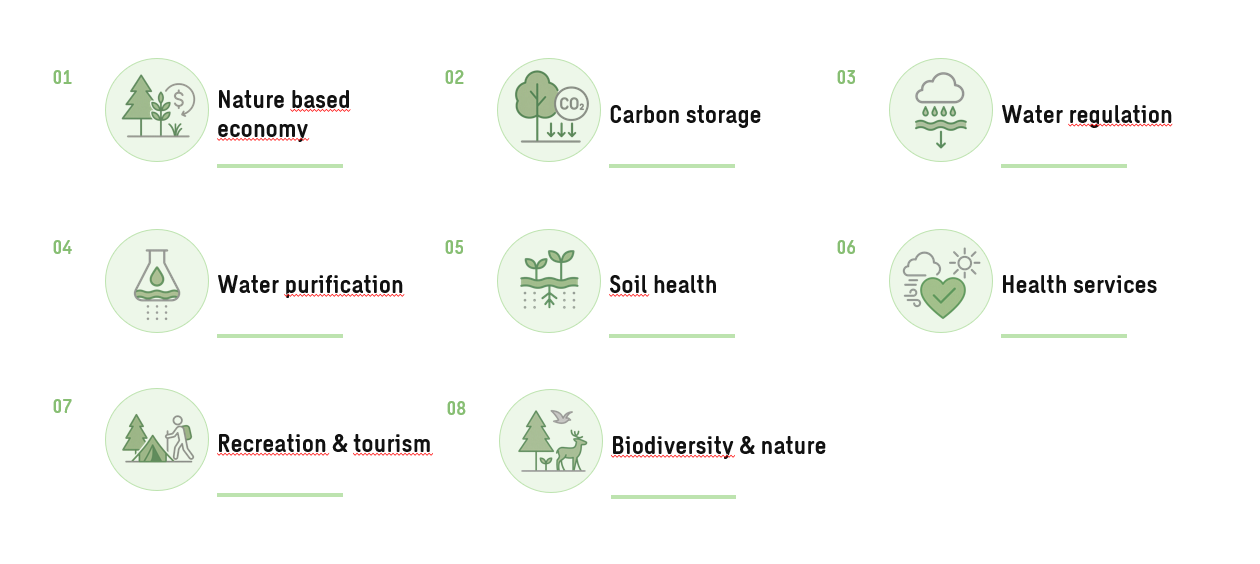
To test the methodology, the project is working with two national parks: Scheldevallei and Entre-Sambre-et-Meuse. They offer an interesting testing ground, because every landscape is different and a PES model always requires a tailored approach. The research focuses on eight clusters of ecosystem services:
- nature-based economy
- carbon storage
- water regulation
- water purification
- soil health
- health services
- recreation and tourism
- biodiversity and nature
This broad scope shows that PES goes far beyond carbon finance alone. Water management, soil quality, recreation, health and local nature-based economies can also be part of a sustainable financing model.
photo left: ©parc-national-esem, photo right: ©nationaal-park-scheldevallei
Where can PES create value?
Carbon storage offers opportunities through, among others, afforestation, carbon farming, wetlands and permanent grassland. At the same time, the project notes that carbon credits can involve high transaction costs and risks such as double counting. Careful design is therefore essential.
Water regulation also offers opportunities. Wetlands, controlled drainage and river restoration can help reduce flood risk and retain water for longer during dry periods. Because flood safety remains primarily a public responsibility, financing models should focus on measures that create added value on top of existing policy.
Another route is water purification through wetlands and natural treatment systems. This can help reduce the impact of local industrial activity or agriculture on water quality. Drinkwater users, such as local breweries, could also be a target group interested in ecological guarantees of top water quality.
Recreation and tourism are also interesting avenues, as are ecological and regenerative forms of agriculture or forestry.
Opportunities for organisations and investors
PES helps public authorities, companies, land managers and investors identify where investments in nature can also create social and economic value.
For land managers and nature organisations, PES can provide an additional source of funding. For companies and investors, it offers a credible way to support nature restoration and link investments to measurable impact. And for public authorities, it can complement public funding with alternative financing mechanisms.
The added value of our project with WWF lies precisely in this integrated approach. Ecological, financial and governance insights are brought together, because a PES model only works if it is robust on all those fronts.
Part of a broader solution
PES is not a silver bullet and will not solve every challenge. It is one of the instruments within a broader approach to nature investments.
Still, it is an important step forward. PES shifts the focus from how nature can be financed solely with public funds to who benefits from ecosystem services, and how those benefits can contribute to protecting and restoring nature.
Do you have questions about this method? Contact Miechel De Paep.
Overig nieuws

Spatial policy plans: making today’s choices for tomorrow’s city
Read more

From housing study to action-oriented housing policy
Read more

Sweco welcomes Stendess and confirms ambitions in sustainable steel engineering
Read more