
Sweco Belgium
More eyes at sea: Sweco designs offshore platform concept for marine monitoring and enforcement in the North Sea
How do you protect a vulnerable marine area that is being used ever more intensively? For the Federal Public Service Health, Food Chain Safety and Environment, Sweco carried out an integrated concept and technical feasibility study for a modular offshore platform near the Westhinder Bank. The aim: a future-ready solution combining monitoring, data transmission, energy concepts, and space for supervision and research.
The Belgian North Sea is small, busy and ecologically valuable. Shipping, energy, fisheries, research and nature interests converge within a limited area. At the same time, there is growing demand for reliable data on water quality, biodiversity and emissions, as well as effective enforcement of environmental rules at sea. Commissioned by the Marine Environment Service, Sweco investigated how one offshore infrastructure could combine multiple objectives: from continuous monitoring and drone operations to supporting scientific research and supervising activities at sea.
High praise for Sweco’s design
The study received positive feedback from the client. The Federal Public Service Health’s Marine Environment Service praised the decisive project management, clear and frequent follow-up, strong co-design workshop with stakeholders, and detailed reporting delivered within a short timeframe. Sweco received a score of 10/10 in the client evaluation.
“Excellent collaboration and performance under severe time pressure, with unwavering enthusiasm.”
Wendy Bonne, Federal Public Service Health, Marine Environment Service

From marine monitoring to enforcement
The concept starts from a clear ambition: to create one robust infrastructure that strengthens monitoring, research and enforcement at sea. The platform should improve understanding of the marine ecosystem through sensors and cameras that help track water quality, biodiversity and restoration initiatives such as oyster reefs.
It should also support enforcement by monitoring nearby vessels more effectively and detecting harmful emissions more quickly. In this way, one infrastructure becomes a smart link between policy, science and operational supervision.
Fixed hub near the Westhinder measuring station
In concrete terms, the study resulted in a substantiated concept for a fixed offshore installation on a monopile, approximately 30 kilometres off the Belgian coast and near the Westhinder measuring station. The preferred solution combines several functions within a limited footprint: energy supply, data communication, sensor technology, drone operations, maintenance and space for future expansions.
Designed around nature restoration and reliable data
The study was commissioned under measure I-1.25, the Marine Nature Restoration Programme within Belgium’s amended Recovery and Resilience Plan. The programme aims to strengthen marine biodiversity in the North Sea through targeted ecological projects and data-driven monitoring. The platform should help map changes in water quality, biodiversity and human impact more quickly and accurately.
Innovative technology for supervision at sea
Enforcement is also an important part of the concept. In time, the platform could help detect and document shipping movements, emissions and potential environmental infringements more effectively. Combined with smart sensors, cameras and data transmission, it will provide a robust basis for faster supervision, more efficient interventions and greater protection of the marine environment.

Expertise from coastal processes to concept design
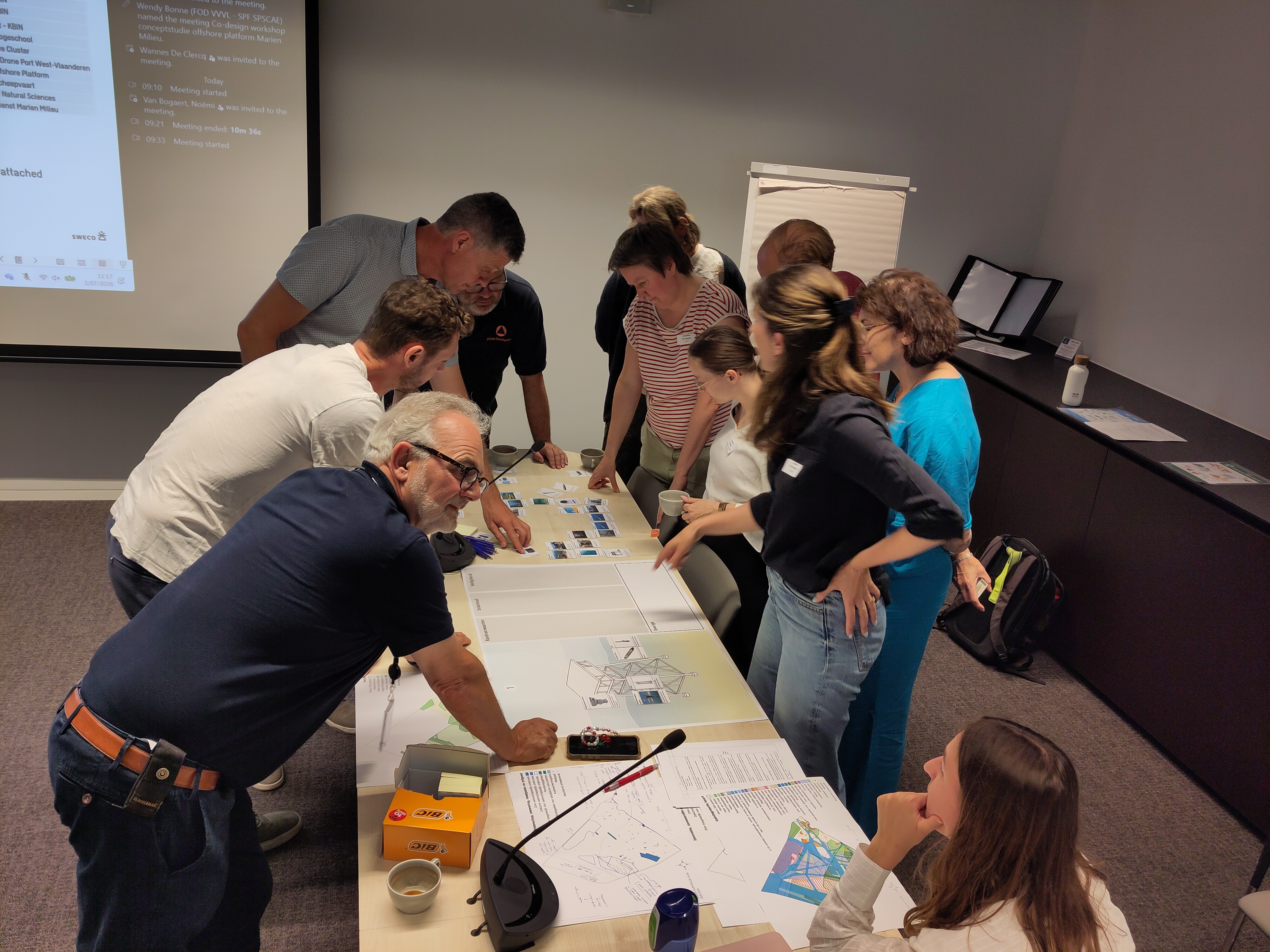
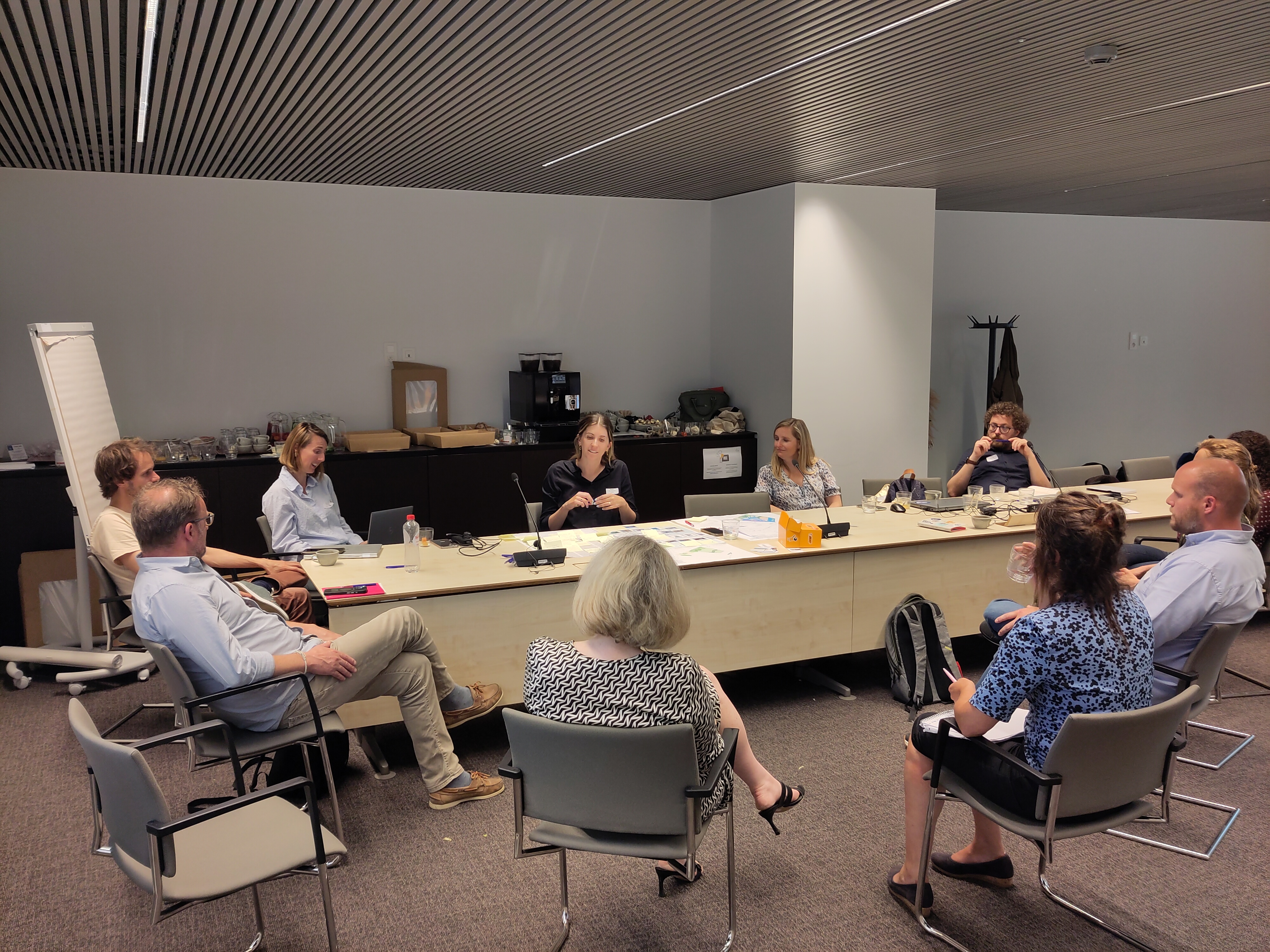
Sweco brought together a wide range of expertise for this assignment: marine ecology, civil engineering, data transmission, energy supply, sensor technology, safety, ecodesign, permitting and cost estimation. Stakeholder consultations, bilateral meetings and a co-design workshop helped define the functional needs. The team then translated this input into a technically substantiated preferred concept, including CAPEX/OPEX estimates and consideration of operations, maintenance, safety and environmental impact.

From stakeholder input to a substantiated concept
The assignment was structured in two parts. In the first phase, Sweco identified the functional and technical needs through desk research, stakeholder consultation, bilateral meetings and a co-design workshop. The options for sensors, energy demand, data management and data transmission were investigated and translated into a broadly supported concept for future users.
In the second phase, the preferred concept was technically developed and financially assessed. Sweco determined indicative investment and operating costs and investigated the infrastructure required for energy supply, data communication, sensor technology, drone operations and maintenance. Stability, safety, sustainability, operational risks and long-term operation were also included in the analysis.

Modular foundation with potential for a European follow-up
The study therefore delivers more than a theoretical exploration. It provides a technical foundation that public authorities can use to substantiate future financing, procurement, tendering, installation and operation. Because the concept is modular, new sensors, autonomous systems, acoustic monitoring, bird and bat detection, or additional research and enforcement applications can be integrated later without fundamental changes to the basic infrastructure.
The study supports the broader ambition to protect, monitor and sustainably manage the Belgian North Sea more effectively. By combining monitoring, enforcement, nature restoration and technological innovation, the concept offers added value not only for Belgium, but also inspiration for other public authorities and European networks. That is precisely the project’s strength: it translates policy ambitions into a feasible, future-ready and scalable offshore design.
Images: © Adobe Stock – Sweco
Other News
More eyes at sea: Sweco designs offshore platform concept for marine monitoring and enforcement in the North Sea
Read more

Virtual Reality: experience your project before it is built
Read more

Why a charging station is much more than just a charging station
Read more