
Sweco Belgium
New Urban Insight Report: A Call to Action for Biodiversity in Belgian Cities
New Urban Insight report: A Call to Action for Biodiversity in Belgian Cities
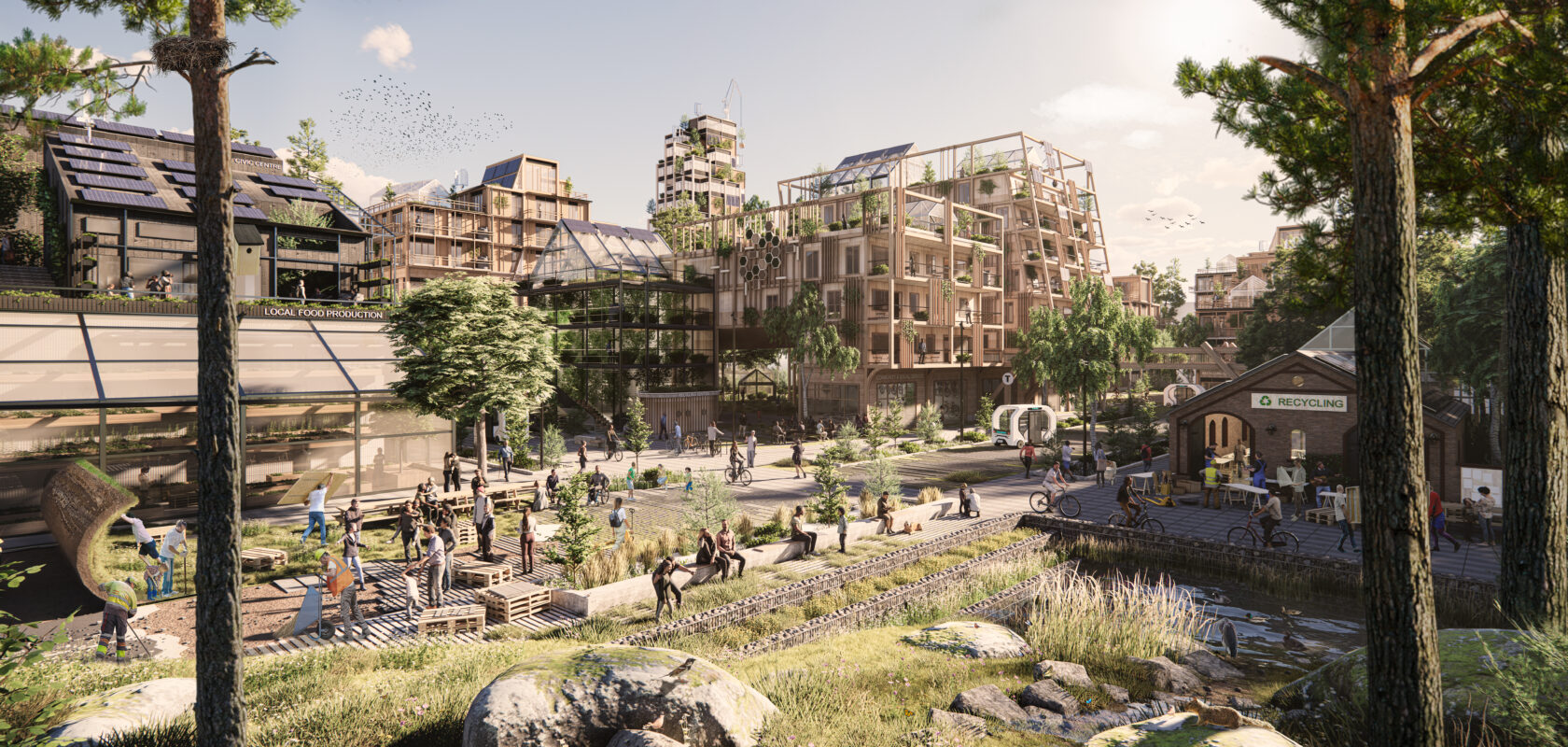
As urban areas continue to expand, the urgent need to address biodiversity loss has never been more critical. The rapid decline in biodiversity, exacerbated by urban development that replaces natural landscapes with concrete, creates ecological dead zones and increases our vulnerability to climate extremes. Recognizing this challenge, Sweco’s latest Urban Insight report provides essential insights and actionable recommendations for incorporating regenerative design.

A study on green-blue spaces in 22 cities
A study by Sweco analyzed the current amount of surface area occupied by greenblue spaces within built-up urban areas of 22 cities, including Brussels and Antwerp. We also evaluated the potential for these cities to increase their net surface cover of blue-green elements within the existing urban footprint. The analysis was performed using the Copernicus database from the European Earth observation program.
- Currently, Brussels has a green-blue coverage of 25%, which falls below the average of 27%. However, by implementing strategic plans, this could be increased to 32%, surpassing the guideline of 30%. Projects like ‘Brussel Plant’ are already a step in the right direction.
- In contrast, Antwerp currently boasts only 17% green-blue space, one of the lowest percentages among the cities studied. The potential for growth is limited, with only a possible increase to 19%. This limitation is attributed to the city’s relatively homogeneous distribution of green spaces and small absolute areas of built-up land, making the overall change less than 1%.
Nature as our client
In our quest for sustainable urban development, we must view nature as an integral part of our design process. As Diego Luna Quintanilla, Project Manager in Urban Design and Strategic Planning at Sweco, states,

By viewing nature as a client when designing cities, we can enhance the quality of urban neighborhoods, improving health for people, animals, and ecosystems.
More green in Mechelen

A notable example of this approach can be seen in Mechelen, where the city aims to restore livability by prioritizing walking, cycling, and public transport. By increasing the amount of unpaved green areas from 2.9 to 6.5 hectares, Mechelen enhances climate resilience and public health. Furthermore, we ensured that there is at least one hectare of accessible green space within 300 meters, as recommended by the WHO.
As we move forward, the insights from our Urban Insight Report serve as a roadmap for city planners and policymakers, encouraging them to prioritize green infrastructure and biodiversity in urban settings. Together, we can create cities that not only accommodate human activity but also nurture the ecosystems that sustain us.
Other news
Stakeholder management creates space for better projects
Read more
Spatial policy plans: making today’s choices for tomorrow’s city
Read more
From housing study to action-oriented housing policy
Read more