
Sweco Belgium
Portfolio management: existing buildings as a lever for liveable cities
Cities and municipalities face a dual challenge. They aim to organise their services in an accessible, high-quality way, while their building stock is often fragmented, ageing or insufficiently aligned with today’s needs. At the same time, expectations regarding energy performance, accessibility, climate resilience and affordable management are increasing. In this context, responding to urgent maintenance issues on a building-by-building basis is no longer sufficient. The greatest benefits lie in a well-founded, long-term view of the entire estate.
Estate management makes buildings, land and sites easier to understand, manage and future-proof.
It helps owners gain insight into the technical condition, risks, use and development potential of their real estate. Above all, it helps them set priorities.
- Which buildings should we retain?
- Where does renovation offer the greatest value?
- Which functions could be better brought together?
- And where can repurposing create greater societal value?
These choices extend beyond real estate alone. They help determine how attractively, efficiently and resiliently a city or municipality operates.
From individual buildings to one coherent strategy
Estate management is the strategic, long-term management of buildings and real estate.
It brings together five building blocks:
- insight into buildings and data,
- analysis of condition, risks and potential,
- a strategy for the entire portfolio,
- prioritisation of investments,
- support for implementation and follow-up.
This integrated approach is essential, because an estate rarely tells one simple story.
A building may remain technically sound for years, yet perform poorly in terms of energy efficiency.
A site may have considerable spatial potential, but no longer match the way employees or residents use it. Or several buildings may each require renovation, while shared use or a different programme could create greater value at portfolio level.
Those who recognise these connections can allocate resources more effectively. Not only to maintain buildings, but to enable the estate to actively contribute to policy ambitions: vibrant urban and village centres, accessible services, high-quality public space, reduced energy consumption and smarter use of scarce space.
One partner, connected expertise
For owners, the challenge rarely lies within a single field of expertise. The right choice for a building depends on its condition, energy consumption, future space requirements, financial feasibility, regulations and significance for the neighbourhood or city.
Sweco brings all these perspectives together.
Our architects, engineers, real estate and sustainability consultants, spatial planners, landscape architects, cost consultants and process facilitators work from one shared question: how can this estate create sustainable value, today and tomorrow?
This is how we combine strategic advice with technical depth and delivery capability.
The connection between disciplines and project phases makes Sweco a partner throughout the entire real estate life cycle. Our approach helps owners not only manage buildings and sites, but also enable them to contribute purposefully to liveable cities and municipalities.
Full life cycle in practice
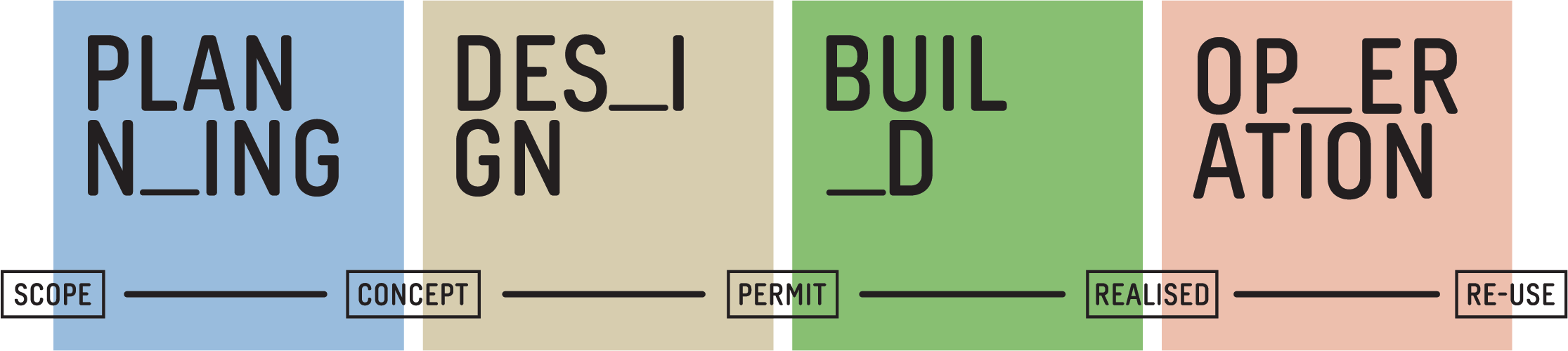
At Sweco, estate management is an integral part of our full life cycle design ambition: we consider a building or site not only up to completion, but throughout its entire life cycle.
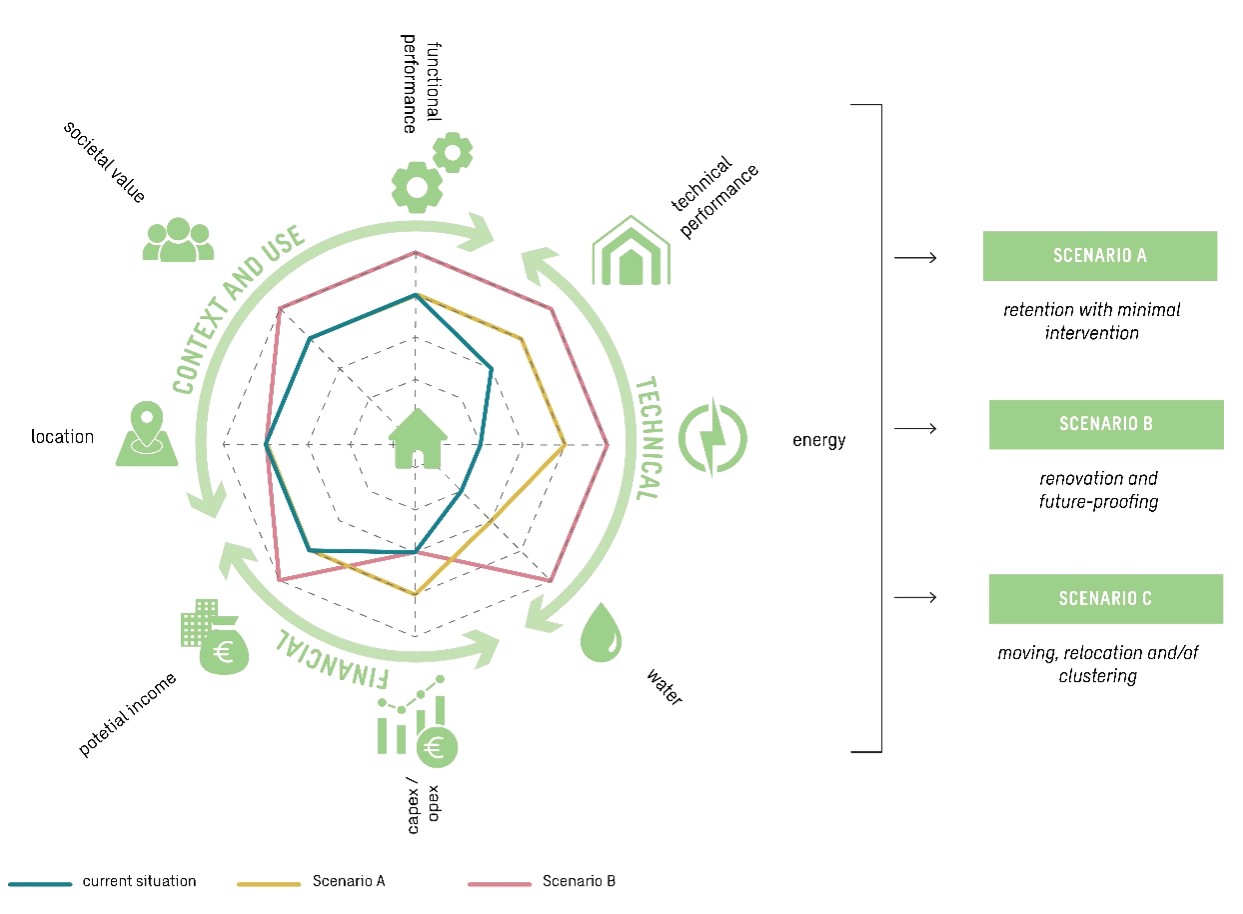
It starts with a thorough understanding of the existing situation. We then identify possible future scenarios, ranging from retention and renovation to transformation, shared use, sale or redevelopment. We assess these scenarios against technical, spatial, financial, legal, ecological and societal criteria. We then help make the chosen direction deliverable through a phased approach, an investment plan and implementation support.
In this way, we connect today’s perspective with tomorrow’s ambitions. Because a sustainable real estate decision is not only about the cost of an intervention. It is about the long-term value that a building, site or portfolio creates for users, owners and the surrounding environment.
Case 1: real estate as a driver for the heart of Seneffe
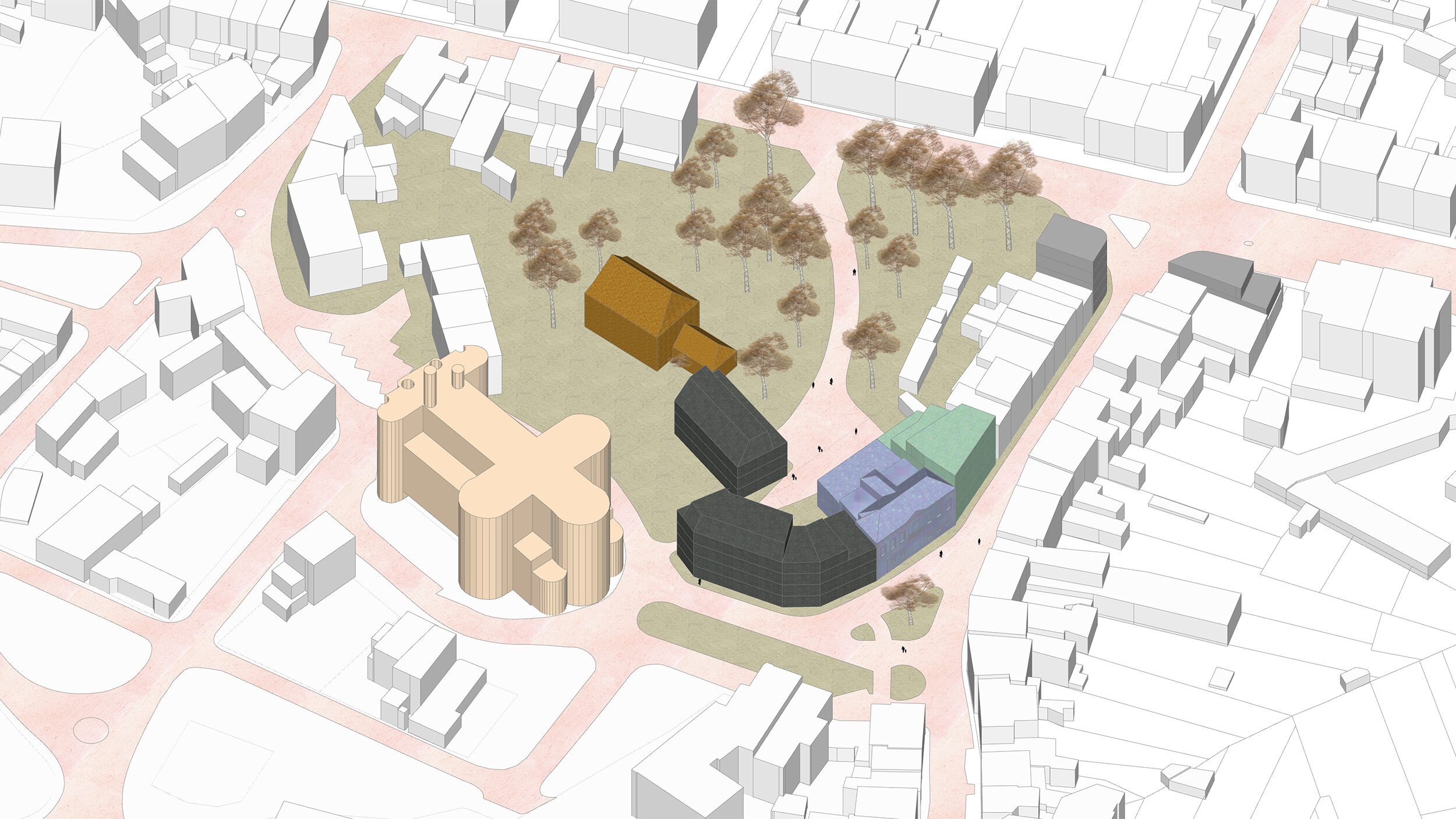
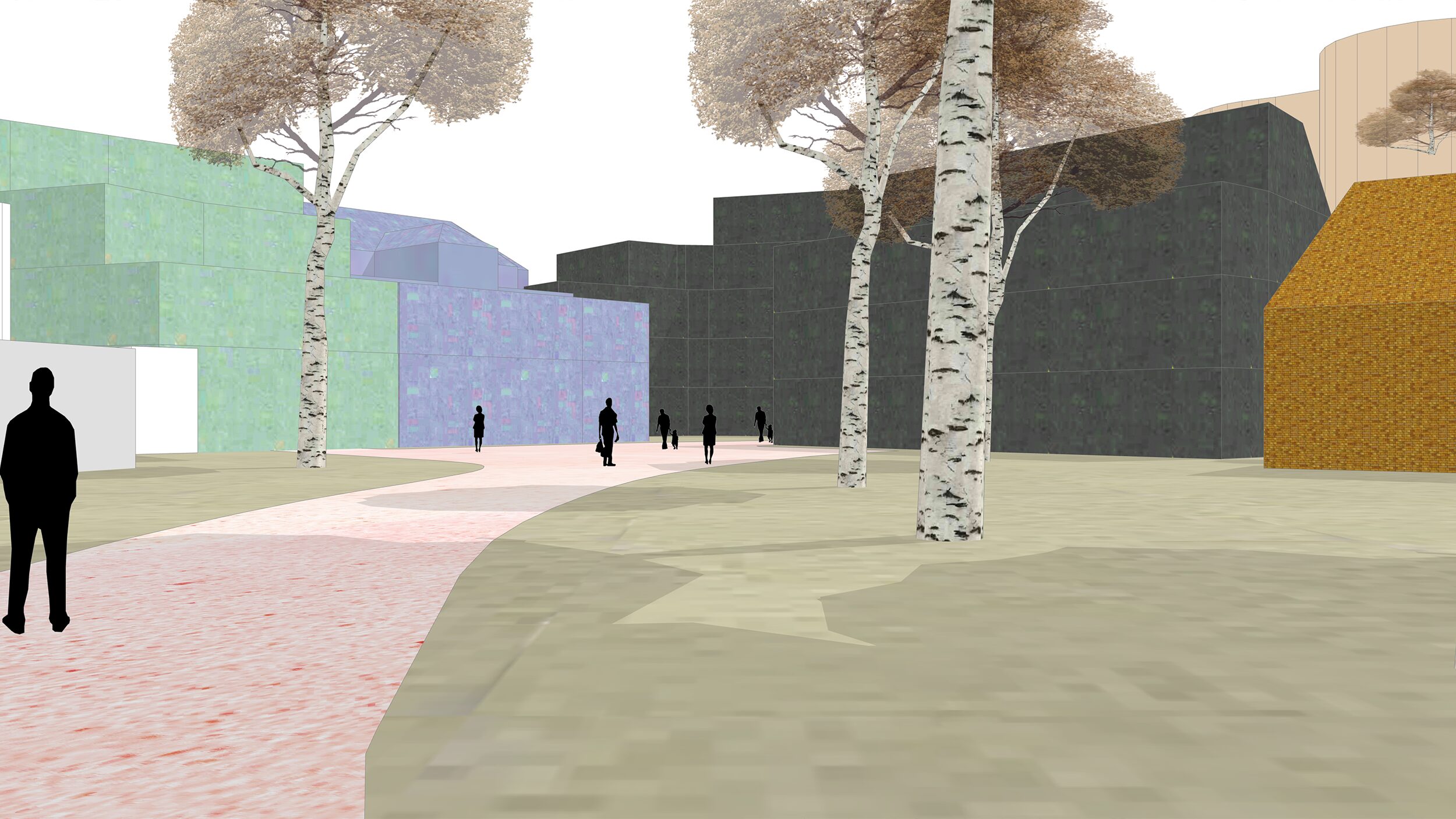
Over recent years, the municipality of Seneffe has acquired several properties and plots around the town hall. The central question is: how can these assets breathe new life into the heart of the municipality while bringing together a number of currently dispersed services?
Together with legal partners, Sweco supports the municipality in the development of an integrated real estate strategy. We start with a multidisciplinary audit of the existing buildings and site, covering structure, fire safety, accessibility and energy, as well as urban planning, landscape, spatial planning and environmental aspects. In parallel, workshops with municipal services identify space requirements, work organisation and opportunities for shared use.
Based on this, we develop several scenarios, including renovation, extension, sale, long lease and collaboration with private partners. Each scenario undergoes a spatial, legal, financial and ecological assessment. Through design research, we also make the consequences tangible: which development zones, de-paving opportunities, programmes and phasing correspond to each development scenario?
The result is not an abstract final report, but a pragmatic roadmap. It provides the local authority with a framework for making step-by-step decisions on investments, procedures, financing and implementation. It also demonstrates how a real estate strategy can simultaneously strengthen a municipality’s quality of life, economic dynamism and ecological ambitions.
Case 2: an objective foundation for Antwerp’s estate
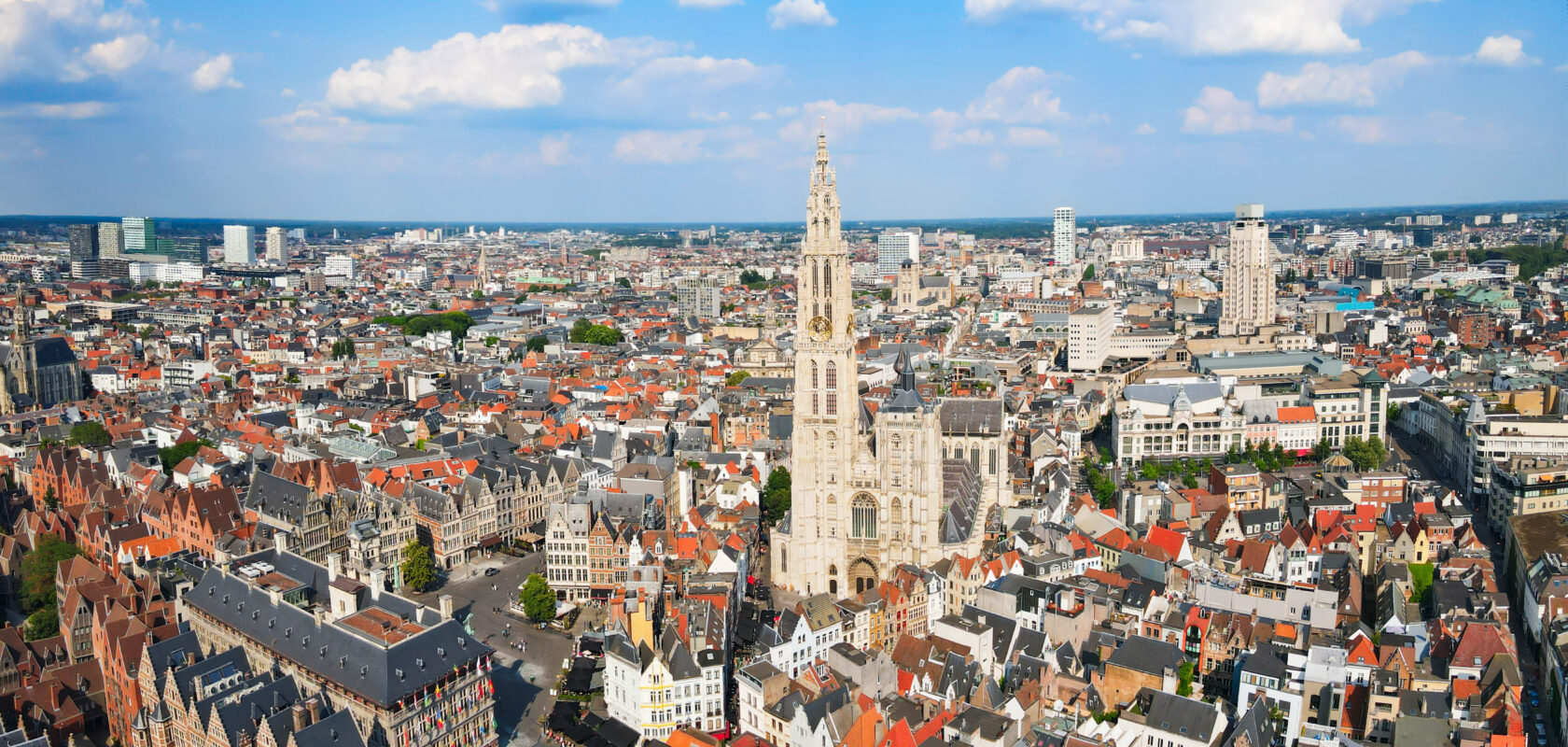
For AG Vespa, Sweco supports the assessment of the real estate portfolio of the City of Antwerp, the Public Centre for Social Welfare (OCMW) and AG Vespa. This is an exceptionally large and diverse portfolio: approximately 390 urban buildings, together accounting for almost 650,000 m² of gross floor area, supplemented by around ninety commercial buildings owned by AG Vespa.
The assignment involves more than a technical inventory. For each building or site, we map the architectural and technical condition, risks, defects and intervention needs. At the same time, we examine opportunities for adaptation, transformation and reuse, as well as possibilities for renovation, sustainability and circular use.
A standardised methodology creates a consistent and objective knowledge base. This enables AG Vespa to compare buildings with one another and set priorities on a well-founded basis: where is intervention most urgent, where are the opportunities for transformation, and which investments will make the greatest difference? In this way, data becomes a strategic tool for future-oriented real estate policy.

Estate as an active driver for tomorrow’s city or municipality
Liveable cities are not created through new projects alone. They also grow from thoughtful choices about what already exists. Existing buildings and sites are valuable levers for bringing services closer to residents, using space more efficiently, improving energy performance and strengthening urban and village centres.
Sweco helps public and private owners address this challenge in all its dimensions. We combine real estate expertise with architecture, engineering, sustainability, spatial planning, cost management and process facilitation. This is how we turn individual buildings into a coherent estate – and an estate into an active driver for tomorrow’s city or municipality.
Other news
Portfolio management: existing buildings as a lever for liveable cities
Read more
Xenon at Park 7 achieves WELL Platinum certification: when a building actively supports health and well-being
Read more
How can a village grow without losing its identity?
Read more