
Sweco Belgium
Xenon at Park 7 achieves WELL Platinum certification: when a building actively supports health and well-being
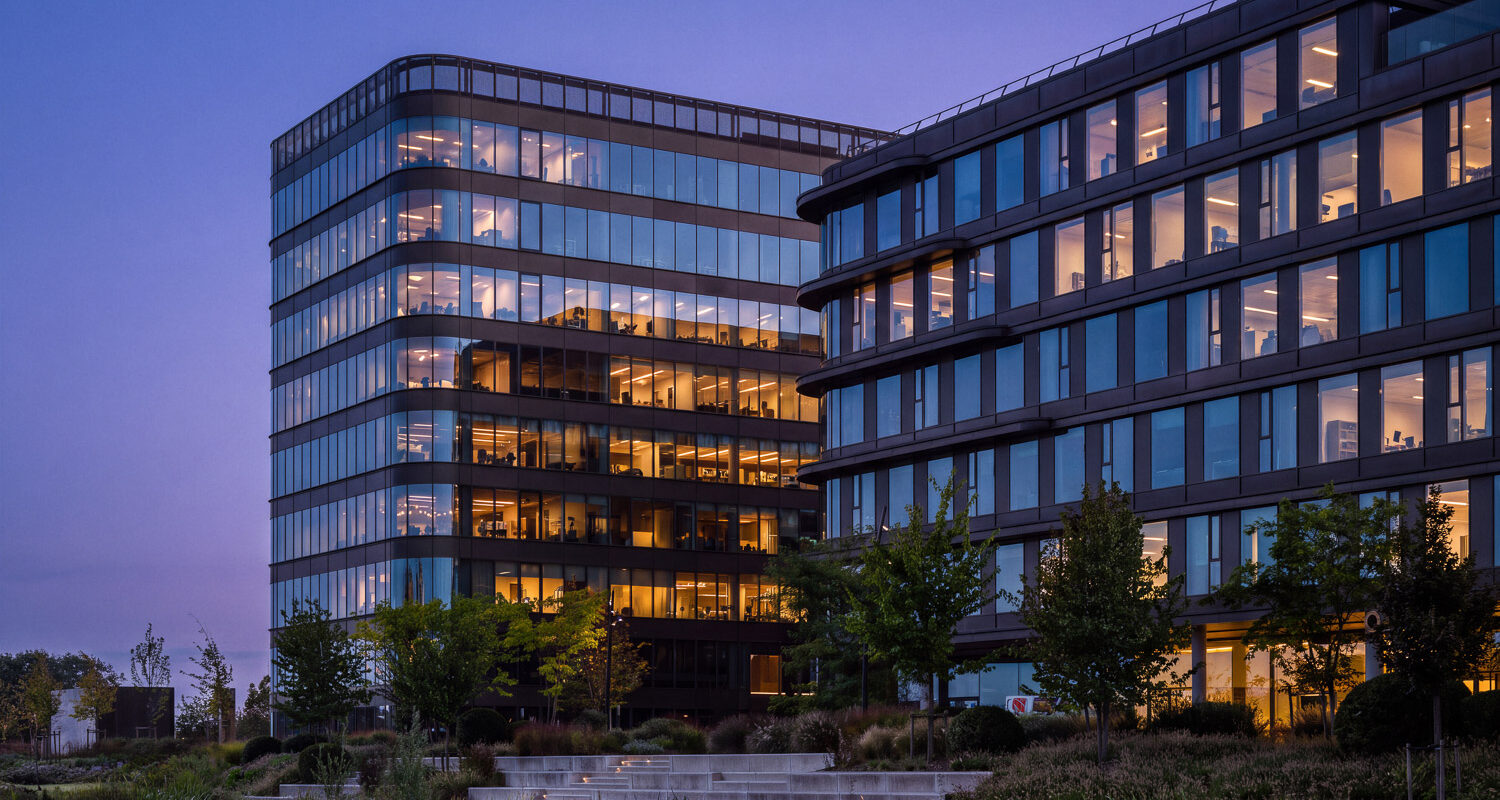
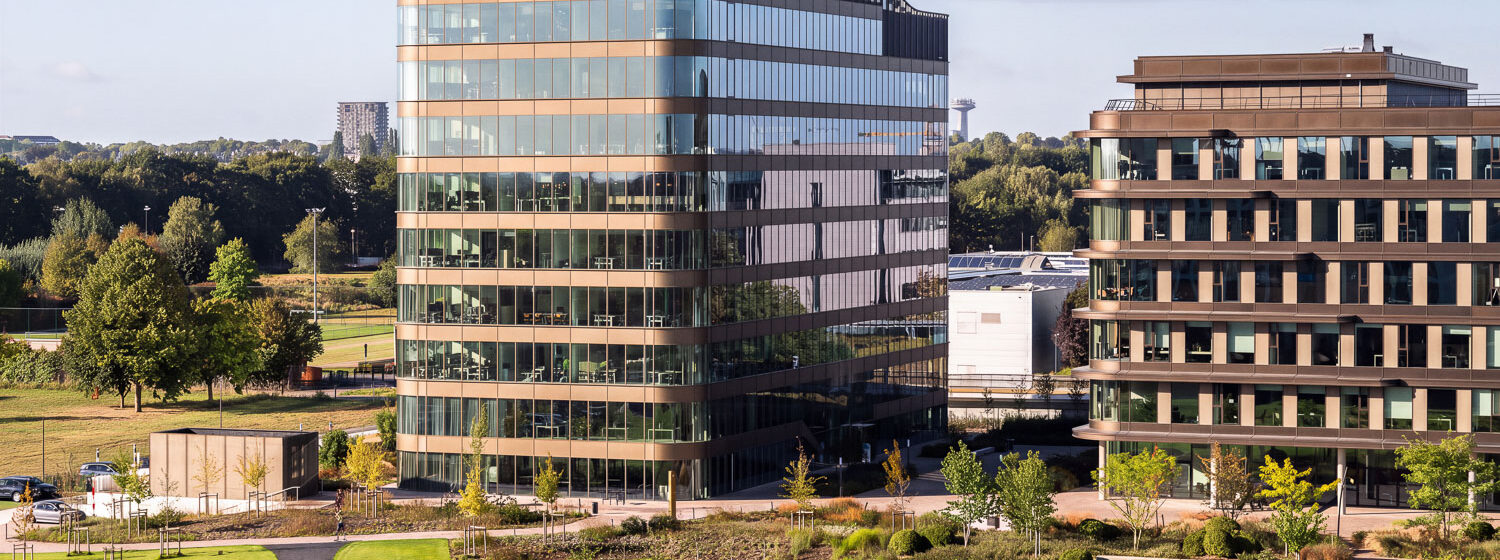
A healthy office today is about much more than sufficient daylight, a pleasant temperature or good ventilation. At Park 7, near Brussels Airport, the Xenon office building demonstrates how architecture, building services and everyday amenities can work together to create a workplace that helps people make healthier choices. This comprehensive approach earned Xenon WELL Platinum certification, the highest level of the international WELL standard.
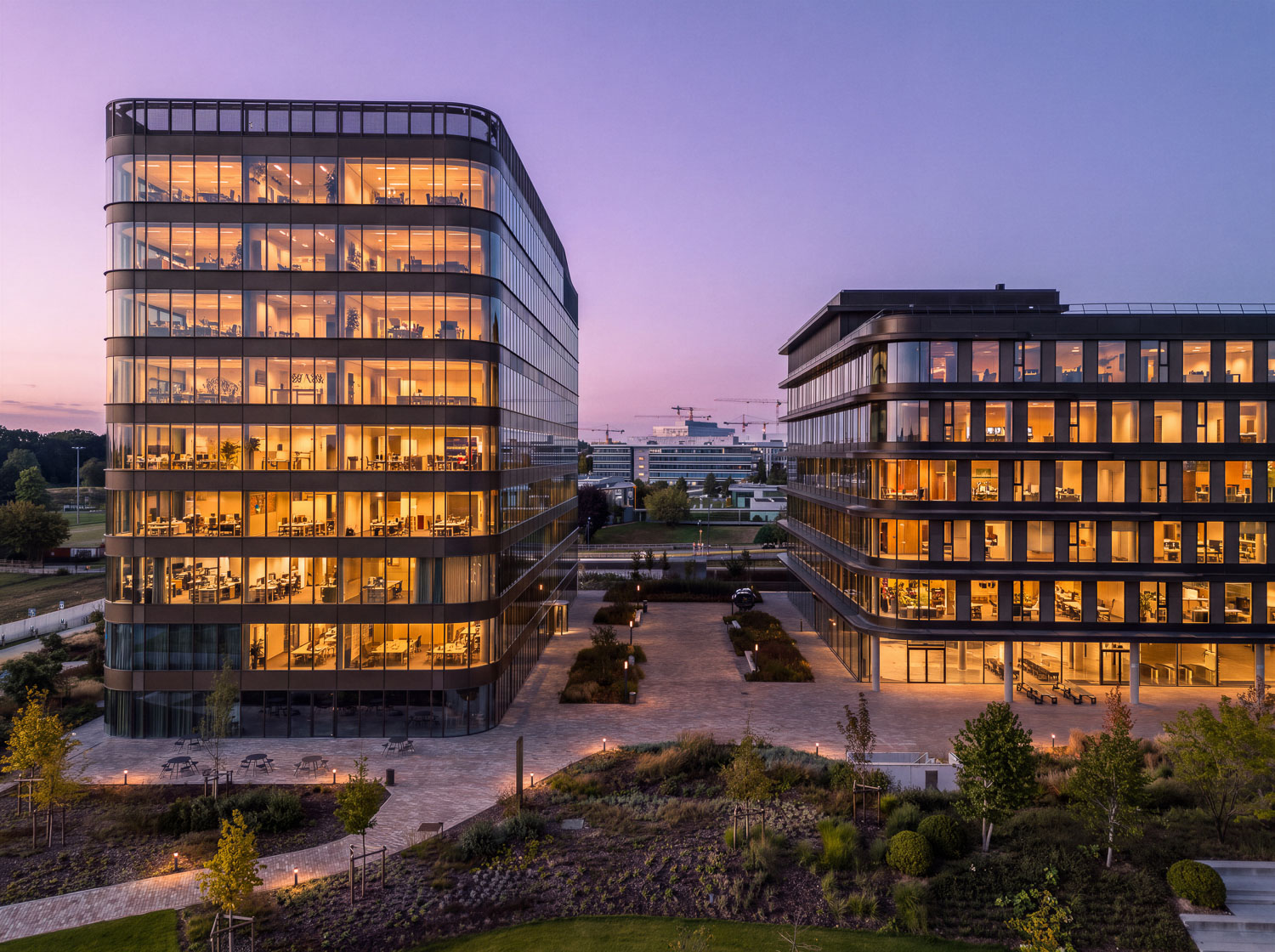
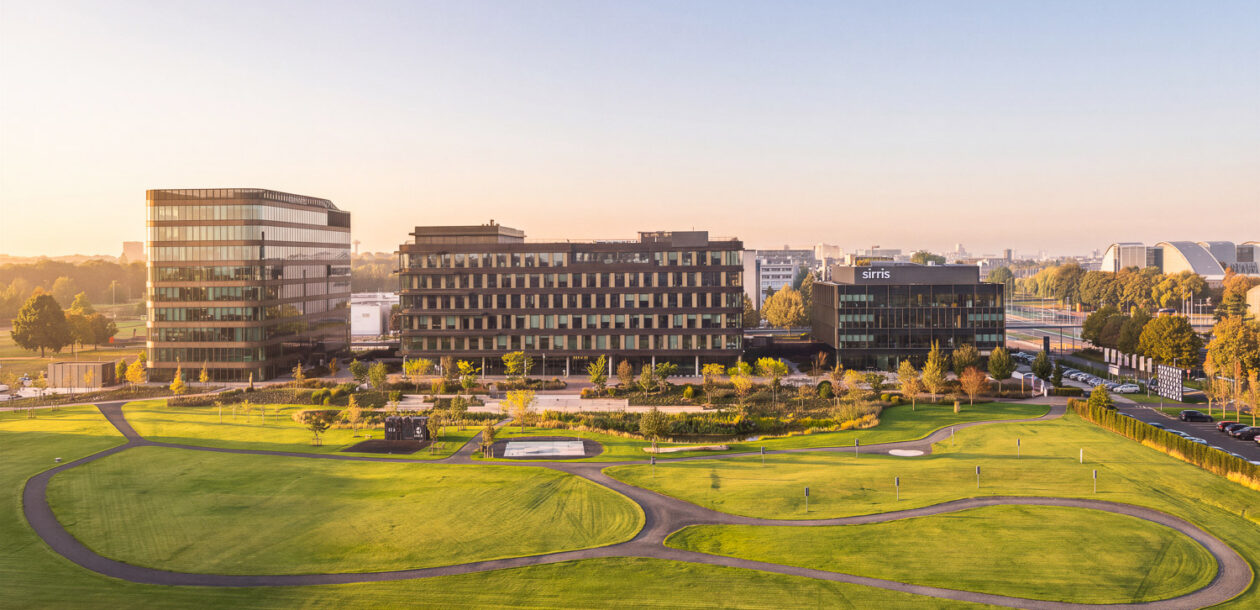
Xenon is the third and newest office building at Park 7 and opened in 2024. With a floor area of approximately 15,000 m², it marks another step in the site’s development as a green office campus. Developer Immogra did not want Park 7 to become a traditional office park. Its ambition went further: to create an environment where work, wellbeing and health are closely connected. Alongside ambitious sustainability goals, people were therefore placed at the heart of the design from the outset. Sweco contributed an integrated range of expertise to Xenon, including building services engineering, structural engineering, acoustics, energy performance (EPB), BREEAM, WELL and project management.
From WELL Gold to WELL Platinum
Health and wellbeing have long been priorities at Park 7. The earlier Onyx building on the campus became the first WELL-certified building in Belgium. For Xenon, the project team wanted to build on that experience. Initially, the target was WELL Gold. During design and construction, however, it became clear that Xenon was close to meeting the requirements for Platinum. The team therefore decided to raise the bar.
What makes a WELL Platinum building special?
While sustainability certifications have traditionally focused strongly on a building’s environmental performance, WELL specifically addresses the health and wellbeing of the people who use it. Its scope extends far beyond building systems alone. Air quality, water, lighting, thermal comfort and acoustics all play an important role, alongside movement, nutrition, materials, mental wellbeing and community. This makes WELL both technically rigorous and people-centred. A healthy building should do more than provide comfort. It should also make healthier choices easier.
Good air quality is the foundation of a healthy building
One of Xenon’s main priorities is indoor air quality. Its ventilation system uses 100% outdoor air, with no recirculation, combined with high-performance filtration. This helps maintain high air quality and contributes to a healthy indoor environment. The building management system also plays a key role. This central system monitors and controls various comfort parameters, ensuring that the technical installations operate as one integrated whole rather than as separate systems. Heat pumps are among the technologies used for climate control. One of the installations operates on a four-pipe principle, allowing it to respond efficiently to simultaneous heating and cooling demand.
Lighting, acoustics and thermal comfort working together
Health in buildings is shaped by a combination of factors. That is why particular attention was paid to visual, acoustic and thermal comfort. The lighting has been designed to minimise glare and incorporates daylight-responsive dimming, automatically adjusting artificial lighting to the available natural light. Acoustics also received special attention. Given the building’s proximity to Brussels Airport, it was important to control not only noise from technical installations and adjacent spaces but also external noise. The building envelope therefore plays an essential role in protecting occupants from outside sound. Low-temperature heating was among the solutions selected to provide thermal comfort. Water quality, leak detection, rainwater harvesting and efficient hot-water production complete the technical concept. The result is not a collection of separate technologies, but a building in which different systems work together to create a pleasant and healthy working environment.
A building that makes healthy choices easier
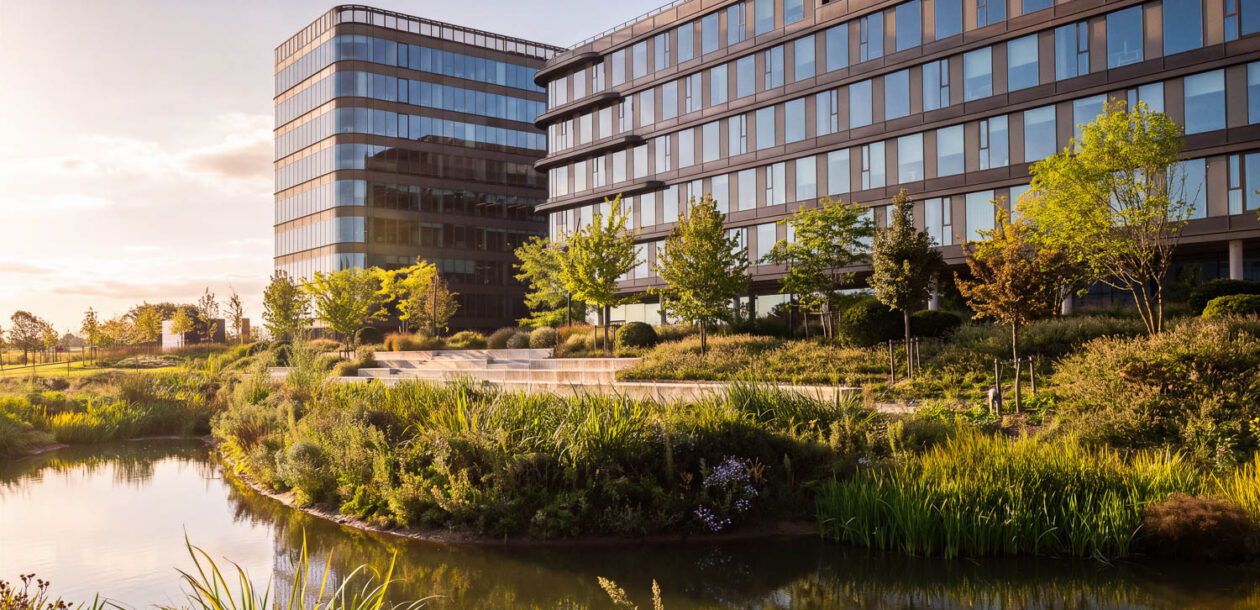
Yet WELL’s strength lies not only in what happens above ceilings, in plant rooms or within the building management system. People working at Xenon also experience its principles in everyday life on the campus. Employees can walk in the green surroundings, cycle to work and use bicycle parking, repair equipment, changing rooms and showers. Healthy food options and facilities that encourage physical activity are also part of this broader vision. The principle is simple: a building cannot force anyone to live healthily, but it can make healthier choices more attractive and accessible.
“Ultimately, a healthy building is one occupied by healthy people. The building cannot achieve that on its own, but it can support a healthy lifestyle. That is precisely where WELL can make a difference.”
Wolfgang Vandenbulcke, Sweco
WELL Core: a healthy foundation for tenants
Xenon is certified under the WELL Core framework. This is particularly relevant for buildings where a large proportion of the space is leased to different organisations. The certification focuses on the base building and shared areas. Air and water quality, daylight, technical infrastructure and communal facilities are therefore addressed at building level. This provides tenants with a healthy foundation from day one, on which they can further develop their own office environment. Tenants who subsequently wish to pursue WELL certification for their own fit-out can build on a property that already meets many of the requirements. Even tenants who do not seek a separate certificate benefit from the measures incorporated into the base building.
Measuring performance to demonstrate results in practice
WELL certification does not stop at design intentions. Performance must also be demonstrated. Various parameters were therefore verified during and after construction. Sweco was responsible for the design and integration of the building services. Airscan acted as an independent testing and monitoring partner, including for air quality. This collaboration is important because real-world conditions do not always fit neatly within a standard framework. Some requirements call for interpretation, technical coordination and pragmatic solutions that remain true to WELL’s objectives. This is precisely where an integrated design team demonstrates its value.
Health becomes a core design consideration
Interest in healthy buildings has grown significantly in recent years. Employers are rethinking the role of the office. It is no longer simply a place where people need a desk and meeting rooms. The workplace also contributes to wellbeing, comfort, collaboration, and attracting and retaining employees. This does not mean that every building necessarily needs WELL certification. Many of its principles can be applied without a formal certification process. Better air filtration, sufficient daylight, comfortable lighting, acoustic design, inviting staircases, cycling facilities and spaces that encourage movement are all measures that can make a difference in many projects. WELL provides a framework for going beyond conventional technical requirements and systematically incorporating health into both building design and operation.
Integrated design from day one
One of the key lessons from Xenon is that an ambition such as WELL Platinum cannot simply be added to a design at a later stage. Architecture, building systems, materials, acoustics, comfort, operation and user experience continuously influence one another. A decision in one discipline can affect several WELL criteria. Collaboration from the earliest design stage is therefore essential. For Sweco, this means bringing together expertise in building services engineering, structural engineering, acoustics, energy performance and certification as part of one integrated design process, rather than treating these disciplines separately. Health thus becomes not an additional layer applied to a building, but a fundamental part of it.
From a healthy building to healthier business operations
WELL also creates opportunities that extend beyond the building itself. Certification can encourage organisations to continue reviewing health, wellbeing and safety critically after occupation. Examples include sports programmes, training, maintenance, healthy food provision and more comprehensive emergency and business continuity plans that go beyond the annual fire drill. This may be Xenon’s most important message: a healthy building is not an end product, but an environment that supports healthy behaviour. For clients wishing to give greater priority to health and wellbeing in future projects, it is therefore valuable to view WELL as more than a certificate. Above all, it can be a catalyst for rethinking buildings and the people who use them every day. With Xenon, Park 7 demonstrates just how far this ambition can go. WELL Platinum is not merely a plaque on the wall, but the outcome of hundreds of design decisions serving one shared purpose: creating a workplace where people can feel better, move more and work better.
More news
Xenon at Park 7 achieves WELL Platinum certification: when a building actively supports health and well-being
Read more
How can a village grow without losing its identity?
Read more
Südspidol takes a major step towards the people-centred hospital of tomorrow
Read more