
Accelerating together to net zero: hydrogen and green molecules
The rollout of clean hydrogen is lagging behind the ambitious goals of recent years. High production costs, uncertain demand and complex regulations are hindering progress. But despite this temporary dip, hydrogen, along with green molecules like biofuels, e-ammonia and e-methanol, remains a key factor in the transition to a carbon-neutral industry. Especially in industries that use hydrogen as a raw material and industrial processes with high temperatures such as chemicals, steel and cement where electrification or batteries are insufficient, hydrogen offers a realistic and forward-looking alternative.
From grey to green hydrogen: a huge climate gain
Most hydrogen today is still produced from natural gas – so-called grey hydrogen. In Flanders, this amounts to about 500 kilotonnes per year, accounting for 4.5 million tonnes of CO₂ emissions. Simply switching from this grey hydrogen as feedstock to low-emission hydrogen, green hydrogen via electrolysis with renewable energy, or blue hydrogen with CO₂ capture (CCUS), will make a huge difference. According to the International Energy Agency, the production of clean hydrogen will rise from less than 1% today to about 4% by 2030.
New opportunities for companies
The shift to renewable hydrogen and green molecules opens up a new playing field of possibilities. As a company, you can diversify your energy mix, proactively respond to stricter European emission targets and strengthen your reputation:
- Environment and sustainability: hydrogen reduces greenhouse gas emissions and contributes to a cleaner energy supply.
- Energy security and flexibility: by diversifying the energy mix, you reduce your dependence on volatile fossil markets.
- Regulation and compliance: prepare proactively for increasingly stringent European emission targets, avoiding unnecessary delays or fines.
- Competitive advantage: position yourself as a leader in sustainability, strengthen your reputation and attract customers and talent who consciously choose a forward-looking organisation.
- Operational efficiency: as technology continues to develop, hydrogen and green molecules can provide a reliable, cost-effective energy solution in the long term.
Hydrogen: how to transition to a low-carbon industry
Specifically, you can rely on us for:
- Legislation and permits: we guide you through the permitting process so that your project meets all requirements and can be executed without delay.
- Strategy, planning and support: we help you identify opportunities, evaluate risks and explore new carbon-free technologies.
- Due diligence and commercial advice: rely on thorough feasibility studies that map out technical, economic and environmental aspects.
- Engineering and design: from designing new hydrogen facilities to optimising existing infrastructure.
A knowledge hub connecting the entire hydrogen chain
As an engineering and consultancy firm, we consciously choose to take on a pioneering role in the breakthrough of the hydrogen economy. We bring together all links of the hydrogen chain: from business case and investment dossier to permits, production, import, transport and storage, to machine adjustments and the role of owner’s engineer.
To function as a knowledge hub, we have assembled a specialised Belgian hydrogen team of more than ten experts, complemented by international know-how – combining local anchoring with global expertise, a unique asset for projects that cross borders and disciplines.
Our strong presence in Flanders, knowledge of both Belgian and Dutch legislation, and expertise in Northern Europe mean we can guide you through the investment, subsidy and permit application process. We ensure that you immediately have a detailed preliminary design, allowing you to make decisions faster and with more certainty.
No holy grail; just the right mix
Is hydrogen the ultimate solution? Not always. We believe in a both-and story. For each business case, we investigate the most suitable technology; sometimes it’s green hydrogen, ammonia or methanol, and sometimes it’s direct electrification, batteries or carbon capture. One thing is certain: with a well-founded strategy, you make a difference today for the energy of tomorrow.
In industries that use hydrogen as a raw material and processes with high temperatures, hydrogen and green molecules offer a realistic alternative.
Contact

Davy Didden
Team Manager Energy for Industry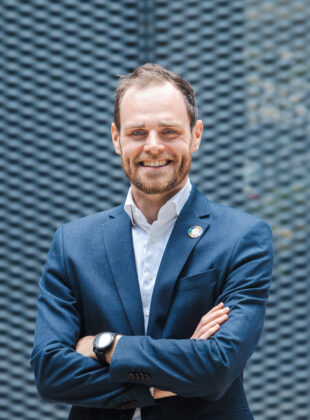
Arjan Missinne
Related Expertises

Build your future at Sweco
Make an impact and help transform the world at Sweco! With our focus on innovation and sustainability, we give you the opportunity to truly make a difference in multidisciplinary projects.
Sweco offers a flexible work environment, sustainable mobility options, and a healthy work-life balance. Join a dynamic team where personal development and enjoyment go hand in hand, and help build the future.
Related news

Why a charging station is much more than just a charging station
Read more
GO! Schools optimise their solar panel portfolio through energy sharing
Read more
Decarbonisation: the biggest energy gains are not where you think
Read more