Sweco Belgium
GO! Schools optimise their solar panel portfolio through energy sharing
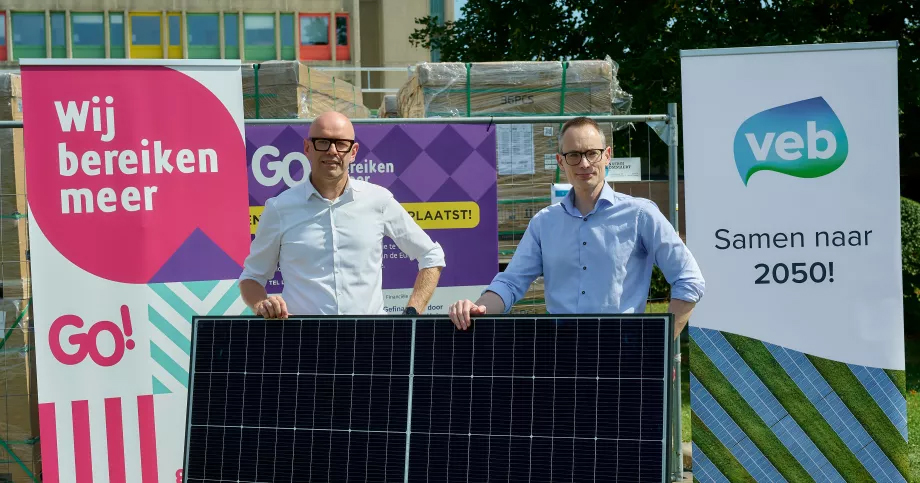
With support from the European REPowerEU programme, GO! Schools have installed 40,400 additional solar panels on their buildings. This project is part of the framework agreement of VEB (Flemish Energy Company), with a total installed capacity of approximately 20,300 kWp. This significant leap forward in renewable energy generation also brings a new challenge: how can the electricity produced deliver maximum value? Sweco addresses this question by exploring how surplus electricity can be used intelligently.
Analysis of consumption and injection
Sweco analyses the energy behaviour of 900 schools in a central database. The focus is on the balance between electricity consumption and the injection of surplus electricity into the grid. While this injection is currently partially compensated, it can also entail costs in certain situations. This makes it essential to explore ways of using these surpluses efficiently.
Based on the analysis of the 900 schools, Sweco selects three reference schools, each representing a specific consumption and injection profile. These schools serve as the basis for developing concrete solutions that can be applied more broadly across the GO! portfolio. For each of these schools, we investigate how surplus electricity can generate greater value. Both through optimisation on-site and through opportunities to use energy beyond the school premises.
Local optimisation through control and storage
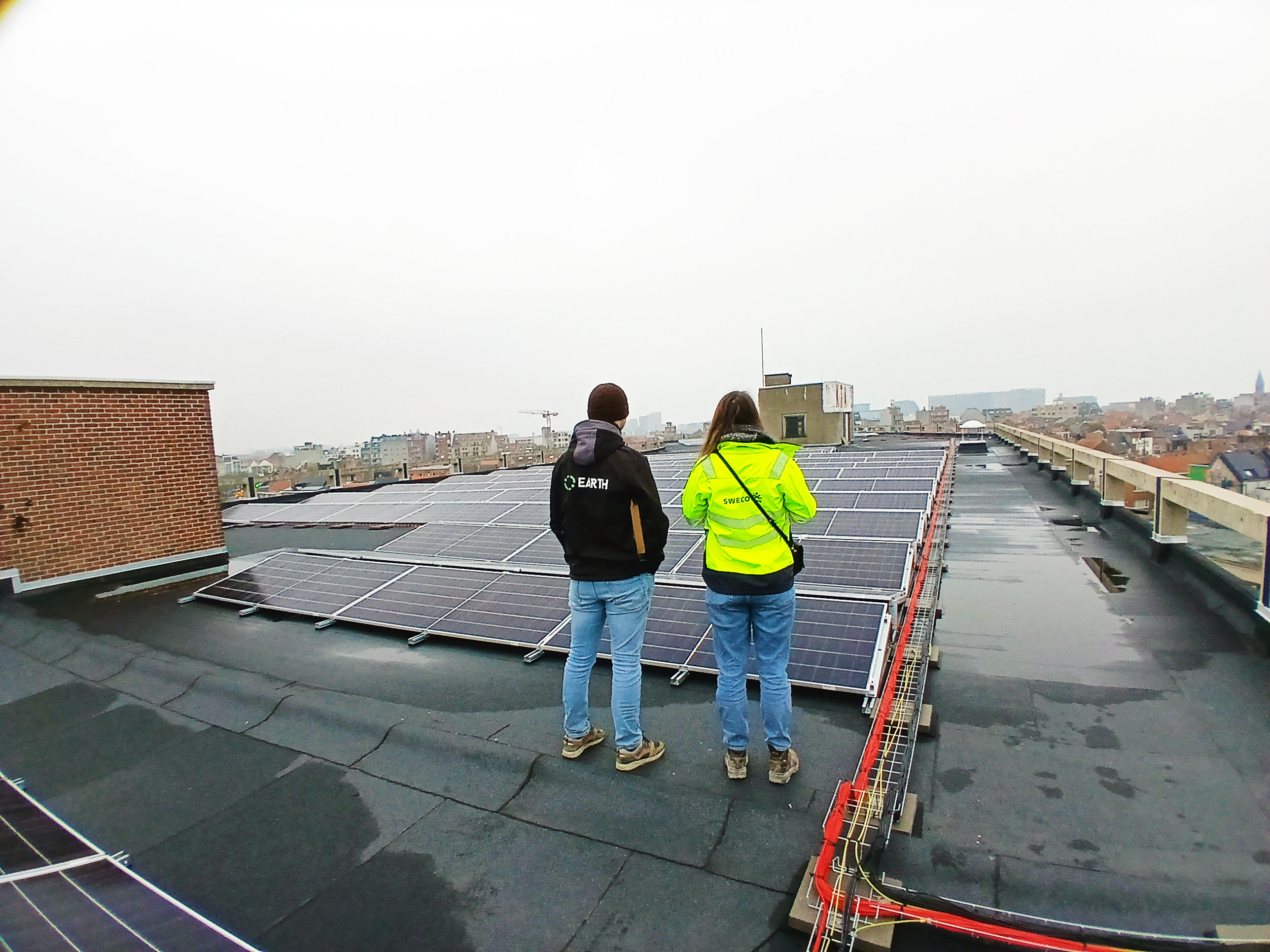
A first approach is to improve the local use of generated energy. This can be achieved by better aligning energy consumption with production through load shifting, where consumption is shifted to moments when solar energy is abundantly available. In addition, the potential use of extra software and possibly a central battery is being explored. By storing energy temporarily and using it later, the share of self-consumption can be increased and dependence on the electricity grid reduced.
Energy sharing with schools and local consumers
Beyond on-site optimisation, Sweco is also exploring how surplus electricity can deliver maximum value locally through energy sharing. Instead of simply injecting electricity into the grid, the aim is to use it directly in other GO! schools or among nearby consumers such as local communities, industry or retail.
Drawing on our broad expertise in energy systems and local energy communities, we examine which technical, economic and regulatory models can make energy sharing feasible. This includes smart control systems, digital platforms and contractual models that enable demand and supply to be aligned within a shared user network.
Energy potential of the GO! portfolio
Across the entire GO! portfolio, there is significant, largely untapped potential to support the stability of the electricity market. The thousands of solar panels spread across numerous school sites together form a large, flexible energy source.
In periods of high solar and wind production, fluctuations in electricity supply increase significantly, making it more difficult to maintain the balance between production and consumption. Sweco is investigating how solar panels can be deployed strategically to help maintain this balance. By aligning decentralised production with the needs of the grid, GO! actively contributes to a more robust Belgian electricity system.
Photos: © GO! and Sweco
Other News

From housing study to action-oriented housing policy
Read more

Sweco welcomes Stendess and confirms ambitions in sustainable steel engineering
Read more
Europe’s water infrastructure is under pressure. How can we invest wisely?
Read more