

Sweco Belgium
The role of water quality in making projects feasible and permit-ready
Complying with regulations is no longer enough. For businesses, public authorities, infrastructure developers and water managers, an integrated perspective on water quality is essential. Although water quality in Flanders has improved significantly in recent decades, there is still a substantial gap to achieving good ecological and chemical status.
Emerging substances, climate change, combined sewer overflows, legacy pollution, fragmented habitats and competing demands for space make water quality one of today’s most complex environmental challenges.
With Sweco’s water expertise, you can make your projects feasible, permit-ready and future-proof.
The discharge standard is only one parameter
Whether a discharge meets the applicable standard is only one part of the story.
When assessing water quality, we look at the interaction between three dimensions:
- physical quality,
such as temperature, pH and oxygen balance; - chemical quality,
such as the presence of metals, PFAS, nutrients, pesticides or other substances; - biological quality,
such as the condition of fish, aquatic plants, plankton, macroinvertebrates and other organisms.
This broad approach is essential.
A discharge may remain within certain limit values on paper, yet still have an ecological impact — for example, when the receiving water system is vulnerable or out of balance, when flow rates are low, or when multiple pressures coincide.
That is why Sweco looks beyond the discharge itself.
Our experts examine the receiving water body, its ecological value, the existing pollutant load, seasonal dynamics and potential cumulative effects.
Water quality is a measure of the chemical, physical and biological condition of a water system. Only by considering all three together can you understand the true impact of a discharge or project.
Dimitri Van de Perre, an expert in ecological water quality and ecotoxicology at Sweco
Water quality is a measure of the chemical, physical and biological condition of a water system. Only by considering all three together can you understand the true impact of a discharge or project.
Dimitri Van de Perre, an expert in ecological water quality and ecotoxicology at Sweco
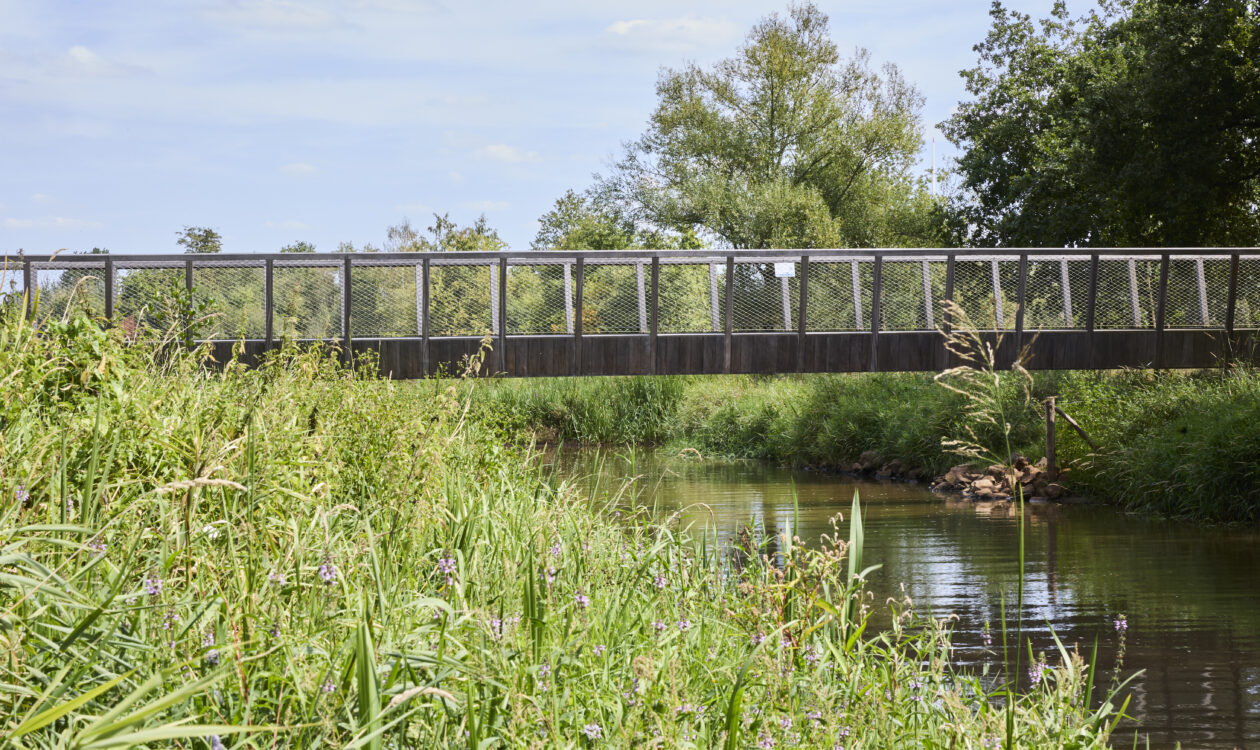
The Water Framework Directive makes water quality a decisive factor in permitting and design choices
The European Water Framework Directive requires Member States to aim for good ecological and chemical status in their water bodies. It has therefore provided the framework for water policy in Flanders for more than two decades.
A key principle is that a water body is only considered to be in good status when all relevant criteria meet the required standard. This makes the regulatory framework strict, but also logical from an ecological perspective: a water system only functions properly when chemistry, hydromorphology and biology are in balance.
What does this mean for you as a client?
Water quality is becoming an increasingly decisive factor in permits, project planning and design choices.
A project must not lead to any deterioration in the status of a water body. If there is a risk of deterioration, mitigation or compensatory measures are required.
That is why it is crucial to consider water quality at an early stage of the design and permitting process, rather than only at the end of a project.
How do we avoid adverse impacts while keeping the project feasible?
Sweco always asks the same core question:
What is the impact of this discharge on the receiving ecosystem?
Our water consultants examine which substances are being discharged, at what concentrations and flow rates, where they are discharged, into which type of watercourse, with what ecological value, and under which hydrological conditions.
The same discharge may therefore be acceptable in one water system, but pose risks in another.
Sweco supports clients with, among other things:
- assessment of temporary and permanent discharges;
- ecotoxicological impact analyses;
- assessment against VLAREM and relevant guidelines;
- evaluation of effects on ecological water quality;
- advice on discharge points and alternatives;
- monitoring programmes and sampling campaigns;
- interpretation of chemical and biological measurement data;
- development of mitigation measures;
- support with permitting and consultation processes.
Ecotoxicology is essential for temporary and permanent discharges
Ecotoxicology examines how hazardous substances affect ecosystems. This is not only about the presence of a substance, but also about its effects on organisms, food chains and the functioning of the water system.
Sweco applies this expertise to major infrastructure works, remediation projects, industrial discharges, pharmaceutical activities and agricultural water flows.
The central question always remains the same:
How can we minimise the impact on the ecosystem?
In doing so, we combine technical, ecological and regulatory knowledge.
Discharge standards, treatment technologies, flow rates, watercourse characteristics and ecological vulnerability must be assessed together. Only then can we provide well-founded advice that is both environmentally robust and practically feasible.
In addition to known substances such as PFAS, pesticides and pharmaceutical residues, there are also emerging substances, including microplastics. Knowledge about their spread and effects is growing, as is the level of public and regulatory attention.
For clients, this creates uncertainty: what seems acceptable today may come under pressure tomorrow due to new insights or stricter standards.
Sweco anticipates these developments by combining expertise in water quality, ecotoxicology, permitting, remediation, hydrology and ecology.

Nature really is resilient. If you apply the right measures, water systems can recover.
Jeroen Van Wichelen, aquatic ecologist and programme coordinator for aquatic environments at INBO
Wastewater treatment remains essential, but it is not always enough
When pressures are addressed in a targeted way, water systems prove resilient. In recent decades, considerable progress has been made thanks to investment in wastewater treatment.
The next step is more difficult: as overall water quality improves, remaining sources of pollution can have a relatively greater impact. During heavy rainfall, combined sewer overflows discharge diluted or untreated wastewater into watercourses, which can put a recovering ecosystem under renewed pressure.
Emerging substances and contaminants that are difficult to remove call for new techniques, smart prioritisation and integrated measures.
Source control, system restoration, better spatial planning and targeted monitoring are becoming important complements to wastewater treatment itself.
Water quality involves multiple stakeholders
Water quality is not determined by the watercourse alone. The surrounding valley, soil, riverbanks, groundwater flows and land use also play an important role.
A healthy water system:
- has room to function
- retains water
- releases water slowly
- recovers through natural processes
- has a self-purifying capacity.
Creating space for riverbanks, valley functions and flood zones contributes to a more robust system. This is important for water quality, but also for drought resilience, flood management, biodiversity and climate adaptation.
At the same time, system restoration is complex. Space in Flanders is limited.
There are also several legitimate interests that need to be reconciled: nature, agriculture, housing, industry, infrastructure, recreation and flood protection.
Moreover, ecological objectives can sometimes conflict with one another. Reintroducing water into a valley can support system restoration, but it can also create risks when that water is too nutrient-rich for vulnerable habitats.
That is why our water consultants take a tailored approach to water quality, supporting evidence-based choices and optimal coordination between stakeholders.
Five questions for an integrated approach to water quality
Water quality is rarely a purely chemical issue. It touches on hydrology, ecology, permitting, design, operations, monitoring, risk analysis and stakeholder consultation.
Sweco brings these areas of expertise together to help projects move faster, become more robust and remain future-proof.
We start with five questions:
1. What is being discharged or affected?
We analyse flow rates, substances, concentrations, temperature, pH and other relevant parameters.
2. Where does the water end up?
We assess the receiving water system, its ecological value, vulnerabilities and existing pressures.
3. What does the legislation require?
We assess compliance with standards, permit requirements, the Water Framework Directive and the no-deterioration principle.
4. What is the ecological impact?
We examine effects on organisms, habitats, biological quality elements and ecosystem functions.
5. Which measures are feasible?
We develop solutions that are technically feasible, ecologically meaningful and defensible from a permitting perspective.
In this way, we help you identify risks at an early stage, avoid delays and make well-founded decisions.
Do not put water quality on the back burner
The challenges surrounding water quality are not getting any simpler. Regulations are becoming stricter, pressure on water systems is increasing and public attention to substances such as PFAS, pesticides and microplastics is growing. At the same time, the progress made in recent decades shows that recovery is possible.
The key lies in an integrated approach:
- combining chemical standards with ecological impact analysis,
- linking discharge advice to system restoration,
- weighing technical feasibility against the carrying capacity of the water system.
For Sweco, water quality therefore means more than measuring and assessing compliance. It is about understanding, predicting, preventing and improving.
Whether it concerns temporary dewatering, an industrial discharge, remediation near a watercourse or an area-wide restoration project: a sound assessment of water quality reduces project risks and increases the likelihood of a widely supported solution.
Other news
The role of water quality in making projects feasible and permit-ready
Read more
GO! Schools optimise their solar panel portfolio through energy sharing
Read more
An integrated BIM approach strengthens digital construction strategy
Read more