Ports & waterways
Extra Container Capacity Antwerp consolidates the port’s strong position
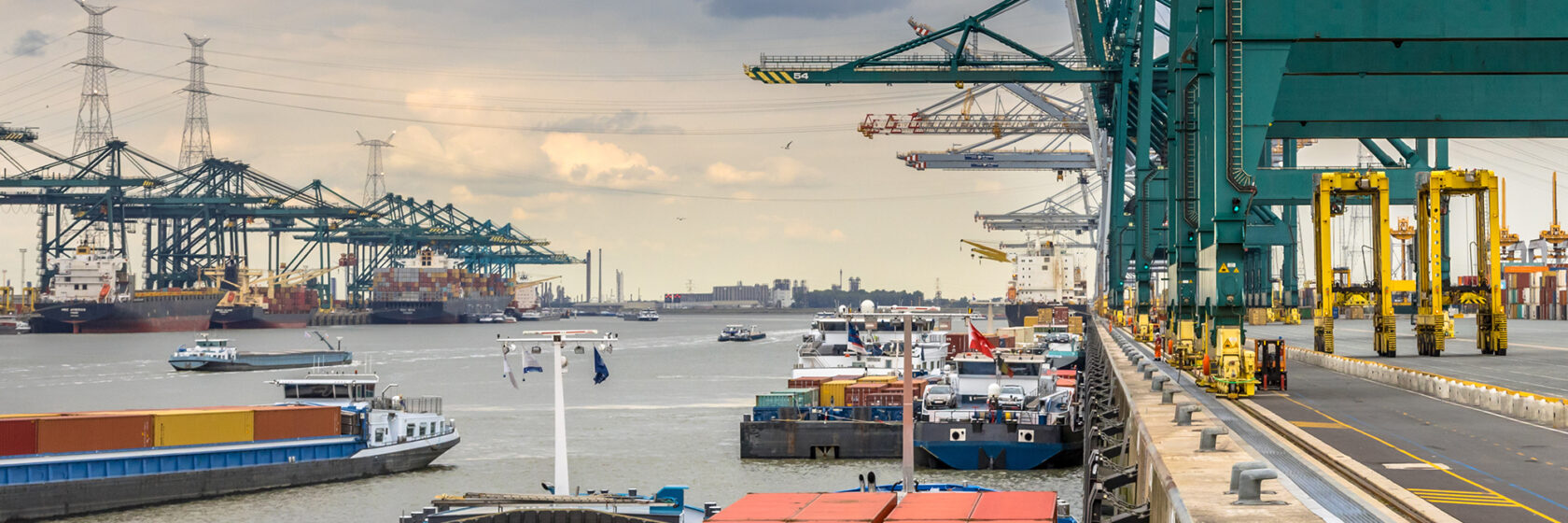
How do you prepare a world-class port for tomorrow’s container traffic? With Extra Container Capacity Antwerp (ECA), Port of Antwerp-Bruges, Maatschappij Linkerscheldeoever and the Flemish Government aim to accommodate expected growth. Within the SHIP consortium, in collaboration with Witteveen+Bos, Sweco supports the development phase of this complex port project, covering integrated research, EIA, mobility, permits and nature compensation.
- Expertise:
- Transport & Mobility, Water
- Client
- Flemish Government – MOW Maritime Access
- Locatie
- Left Bank of the Scheldt and Antwerp port area
- Services
- Project coordination, integrated research and EIA, mobility, water and sediment modelling, permits, nature compensation and land surveying support
- Partners
- SHIP consortium with Witteveen+Bos; subcontractors Rebel, Kenter (climate), Acoustical Engineering (noise), Joveco (air) and Mieco (nature)
Prosperity across generations
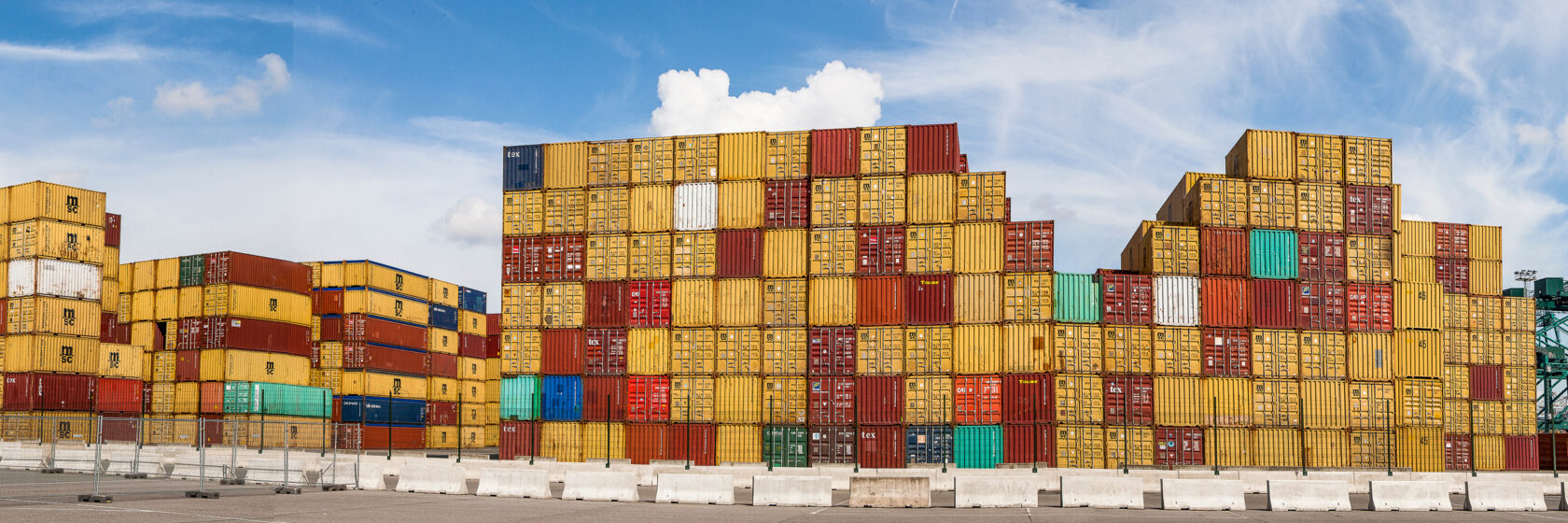
The Port of Antwerp is our country’s most important economic engine and a key hub in global trade flows. Container traffic plays a central role, from everyday goods such as clothing, coffee, fruit and medicines to export products from Belgian companies. With its current infrastructure, the port can no longer fully accommodate the expected growth. Without additional capacity, traffic flows and economically important activities risk shifting to foreign ports.
Room for growth, with balance in mind
Through infill development and expansion, ECA creates room for 7.1 million TEU of additional container capacity. The largest project is a second tidal dock connected to the Deurganck Dock. Adjustments are also planned to the Doel Dock and the Northern Inlet Dock, while the North Sea Terminal on the right bank will also be expanded. At the same time, ECA includes additional berths for inland navigation, new roads and railways, safe cycle paths, logistics and industrial sites, and nature and green buffers between the port and surrounding villages. In this way, the port does not grow separately from its environment, but with attention to mobility, liveability, landscape, nature and climate-friendly infrastructure.
The project is built around three major objectives: creating additional container handling capacity, developing logistics and industrial land, and improving multimodal access to the main network. This combination makes ECA a spatially and socially strategic project in which economic growth, accessibility and environmental quality are continuously weighed together.

Foto’s: © Adobe Stock
Where port development and the surrounding environment come together
ECA is the result of many years of cooperation and open dialogue with local authorities, residents, associations, nature organisations, farmers and companies. This broad involvement led, among other things, to the Ommeland Agreement, with arrangements on port development, Doel, mobility, heritage and landscape, nature, agriculture and the residential areas around the port. That is precisely what makes the assignment complex: container handling, logistics and industrial development, road and rail access, inland navigation, safe cycling infrastructure, nature compensation and accompanying measures are all closely interconnected. Sweco helps manage that complexity by safeguarding the substantive coherence, aligning studies and structuring the process clearly.
Multidisciplinary and integrated approach
The expansion must do more than create additional container capacity. It must also contribute to a port that remains accessible, liveable and economically strong. This is only possible through a coordinated approach in which maritime infrastructure, mobility, permits, environment, noise, air, climate, nature and spatial planning are considered together from the outset.
Sweco brings this broad range of expertise together within the SHIP consortium and works closely with Witteveen+Bos and specialist partners. This gives the project one clear framework in which technical, spatial, legal and ecological puzzle pieces are aligned. The result is an integrated approach that enables sustainable growth while taking into account the environment in which the project takes shape.
Sweco as the connecting link
On behalf of the Flemish Government – MOW Maritime Access, Sweco is supporting the complex ECA project during the development phase. In this penultimate phase, the preferred decision is translated into concrete, feasible and permittable projects, such as the Left Bank Container Cluster, the Western Access to the Waasland Port and the expansion of the North Sea Terminal.
The draft project decision for the Left Bank Container Cluster was approved by the Flemish Government in May 2026, followed by a public consultation. Sweco safeguards the substantive coherence, process alignment and quality of the integrated studies.