

Sweco Belgium
From housing study to action-oriented housing policy
How data, local insights and spatial expertise help municipalities turn their housing policy into concrete action
The housing challenge confronts local authorities with complex choices around affordability, mandatory renovation, densification and open space. A housing study helps them gain a clear understanding of local needs and translate these into concrete policy choices. In this article, strategic planners Hans Tindemans and Maxime Le Roy explain how they support local authorities in this process.
“Our housing policy is facing several challenges,” says Maxime. “On the one hand, our population has changed significantly: there are more single-person households, while the number of older people is also increasing. These groups have different housing needs from the typical family. This clashes with a housing supply that has long been geared towards the Flemish housing ideal: a detached family home with a large garden. Affordability is also a major concern for many target groups. On top of that, the mandatory renovation requirement comes with a substantial price tag and is increasing pressure on both the owner-occupied and rental markets.”
“Moreover, in their spatial planning policies, municipalities often need to link housing choices to the building shift, and an outdated spatial structure plan is frequently no longer sufficient,” Hans adds. “They therefore need to draw up a new policy plan, taking account of demographic growth and identifying the areas where they do or do not wish to encourage densification.”
Mapping local housing needs
Housing challenges vary greatly from one municipality to another. That is why it is important first to gain a clear understanding of how the local housing market currently operates and how it may develop in the future.
A housing analysis can help by bringing together factors such as the composition and development of the population, the housing needs of specific target groups, the existing housing stock, affordability and the municipal property portfolio. These insights help local authorities identify gaps in the housing supply at an early stage and take targeted action.
“We examine how the population is evolving and take demographic trends into account. On that basis, we aim to map housing needs and demands in very concrete terms,” Maxime explains.
Data as a starting point, local interpretation as the key
Data are an important foundation for any housing analysis. For a long time, the availability of data was a challenge. However, provinces are now increasingly making statistical information available, allowing housing studies to be based on more robust evidence.
“Even so, correct interpretation of that data remains essential. The situation differs greatly from one region or municipality to another. Within each municipality, you therefore need to understand the stories behind the figures,” Hans explains.
That interpretation starts with the question of whom the housing supply needs to serve today and in the future. We therefore look beyond averages and analyse the needs of different target groups. “We focus in particular on target groups identified on the basis of a range of characteristics. Their needs help determine which types of housing are suitable and which market segments they can access,” Maxime adds. Age, household composition and socio-economic circumstances all play a role.
Listening to what is happening in the housing market
Figures alone are not enough: a robust analysis also requires practical knowledge. By involving other stakeholders, such as estate agents, developers, social housing providers and residents, we can identify trends that are not yet, or not sufficiently, reflected in the available data sources.
“We try to understand what lies behind the figures,” says Maxime. “Estate agents and developers may, for instance, report that a property advertised for rent immediately attracts dozens of candidates and is let within an hour. That kind of information is not captured in the available statistics, but it does help us build an accurate picture of the situation on the ground.”
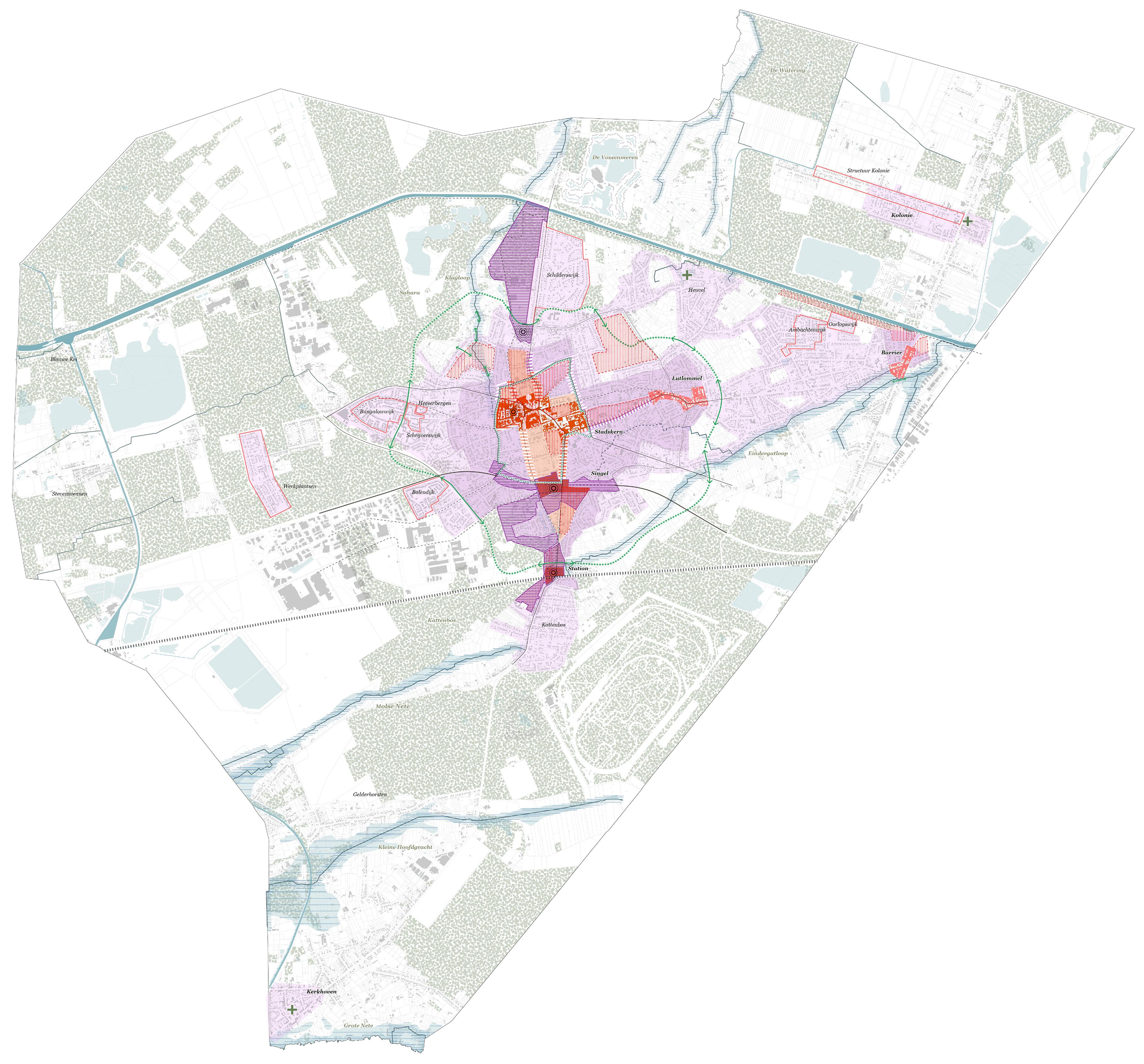
Residents can also provide valuable insights. In Lommel, for example, we conducted a survey among residents under the age of 30. “We wanted to understand why some people leave the municipality,” Maxime explains. “Do they move because they are looking for a different environment, or would they actually prefer to remain in the municipality but cannot find an affordable home there? That is an important distinction.”

Transition vision residential zone urban carrier, Lommel
Housing policy connects with spatial planning, water, climate and heritage
The housing choices made by a municipality cannot be considered in isolation from other spatial themes. Housing is closely linked to densification, mobility, flood resilience, climate adaptation, landscape, energy and heritage. How should existing buildings be approached from a heritage perspective? What role do energy and sustainability play?
“Spatial policy plans are often the starting point for our housing studies,” says Hans. “This immediately creates a link with other spatial issues.”
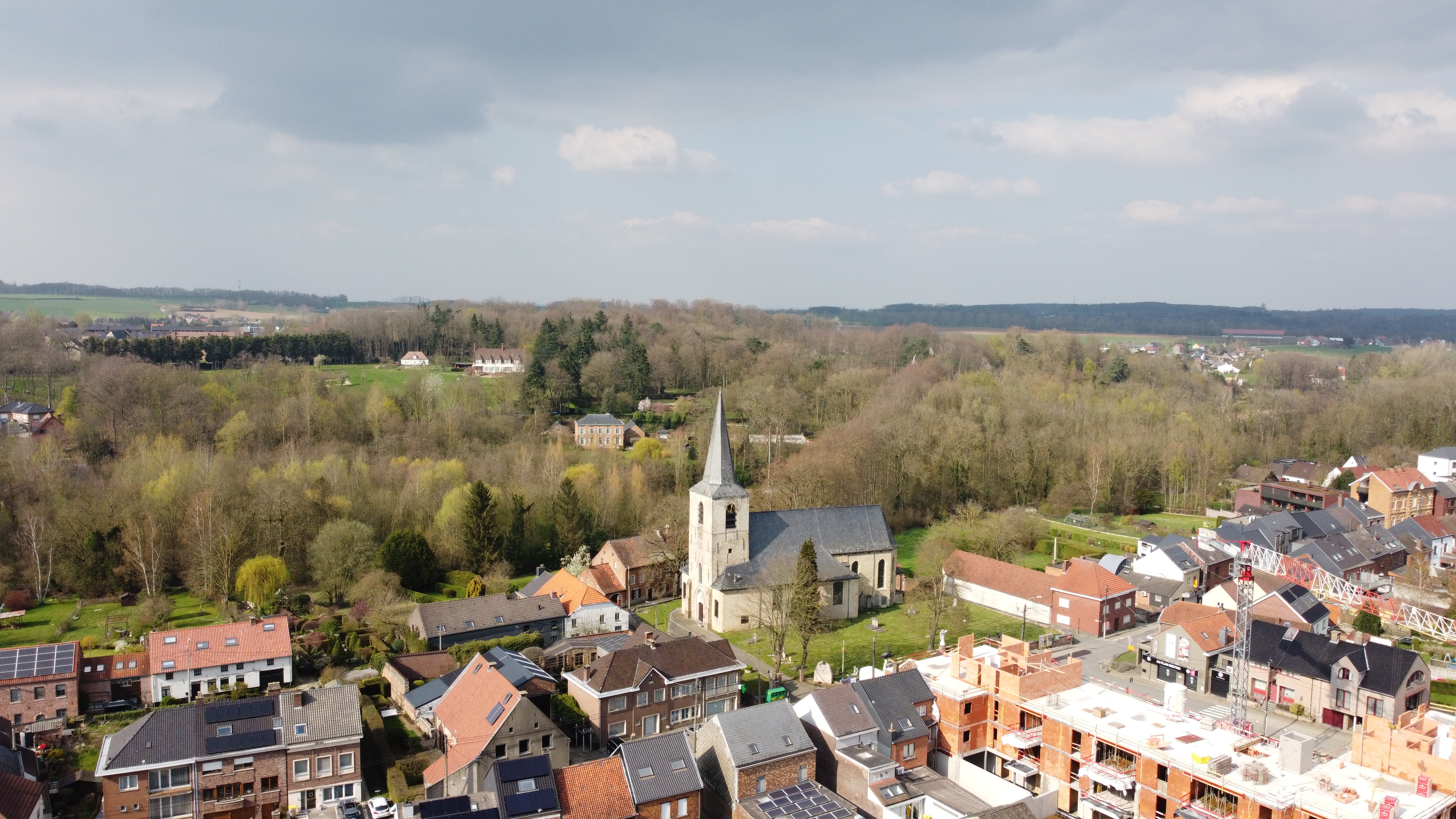
Hans refers to a recent assignment in Walden, where Sweco worked with three municipalities on spatial policy plans through the lens of housing policy. The project considered specifically how housing could be embedded within the landscape. The local housing market is under pressure, while the municipalities also want to strengthen their landscape qualities as much as possible.
“In that project, there was a clear need to examine water-related issues carefully,” says Hans. “For example, there are stream valleys that are vulnerable to flooding, particularly during intense rainfall. This affects the potential for housing development. The housing challenge is therefore closely connected to climate, landscape and water.”
New-build homes and the existing housing stock
The housing challenge is not only about providing additional homes. Today, newly built homes are accessible and affordable for only a relatively small proportion of the population. Where population growth and rising housing demand are anticipated, it is important to consider the form that this new supply should take and the needs it must address.
“Not only is new-build housing not automatically affordable for everyone, but the focus is still very much on the average family home, despite there already being a large supply of spacious family homes,” says Maxime.
Housing analyses therefore also examine the existing housing stock. Many homes require renovation, but after refurbishment they may become more affordable or better suited to particular target groups. Large, well-located properties could potentially be subdivided, while collective housing models may also offer a solution.
The property portfolio of local authorities forms part of this assessment. Municipalities often own buildings and land, raising the question of how these assets can be used. Alongside financial considerations, sustainability and the potential to develop homes for specific target groups are also important factors.
“So it is not simply about creating additional homes,” Maxime says. “It is also about whether the available housing supply is suitable for the people who need to use it today and in the future.”
A menu of options for housing policy: turning analysis into action
Local authorities need more than a housing analysis; they also need practical guidance on how to act on its findings. We are seeing growing demand for the practical implementation of housing policy.
“What can a local authority do itself to influence the housing supply? How can it steer affordability or encourage housing aimed at specific target groups? These are the questions they are grappling with,” says Maxime.
That is why we developed an action-oriented framework in the form of a matrix: effectively, a menu of options. It brings together common housing challenges and potential policy actions, building on experience from previous studies and projects. For each action, it is possible to assess which target groups it is relevant to, the financial implications and staffing requirements involved, and any organisational or legal considerations.
“Many studies stop at broad conclusions. We aim to provide local authorities with practical tools that they can genuinely use,” Hans adds.
Through an integrated approach, we bring together knowledge of housing needs, the housing market and policy instruments. Where necessary, we complement this with expertise from other disciplines, including energy, climate and property management. We translate these combined insights into an evidence-based framework that helps local authorities make well-informed, targeted choices. “Sweco’s added value lies precisely in our ability to bring together complementary areas of expertise,” Hans concludes.
Would you like to gain a clearer understanding of the housing challenge in your municipality? Do not hesitate to contact our experts.

Hans Tindemans

Maxime Le Roy
Overig nieuws

From housing study to action-oriented housing policy
Read more

Sweco welcomes Stendess and confirms ambitions in sustainable steel engineering
Read more

Europe’s water infrastructure is under pressure. How can we invest wisely?
Read more