
Sweco Belgium
Hoeilaart sets the tone with climate-adaptive streets
Climate change is confronting cities and municipalities with increasingly complex challenges. Intense rainfall leads to flooding, while heatwaves and drought put pressure on the livability of streets. At the same time, expectations are rising to design public space in a greener, healthier and more future-proof way.
Pressure on public space is increasing
For local authorities, it is becoming more complex to design streets in a well-considered way. Multiple functions need to come together within limited space, balancing mobility, water management, biodiversity and budget. The ambition is clear, but translating it into concrete and feasible solutions often remains a challenge.
New tools make the difference
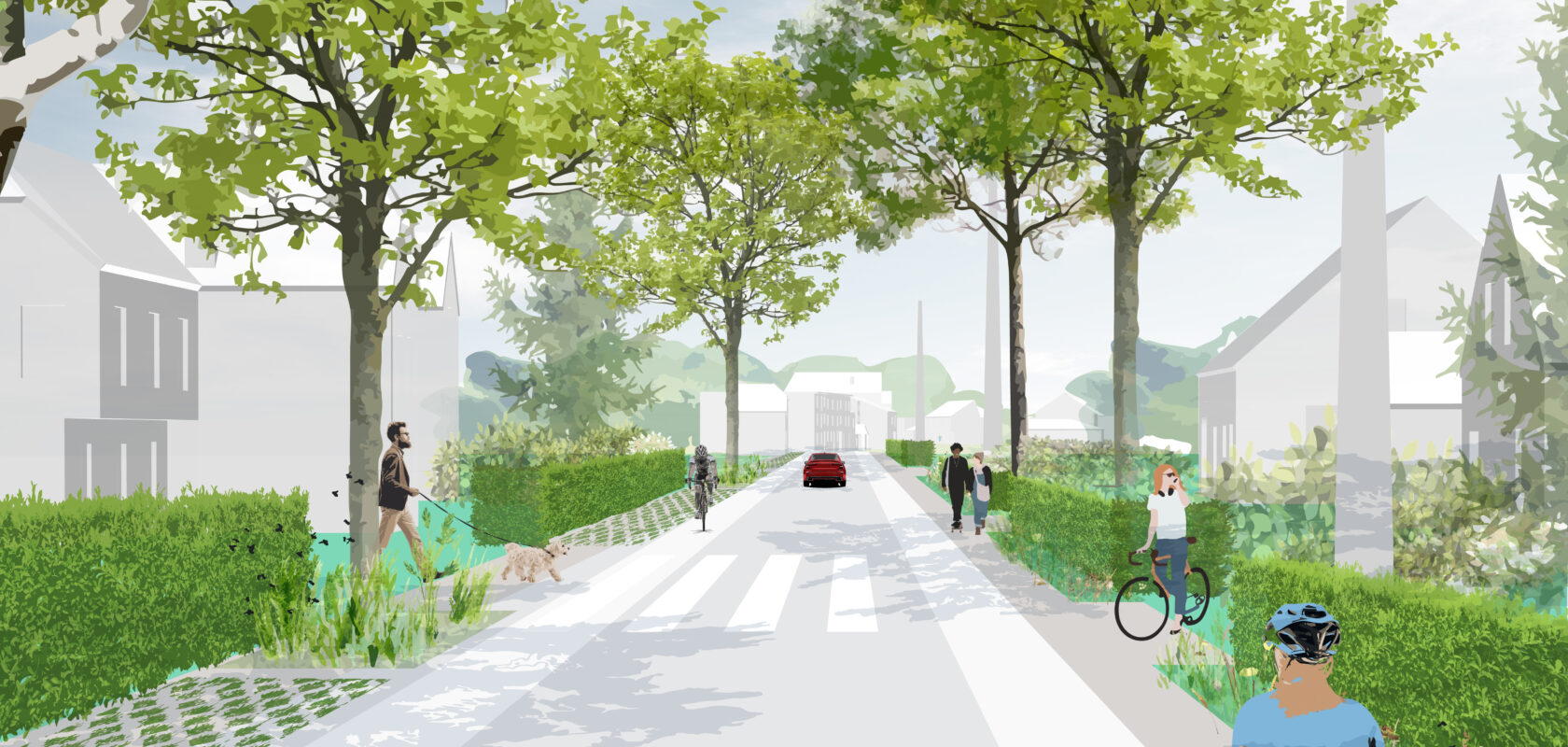
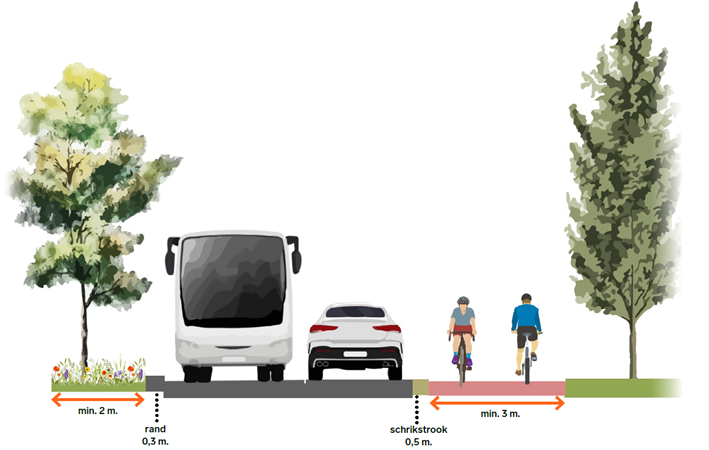
To manage this complexity, more and more organisations are turning to digital support. By combining design and data, a powerful tool emerges to make faster and better-informed decisions. The Klimaatstraattool by Sweco is a concrete example. This digital tool makes it possible to build street profiles interactively, while simultaneously evaluating them based on space usage, greening, water management and cost. The result is an approach where different scenarios can be compared not only visually, but also in terms of content. This provides greater insight and accelerates decision-making.
Hoeilaart as a pioneer in practice
The first municipality to apply this approach is Hoeilaart, also an active participant in the Green Deal Nature-Inclusive Parking Areas. With a clear ambition around climate adaptation, the municipality looked for ways to structurally green its streets and make them more resilient. By using the Klimaatstraattool, Hoeilaart was able to quickly analyse and optimise different street profiles.
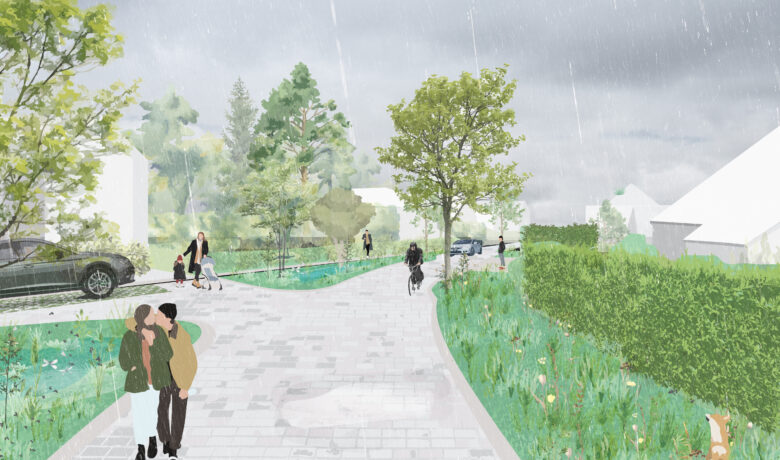
Elements such as trees, swales and adapted paving were not only visualised, but also immediately evaluated in terms of their impact and cost. What makes this approach strong is the combination of speed and substantiation. Instead of long study processes, it quickly provides a clear view of what is possible and which choices have the greatest impact.
More than a design tool
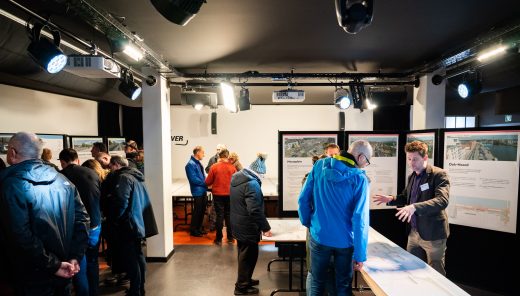
The added value of this approach goes beyond design alone. The Klimaatstraattool also acts as a communication tool. Because scenarios are presented visually and clearly, it becomes easier to discuss projects with different stakeholders. This helps to create support more quickly and makes decision-making more transparent. In Hoeilaart, this approach is also linked to participation, allowing residents to gain insight into possible street designs and actively contribute to shaping their environment.
A scalable approach for other municipalities
While Hoeilaart takes on a pioneering role, the approach can be applied more broadly. The principles behind the Klimaatstraattool are flexible and can be adapted to the context of other cities and municipalities. Each municipality has its own challenges, but the need for insight, speed and well-founded decisions is equally strong everywhere. By using digital tools, local authorities can take this step more efficiently.
Ready for the next step
Initial applications show that climate adaptation does not have to remain a policy ambition, but can be translated into concrete and feasible projects.
By combining technology, data and design, a new way of working emerges that better matches today’s challenges.
Curious how your municipality can get started?
Feel free to contact our experts for more information or tailored advice.
Other news
Stakeholder management creates space for better projects
Read more
Spatial policy plans: making today’s choices for tomorrow’s city
Read more
From housing study to action-oriented housing policy
Read more