Sweco Belgium
How participation turned the tide for the Bossuit–Kortrijk Canal
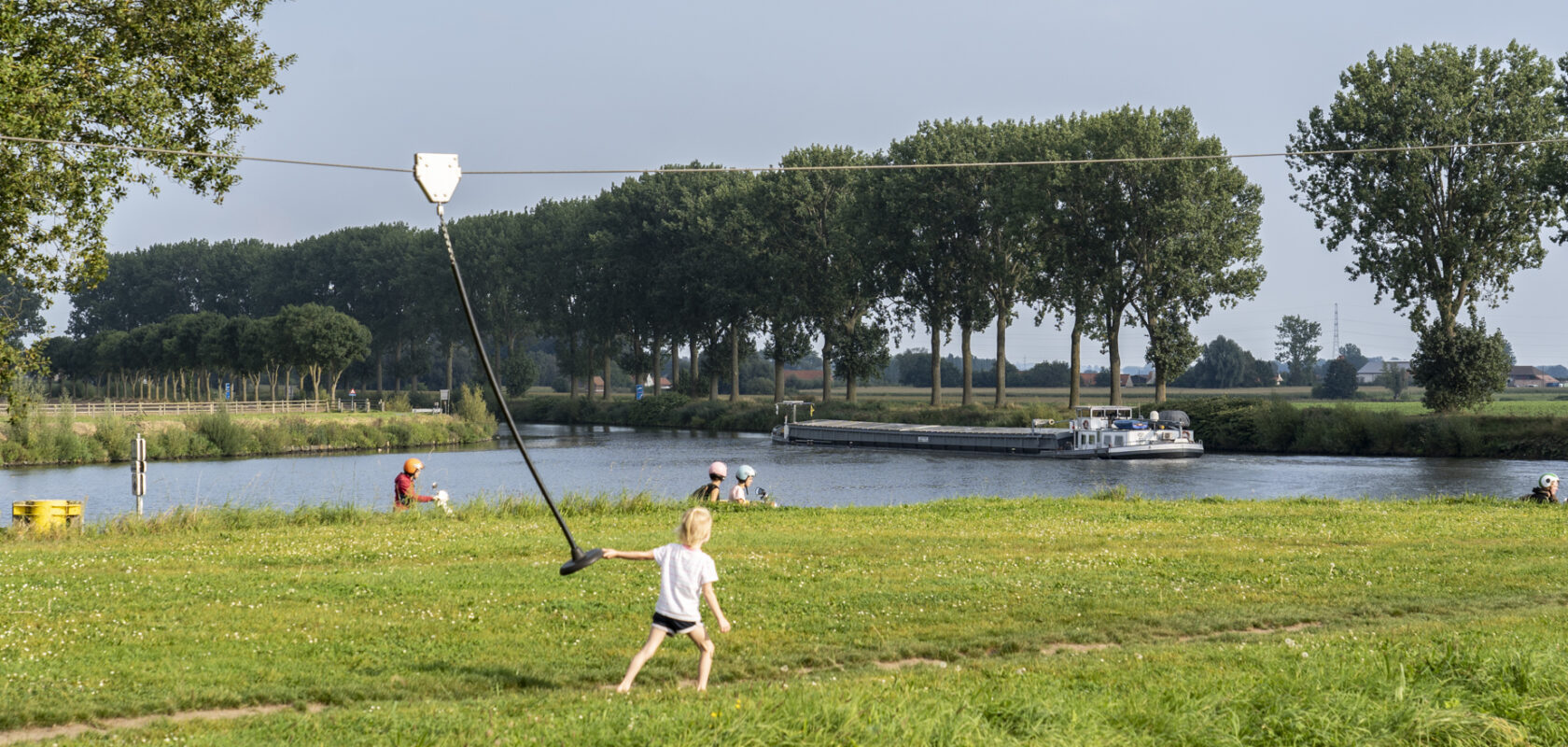
The Bossuit–Kortrijk Canal is a strategic artery within the inland waterway network connecting Flanders, Wallonia and Northern France, and at the same time a project that remained under pressure for years. In order to allow larger inland vessels of up to 3,000 tonnes, a major upgrade was unavoidable.
Yet what made technical sense did not automatically translate into societal acceptance. The project encountered limited public support, putting its progress under strain. As a result, the trajectory was reconsidered. The focus shifted from purely technical challenges to the relationship between the project and its surroundings. Participation became the key instrument to evolve towards a more broadly supported and integrated approach.
Waterway back on track with an integrated approach
Initially, the project was conceived as a classic nautical case, aimed at adapting the canal for class Va vessels. However, this approach proved too narrow. The plans were perceived as overly technical and insufficiently connected to the living environment.
De Vlaamse Waterweg nv and the city of Kortrijk faced a clear choice: abandon the project or fundamentally rethink it. A restart was chosen, based on an integrated approach in which water infrastructure and urban context are considered together.
“We saw the upgrade as a lever for area development,” says Annelies Anthierens, Business Unit Manager Ports & Waterways at Sweco. “The two could go hand in hand. We built on lessons learned to avoid repeating past mistakes.” The focus thus shifted from a purely technical intervention to a broader ambition: strengthening the region economically, spatially and socially.
Co-creation as the engine of the process
This new direction translated into a co-creative process in which residents, stakeholders and authorities were actively involved. Together, they explored the challenge and deliberately broadened the perspective.
Beyond the waterway itself, attention expanded to the banks, the urban fabric and economic potential. Within the integrated study known as PLAN B K, themes such as mobility, nature, economy and climate adaptation are considered collectively. The canal remained the starting point, but its surroundings became an equal partner in the story. As a result, the attitude of the neighborhood gradually evolved from passive to engaged.
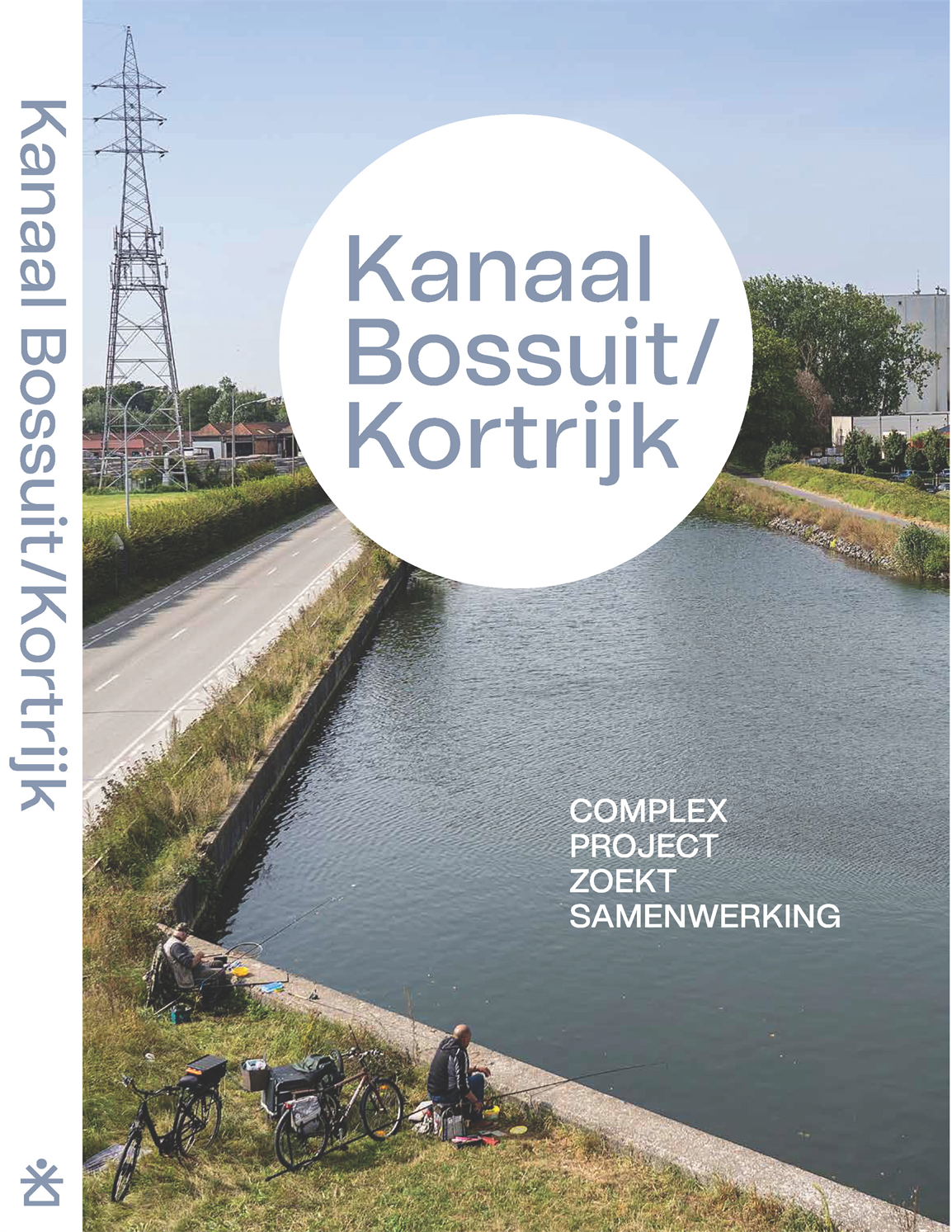
Publication “Bossuit–Kortrijk Canal: A complex project seeking cooperation”
The “complex projects” instrument is relatively new. Its added value lies in creating support through the involvement of multiple governance levels, cross-policy cooperation and continuous interaction with citizens and civil society. In this publication, Sweco shares the ups and downs of the approach to upgrading the Bossuit–Kortrijk Canal. It offers insight into the perspectives of the key players: the Sweco team, De Vlaamse Waterweg nv, the Department of Environment, and local authorities.
Environmental management: engaging in dialogue
The participatory approach did not eliminate tensions overnight. On the contrary, critical voices remained and were actively engaged. “We always handle critical voices with care and maintain a warm human connection,” says Anthierens. “For example, we visited a small nature reserve with the volunteers who manage it. During a walk, we got to know them. By engaging respectfully, we reduce distance and increase mutual understanding. That’s how a bond is created.”
By engaging outside traditional consultation moments and taking time for personal interaction, mutual trust grew. Clear communication also played a key role: the study team shared knowledge and insights without unnecessary technical complexity, making it easier for residents to understand what was at stake.

Participation based on trust
A striking aspect of the process is the role of vulnerability. “As a project team, you sometimes have to show vulnerability. The research is still ongoing. What we know today may be outdated tomorrow due to new insights. The environment appreciates that attitude. Together, we become smarter,” Anthierens explains.
This openness requires consistency. Participation takes place throughout the entire process, with the same people involved, allowing relationships and trust to grow. Researchers evolve into familiar faces, and interactions become more personal and meaningful.
For engineers, this also implies a different way of working. “Citizen participation forces project engineers out of their comfort zone. We’ve learned to look at the project from a helicopter view throughout the process,” add Evert De Groote and Frank Serpentier from De Vlaamse Waterweg nv.
A new standard for complex projects
In 2021, the research phases were completed. In spring 2024, the public consultation on the draft preferred decision of the Flemish Government took place, marking a new decisive phase. The process has delivered more than just a technical solution. “The greatest success is that the process and the ‘complex projects’ methodology resulted in a ‘possible map’ of the project,” says Anthierens. “It is the outcome of design research, consultation and collaboration, and above all of explicitly positioning the canal within its environment. Not so much the prospect of realization itself, but clarifying social, ecological and economic ambitions is the real added value.”
This “possible map” brings together future opportunities for the first time. The area along and around the canal is now viewed as one integrated whole. In practice, this translates into a set of coordinated developments: completion of the R8 ring road, development of a new cycling network, renewal of urban workers’ neighborhoods and the creation of a green-blue park. At the same time, efforts focus on strengthening the natural structure connected to the Leie valley and enhancing the canal itself.
Other News
Sweco welcomes Stendess and confirms ambitions in sustainable steel engineering
Read more
Europe’s water infrastructure is under pressure. How can we invest wisely?
Read more
How framework agreements help local authorities address spatial challenges
Read more