Roads & Highways
Vuntcomplex Leuven-Noord gets a compact mobility hub
On the northern edge of Leuven, the Vuntcomplex is undergoing a major transformation. Commissioned by the Agency for Roads and Traffic, Sweco is contributing to the redesign of interchange no. 20 of the E314, near the Aarschotsesteenweg and Kesseldallaan. The project will improve access to the future Wetenschapspark Noord, enhance road safety and better integrate the infrastructure into an environment where mobility, water and nature come together.
- Expertise:
- Water, Transport & Mobility
- Client
- Agency for Roads and Traffic
- Location
- Leuven-Noord, around E314 interchange 20
- Services
- Mobility design, traffic analysis, landscape design, environmental and water studies, project EIA, hydraulic surface water modelling, and permitting and tender documentation
- Stakeholders
- Infrabel, Flemish Environment Agency, Province of Flemish Brabant, Agency for Nature and Forests, and City of Leuven
As an integrated design partner, Sweco brings together several areas of expertise within one study assignment: from mobility and traffic flow to water management, landscape integration and environmental assessment. In this way, the Vuntcomplex becomes more than a traffic project: it will be a link that improves access to Leuven-Noord while also addressing climate adaptation and spatial quality.
From complex traffic junction to legible design
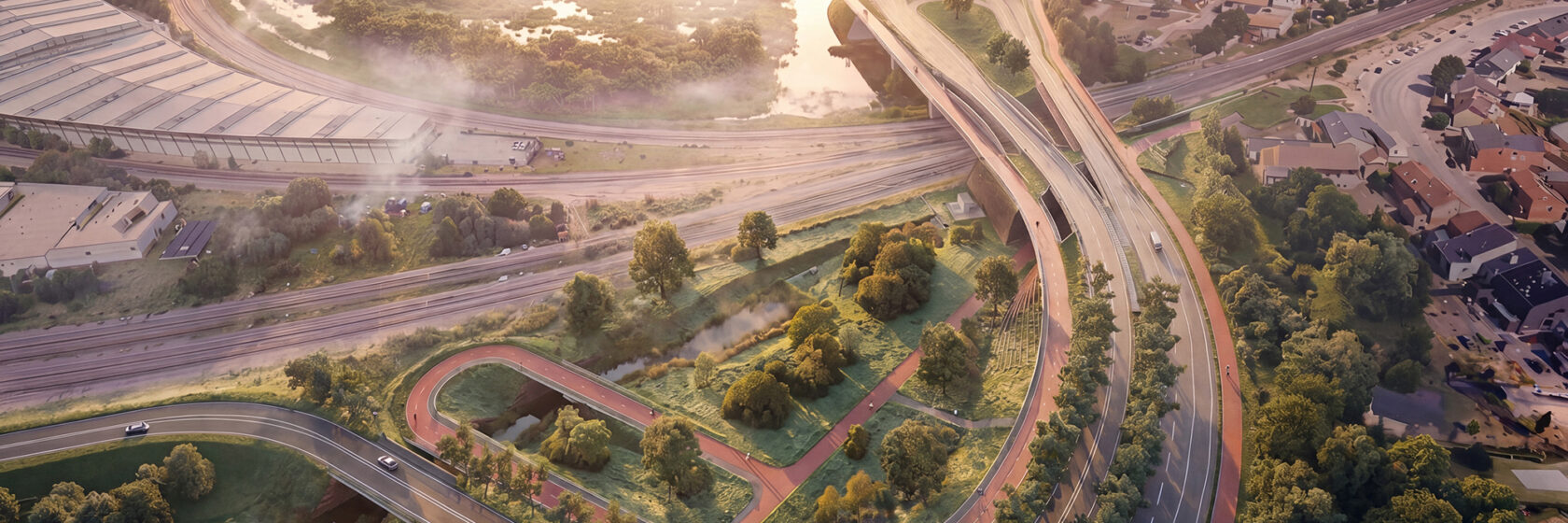
The Vuntcomplex has a long history. While an initial proposal still envisaged a large roundabout, the new design opts for a more compact signal-controlled four-arm intersection. This will be complemented by a connecting road running parallel to the existing infrastructure and a new railway bridge. The result is a clearer interchange that takes up less space and better responds to the mobility needs of Leuven-North.
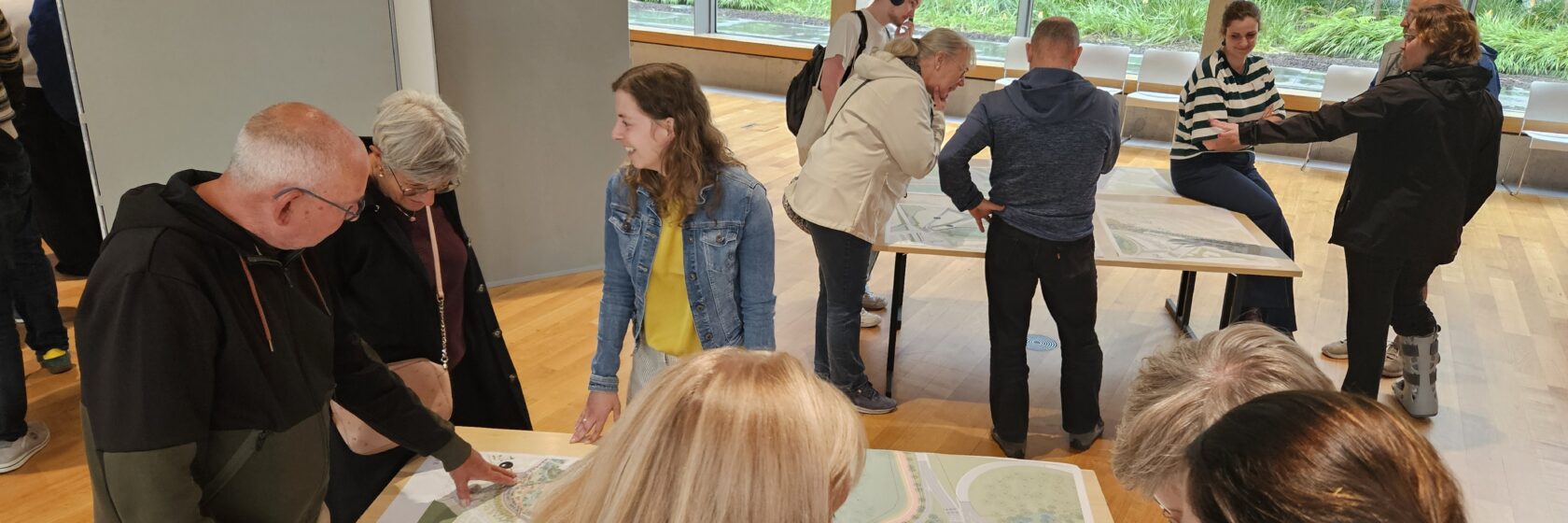
Throughout the process, the emphasis was on close collaboration with the client and early alignment with key stakeholders. Thanks to regular consultation, the design team was able to respond quickly and incorporate requirements related to rail infrastructure, water, nature and permitting in good time.
Improved access to Wetenschapspark Noord
The new connection will provide the future Wetenschapspark Noord on the railway plateau with a smoother and clearer link to the E314 and the local road network. At the same time, the overall traffic flow in the wider project area is being studied, taking future traffic volumes into account. This is where motorway traffic, local roads, cycling connections and new developments converge. By organising traffic flows more clearly, the design improves traffic flow, safety and the readability of the interchange.
The study assignment must result in a permitted and tender-ready file for the redevelopment of exit complex 20. A project EIA is also part of the approach. This combination of design, traffic analysis, environmental assessment and permitting process calls for an integrated approach within a tight timeframe.
Conflict-free cycle paths with a striking cycling canyon
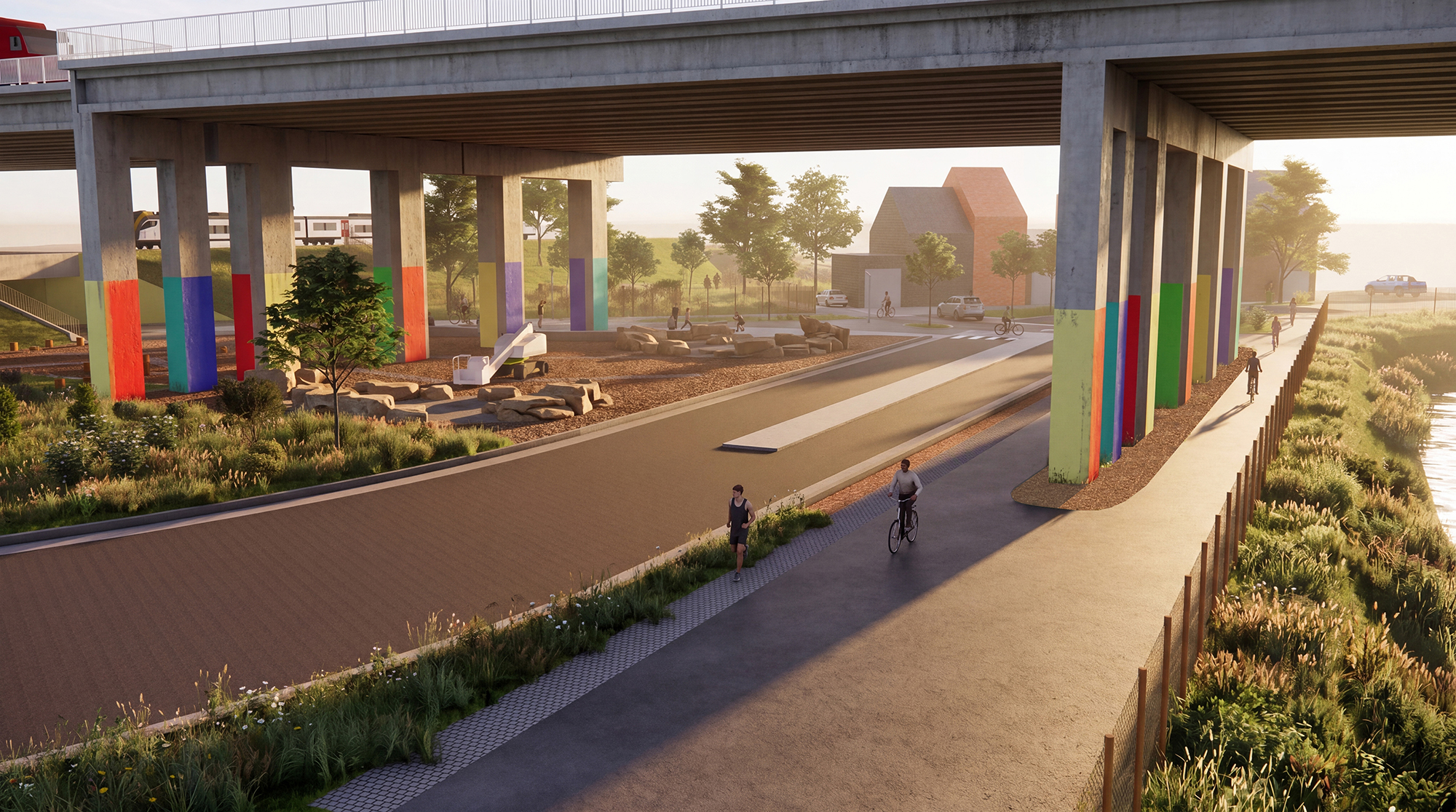
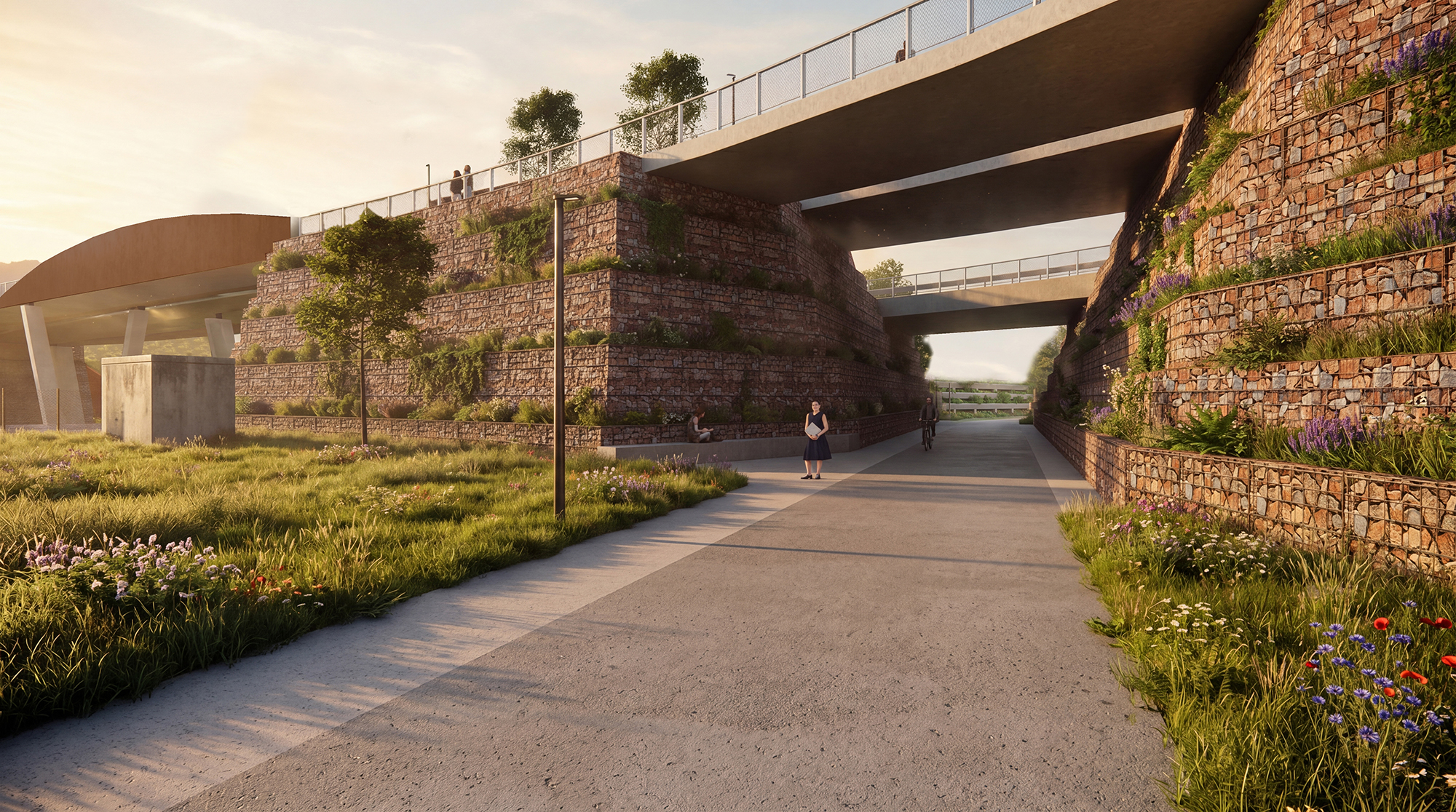
The design also represents a major step forward for cyclists. New connections will be created in all directions, separated from road traffic. The most eye-catching element is the ‘cycling canyon’: a cycle path that runs underneath the bundled cycling infrastructure through an open space. The green walls make this underpass more than just a functional passage; they also give the route a more pleasant, landscaped experience. For the greening of the canyon, the sowing of foxglove on the gabion walls near the new cycle bridge in Wijnegem serves as an inspiring reference.
Green infrastructure with space for water and nature
Landscape integration is receiving considerable attention. The new infrastructure will be planted with as many trees as possible, making the traffic interchange greener and better integrated into its surroundings. Along Kesseldallaan, a widened winter bed will also provide additional buffering capacity for the Lemingbeek. This is important because the project zone is located where the Lemingbeek flows into the Vunt and is highly prone to flooding. In this way, the design links mobility with water management, climate adaptation and spatial quality.
As part of the design, Sweco examined in consultation with the Flemish Environment Agency and the Province of Flemish Brabant how the Vuntcomplex can comply with guidelines on rainwater management, including the regional urban planning regulation on rainwater, the provincial regulation on rainwater drainage and the technical water management regulations of the City of Leuven. The presence of beaver activity in the inner area makes the task even more complex: space for water storage capacity must be preserved or compensated within the landscape.
That is why a hydraulic evaluation is being carried out using the surface water model of the Vunt-Lemingbeek-Abdijbeek. This model is used to calculate scenarios for compensatory measures in the Lemingbeek valley. The impact on simulated water levels, flow rates and flood contours upstream and downstream of the project zone helps arrive at a robust and broadly supported design.