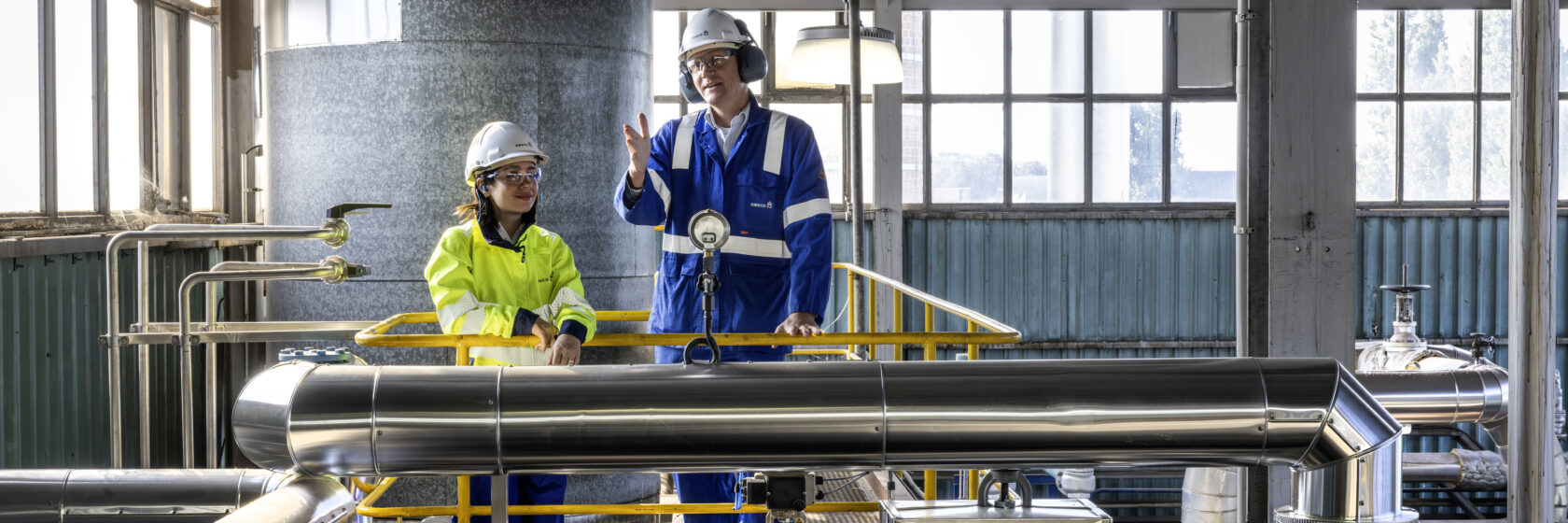
Webinar on demand: de-risking industrial projects or how to keep complex projects under control from day one
Industrial projects are becoming increasingly complex. New technologies, growing investment pressure, stricter permitting requirements and ambitious sustainability goals mean that technical and business decisions must be perfectly aligned from the earliest project stages.
In this webinar, our experts show how to better prepare industrial projects, make risks visible earlier and strengthen investment decisions.
Why watch this webinar?
Many industrial projects are delayed because of unclear assumptions, siloed thinking or the late involvement of crucial stakeholders. This includes operations, maintenance, finance, permitting experts, suppliers, offtakers or local authorities.
During this session, you will discover how an integrated approach helps you make better decisions from the start. Not designing for deliverables, but designing for decisions.
What you will learn
In this webinar, you will gain insight into:
- why industrial projects often go off track due to complexity, rising costs or a lack of stakeholder alignment
- how to identify technical, financial and permitting risks earlier
- why concurrent engineering helps teams work faster and more accurately
- how process simulation, cost estimating and 3D layouts reinforce each other
- how to better include CapEx, OpEx, footprint, safety and CO₂ impact in the feasibility phase
- why early attention to permits and license to operate is crucial
- how digital tools, data and AI can contribute to better decision-making
Who is this webinar for?
This webinar is relevant for project developers, plant managers, engineering managers, innovation managers, sustainability managers, operations teams and investors involved in industrial projects, scale-ups, new production technologies or process optimisations.
What will be covered?
Our experts discuss, among other things, how to close the gap between business, R&D and engineering. They show how assumptions around availability, reliability, flexibility, safety, material selection and scalability directly impact investment costs. You will also see a concrete example of a biofuel project where four scenarios, a cost estimate and a 3D layout were developed in approximately two months. A traditional approach would have required significantly more time.
Gaëlla Delcour
Balder Kennivé
Amir Reza Mostaan
Other news
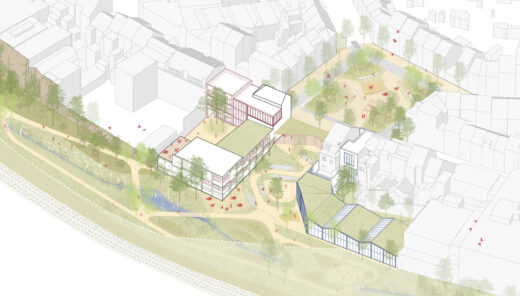
Timber construction reshapes a fragmented site in Schaerbeek
Read more
Sweco officially welcomes CONIX RDBM Belgium
Read more

What forgotten landfills can teach us about brownfield development
Read more