
Sweco Belgium
Approved by children: designing safe school environments
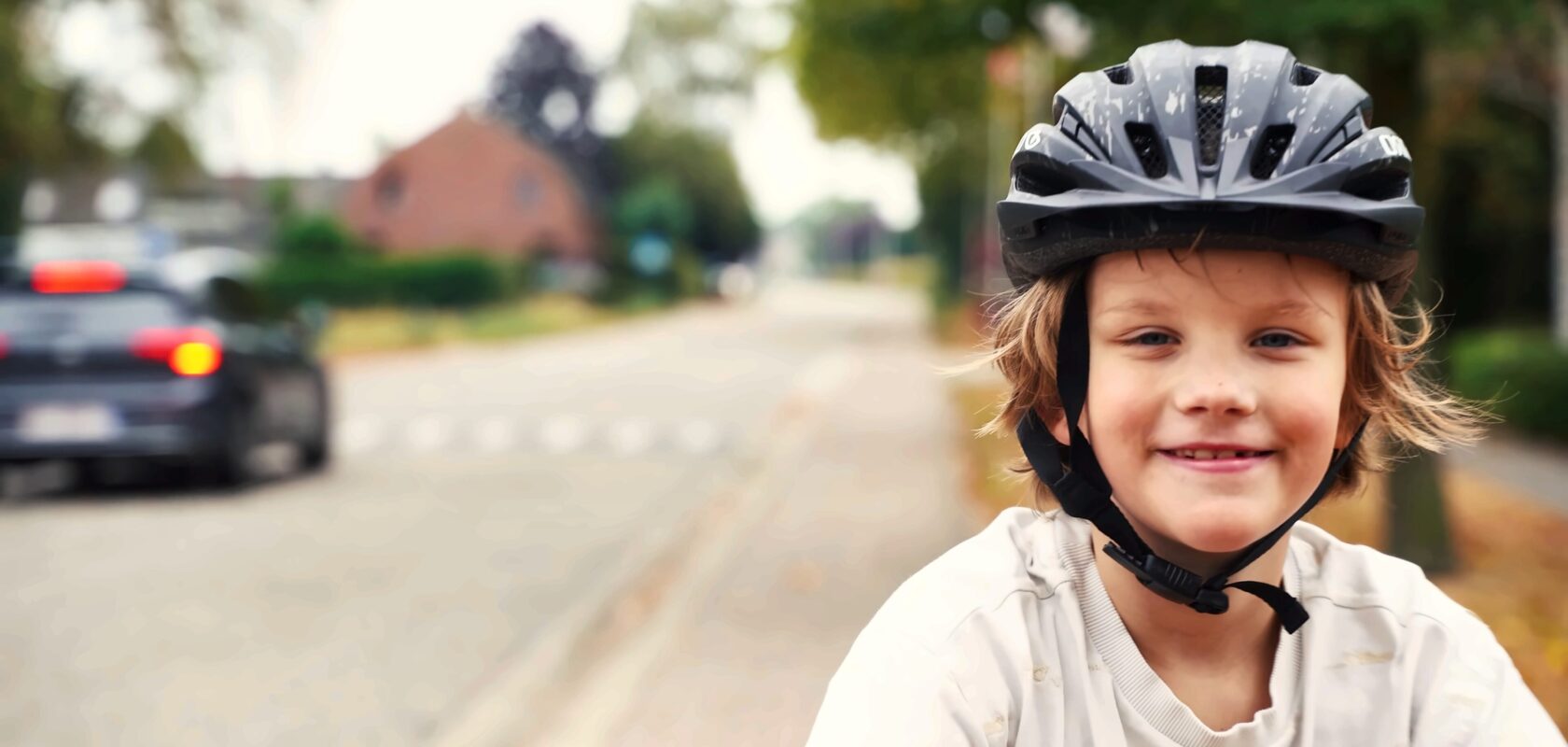
A safe school environment does not start with traffic flows, but with the people who move through it every day. By designing through the eyes of children, we create streets that are safer and more liveable for everyone.
At Sweco, we translate accessible mobility into strong, future-oriented designs. We combine technical expertise with local knowledge and actively involve children in the conversation about their own living environment. Because safe school environments are created by listening and by looking from a child’s perspective.
Child-friendly mobility as a design principle
On paper, a school environment often seems easy to understand. But during morning and evening rush hours, pedestrians, cyclists, cars, buses and Kiss & Ride movements all come together in a short period of time. That is exactly why children’s perspectives are so valuable. They experience every day where crossing feels difficult, where visibility is limited or where different traffic flows intersect.
That daily experience is an important complement to traffic analyses, site research and technical design principles. By literally looking at public space from a child’s height, insights emerge that are not always visible on a plan.
Integrated design for safe school environments
For Sweco, a strong school environment starts with an integrated vision. Mobility, road safety, landscape, water management and infrastructure are not considered separately, but brought together in one design that places the daily experience of users at its centre.
Participation plays an important role in this approach. By involving children, parents, schools, local residents and city services early in the process, local knowledge is translated into concrete design choices. The result is a school environment that is not only safe in traffic terms, but also recognisable, accessible and pleasant to use.
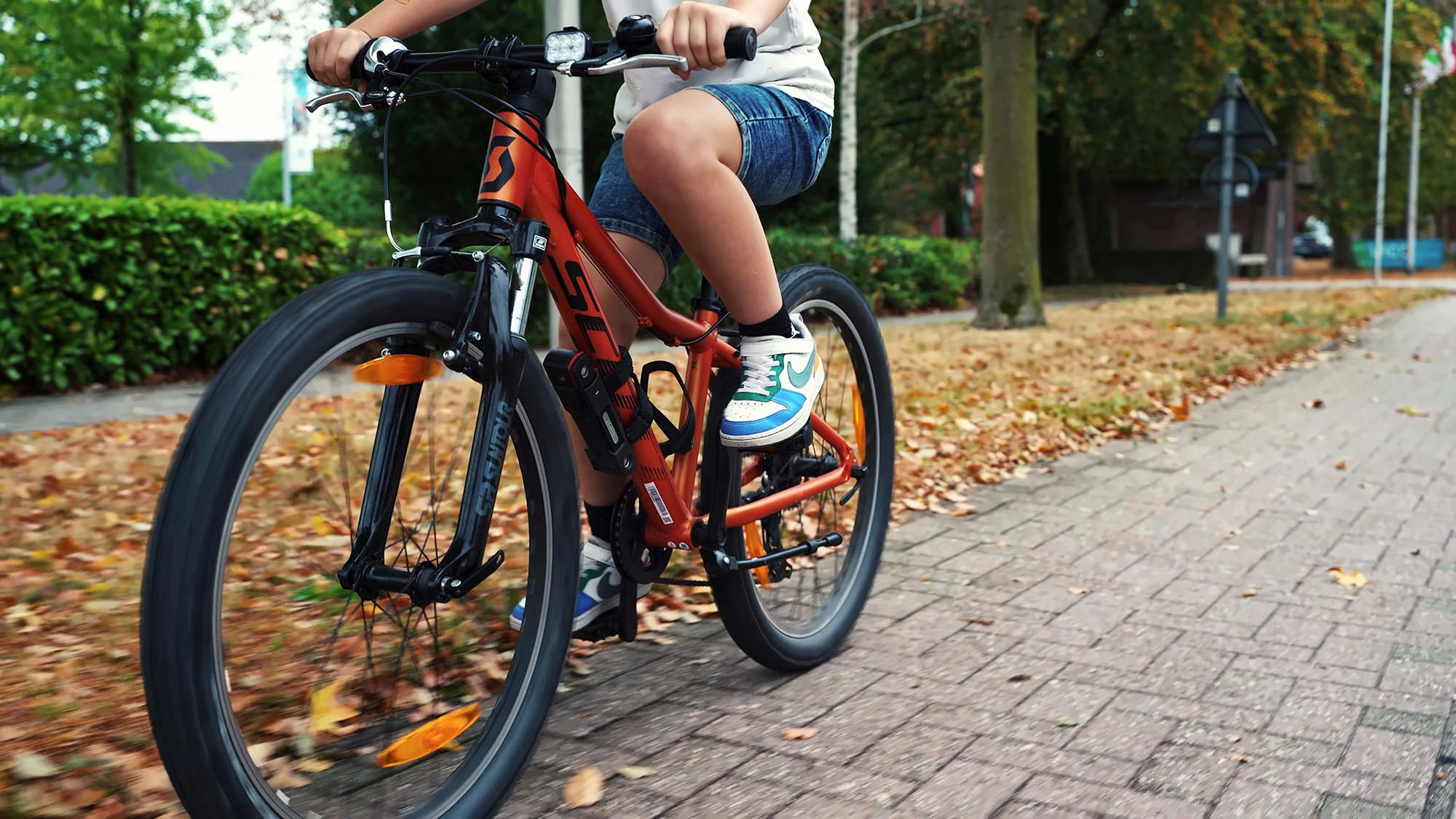
Mobility project in Hamont-Achel
This approach is taking concrete shape in Hamont-Achel, where Sweco, together with subcontractor Bochtwerk and on behalf of the City of Hamont-Achel, is working on the redesign of the area surrounding Basisschool Hamont-Lo and WICO Campus Hamont. The project is part of a broader approach for Haag, Dijk, Salvatorstraat and ’t Lo, bringing together road safety, sustainable mobility, greenery, water management and infrastructure in one future-oriented design.
More space for active mobility
The design does not merely address individual traffic bottlenecks, but looks at the entire school environment as one whole. Separated cycle paths, safer crossings, wider pavements, an optimised Kiss & Ride zone and a clearer separation between traffic flows are intended to encourage children to move around more safely and independently. At the same time, the project improves the quality of life in the neighbourhood. New trees, green central reservations, permeable parking spaces and wadis contribute to more greenery and better local rainwater management.
Designing for children means designing for everyone
An environment that is clear, comfortable and safe enough for children usually becomes better for other users too: parents, local residents, cyclists, pedestrians and people with reduced mobility. The school environment thus becomes a place where safety, encounter, greenery and active mobility reinforce each other.
Other News

Approved by children: designing safe school environments
Read more

More eyes at sea: Sweco designs offshore platform concept for marine monitoring and enforcement in the North Sea
Read more
Virtual Reality: experience your project before it is built
Read more