
Sweco Belgium
Flanders’ first quaternary micropollutant treatment plant takes Bronze at IWA Project Innovation Awards 2026
Sweco and Aquafin, together with its contractors, have received the Bronze medal in the Market-changing Water Technology & Infrastructure category of the IWA Project Innovation Awards 2026 for the First Quaternary Micropollutant Treatment Plant in Flanders (Wastewater Treatment Plant Aartselaar).
The IWA Project Innovation Awards recognise excellence and innovation in water management, research and technology. The awards were presented during the IWA World Water Congress & Exhibition in Glasgow, which brought together water professionals and innovators from around the world. Flanders’ first full-scale quaternary treatment plant, at the WWTP in Aartselaar, was recognised in the Water Technology & Infrastructure category because it translates proven treatment principles into a transferable solution and combines infrastructure delivery with structured learning for the wider water sector.
“Our award-winning project helps us prepare for Europe’s higher ambitions. The First Quaternary Micropollutant Treatment Plant in Flanders shows what is possible when partners combine expertise and ambition. Aquafin sincerely thanks Sweco and all the teams involved for the excellent collaboration. Together, we are helping water treatment plants evolve into resource-smart hubs that restore ecosystems and create lasting value for society.”
Jan Goossens, CEO of Aquafin
“This recognition confirms that combining process expertise with multidisciplinary engineering can deliver a robust solution for removing micropollutants. I thank Aquafin for its trust, the Interreg partners and every colleague whose work made this project possible.”
Greet De Messemaeker, Business Unit Manager Clean Water & Water Security at Sweco
“The successful completion of the Aartselaar installation demonstrates the value of strong collaboration between Sweco and its partners Aquafin, Mols Contractors, Litran, Deckx Elektro Mechanica and Xylem. Its breakthrough lies in integrating disc filtration, ozonation and granular activated carbon filtration into one reliable, full-scale system.”
Qian Xin Liang, Senior Project Leader at Sweco

Removing micropollutants with quaternary treatment
Conventional wastewater treatment removes organic matter and nutrients, but it does not fully capture emerging organic micropollutants. Residues from medicines, cosmetics, pesticides and PFAS compounds can therefore still reach surface water. Even at low concentrations, these substances may affect aquatic ecosystems, contribute to antimicrobial resistance and create additional challenges where surface water is used for drinking-water production.
Disc filtration, ozonation and activated carbon improve water quality
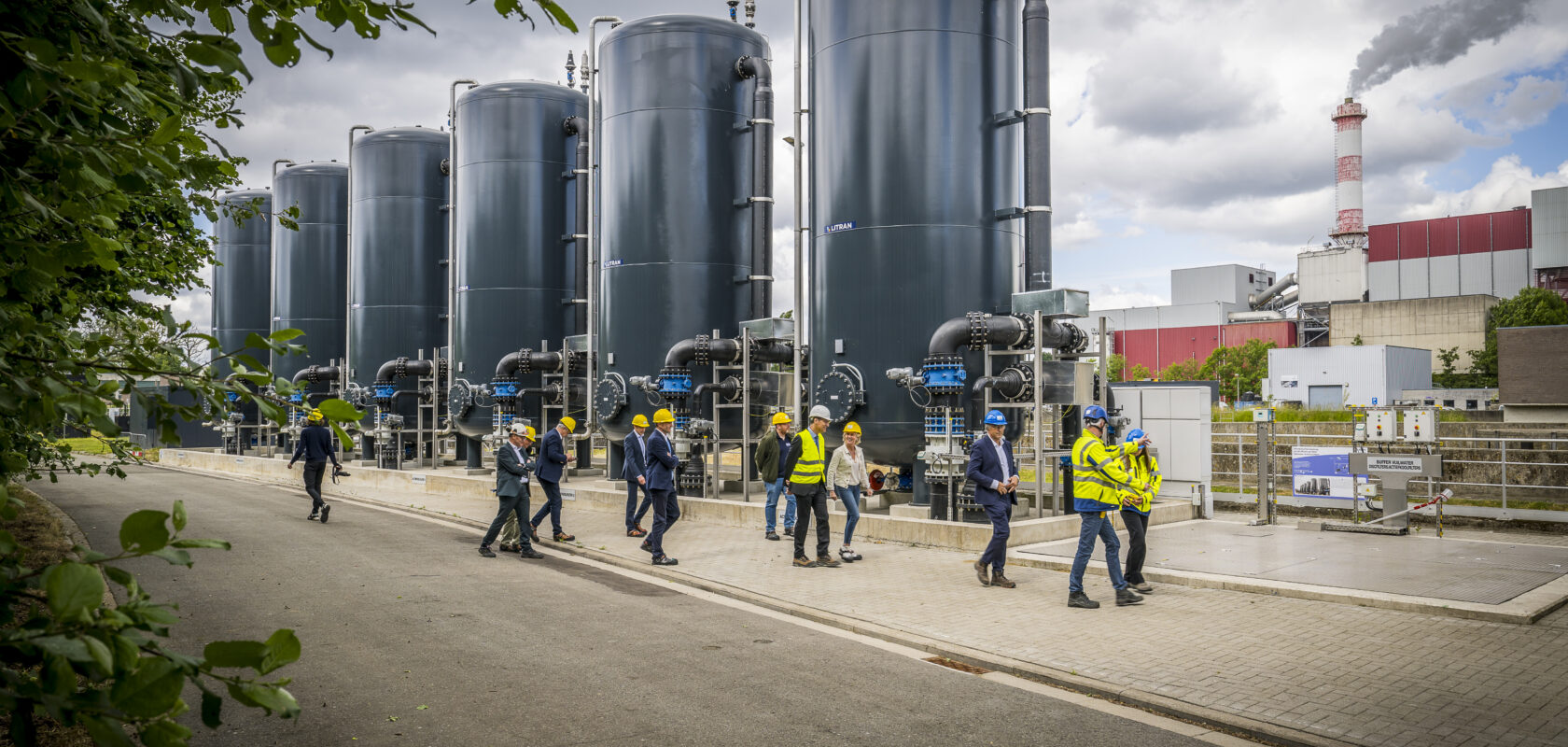
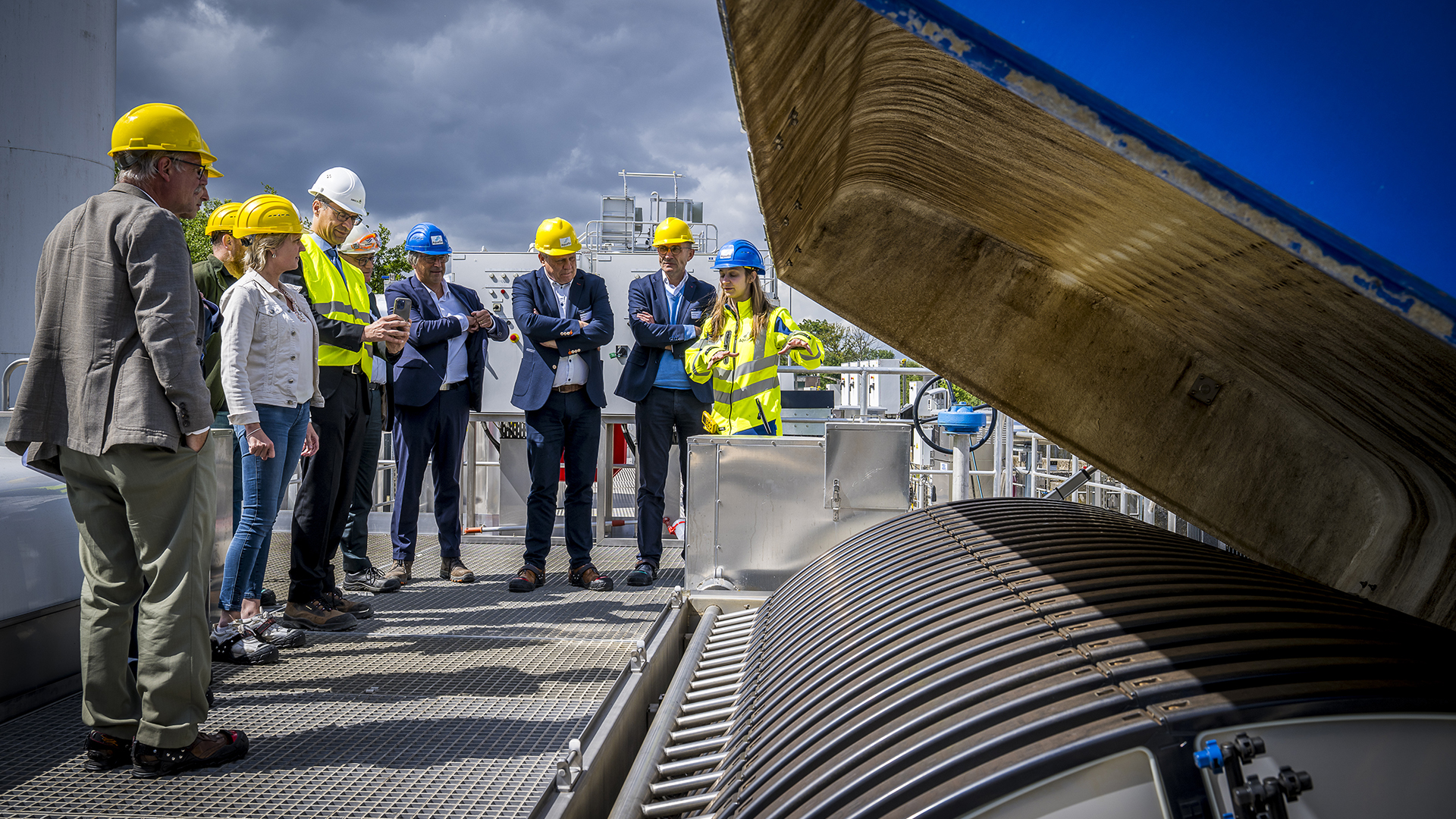
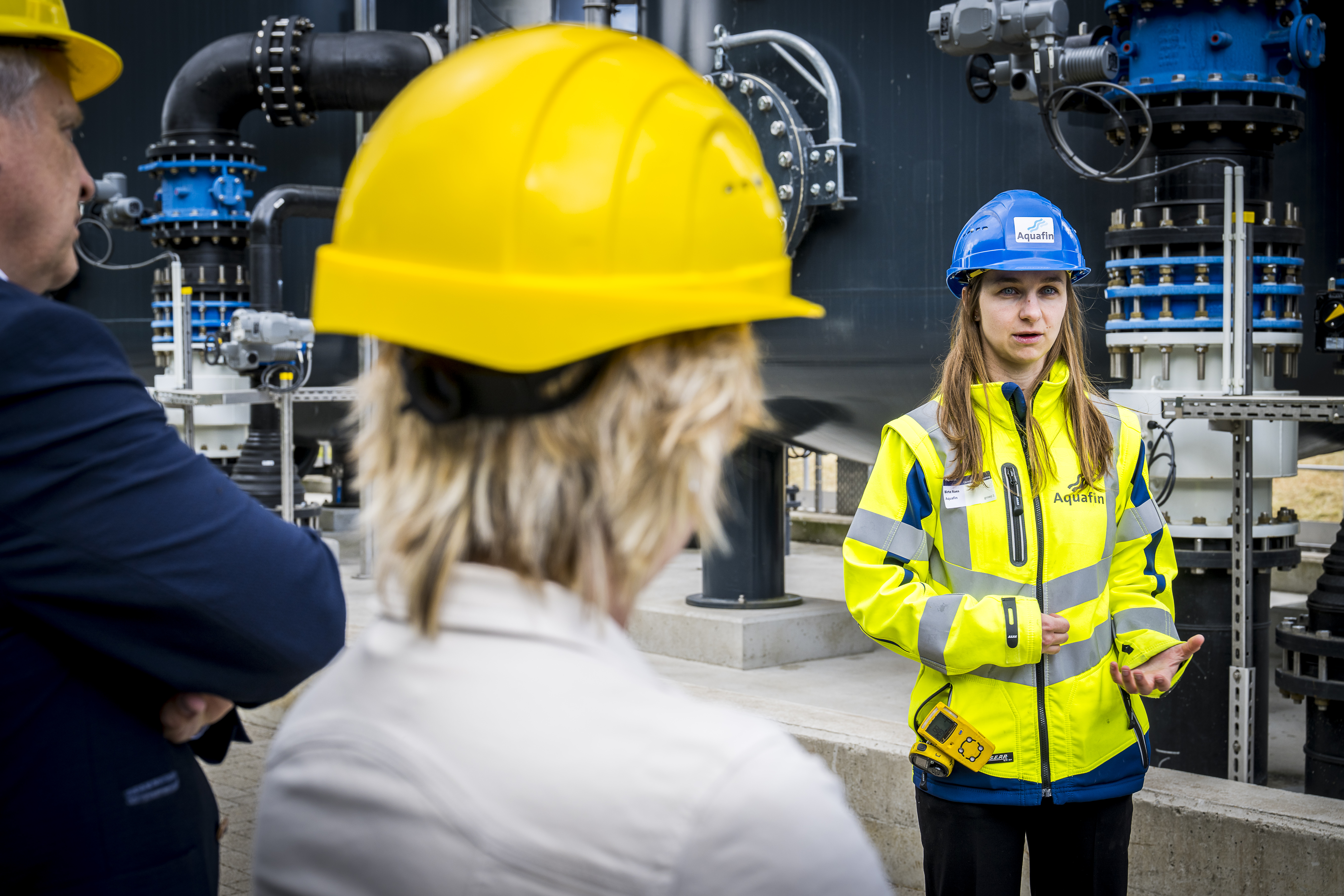
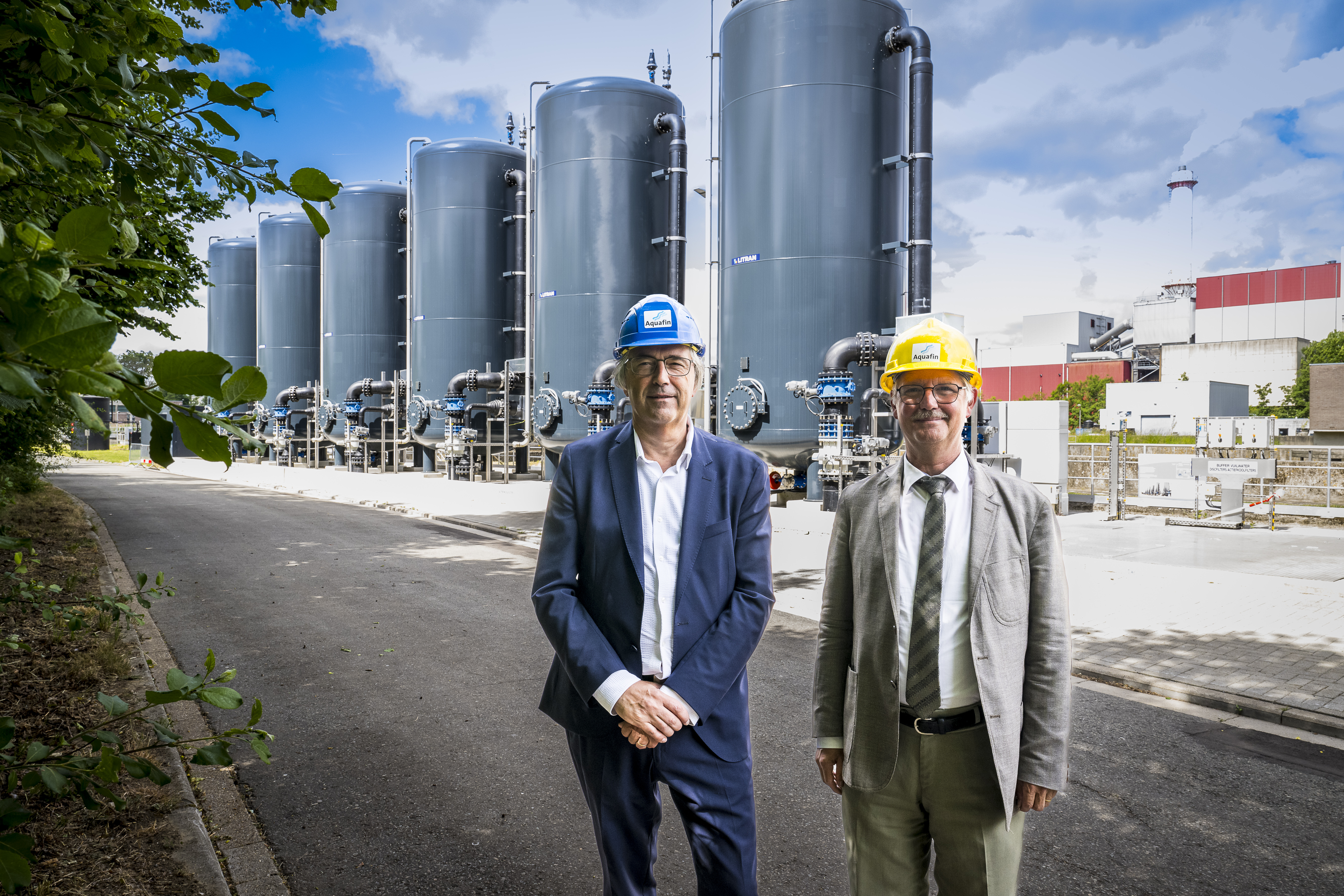
At the Aartselaar site, three consecutive treatment stages work together. Disc filters installed by Litran first remove residual suspended solids. Xylem, in partnership with Deckx Elektro Mechanica, supplied the ozonation technology, which oxidises and breaks down a broad range of organic micropollutants in a concrete tank constructed by Mols Contractors. Granular activated carbon then captures remaining substances and transformation products. Together, these technologies enable the removal of micropollutants, improving local surface water quality and supporting the transition towards more resilient and sustainable wastewater treatment systems.
It is the first installation in Flanders to apply this combination at full scale. The treated effluent is discharged into the Grote Struisbeek, so the pilot directly supports local surface-water quality while generating evidence for wider deployment in Flanders and the Netherlands. The complete post-treatment plant was officially inaugurated on 23 May 2025, following preparations that Aquafin and the Flemish Environment Agency began in 2017.
EU wastewater directive drives investment in quaternary treatment
The project also provides timely experience for implementing the recast European Urban Wastewater Treatment Directive. By the end of 2045, quaternary treatment will be required at plants serving 150,000 population equivalents or more. For smaller WWTPs, a risk analysis will be performed to evaluate the necessity of additional post-treatment.
Intermediate implementation targets apply in 2033 and 2039. Full-scale operational data from this site will help future projects make informed choices on design, automation, monitoring, maintenance, safety and cost-effectiveness.
Multidisciplinary engineering for wastewater treatment
Sweco supported Aquafin with the feasibility study, preliminary and detailed design, permit application, tender documents and execution supervision. Its multidisciplinary team integrated process design, electromechanics, civil engineering, electricity, automation and infrastructure into one coherent solution.
The installation is a reference site within the Interreg Flanders–Netherlands project “Schone Waterlopen door O3G”. This cross-border programme investigates how ozonation and granular activated carbon can be optimally combined to achieve high removal rates with minimal formation of by-products, fewer carbon-regeneration cycles, and efficient use of energy and raw materials. Continuous monitoring at the Aartselaar site captures operational parameters and treatment results, building a practical evidence base for subsequent installations.
Photos: © Frederik Beyens – Aquafin – Faye Pynaert
Other News

Wildfire does not stop at the forest edge
Read more
Water-Land-Schap 2.0 prepares the Vliet valley for drought and flooding
Read more