
Sweco Belgium
Water-Land-Schap 2.0 prepares the Vliet valley for drought and flooding
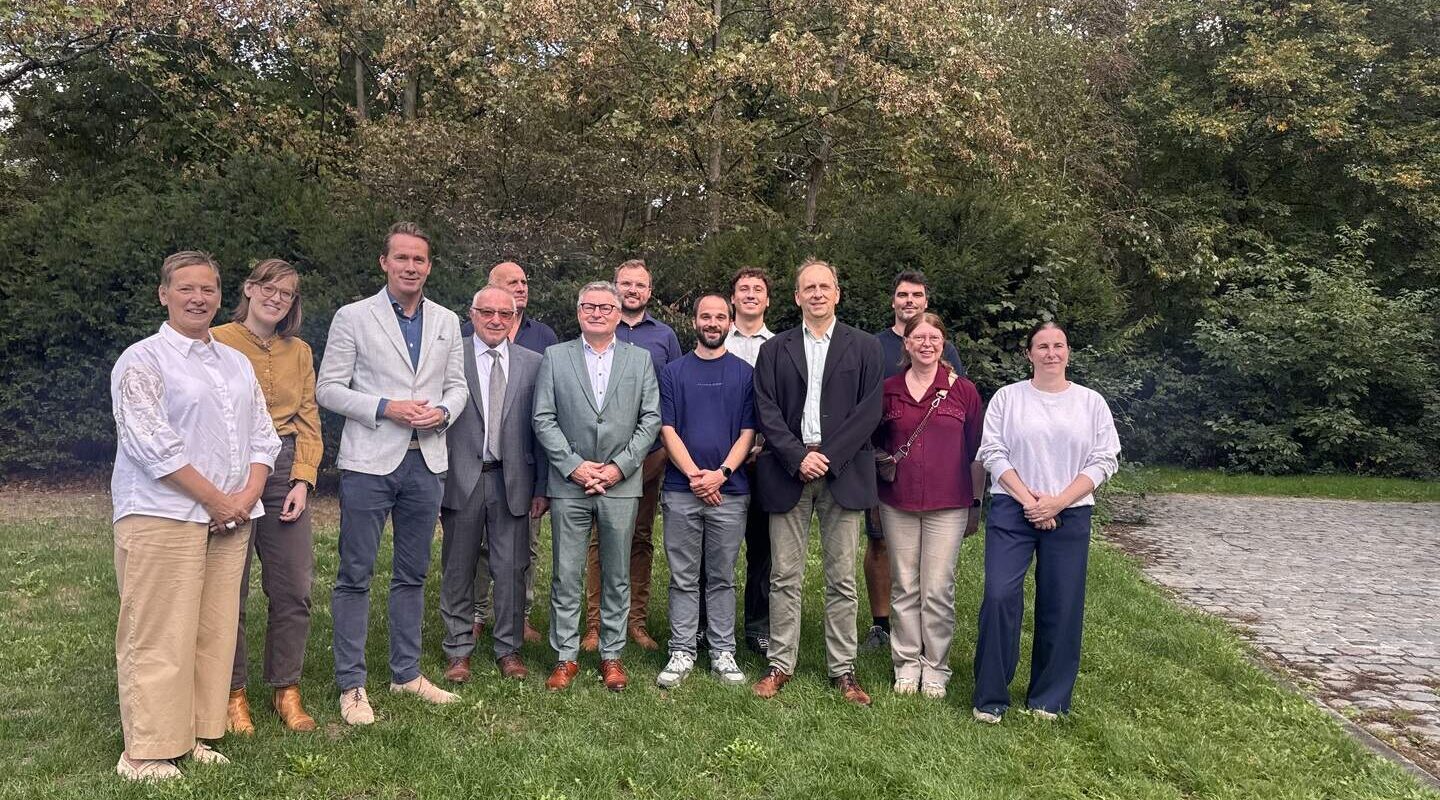
On 1 October 2026, Jo Brouns, Flemish Minister for the Environment and Agriculture, officially opened ‘Water without borders or limits in the Vliet valley’. This initiative is one of fifteen area-based projects within Water-Land-Schap 2.0, a programme of the Flemish Land Agency under the Blue Deal in which local coalitions take an integrated approach to drought and flooding.
Commissioned by the Flanders Environment Agency (VMM), Sweco worked with co-initiator Polder Vliet en Zielbeek and the other local partners to create a more flexible water system. Through nine concrete work packages, the project helps retain water for longer during dry periods and creates more room for water during heavy rainfall.
“The greatest achievement is that, within a particularly tight timeframe and despite sometimes widely differing interests and perspectives, we managed to reach broadly supported solutions. Together with all stakeholders, we have laid a solid foundation for better water management in the Vliet valley.”
Jo Lybaert, Project Manager Blue Deal at Sweco
Stronger water management in the Vliet valley
Within Water-Land-Schap 2.0, local coalitions of public authorities, farmers, nature organisations, businesses and other land users are developing water systems that can better absorb climate shocks. Their focus is on a sustainable water supply, good water quality, climate-resilient agriculture and an attractive landscape.
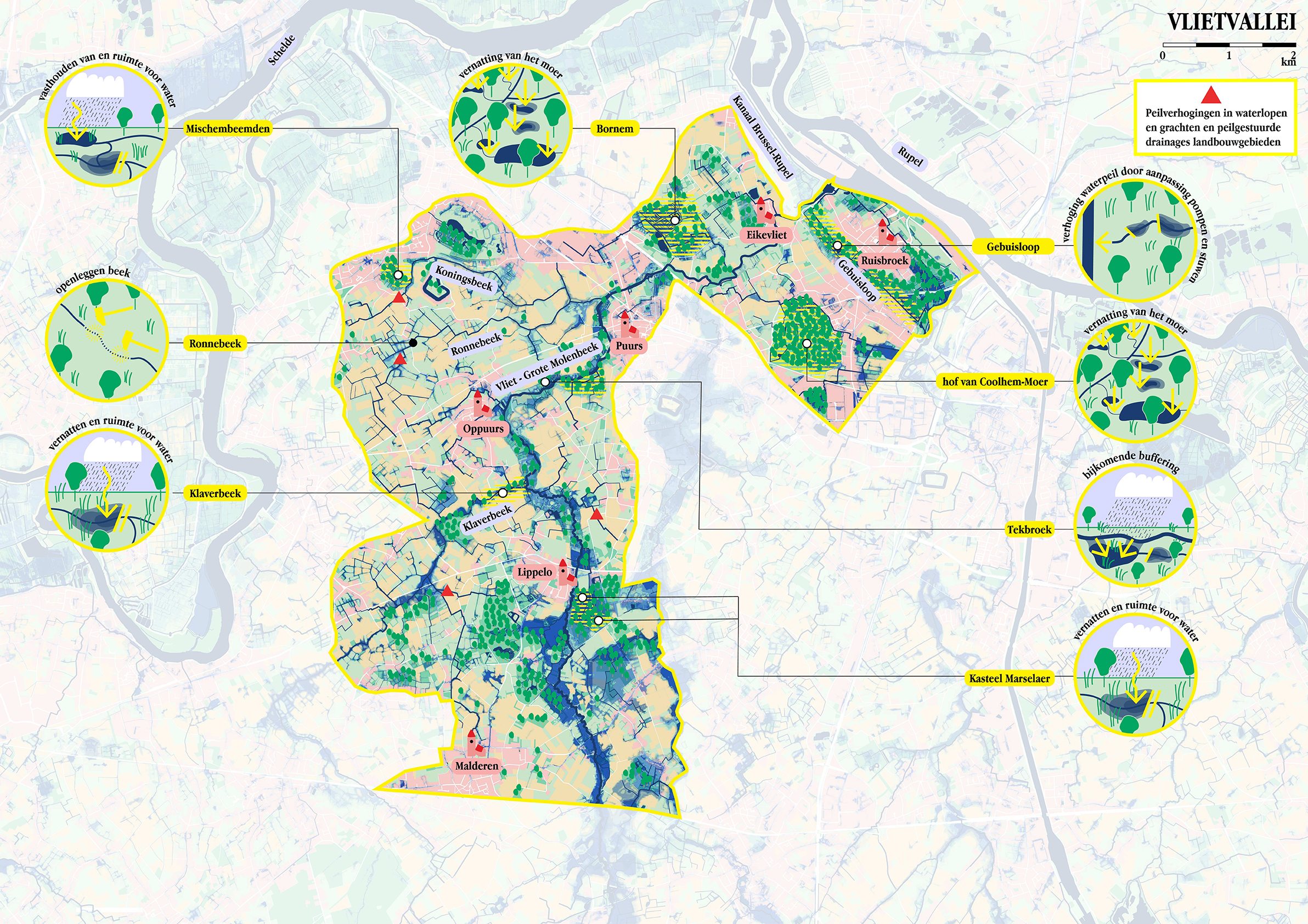
After tidal influence was cut off in the late 1970s, the Vliet valley gradually lost its natural dynamics. This increased drought and vulnerability in low-lying nature and agricultural areas, including Gebuispolder, Moer van Coolhem, Moer in Bornem, Michembeemden, Tekbroek, Lippelobroek and Marselaer. The project builds on the Vliet River Contract and the 2022–2027 river basin management plan, translating the principles of the Blue Deal into concrete measures on the ground.
VMM and local partners join forces
VMM financed the preliminary study and preliminary designs and initiated the project together with Polder Vliet en Zielbeek. Polder Vliet en Zielbeek also acted as the subsidy applicant. The area coalition also brings together the municipalities of Bornem, Puurs-Sint-Amands and Londerzeel, Natuurpunt Klein-Brabant and Londerzeel, the Klein-Brabant and Londerzeel farmers’ associations, the Flemish Land Agency, the Agency for Nature and Forests and De Watergroep.
By working across municipal and provincial boundaries, the project combines more robust water management with sustainable agriculture, stronger ecosystems and a high-quality landscape.
Sweco takes nine water projects from plan to implementation
Commissioned by VMM, Sweco handled the preliminary study, design, permit applications, procurement and support during implementation. Together with co-initiator Polder Vliet en Zielbeek and the other stakeholders, our experts brought nine work packages to implementation. We combined project management, hydrology and technical design with ecological analyses, environmental permits, environmental soil studies, on-site support and land surveying, including at sites that were difficult to access.
The Sweco teams Blue Deal, Ecosystem Services, Soil, Civil, Urban Management and Geodata operated as one multidisciplinary unit. In addition to the technical development, we also took on a connecting role: aligning interests, opening solutions up for discussion and building the support needed to secure permits and deliver the projects.
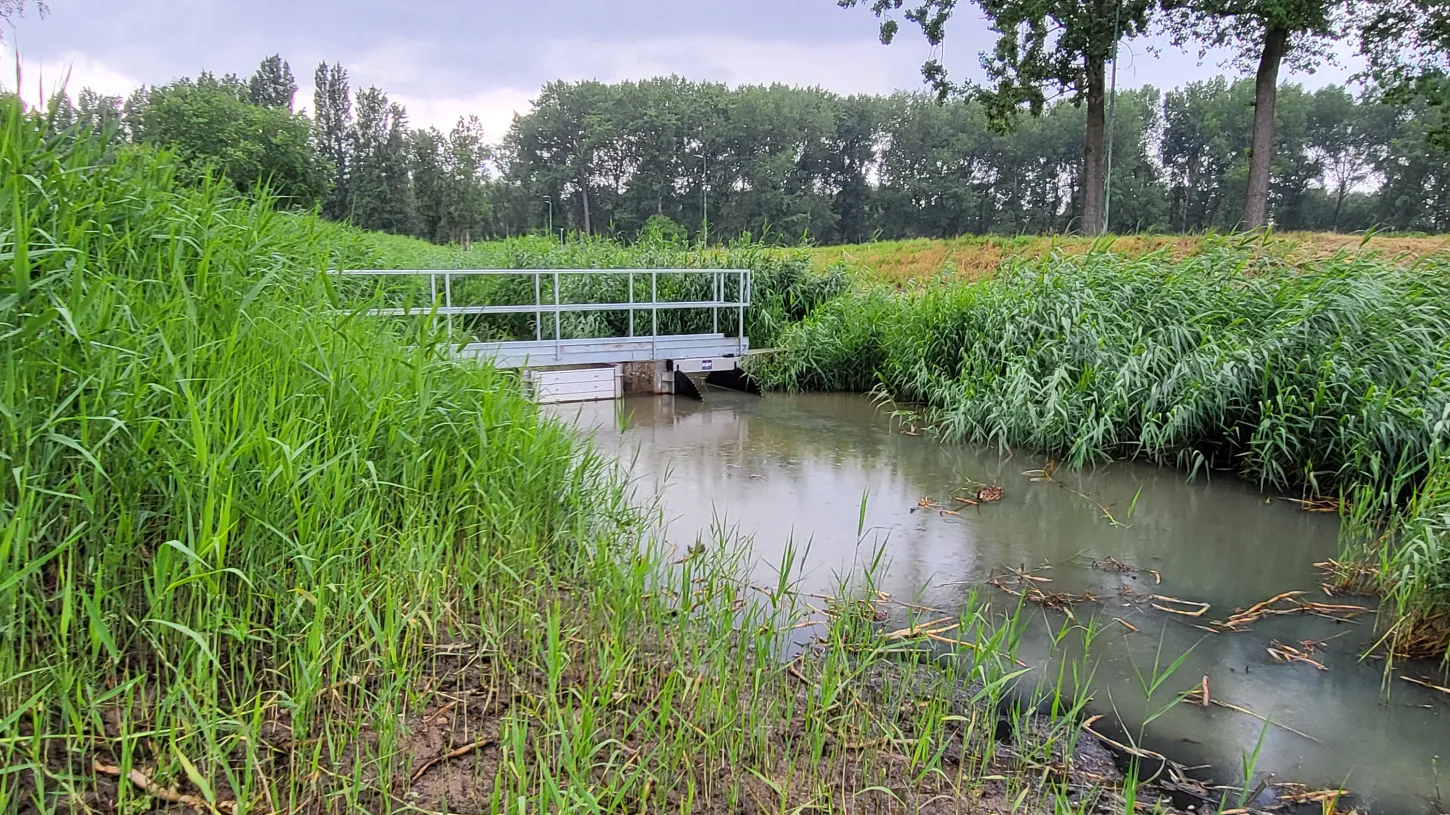
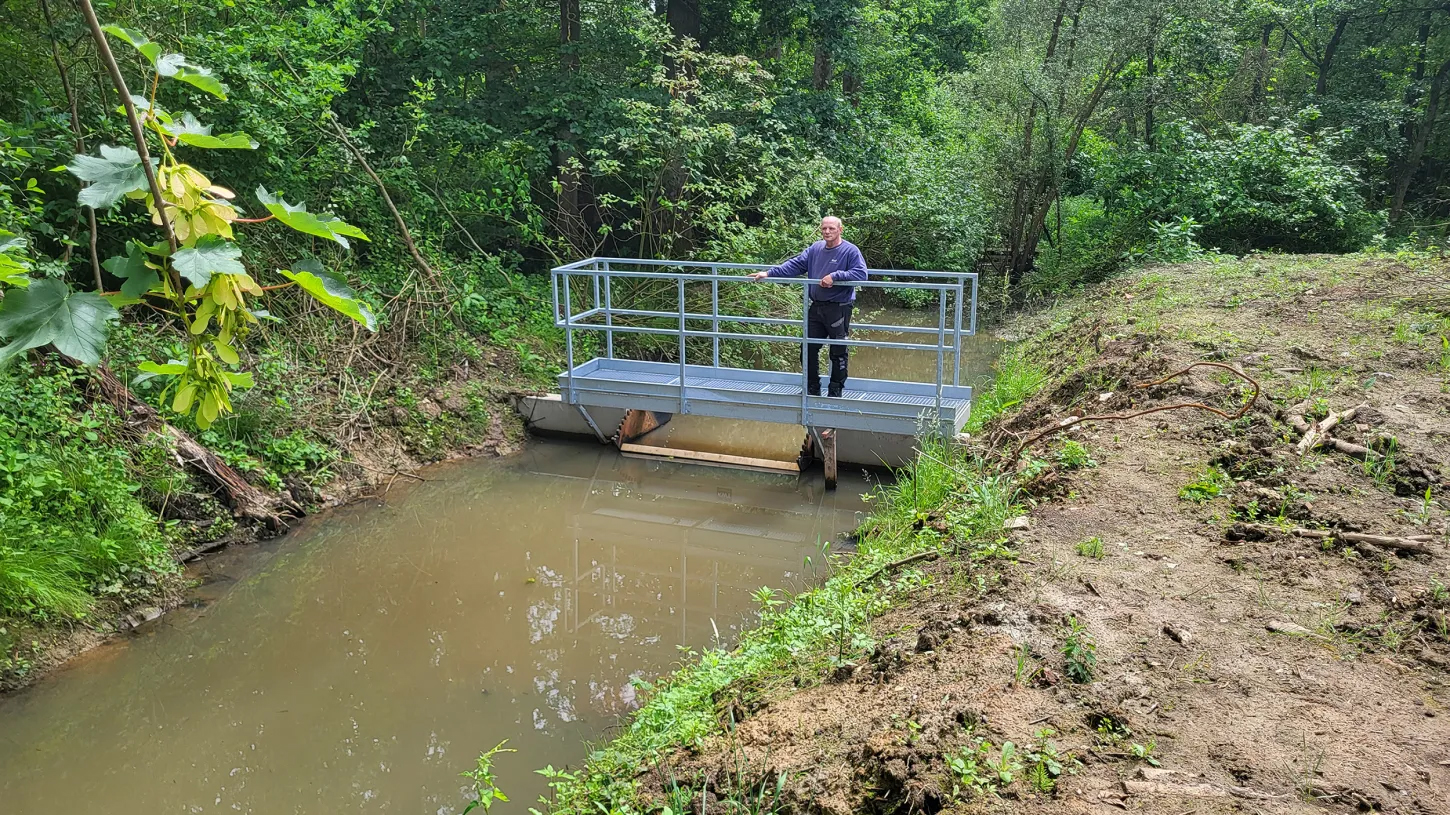
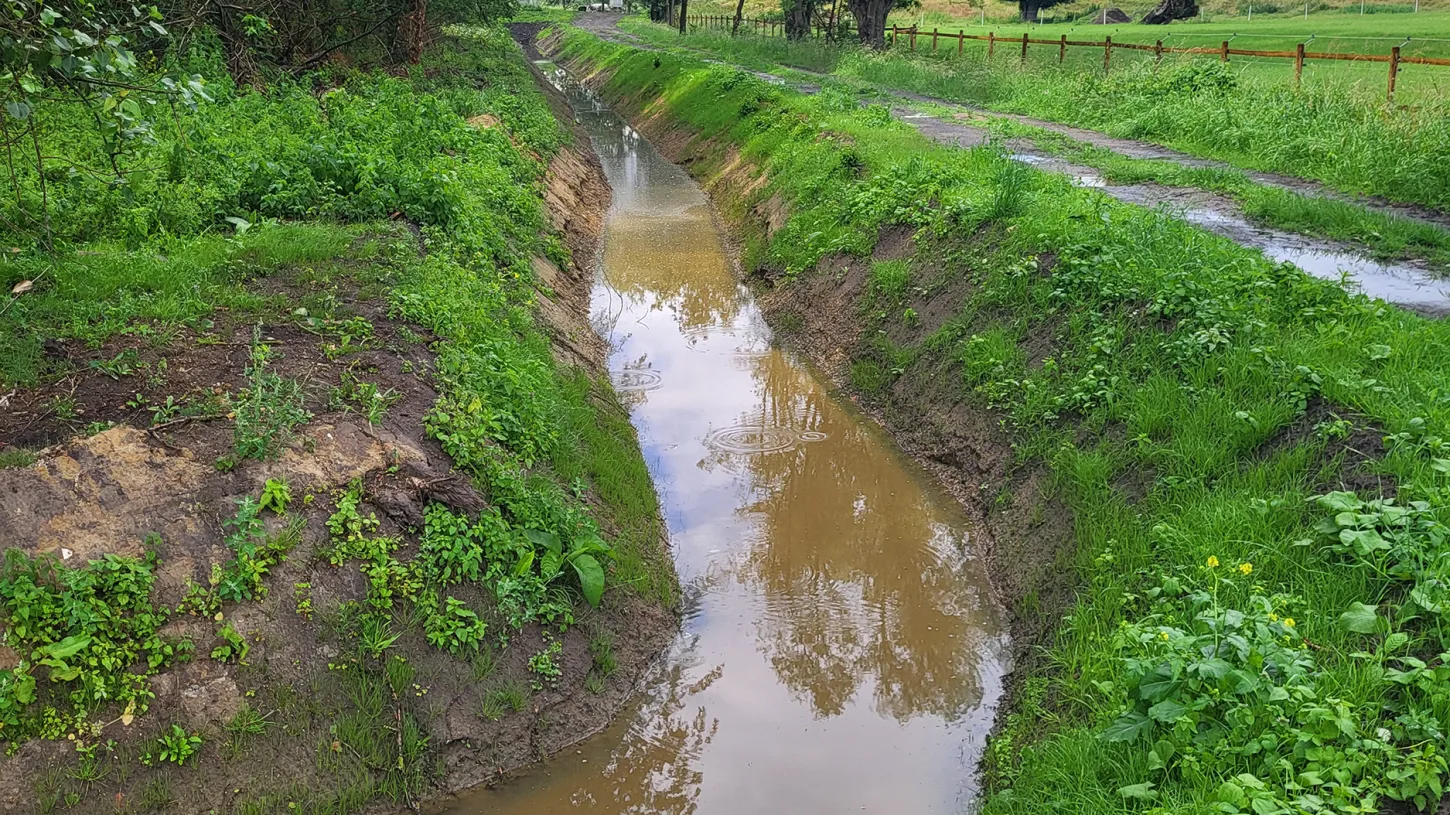
From adjustable weirs to a reopened Ronnebeek
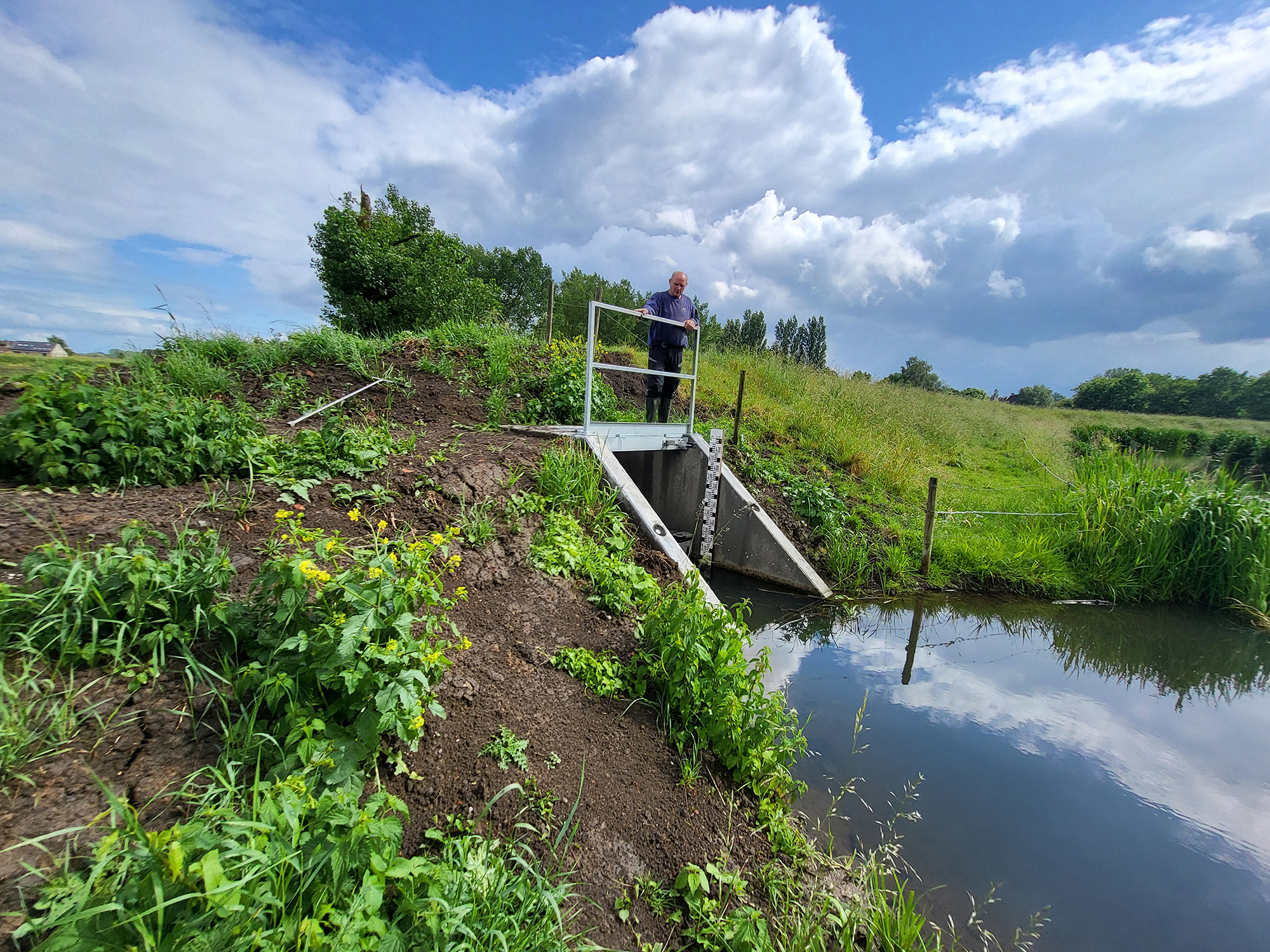
The measures enable flexible water-level management: during dry periods, more water remains available for nature and agriculture, while in wet weather the areas can buffer additional water or discharge it in a controlled way. Two adjustable weirs were installed in Ruisbroek. In Coolhem and Bornem, historic water supplies to nature areas were restored or optimised. Around 100 metres of the Ronnebeek was reopened in an open channel, creating new opportunities for infiltration, water storage and nature development. Measures were also implemented in Michembeemden, Tekbroek and the former Marselaer castle site to retain water for longer.
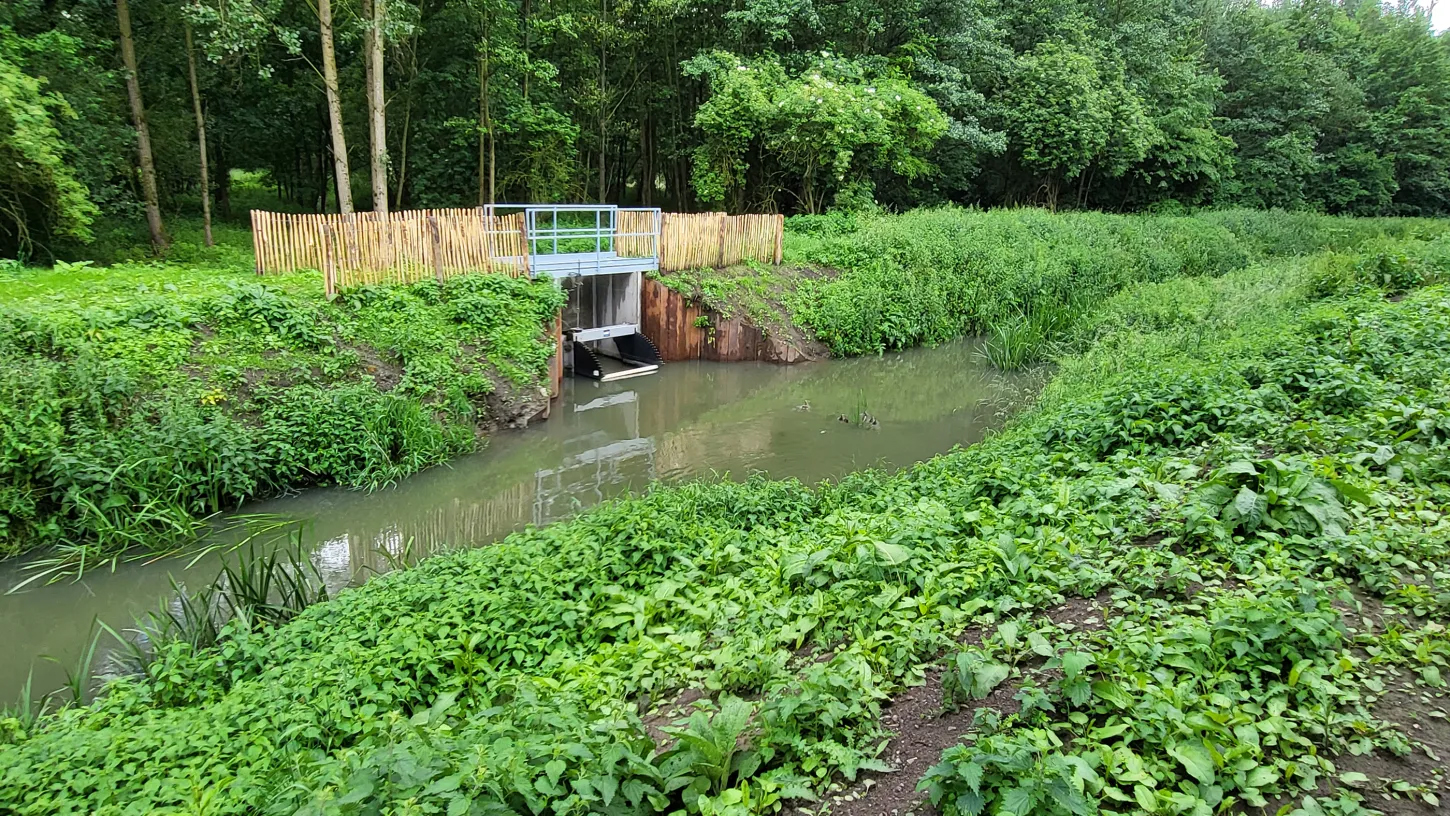 Foto’s: © Sweco
Water buffers and stream restoration within Water-Land-Schap 2.0
Beyond the Vliet valley, Sweco is also deploying its integrated water expertise within Water-Land-Schap 2.0. For the Province of West Flanders, we carried out three feasibility studies for buffer and storage basins in Kortemark, Diksmuide and Houthulst as part of the Blankaart basin and Handzame valley area project. In Voeren, commissioned by VMM, we worked on three water buffers, from the preliminary study through to the tender dossier. And at Meise Botanic Garden, we supported the remeandering of the Amelvonnebeek as part of the Climate-Resilient Green Northern Rim project.
Other News
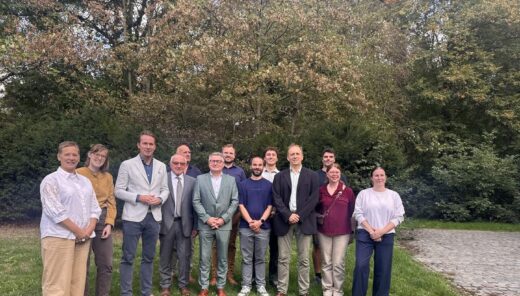
Water-Land-Schap 2.0 prepares the Vliet valley for drought and flooding
Read more

Sweco confirms strong sustainability performance with EcoVadis Gold
Read more
Sweco welcomes Technocon employees and strengthens its advanced steel expertise
Read more