
Sweco Belgium
Water management without reuse is no longer fit for purpose
Water shapes how we live, work, relax and live together. Today, it is also one of the clearest ways in which climate change, urbanisation and environmental pressure are felt. Sometimes there is too much water. Sometimes it is too polluted. And increasingly, there is too little. These three challenges are closely interconnected, and each affects people’s safety, health, comfort, living environment and access to high-quality water.
In August, water takes centre stage at Sweco. We look at water as one system, because water does not stop at the plot boundary, the discharge pipe or the edge of an industrial estate. Every intervention affects the wider water cycle: from precipitation, infiltration and groundwater to process water, wastewater, surface water and reuse.
This systems-based approach makes water reuse a crucial link in future-oriented water management:
- retaining water for as long as possible,
- using water locally wherever possible,
- reusing water to the highest possible standard,
- discharging water only when there is no better option.
Rainwater discharged too quickly today will not be available in the soil tomorrow.
Combined wastewater that enters watercourses during heavy rainfall compromises water quality and recreational use.
And using drinking water for applications that do not require drinking-water quality increases pressure on vulnerable sources.

Water management has fundamentally changed
For a long time, water management focused mainly on discharge: moving rainwater away as quickly as possible, sending wastewater to treatment and confining watercourses within rigid channels. Today, we know that this linear logic is no longer enough.
In future-oriented water management, Sweco’s water consultants ask three questions:
- How do we prevent flooding during peak rainfall?
- How do we protect water quality and public health?
- How do we retain water for longer and reuse it more intelligently?
These questions cannot be answered through isolated measures. They require an integrated approach across different scales.
Reuse as a catalyst for sustainable water management
Step 1 – the source
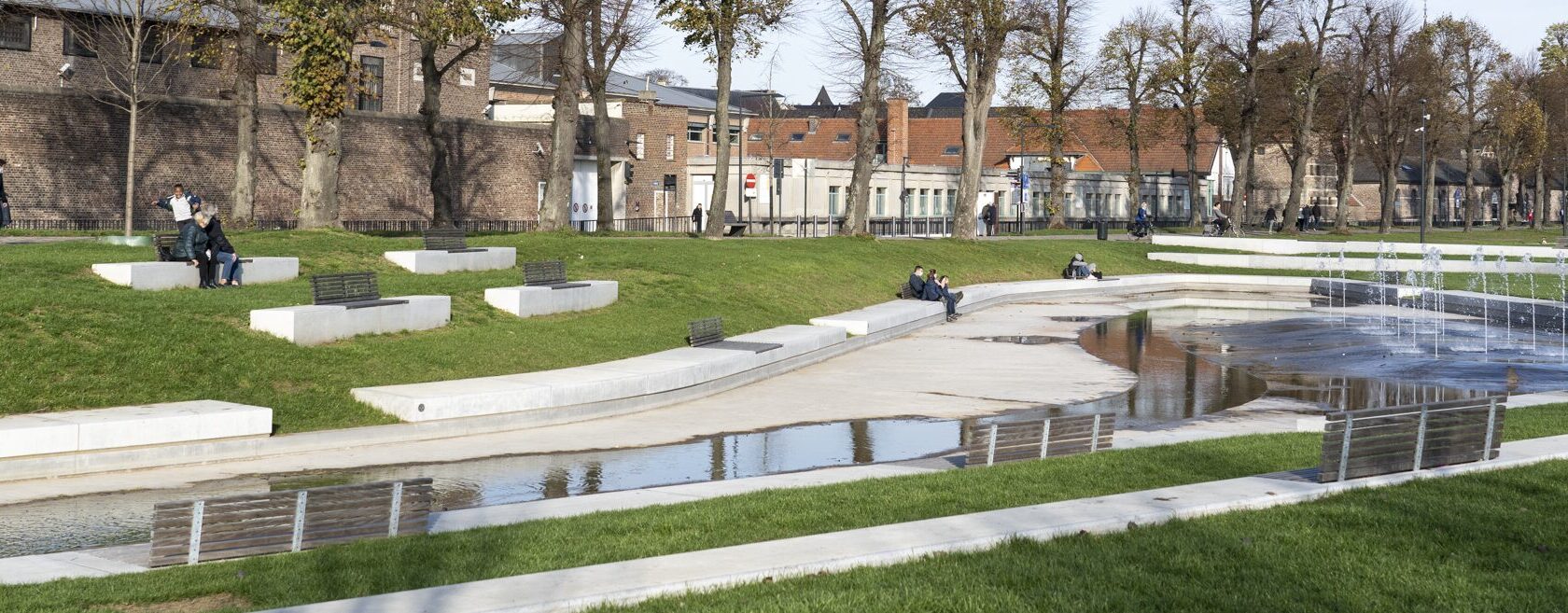
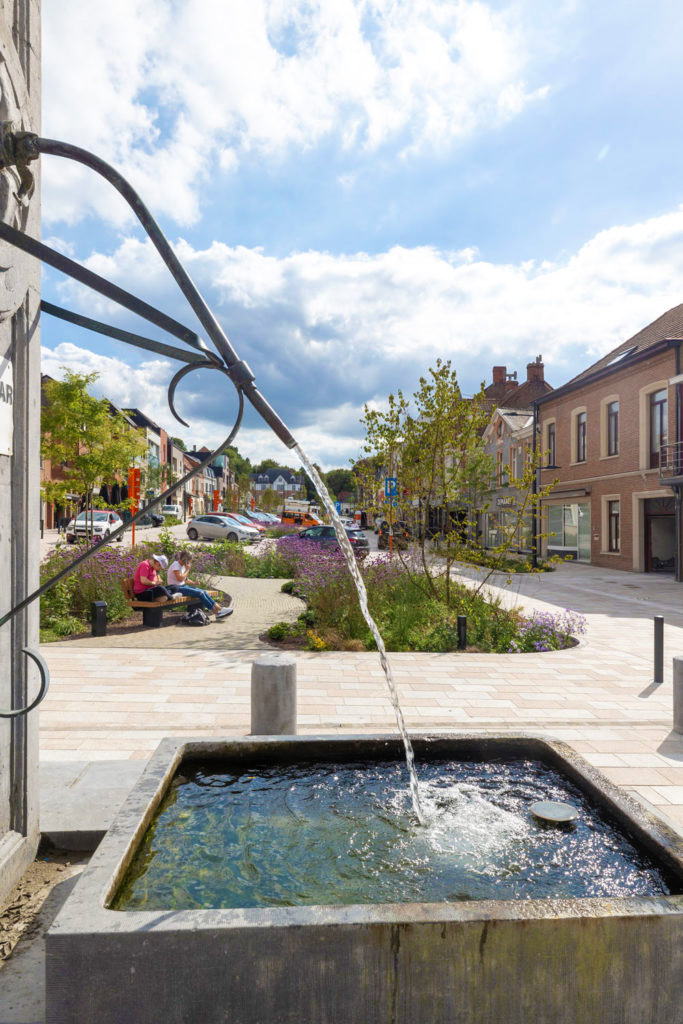
Rainwater on roofs, public squares, roads and car parks is not automatically wastewater: it can be collected, infiltrated, buffered or reused. In public spaces, these choices directly contribute to water safety, water availability and water quality.
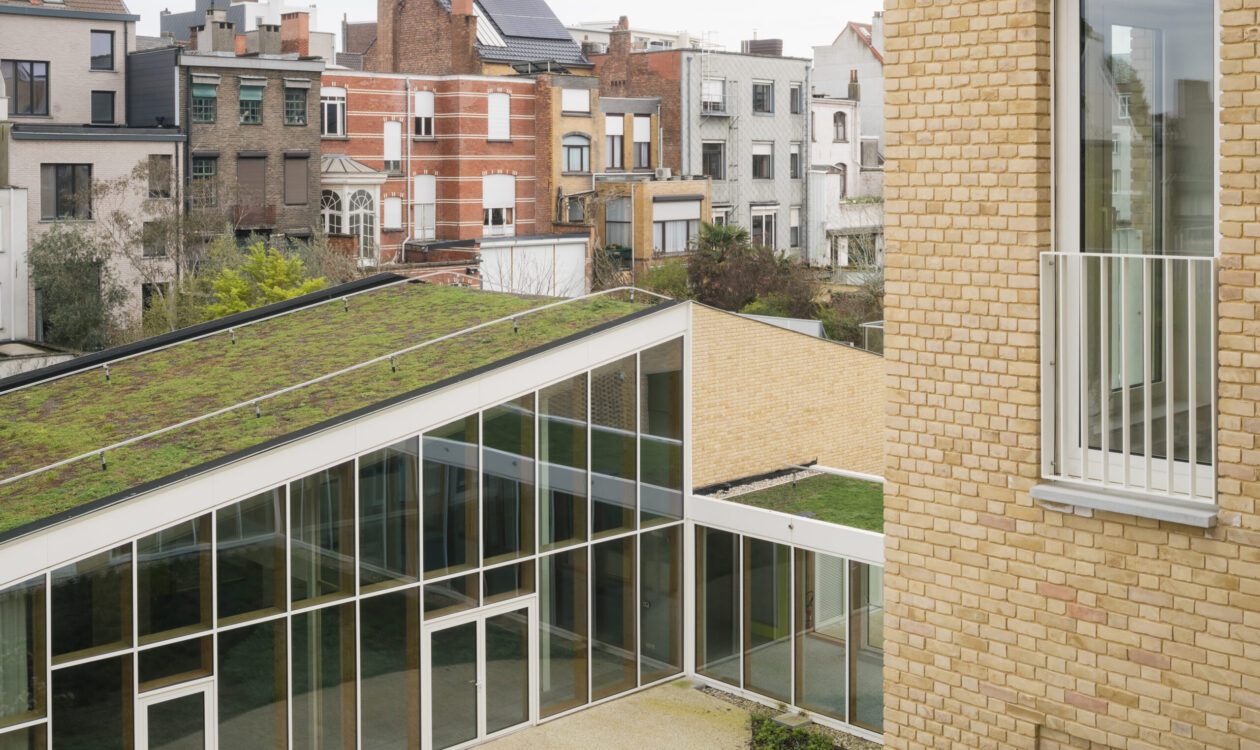
Depaving, wadis, infiltration zones, ditches, water squares, green roofs, buffer basins and blue-green corridors: they reduce pressure on sewers and watercourses, while creating more cooling, biodiversity and quality of life.
Step 2 – reuse locally
Buffering is more than a safety measure during peak rainfall: it makes cities and municipalities more resilient to drought.
Water that is temporarily retained can be used in certain locations for green space maintenance, street cleaning, recreational functions, technical applications or building-related uses. The spatial component is crucial here: water needs space.
Today, public space cannot be designed without considering water as a structuring element.
Our water experts support cities, municipalities and water managers in projects where infiltration, buffering, reuse, ecology, mobility and public experience come together.
We need to take a structural approach to water as a circular resource. Not every use requires drinking-water quality. And not every water flow has to be lost after a single use.
Annelies Beuckels, project manager for integrated water management at Sweco
In an urban context
The urban context is creating increasing opportunities for local and collective cycles: rainwater recovery, greywater reuse, collective buffers, reuse of treated wastewater, beneficial use of dewatering water and smart connections between buildings, public space and infrastructure.
The greatest gains are often found in combinations:
- water buffered at district level is used locally;
- water collected in buildings reduces pressure on sewers;
- treated flows are given new applications that do not require drinking water.
Circular water concepts contribute to more robust cities, more efficient use of scarce resources and a more reliable water supply for residents, businesses and public functions.
Sweco uses reuse as a design principle.
This requires insight into water quality, flow rates, storage capacity, usage profiles, regulations, health, maintenance and operation. Considering these elements in an integrated way creates a system that works technically, is safe and remains manageable in the long term.
For safe recreation
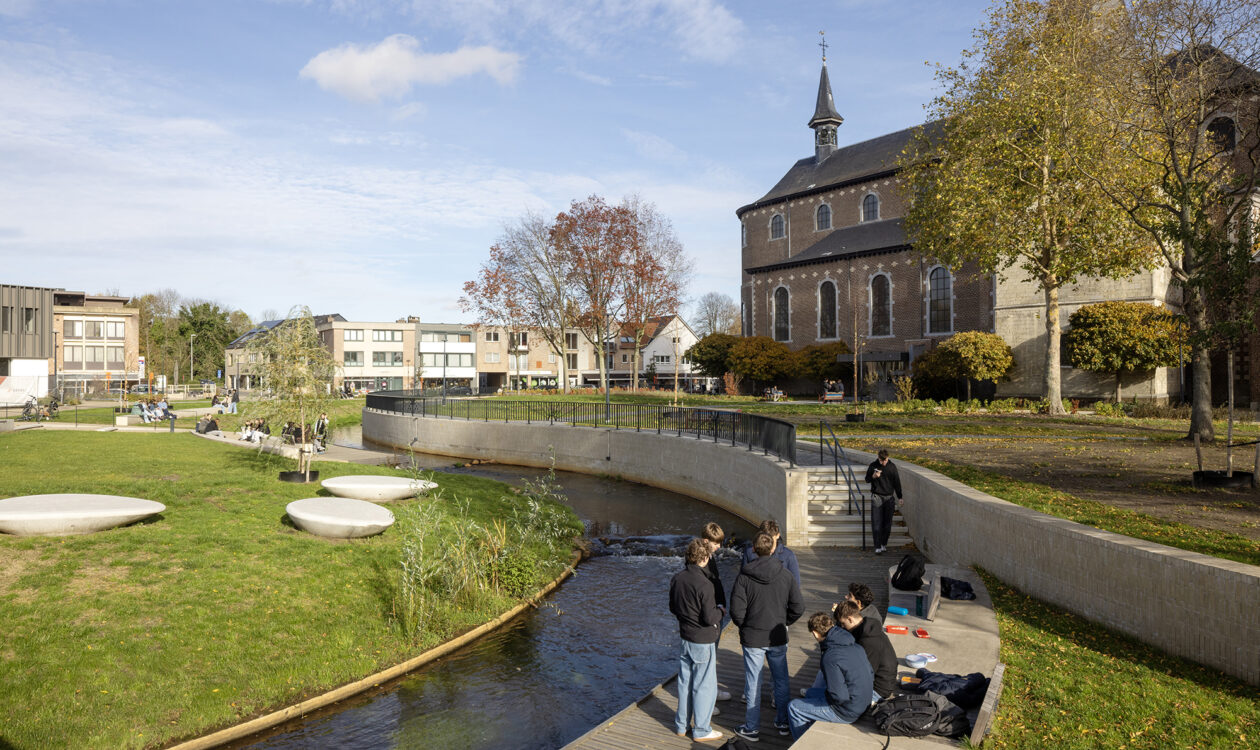
Water is not only infrastructure. It is also an experience: in parks, on public squares, along quays, in recreational areas and sometimes even as bathing water.
This creates opportunities for social interaction, relaxation, health and urban cooling. But it also requires a careful balance between ecology, safety, water quality and management.
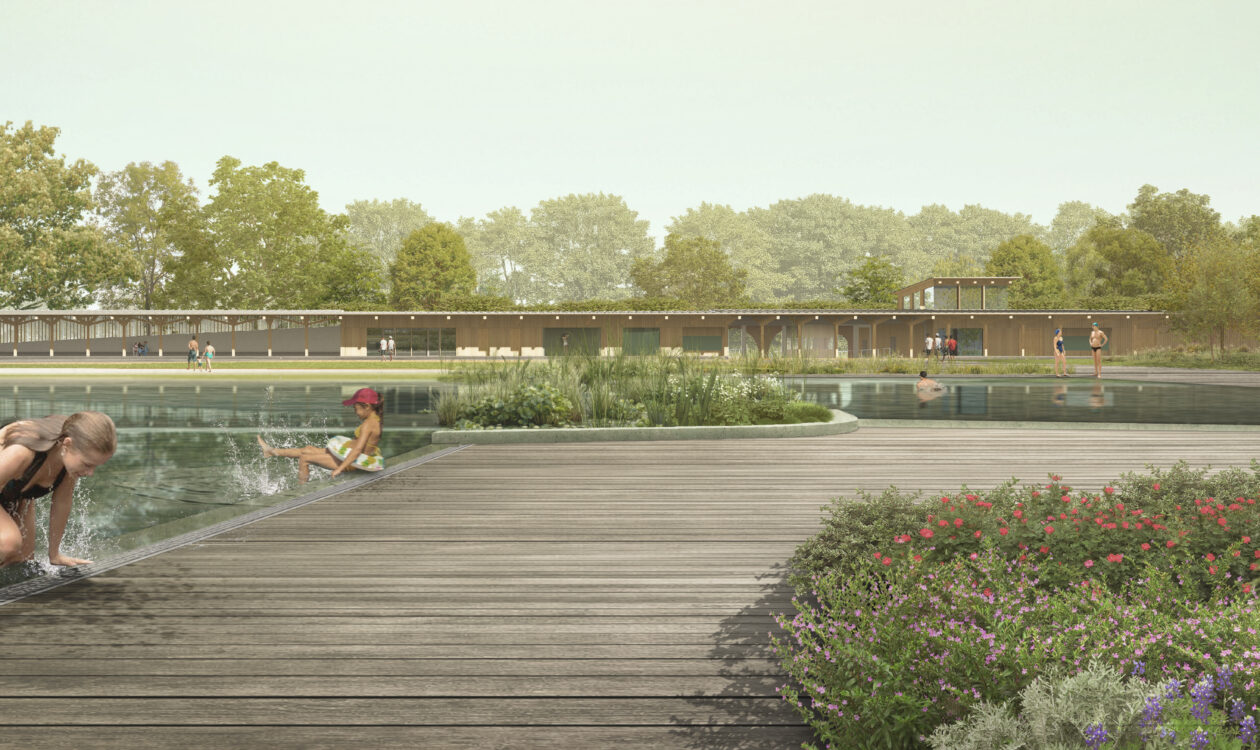
The bathing water project in Diest illustrates how water can evolve from a technical precondition into high-quality public space. Recreational water requires more than attractive design. It requires insight into flow, water quality, sources of pollution, ecological carrying capacity, management, monitoring and risks to users.
This is precisely where the added value of an integrated approach lies. Sweco combines hydrological, ecological, urban planning, technical and safety expertise to design water spaces that are not only attractive, but also function within the wider water system.
At building level
Many water challenges come together in buildings: drinking water, domestic hot water, rainwater harvesting, greywater reuse, buffering, infiltration, cooling, fire safety and comfort.
- Rainwater can be used for toilet flushing, cleaning, irrigation or technical applications.
- Greywater from showers or washbasins can, with appropriate treatment and safety measures, be reused for applications that do not require drinking-water quality.
- The water cycle does not stop at the plot boundary: at site level, buildings can also contribute to collective buffers and delayed discharge.
This calls for a different way of designing: integrating water technologies from the outset into architecture, structural engineering, building services, outdoor space and operation. Space for storage, pipe networks, filtration, monitoring and maintenance must be provided in good time. Otherwise, reuse becomes complex, expensive or difficult to manage at a later stage.
Our water consultants work together with our architects, landscape designers, soil experts and engineers to make water reuse part of the daily lives of residents, employees and visitors – without compromising on comfort, safety or health.
What can public and private organisations do?
The urgency is clear. Climate change is causing more intense peak rainfall and longer periods of drought. Water quality is under pressure. Societal expectations around health, liveability and sustainability are increasing.
Waiting until problems arise is no longer a strategy.
Take the full water cycle into account
Only then do opportunities for buffering, treatment and reuse become visible.
Use the following questions as a guide — Lansink’s Ladder
- Where can you avoid water consumption?
- Where can you reduce demand?
- Where can you reuse suitable water flows?
Only then should discharge be considered.
Combine source-based measures with reuse
Buffers, wadis, green roofs, rainwater tanks and water squares are more than temporary storage. Use captured water for green spaces, cleaning, sanitary facilities, recreation or technical applications.
Reduce pressure on combined sewers and overflows
Retain rainwater locally, disconnect it and reuse it wherever possible.
Let water quality guide reuse
Not every water flow is suitable for every application. Through monitoring and quality control, you can determine which water can be safely reused and which treatment or pre-treatment is required.
Embed reuse across multiple scales
Do not look only at individual buildings, but also at sites, districts, public space and infrastructure. Collective solutions often make reuse more efficient and robust.
Include operation and maintenance from the outset
Technology, ease of use and responsibilities must be clear from the start.
Water solutions that connect different scales
Water determines how safe our streets are during peak rainfall, how healthy our living environment is, how resilient our drinking water supply remains and how attractive our public spaces become.
Sweco develops water solutions that connect different scales: from city to network, from watercourse to building, from source-control measure to end user.
In this integrated vision, reuse is becoming increasingly important, in response to flooding, drought and pressure on drinking water sources. It makes public spaces more robust, buildings more efficient and cities more resilient. The future of water management lies in smart design, timely intervention, local use and integrated collaboration.
By combining hydrology, sewerage, water quality, ecology, infrastructure, public space, buildings and digital monitoring, our water consultants, soil experts, environmental planners, urban planners, architects and engineers address these challenges in an integrated way.
Other news
Water-Land-Schap 2.0 prepares the Vliet valley for drought and flooding
Read more
Sweco confirms strong sustainability performance with EcoVadis Gold
Read more
Sweco welcomes Technocon employees and strengthens its advanced steel expertise
Read more