
Sweco Belgium
Water, the key to restoring nature and creating a liveable future
Climate change is making our relationship with water more urgent, more visible and more complex. At times, there is too little water; at others, there is too much. Often, the root of the problem lies in the way we have organised our landscapes, valleys, agricultural areas and built environment.
Our teams of water consultants support public and private clients in tackling the wide range of challenges they face.
Our water system is under pressure
3 x increase
in the number of days with heavy rainfall
in Flanders by 2050.
Source: Flemish Environment Agency
> 80%
of the annually available water supply
is consumed, placing Belgium among the countries with extremely high water stress.
Source: World Resources Institute
These figures show one thing above all: drought and flooding are not isolated phenomena. They are symptoms of a water system under pressure.
Alongside climate change, the way we manage water is also creating major challenges.
It is not that Belgium is suddenly seeing much more or much less rainfall. The challenge lies in longer dry periods alternating with more intense downpours.
Leen Coorevits, Water & Nature Strategies consultant at Sweco
Our sponge capacity is under pressure
For decades, we have designed our landscapes and built environments to drain water away as quickly as possible. Ditches, straightened watercourses, drainage systems, paved surfaces and intensive land use have enabled agriculture, housing, industry and infrastructure.
Today, this approach is reaching its limits.
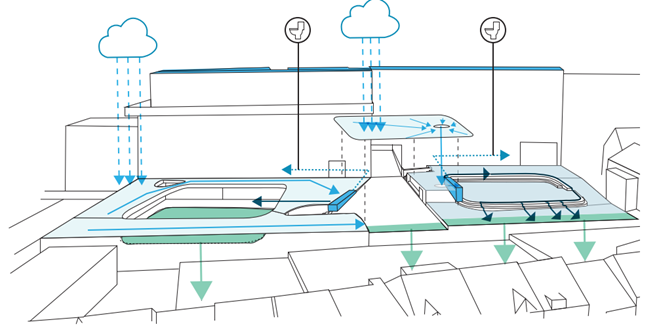
- Rainwater that is drained away too quickly has insufficient time to infiltrate.
As a result, our groundwater is replenished less effectively. A single wet summer or winter is not enough to restore this structural deficit. Groundwater reserves recover slowly and need space, time and a different approach to spatial planning. - Spatial planning also plays a key role in flooding.
Because of paved surfaces, constricted valleys and development in vulnerable areas, extreme rainfall is harder to buffer. Water that was once temporarily retained in wet natural areas, floodplains or valleys now flows more quickly from streets, buildings and paved surfaces into our sewer infrastructure, from where it is discharged into our watercourses.
If we want to protect ourselves better against the impacts of climate change, we need to give water space once again.
Not by seeking to control it, but by restoring the systems that allow it to infiltrate, run off more slowly and be temporarily buffered.
We should no longer see water as an adversary.
By putting the water system back at the heart of how we design and organise our space, water can become a powerful ally in making our living environment more resilient and better adapted to a changing climate.
Water is the key to many climate challenges
 Belgian Climate Risk Assessment Belgian Climate Risk Assessment | The first Belgian Climate Risk Assessment by CERAC places climate challenges within a broader framework. CERAC identifies 28 key risks for Belgium arising from climate change and ecosystem degradation. Flooding, drought, heatwaves and wildfires are already affecting communities, ecosystems and infrastructure today. CERAC does not treat these risks as isolated events, but as part of interconnected systems.
Sweco’s climate and environmental consultants also take an integrated approach to the challenges facing our water system, taking account of their impact on spatial planning, soil, nature, infrastructure, agriculture, industry and society. |
Investing in water and nature means
investing in resilience
Our teams working across open landscapes focus on nature-based solutions to address climate challenges. Nature restoration, in its many forms, is more than an ecological choice: it actively helps to strengthen our resilience.
Wetlands, valleys, marshes, re-meandered streams and healthy soils play a vital sponge function. They slow run-off, temporarily store water, replenish groundwater, improve water quality and create habitats for plants and animals.
147,000 ha
are estimated by INBO to have restoration potential.
The Flemish Climate Adaptation Plan 2030 aims to restore or improve the quality of 20,000 hectares of wet nature by 2030.
This is not a luxury. It is a necessary investment in a more robust landscape.
Only 0.5%
of Flemish surface water bodies — 1 in 203 — are in good ecological condition.
Water quality also underlines the urgency.
In Wallonia, the third Walloon River Basin Management Plan states that climate change, flooding and drought are major challenges for water management and the condition of water bodies.
Source: Flemish Parliament
Anyone who invests in nature restoration is also investing in flood protection, drought resilience, water quality, biodiversity and liveability.
What does this mean for investors?
The question is no longer whether investment in water resilience is necessary.
The question is where, when and how that investment will create the greatest social and economic value.

For public authorities and
water managers
Local authorities, provinces, regions and water managers face the challenge of better aligning policy, spatial planning, permitting and delivery.
Stormwater and drought plans, valley restoration, de-paving and creating space for water need to reinforce one another.
For farmers and agricultural investors
Agriculture is highly dependent on water security.
Drought affects yields, while intense rainfall can lead to erosion, soil compaction and crop damage.
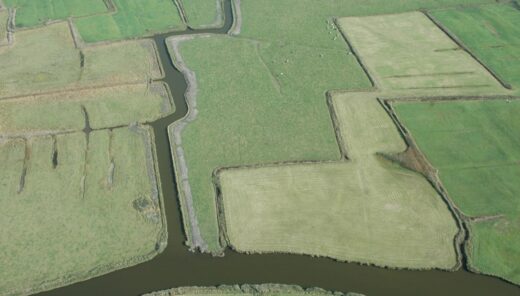
Storage basins, infiltration zones, controlled drainage, wetland crops and landscape buffers can help make farms more resilient.
The challenge is to see water not only as a factor of production, but as part of the business model.
Investments in water buffering and soil quality can reduce risk while also contributing to nature restoration.
For nature organisations and site managers
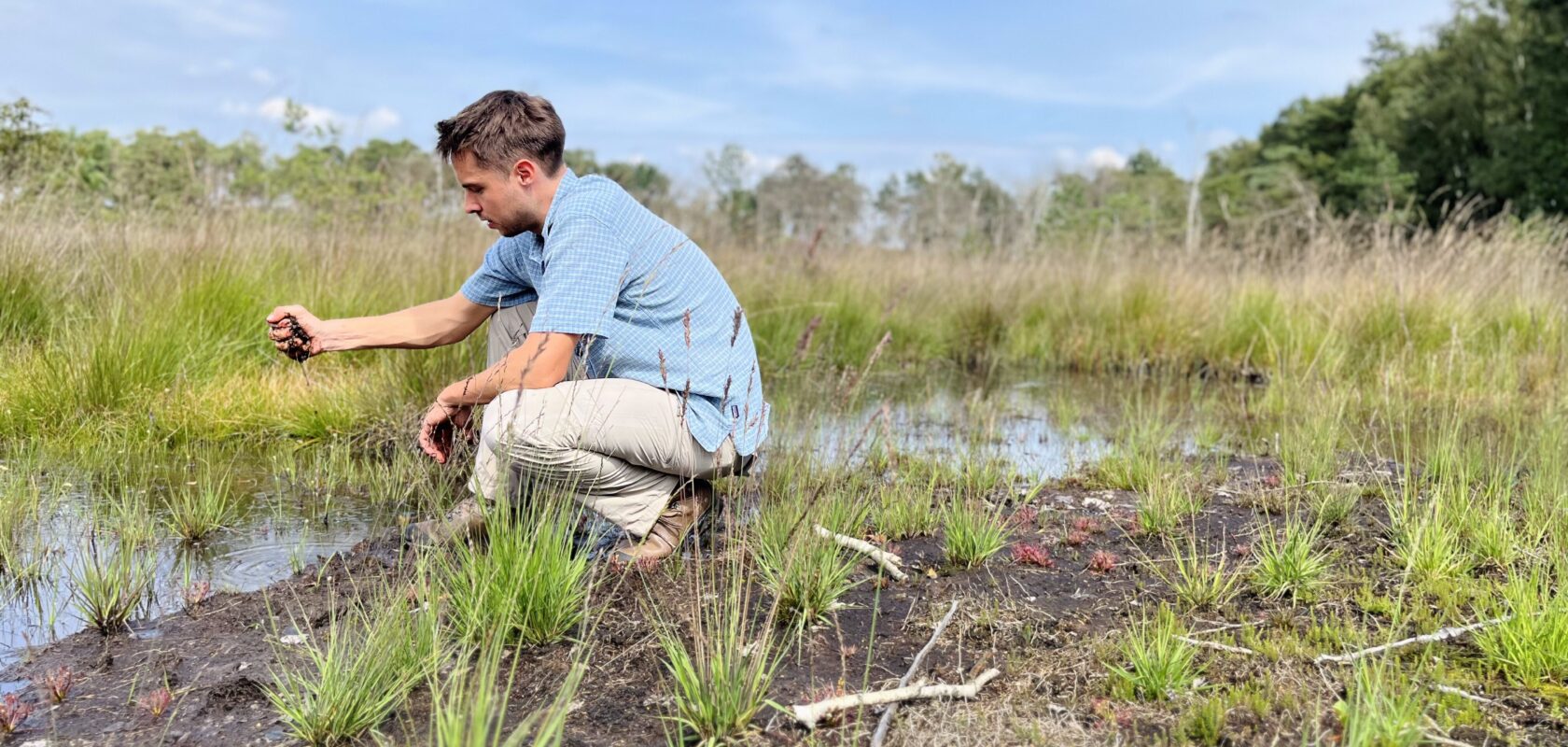
For site managers, the challenge is to restore hydrological processes.
Nature restoration often starts by restoring groundwater levels, natural flood dynamics and connections between watercourses, valleys and surrounding landscapes.
This requires ecological expertise, but also hydrological modelling, stakeholder management, permitting, cost-benefit assessments and delivery capacity.

Integrated solutions from analysis through to implementation
Sweco supports, guides and takes pressure off the various organisations working in open landscapes. They are the ones who must translate objectives and ambitions into concrete projects on the ground, in consultation with all the stakeholders involved.
We support numerous projects that strengthen the resilience of our landscapes. These are complex challenges that call for integrated solutions. We bring together:
- hydrology
- ecology
- spatial planning
- infrastructure design
- environmental impact assessment
- data analysis
- participation
In this way, we map out the entire water system: from source to valley, from rainfall to groundwater, from natural areas to the built environment.
Added value is created where challenges intersect and reinforce one another: where synergies are harnessed and different spatial demands do not compete, but strengthen each other. In this way, we aim to contribute to climate-resilient, biodiverse landscapes and places where people and nature can thrive, now and in the future.
A selection of our projects shows how we help make a difference
-

RESTORATION OF WETLANDS AND WETLAND HABITATS
In the Leie Valley, we are working on several nature development plans aimed at restoring wetland habitats and, with them, the valley itself as part of “River Restoration Leie”.
Commissioned by the Flemish Land Agency.In the Dender Valley, we developed design plans for De Nuchten and Kwaadbroeken-Pollaremeersen as part of “Room for Water – T.OP Dender”.
Commissioned by the Agency for Nature and Forests. -

STREAM RESTORATION THROUGH THE RE-MEANDERING OF WATERCOURSES
In the Nete Basin, we are helping to restore natural watercourses through Blue Deal projects.
Commissioned by the Flemish Environment Agency. -
FLOOD RESILIENCE
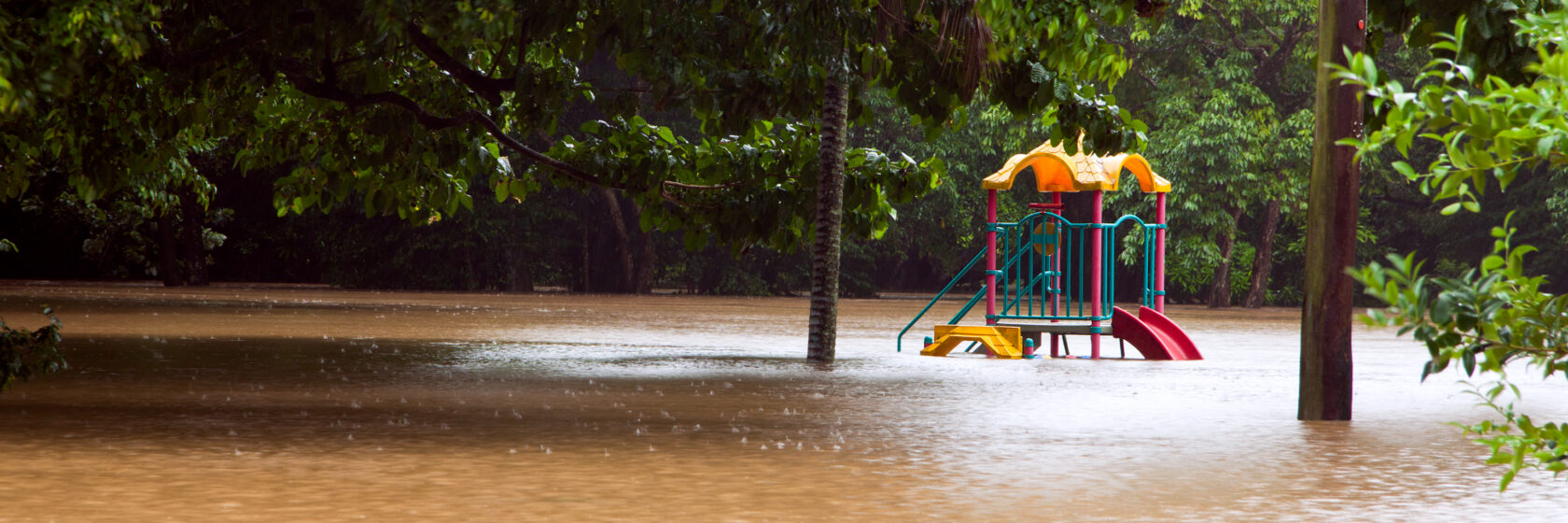
In and around Lillo , we are implementing the Sigma Plan in the highly valuable natural environment of the Scheldt Delta. Elsewhere, we are preparing an integrated nature management plan for the Sigma project areas.
Around the Yser, we are working on a broadly supported multi-year programme for a “Resilient Westhoek”. The programme also focuses on upstream measures to tackle drought.
Commissioned by De Vlaamse Waterweg and the Flemish Environment Agency.In Voeren, we investigated the potential for additional water storage in the valleys of the Voer and Noorbeek. The aim is to reduce the flood risk near the centre of ’s-Gravenvoeren.
The integration of water buffers into the landscape in Voeren forms part of the Water+Land+Schap 2.0 project “Towards a climate-resilient landscape in the Voeren region”.
Commissioned by the Flemish Environment Agency.In the Vesdre Valley, too, the need for systems thinking remains significant following the floods of July 2021, which claimed at least 37 lives in Belgium (source: ECDC).
Commissioned by the Public Service of Wallonia. -
BUFFERING AND INFILTRATION FACILITIES WITH ADDED VALUE FOR NATURE OR AGRICULTURE
The “BETONwater voor irrigatie” project buffers rainwater at business parks in Torhout and Zedelgem. The new water basins will also be made available to farmers in the surrounding area. The project reduces peak run-off and flood risk, promotes the sustainable use of scarce water resources and illustrates how agriculture and industry can reinforce one another.
Commissioned by the Province of West Flanders.In East Flanders, we are working to improve buffering and infiltration facilities on business parks, so that more rainwater is captured during heavy rainfall and can infiltrate gradually, with greater emphasis on biodiversity.
Commissioned by Veneco.
Putting water – and soil – back at the heart of decision-making
Today, this means giving water space again and assessing investments according to their systemic impact, so that nature can once again become our ally.
Nature restoration is an essential lever for making Belgium more water-resilient.
Investing in water restoration means investing in the foundations of:
- greater biodiversity
- stronger ecosystems
- more resilient landscapes
This means less damage and a more liveable future.


Other news

The parking ladder: take control of parking policy, one step at a time
Read more

Approved by children: designing safe school environments
Read more
More eyes at sea: Sweco designs offshore platform concept for marine monitoring and enforcement in the North Sea
Read more